Sean Scully

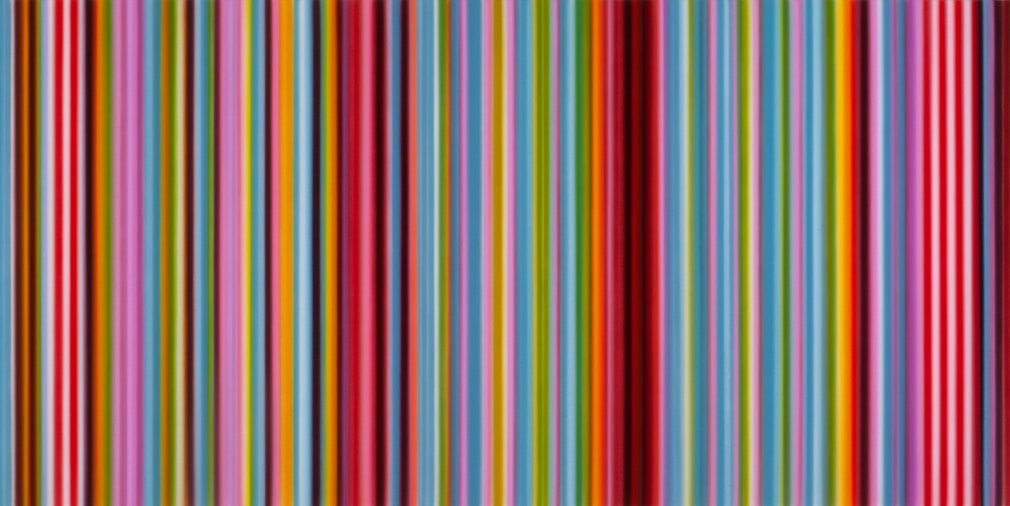
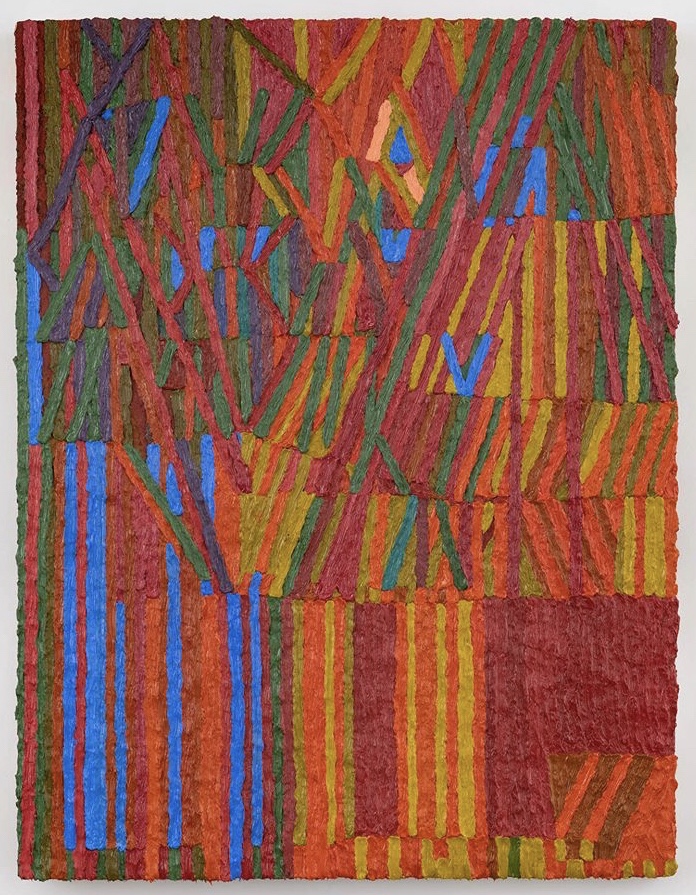
came up for me recently when writing Competition, as I was rereading my initial blog about Astrid and John Yau’s essay Whose Stripe Is It, Anyway? The subtitle conveys that Astrid was told that she could not paint stripes because Sean Scully and Frank Stella had done so before her (which I agree with John is a patently foolish statement).

So I’ve never blogged about Mr Scully. Reason being? I bet a number of you remember the Mr Shachter putting Scully on blast for a mind-boggling degree of self-regard in a BBC film about his life. In particular, the zinger in the article is that Scully says in the film “I’m the Donald Trump of the Art World.” Well I know the Brits were going through Brexit and Boris Johnson at the time (2019), and the amount of insensitivity it took to utter that really blew my mind and candidly broke my heart. 

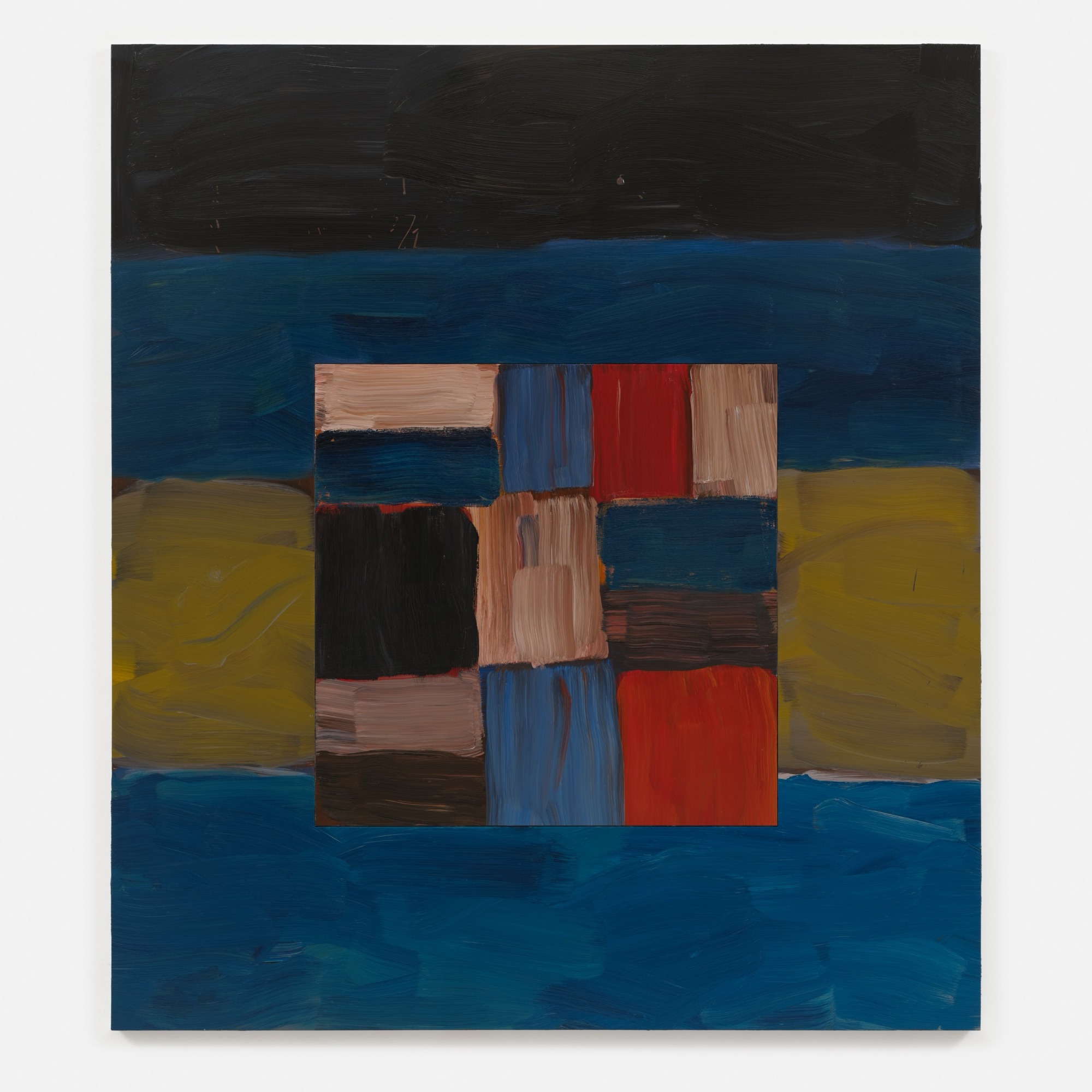
Why? I’ve been moved by Scully’s work.  The first time I ever saw one in person was at the Met, and I remember coming around the corner to encounter a really large one in subdued colors on a dark wall and being almost overwhelmed with melancholy. He is often compared to Rothko, and my emotional experience of that work made it clear why. It was many years later that I also found myself inspired by his words – his Mark Rothko: Corps de-lumiere had a good deal of influence on me during my time in graduate school, as I struggled to describe how painting could “speak” to something directly, and in a way that words never could.

Have you ever seen his photography* btw???

So I am feeling grateful that a recent essay gave me a reason to revisit and sort through these feelings. I have said for many years now that part of the obligation that writers and teachers have in these types of situations is to point directly at the contradictions, and make the lesson that it is possible for canonic artists to be complex, flawed and gifted, as a way for us all to have a better understanding of the world and our selves.

*Also, and have you seen Ellsworth Kelly’s?

#seanscully
Richard Hogan

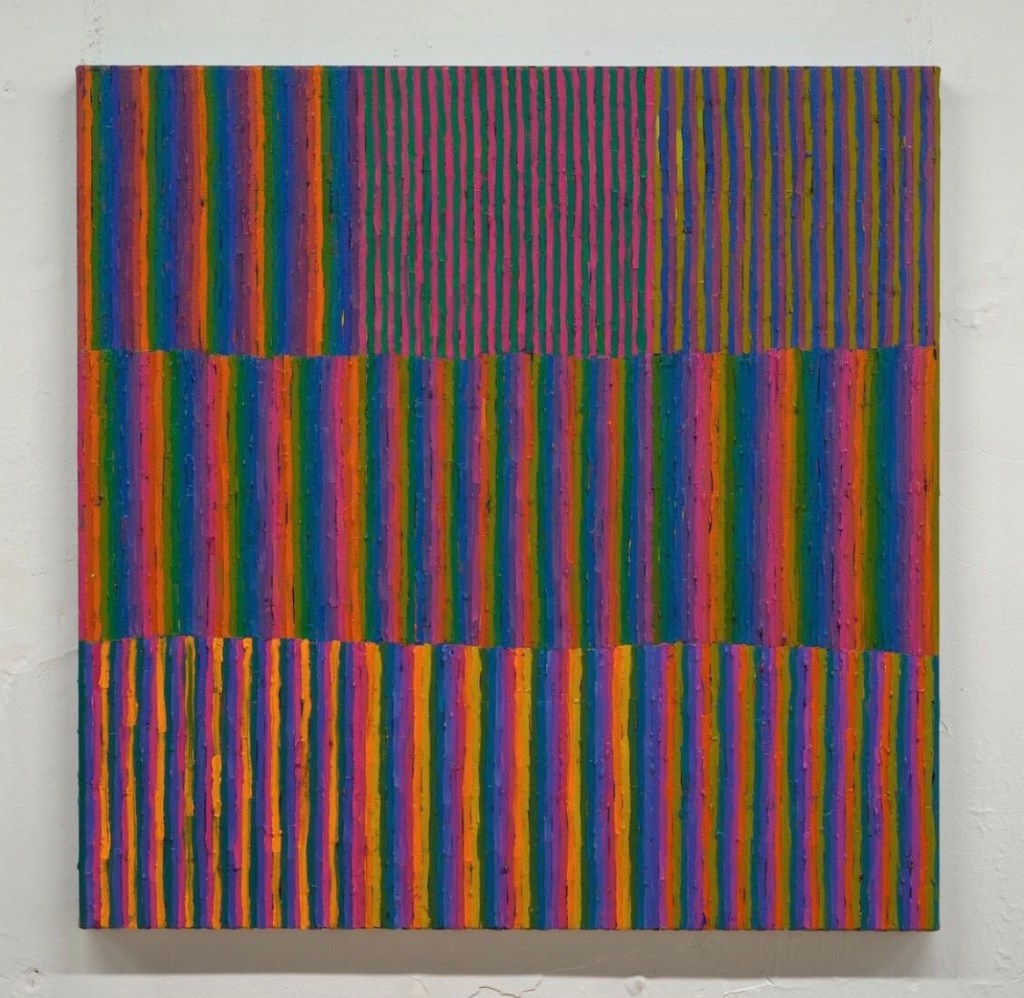
Richard, who shows with Pie Projects, came to New Mexico as a child when his parents settled in Albuquerque. He was immediately struck by the vast open space of New Mexico, and space would become a major factor in his painting. Art critic William Peterson wrote of Hogan’s work in 2002: ” Hogan’s reductive linear vocabulary implies a return to beginnings, to the inscribing of linear marks as the most archaic of art making activities. Yet, despite his deep interest in Paleolithic and Neolithic art, his inquiry into the basic impulse of drawing is not so much a nostalgia for the “primitive” as it is instead a search for a vocabulary that will read as independent or autonomous, and not as “abstracted.” Following the Modernist tradition of interrogating the formal bases of his art, his achievement has been to make line a medium of painting.”
#richardhogan

Carmen Anzano

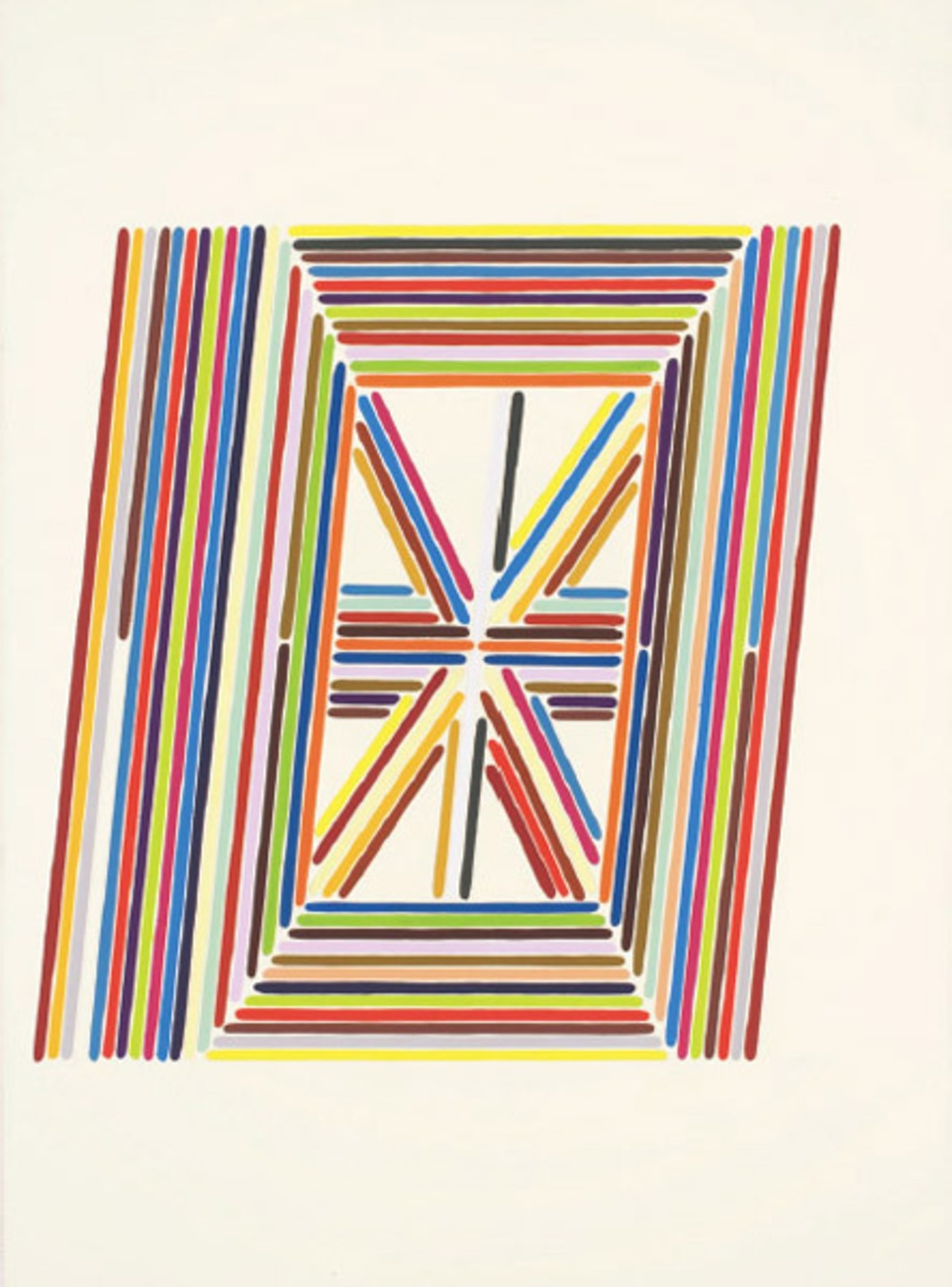
Carmen sees the world “as ‘shapes and threads’, elements from which she continues to weave new shapes and emotions. She interlaces string, thread and ribbon to generate surfaces with which she articulates spaces and configures a cosmos of lines and dynamic tensions. These lineal frameworks dominate together with a colour scheme at times vivid, intense and energetic, at others harmonious, subtle and mysterious.

More

#carmenanzano

Tauba Auerbach

In Artforum’s November issue, “Tauba Medium,” an essay by Caroline A. Jones, heralds the opening of “S v Z,” the artist’s exhibition at the San Francisco Museum of Modern Art, on view from December 18, 2021 to May 1, 2022.“Meaning in written language is not only content but gesture,” Tauba Auerbach observes in this 2010 rumination on style and handwriting.

#taubaauerbach

Otto Zitko

For an artist whose bright oil stick lines often explode, uncontained, across the walls and ceilings of galleries, it feels fitting for this moment—one of physical distance, meditation, and uncertainty—that the works in Otto Zitko’s exhibition “In Times Like These” are anxiously restrained to canvas size

More (older installation work like below)

#ottozitko

Carlos Cruz-Diez

I felt like I’d seen Carlos’s work before seeing the first piece below in #surmoderno. A little internet searching turned up some things that… yeah, I’m sure I’ve seen these in popular culture, definitely the ones in Houston. His work focused (he’s no longer with us) on the kinetic energy of color particularly the #moiré effect.

#carloscruzdiez

Martina Nehrling and Gunther Forg

One of the most compelling facets of abstract painting for me are formally similar but conceptually dissimilar works. Martina paints an urban energy where Gunther seeks to emote the experience of being a German.

#martinanehrling

#guntherforg