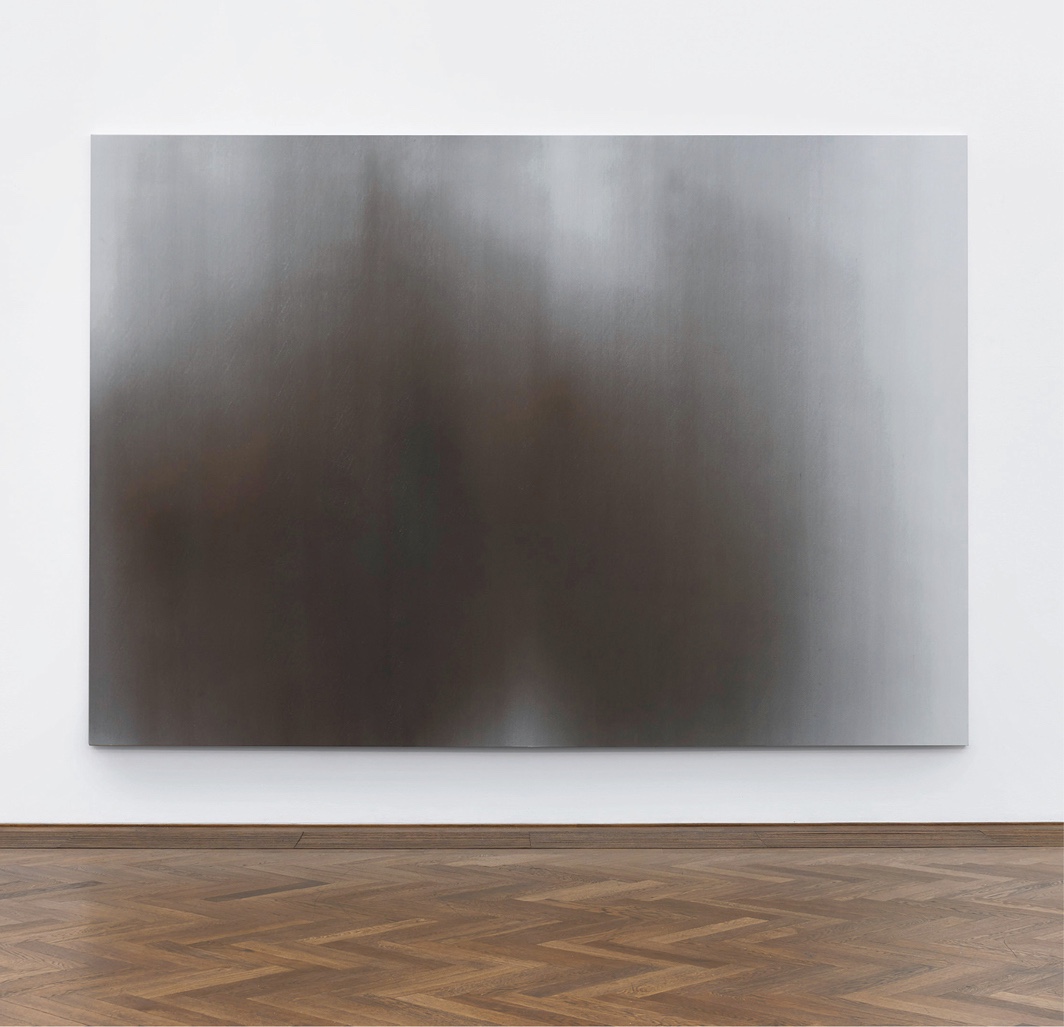
Larry Ossei-Mensah predicts to Artsy that abstraction by artists of color will become even more prominent in 2023. The genre, Ossei-Mensah believes, is essential to shifting the public’s belief that artists of color should only make representational work that is immediately legible. He refers to Atta.
Those of you who read this blog are probably either artists yourselves or know many at least, and so you’ve heard one of us, certainly, talk about “having a practice.” If you don’t know what this means I’ll forewarn you that doing a search on the internets for a definition will take you all kinds of places, and I won’t attempt to be the definitive answer to the “what is a practice” question. I have a practice. It was re-born from a question I asked myself during a turbulent time- effectively what am I leaving this world- to which I answered “if abstract painting matters enough to me that I want it to exist in the future, I have to invest in it by making it, talking about it, looking at it, buying it, teaching about it, and challenging it as a medium and a historical movement.”
For me a practice is about a sum of activities, IE, it’s more than the actions and discipline around making work. For example, showing up; in this case, being at openings for your people. And “your people” are the ones who support you in return, whatever that means. There is a David Hickey quote about forming a club and taking over the Art world that I can’t find on the Internet this morning (and whichever of you I loaned my copy of Air Guitar, please return it.
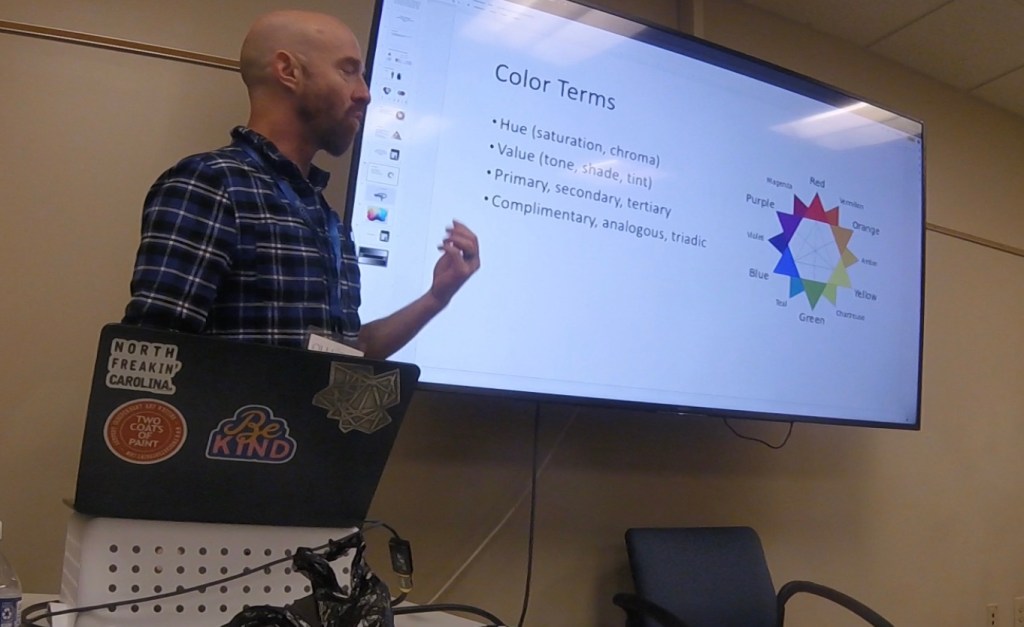
Teaching is another part of my practice. Since I have full-time employment outside of the Art world, I have the privilege to teach for the love of it as the kids say, I think… This semester I’m teaching Foundations of Color through OLLI at Duke. Honestly I would do this full time if I could- I love teaching color.
Part of having a practice, to me at least, is also continually challenging yourself. In addition to reinvigorating my practice through daily drawing recently, I also took the opportunity this last week to learn about a new printmaking technique- using the foil material in TetraPak cartons as a plate. There are a few images of the results below, my brain is spinning with the possibilities. If you have the opportunity and are local to the Triangle I definitely recommend taking one of Susan Martin’s workshops.
Born in Birmingham, England in 1939, John Walker was educated at the Birmingham School of Art and Académie de la Grande Chaudière, Paris. In 1976 he was awarded the John Moores Painting Prize, represented England in the 1972 Venice Biennale, was nominated for the Turner Prize in 1985. Since then, he has gone on to receive numerous awards and honors and has exhibited both nationally and internationally. The Ogunquit Museum of American Art recently organized From Low Tide to High Tide to highlight his work.
#johnwalker
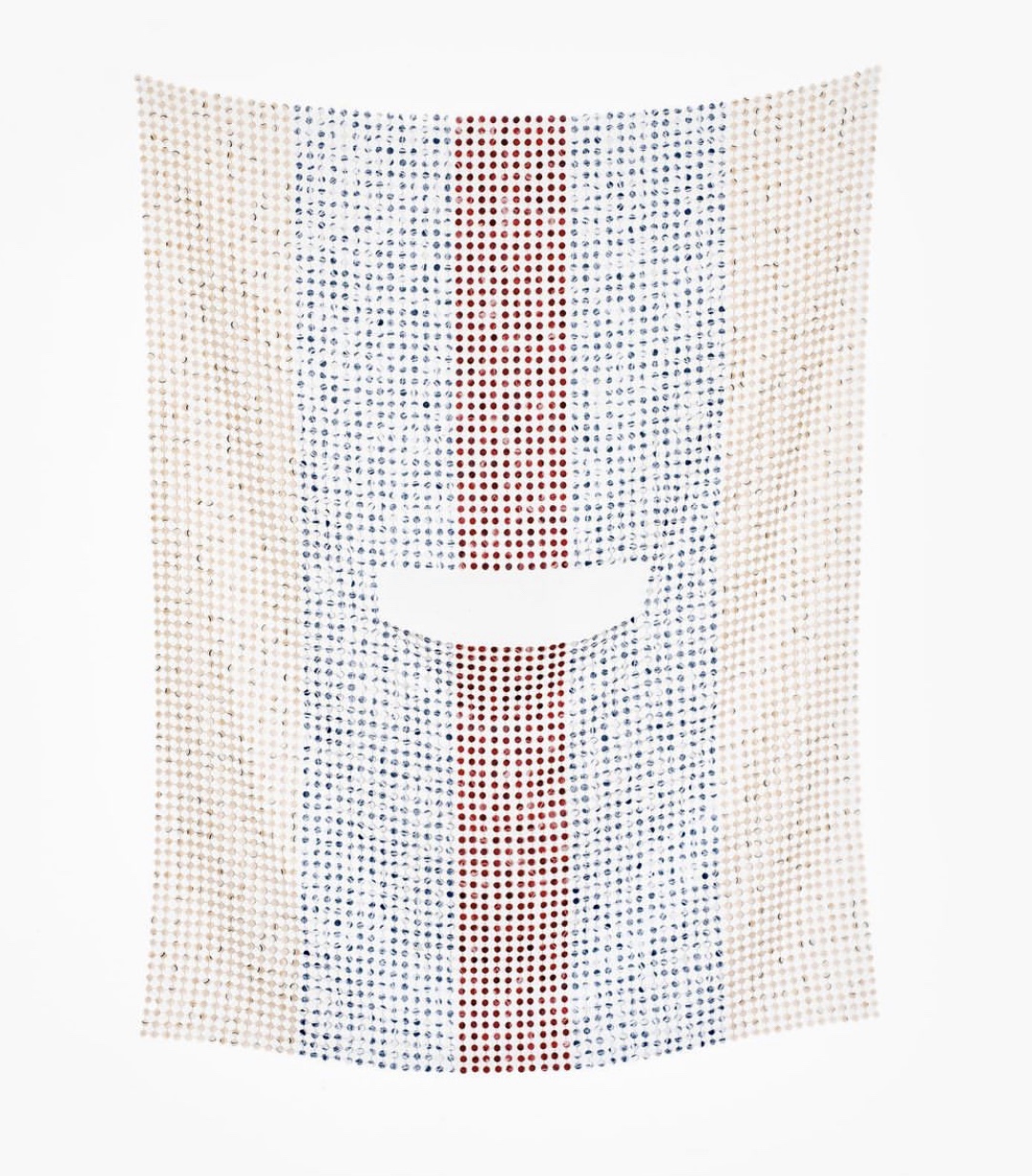
Artforum notes that Bonolo decided early in her career what she did not want her art practice to be about: the political burden of being a Black woman in South Africa. Born in 1992, the artist found that most of the art history she encountered in her country was charged with the discourses of racial and cultural identity politics. Since her time studying at the Michaelis School of Fine Art in Cape Town, Kavula has been determined to play and experiment with form.
If readers find the broader conversation about abstraction in the hands of Black creatives interesting, you should look at Artsy’s ’23 curator outlook in which Larry Ossei-Mensah predicts that abstraction by artists of color will become even more prominent in 2023.
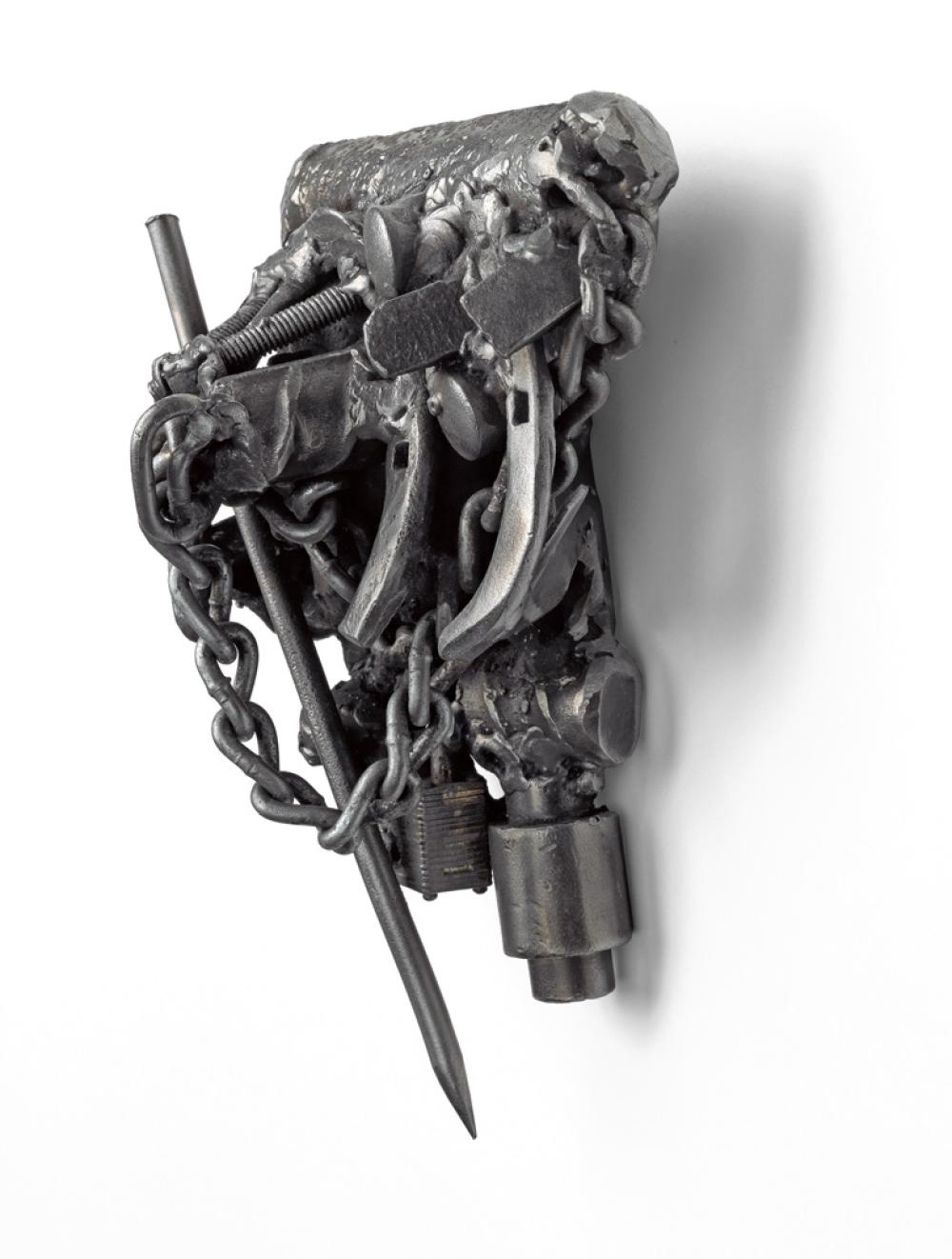
ArtNews asks us who gets to be abstract in the context of revisiting Frank Bowling‘s show from 1969, “5+1”(a show which also included Al, Jack, Daniel and William)? I had heard of Melvin Edwards before from listening to this amazing artist talk. In my head I didn’t lump Melvin in with Sam and William because candidly there is a lot of recognizable materials in his work (see below) and then of course this article made me question that. tldr- the punchline of the essay is that, when Stony Brook attempted to re-stage the show the curators found significant archival gaps because the academic gatekeepers of the late ’60s didn’t deem the show important enough to document. The show reboot also includes many black women such as Howardena and Mary.






 Painting After Art is Dead