We’ve all heard this phrase. Its meaning, generally/culturally, is that some challenge one is experiencing has taken on significance that requires an exaggeration of that challenge’s existential implications. People might also use the phrase “beating yourself up.” I don’t think Artists are immune to this. In fact, I’ll posit in this particular update on my practice that I find a lot of the Art in my Art (my practice) is in my head, or at least takes place in my thoughts. Meaning, there’s an element of making Art (with a capital “A”) that requires one to be in their head, “beating up” an idea or three.
A few things happened since my last update that motivated me to produce this short blog, using words rather than images (“yes,” as you’ve probably guessed, I’m a bit stuck “in my head” and the physical aspects of my practice have slowed down for the moment). So that’s thing number one of course- 1) “beating yourself up” as a creative when work isn’t just pouring out of your finger tips. You’ve probably guessed the “answer” to this- that the intellectual, academic, word-based part of making art is actually what distinguishes a practice from a hobby so don’t… yeah, you get it.
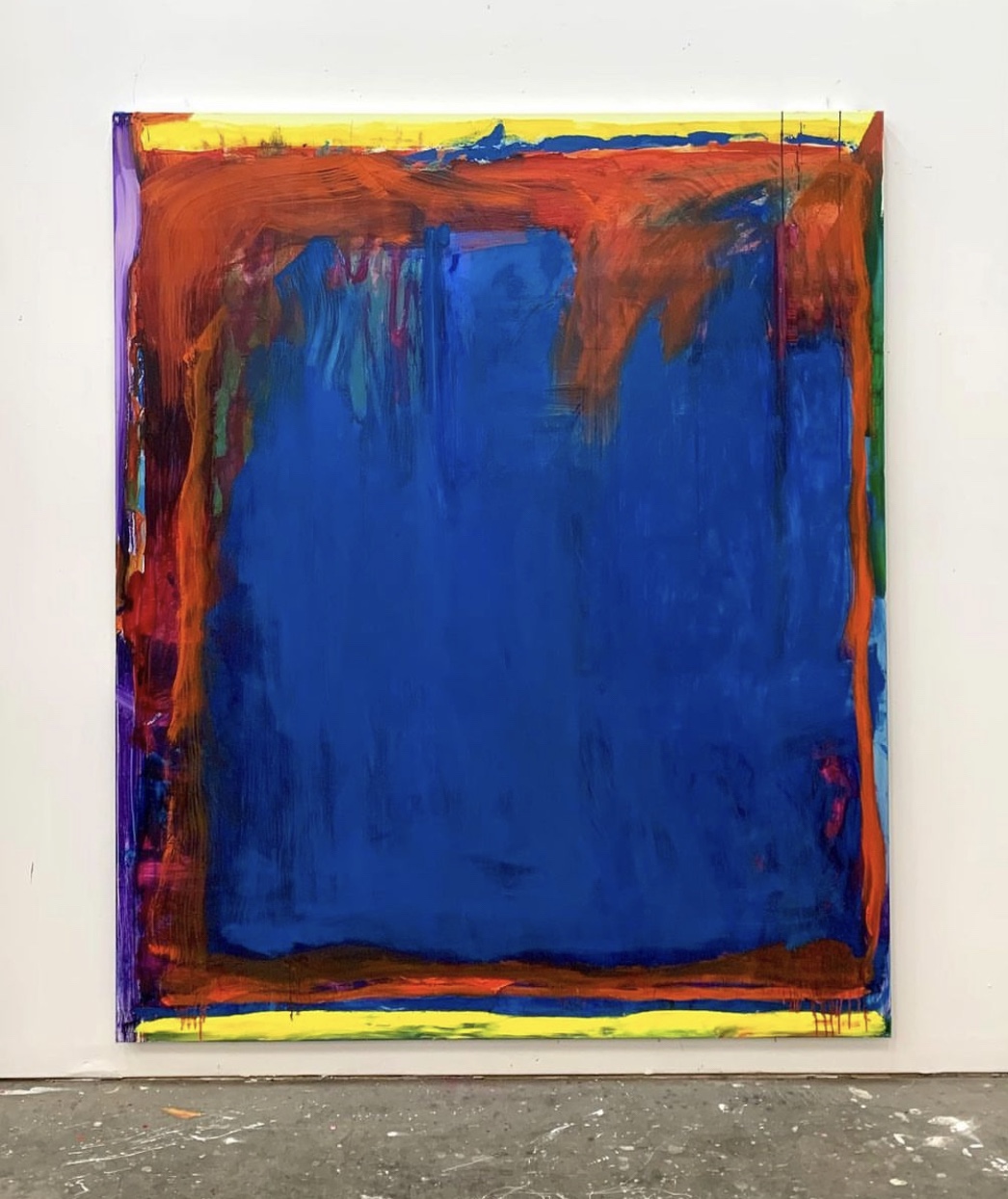
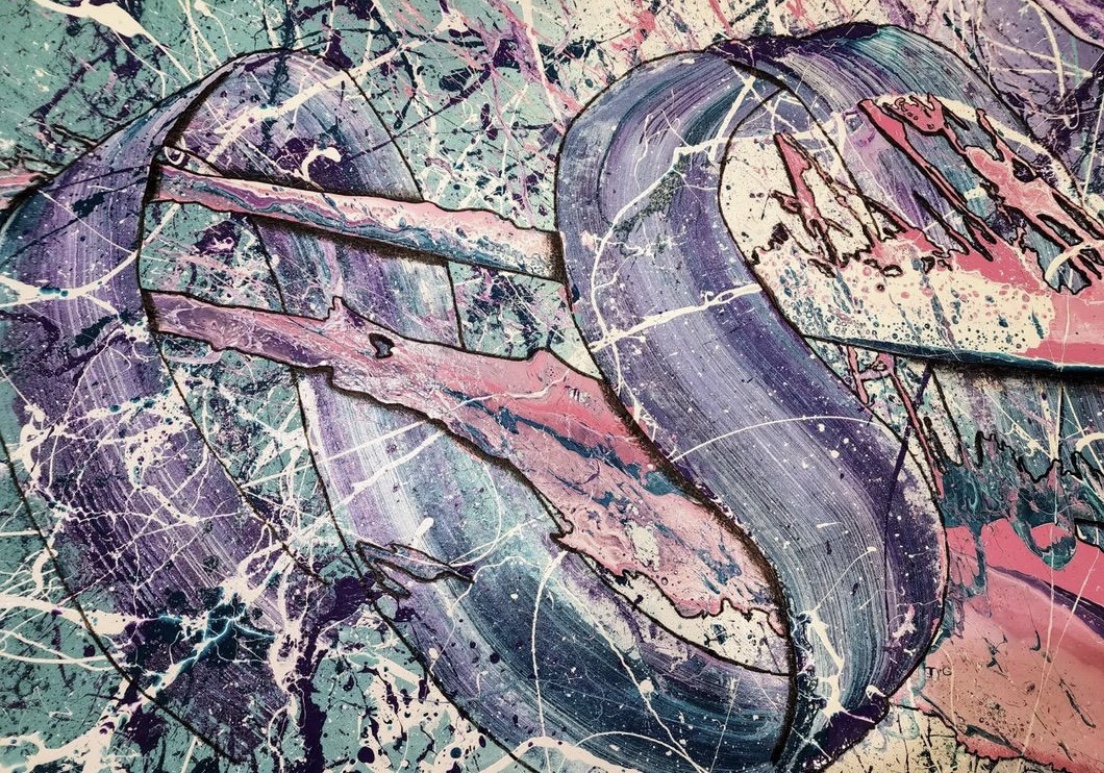
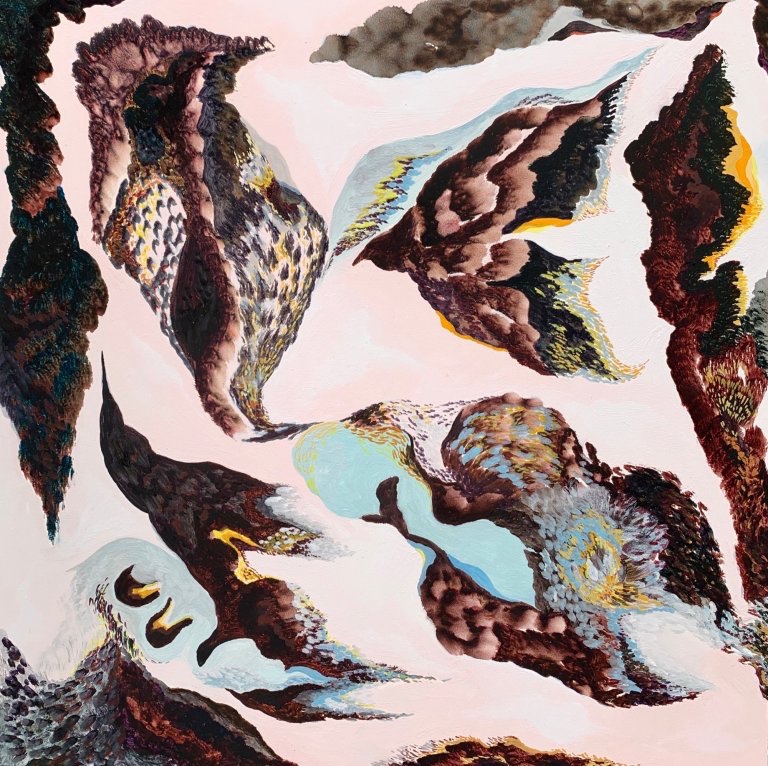
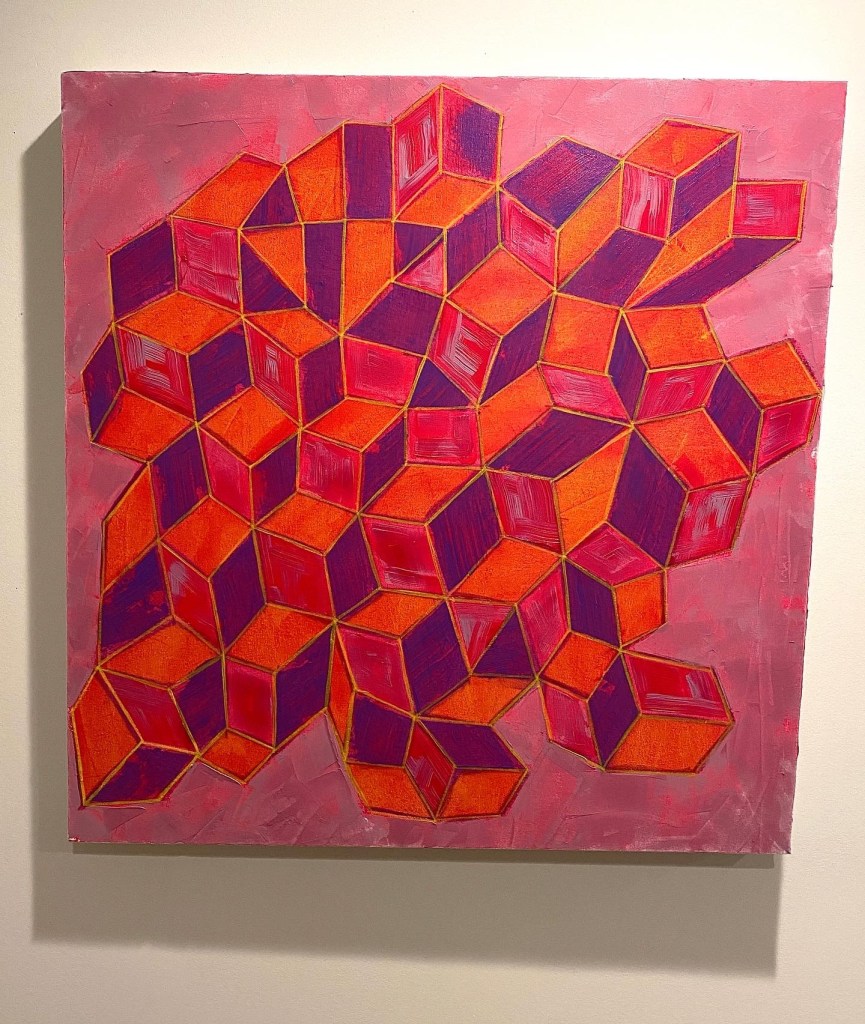
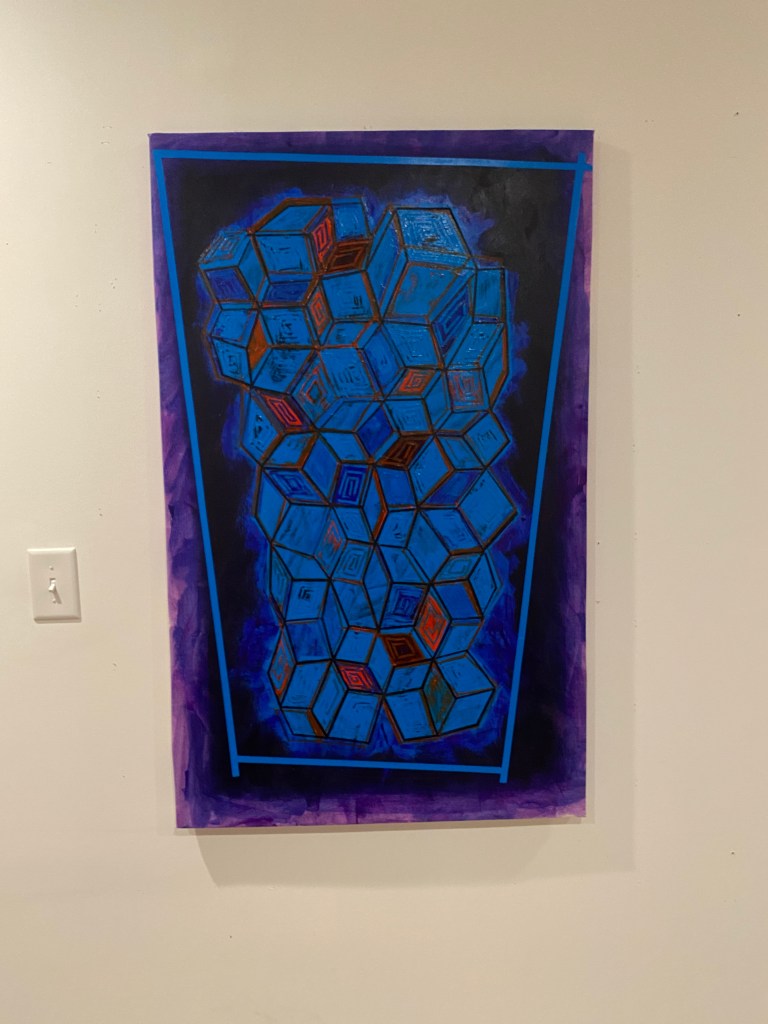
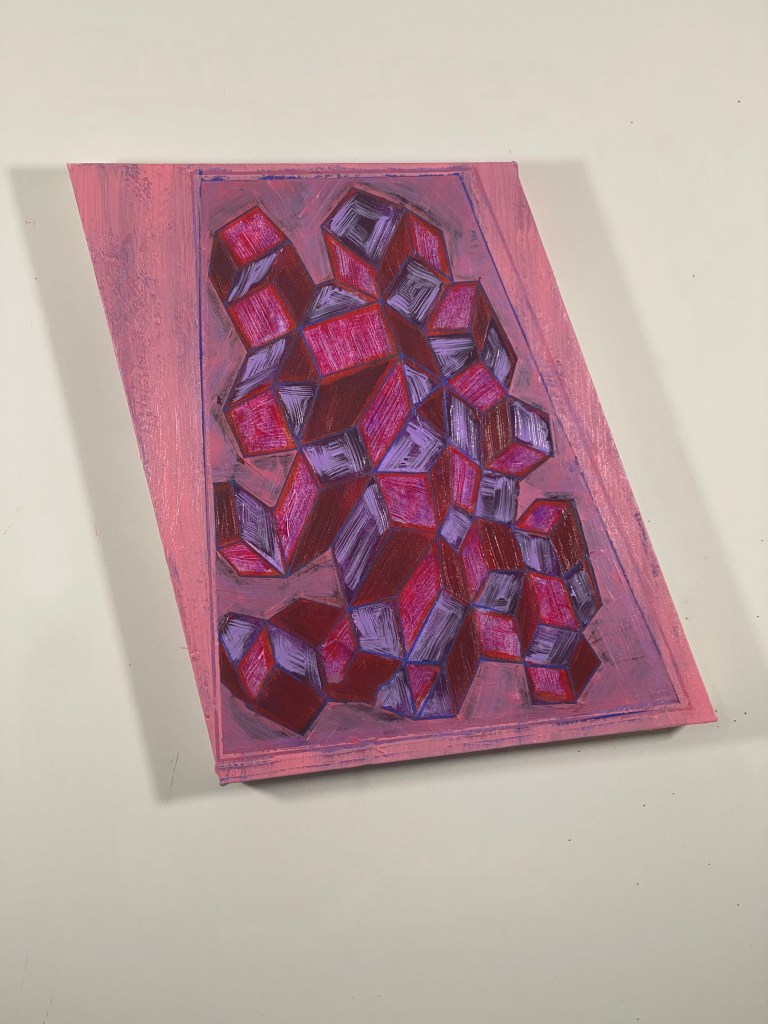
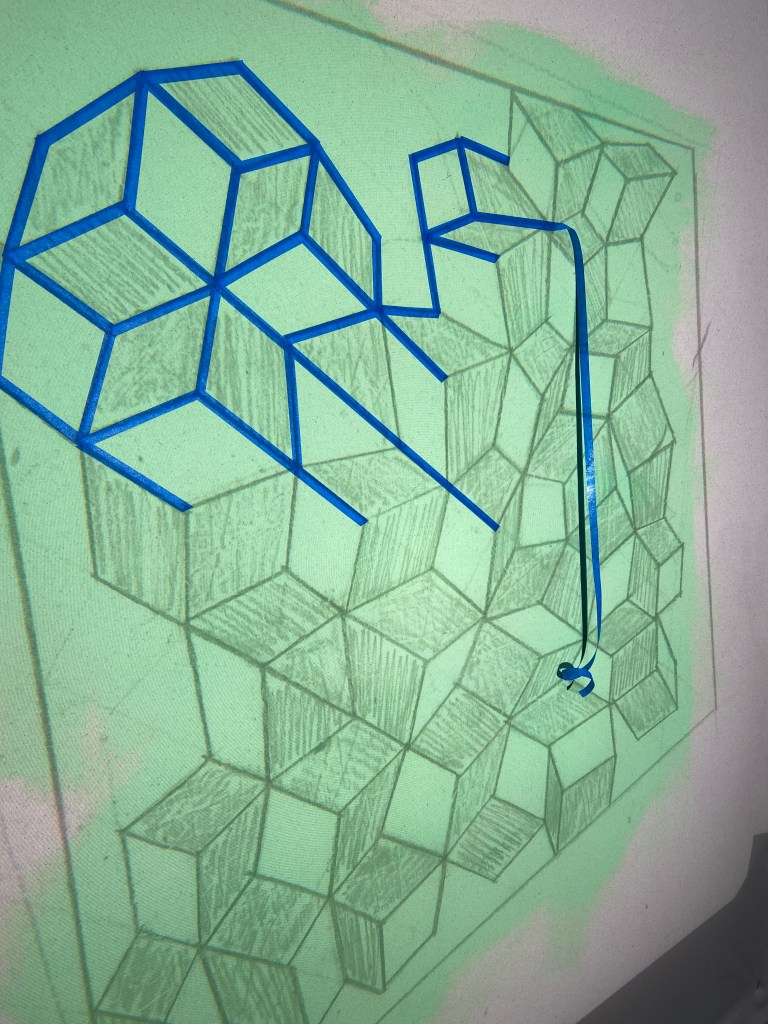
“Sterling, what happened?” In addition to making a small body of work recently that I acknowledged was a departure and then following it up with a smaller piece that further explored line/edge (point- I was “in my head” already about a possible new direction for my painting), in the last week I had a piece that was underway (end of the linked blog) fall to pieces on me. The epiphany moment for this piece, which was literally invaluable but at the time felt like failure, was when I realized that what the painting was teaching me was recognizing that this thing went somewhere I didn’t want it to go and stepping away (not following it, in this case). So, I pulled it off the wall, turned it over and re-stapled it to the wall where it will serve a better purpose, which is exploring some things that have happened in some smaller studies, but at scale. In fact, immediately after it came off the wall, 3 other potential substrates went up on various surfaces in my studio, with the intent to spend less time constrained by a goal and more time released to explore new things without a goal (and that’s thing #2- committing to resolving the tension between head and hand by spending time in what psychologists would call a state of “play”).








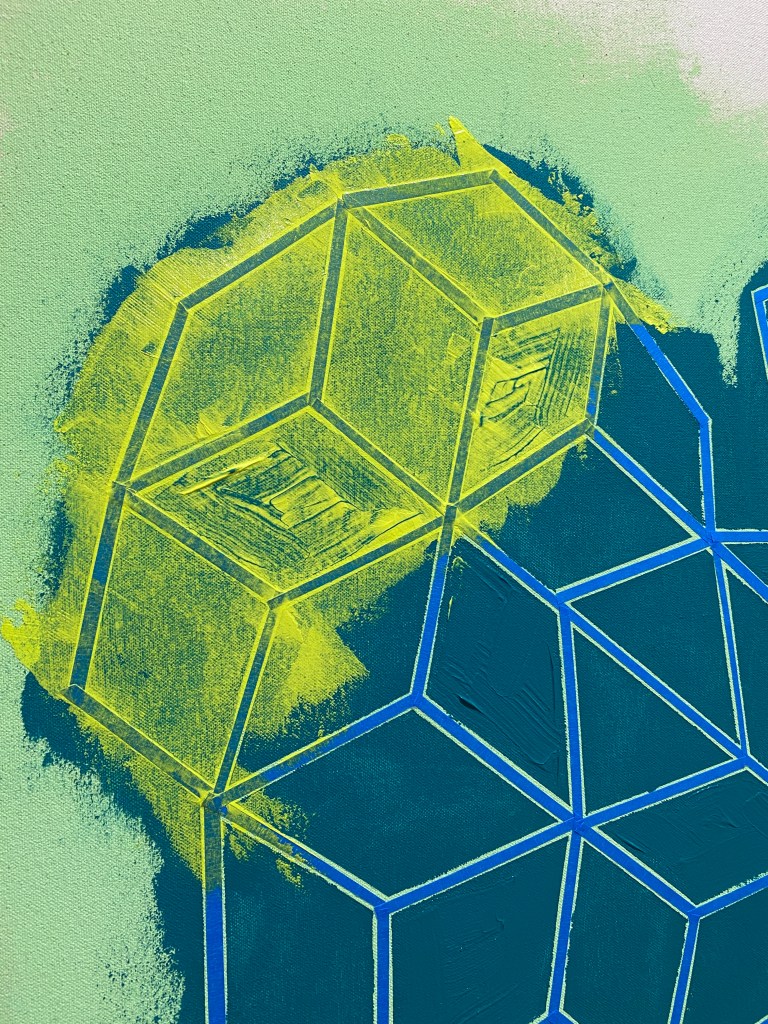

 Painting After Art is Dead