Tussle magazine has words about Yoon’s new work at the New York Hall of Science in Queens.
#kyungyoulyoon
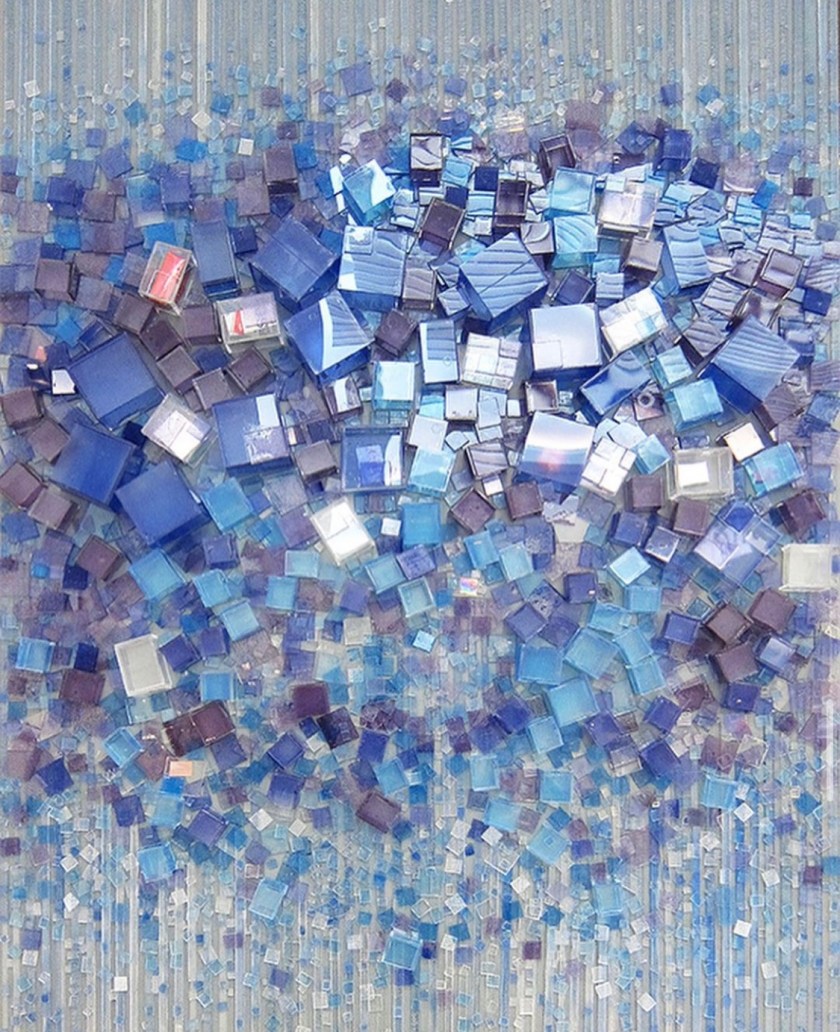
Tussle magazine has words about Yoon’s new work at the New York Hall of Science in Queens.
#kyungyoulyoon
Sean is a self-taught artist and multi-instrumentalist that currently makes work on the CT shoreline. He is informed by his passion for art history and contemporary art, as well as his experience working with materials as a carpenter and house painter. This has led to Sean’s deliberate use and misuse of materials in the studio through painting, collage and sculpture. By mixing paints that don’t mix and allowing organic works to form, he can lend to the idea of an object growing (or decaying) in time and space.
#seankratzert

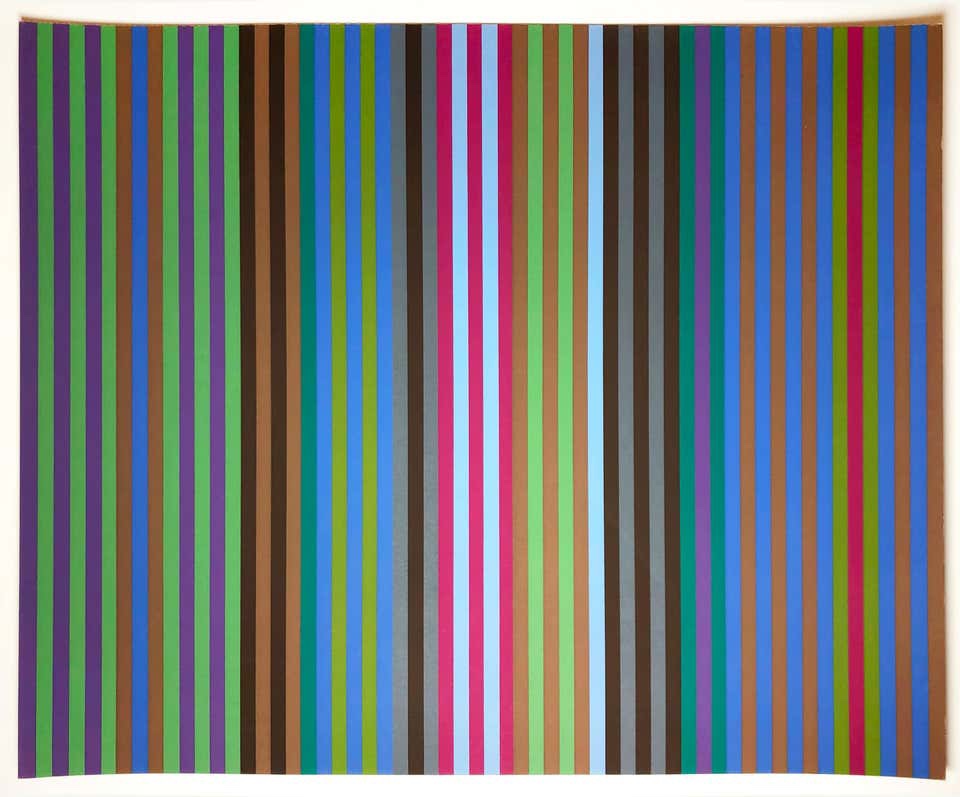
Blogging about Mokha (who was Gene’s assistant) made me realize I’ve yet to cover Davis who was a major figure in 20th-century American painting and whose contribution was invaluable in establishing Washington, D.C., as a center of contemporary art. Davis also played a significant national and international role in the color abstraction movement that first achieved prominence in the 1960s.
#genedavis
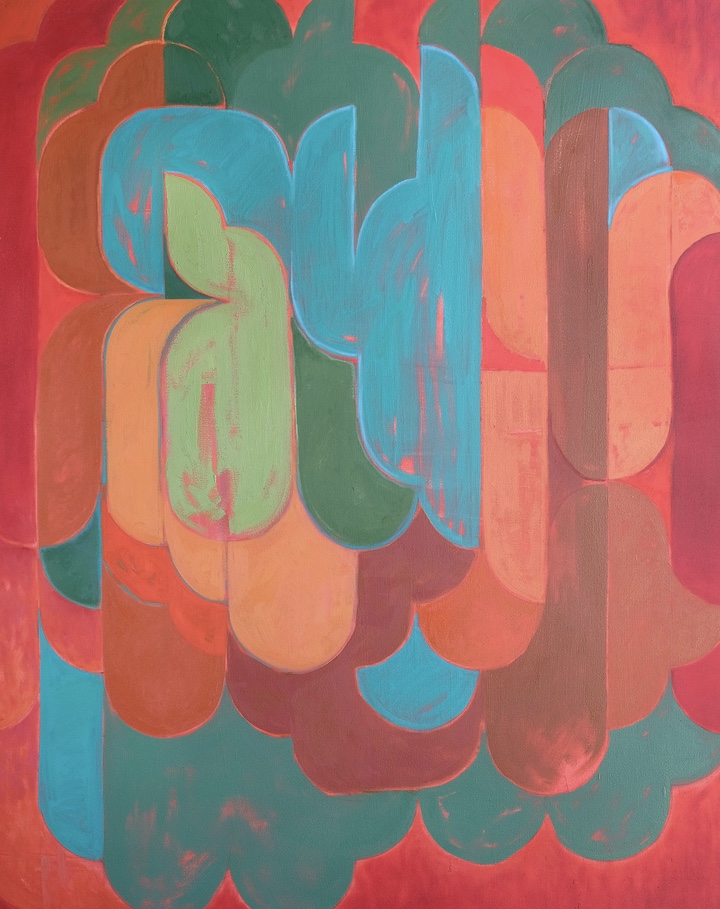
Anahita is an Iranian-Canadian painter and visual art educator based in Toronto. She takes influence in her work from memories of Iran and the cultural signifiers of her homeland in relation to her new adopted home of Canada. She seeks to create a dialogue between immigration and identity that is inspired by the cultural richness and the deep spiritual belief behind Iranian art and architecture.
#anahitaakhavan
So no, I’m not planning to start action painting (although*…). I am excited that a new year is underway. Yes I understand the passage of time and human history aren’t impacted by the construct of a calendar that we pastiche on top of our lived experience, and marking the passage of time, as well as reflecting (see my favs from ’22 post if you haven’t) and looking forward can be meaningful. And there you have it- my ongoing interest in the idea that two ideas which seem to contradict can both be true continues.
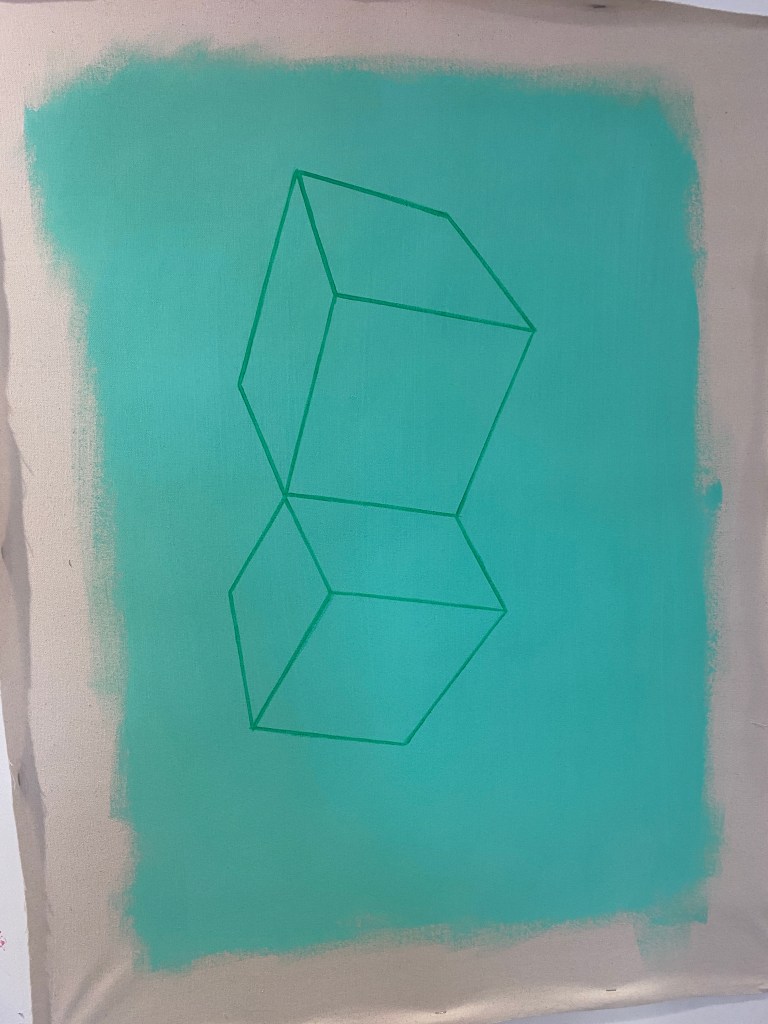
I do have a couple of new things in the works. In part based on the last, small body of (small) work that I completed (which I found also influenced by the hard edge work I was making 2 decades ago), as well as having a go with shaped canvases or at least containers (most of which have actually been discarded), I’ve found myself moving towards even more graphic painting elements. In particular, there is a small green and pink and purple study I’ve wanted to revisit. The main shift in direction is and will be rooted in my recent reflection on a specific condition of painting- that an implied light source is important (critical?) to understand the illusion in (a) painting, even in the case of an unnatural, fictitious space or place. I like the contradiction/duality of making work also appear to be a source of light, much the same way the stacking of cubes that rely on and deny gravity can be arresting. In addition, there is a pleasing and engaging duality created by having more than one appearance or set of visual characteristics for a painting, given different lighting. Plus, the need to change the lighting to view a work (turning on a black light, or in the case of photo-phosphorescent work, turning off the light) requires participation by an audience which, I think, emphasizes the experiential element of seeing art. Additionally, there is the duality that black-light art is not typically “high art” and gives a gentle entry point for more audiences (I’m totally good with “that’s cool” from the non-art crowd).

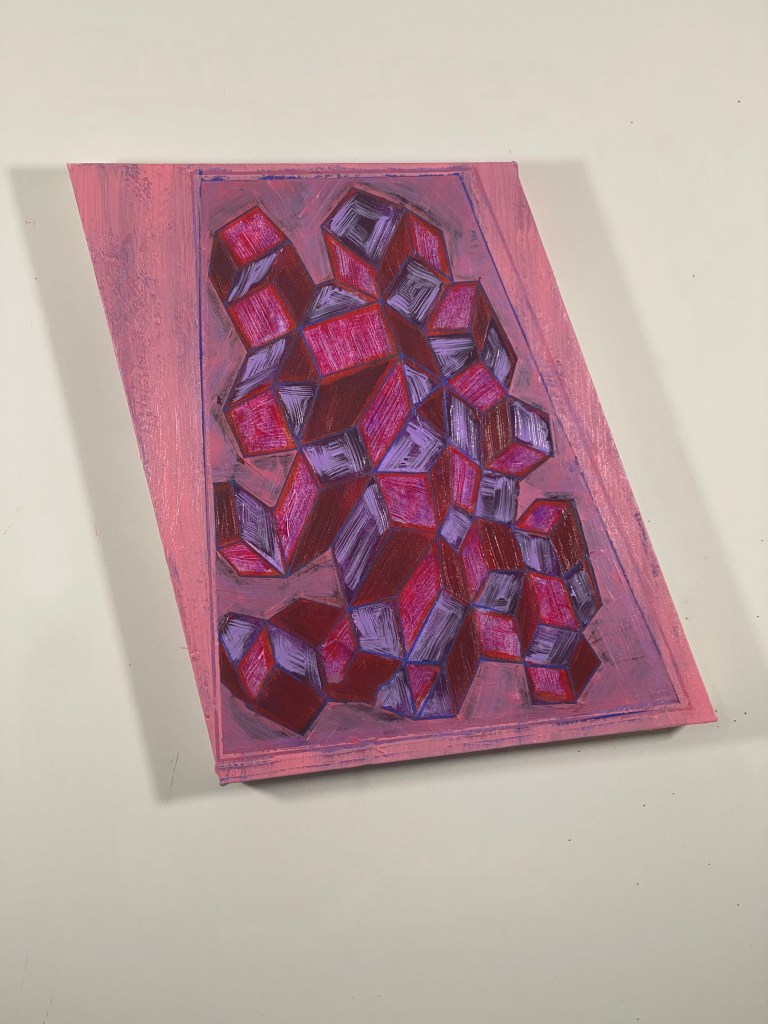



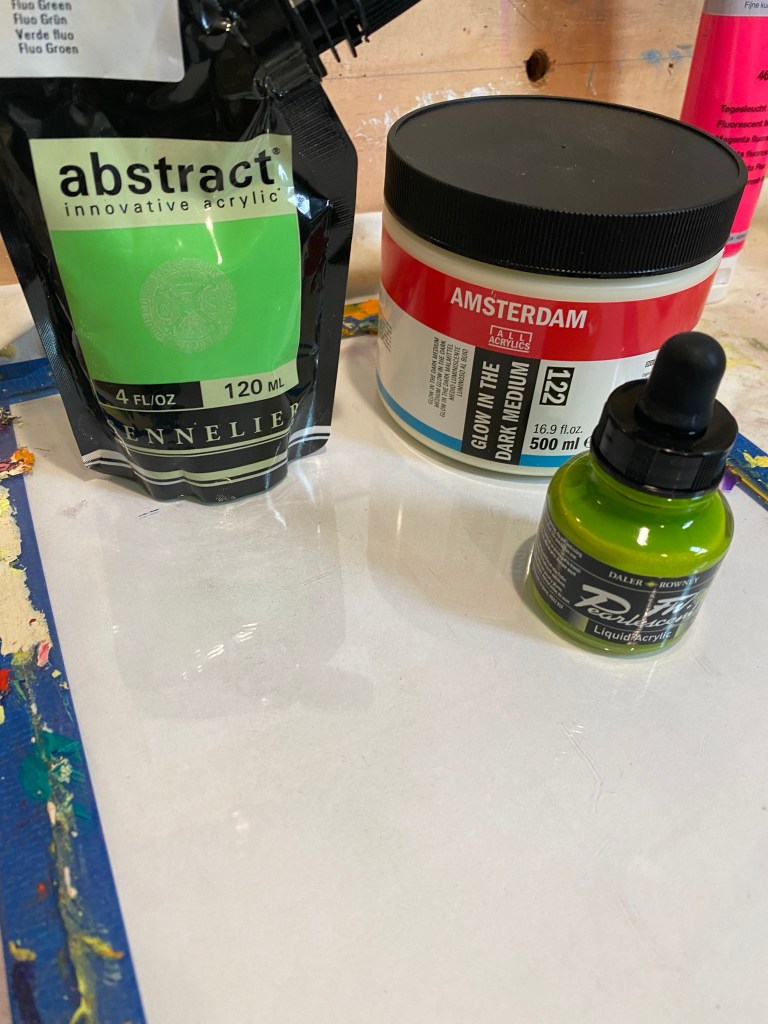

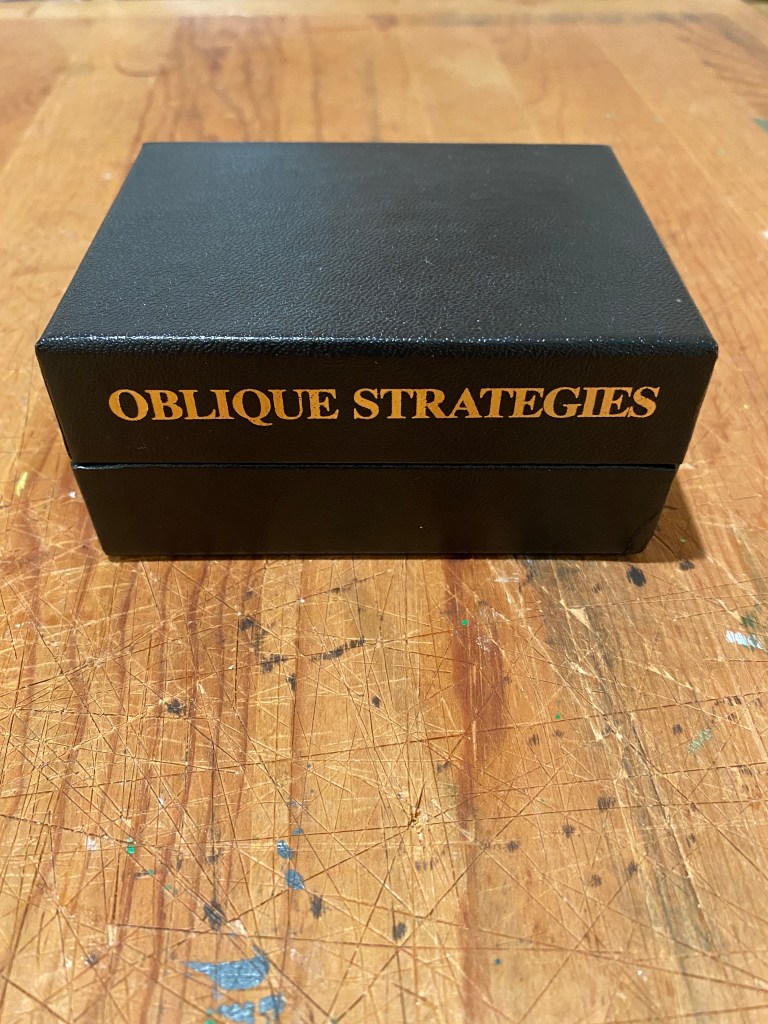
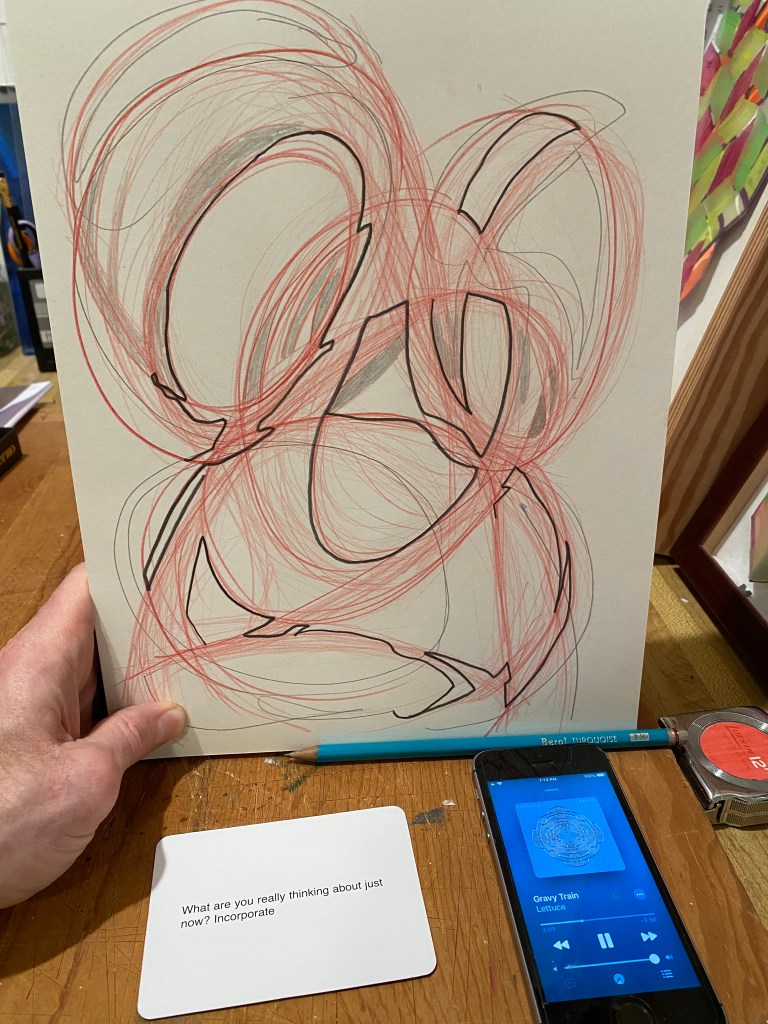
I’ve also started a new, (what I will strive to make a) daily practice of drawing, based on Brian Eno and Peter Schmidt’s Oblique Strategies. The end goal of this part of my practice will be some source material for another body of work that will incorporate black light and fluorescent paint. *Right out of the gate though, it looks like trying to open up by responding to word prompts and also to be more “automatic” in my approach to mark-making is going to lead to some quite divergent forms…


is a fantastic artist working in textiles, and is also a historian, podcaster and author.
#ferrengipson

Edvins is no longer with us- Smythe-McKee represents his estate (as they do with several other estates). He was born in Latvia in 1933 and after World War II emigrated with his family to Chicago in 1950. Strautmanis graduated from the School of the Art Institute of Chicago and began exhibiting in 1965. After an exploratory hard-edge period in Chicago, working on paintings, sculptures and monotypes.
#edvinsstrautmanis
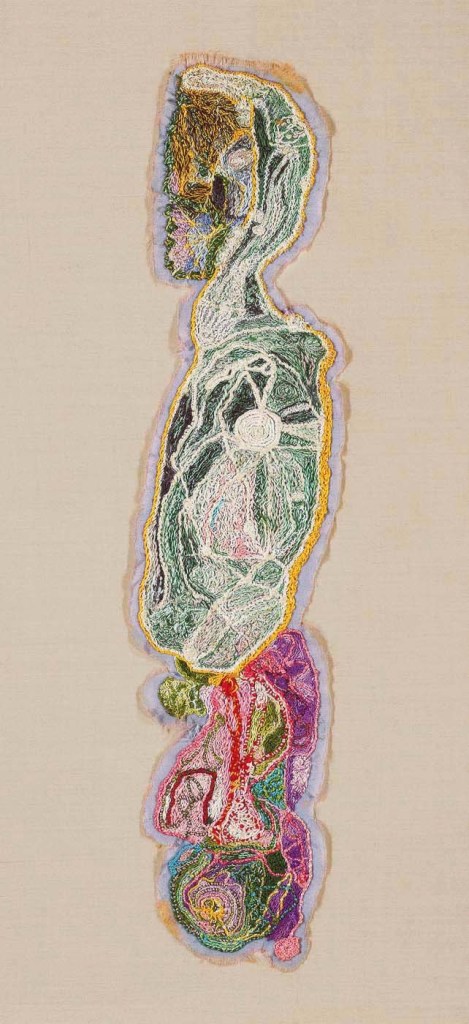
I’ve been reading Line Let Loose and Jeanne gets a mention. Daughter of a wine merchant, Tripier Jeanne spent her childhood with her grandmother in the countryside. As an adult, she lived in Montmartre with her son Gustav, whose father was American. Spiritualism entered her life when she was fifty-eight. It was during this period that she started to experience mental distress. Committed in 1934 for “chronic psychosis, logorrhea and megalomania,” Jeanne Tripier developed, during the ten years of her hospitalization, a vision of the world that she transcribed in her Messages relating her interplanetary travel, or Missions on Earth. “Medium of first necessity, holder of the laws of the planet, and the reincarnation of Joan of Arc,” she created drawings in ink, combined with hair dye, nail polish or pharmaceuticals but also embroideries, her needle constituting a formidable weapon. She uttered prophesies, triggered wars, sometimes using secret codes she called “the spherical language.”
#jeannetripier



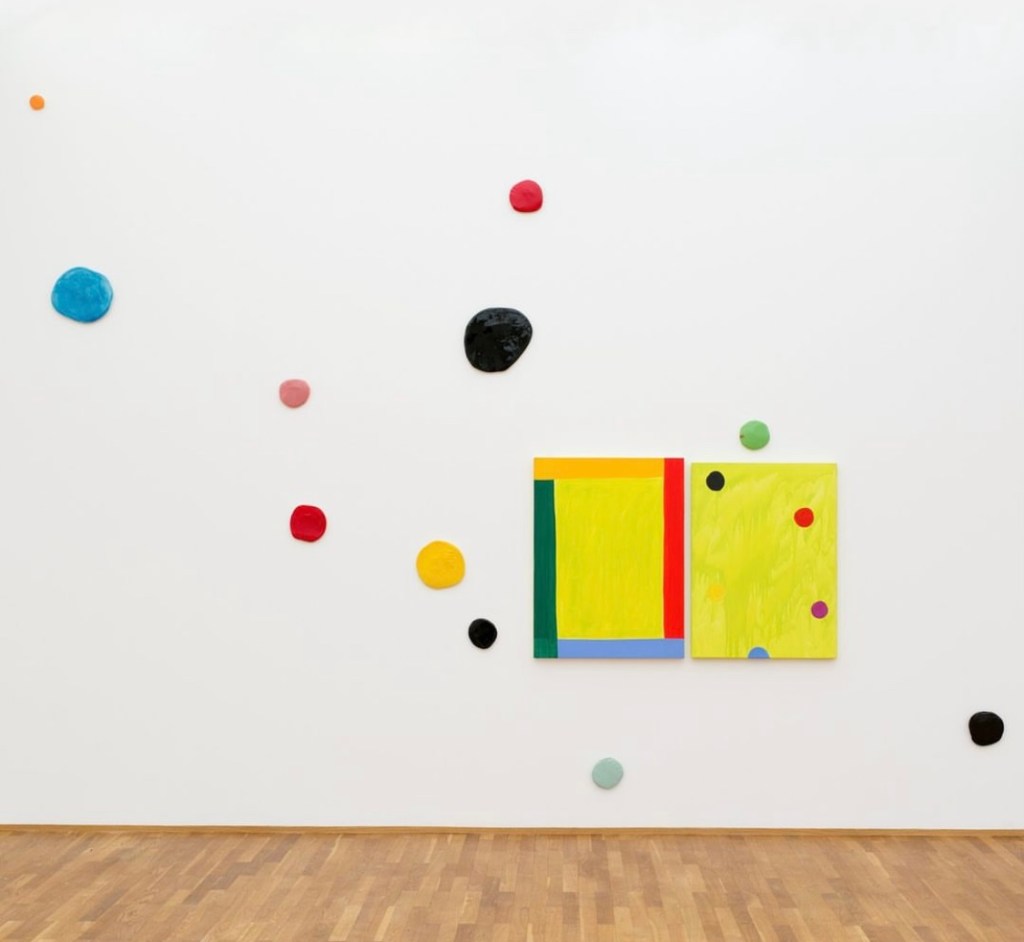
 Painting After Art is Dead