First encountered Nora at Expo Chicago (has been fun to see below in other Art-worlders’ feeds). More
#noramaiténieves
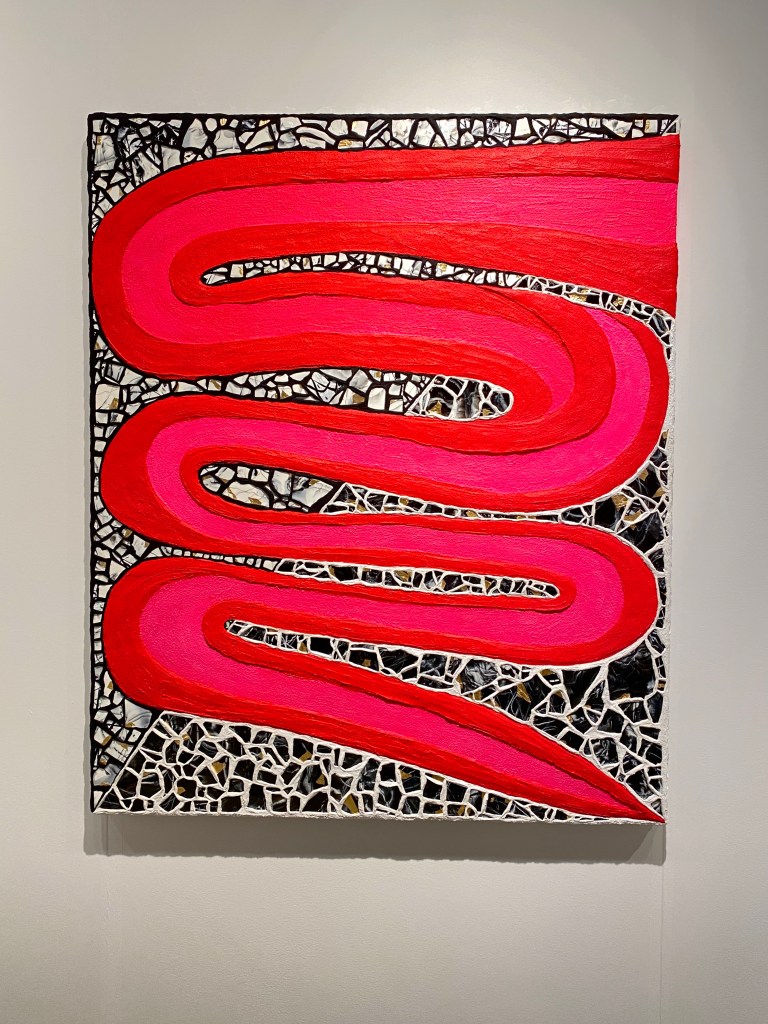
First encountered Nora at Expo Chicago (has been fun to see below in other Art-worlders’ feeds). More
#noramaiténieves
Spotted below at Expo Chicago. Howard was (1928-2021) an African-American artist, designer and collector. He worked with paper, pigments, wood, clay, textiles and metal. He designed for industry—e.g. print textiles for Vallila, tableware and interior items for Arabia (the esteemed ceramics factory in Helsinki). He planned interior designs for corporate offices, public buildings and cruise ships. He especially enjoyed recycling items like scrap metal, used cardboard, castoff clothing–which he took and created into whimsical compositions. More
#howardsmith
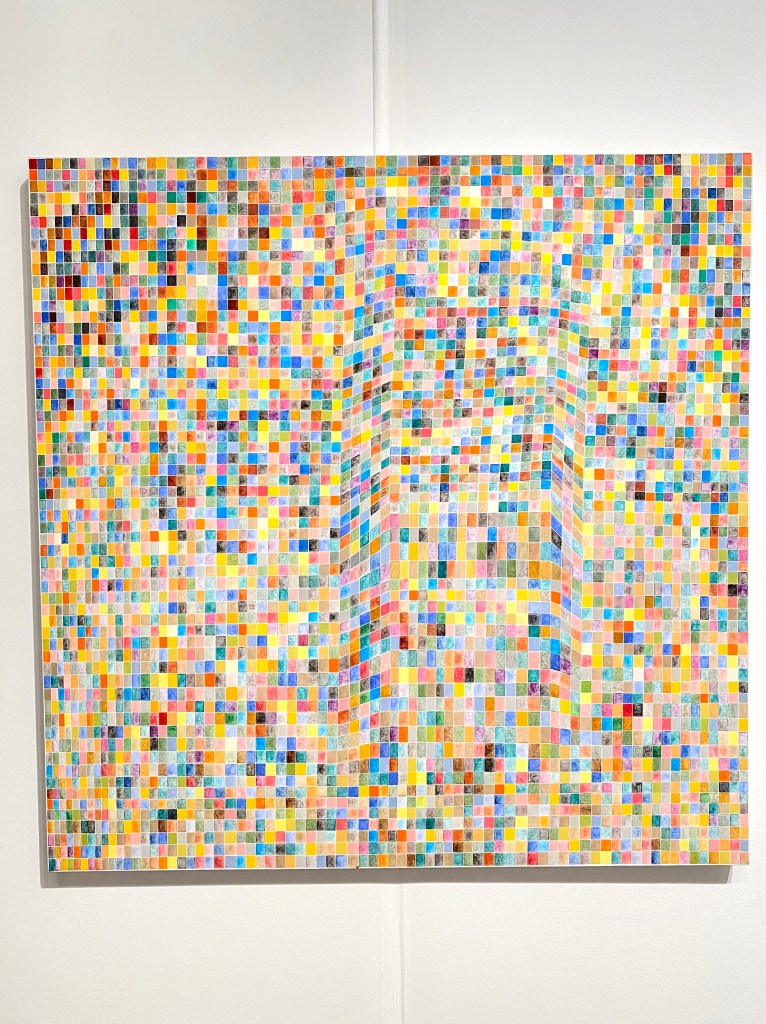
Hyperallergic says “In Reflections on a Pond, her fourth show at the Bowery Gallery in New York City, Adrianne Lobel presents a new series of graphic and geometric paintings inspired by the landscape and its reflection on her pond in upstate New York. She works en plein air during the warmer months and takes the work into her studio in Hoboken in the winter, creating larger, cleaner versions of the outdoor sketches.”
#adriannelobel
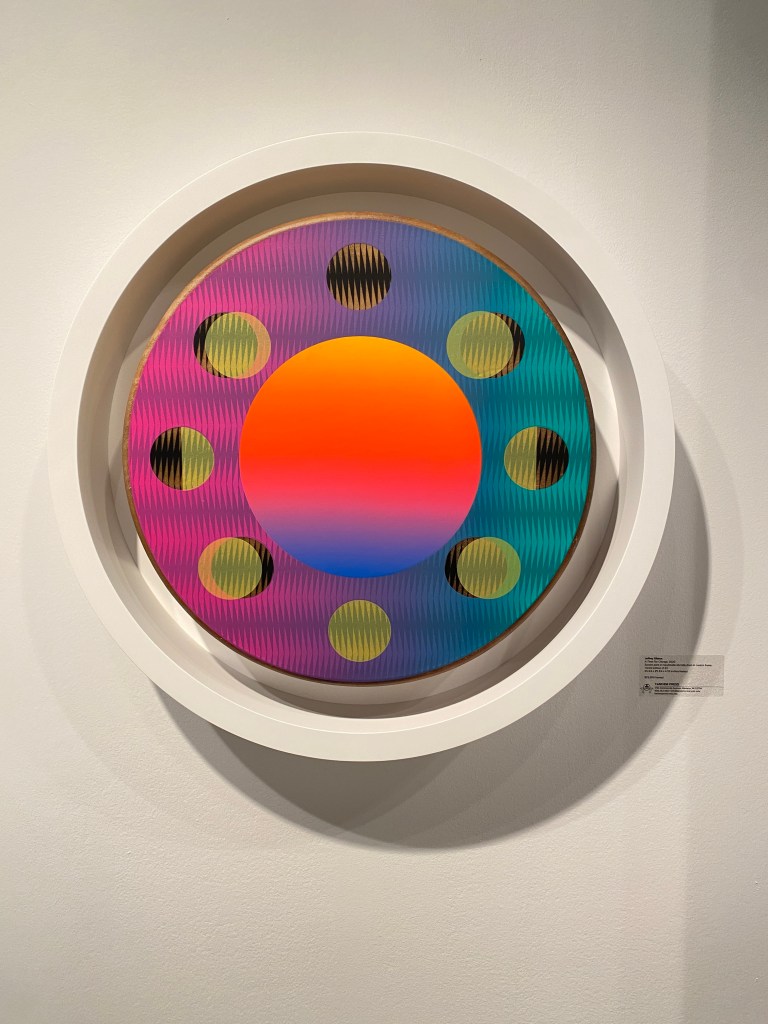
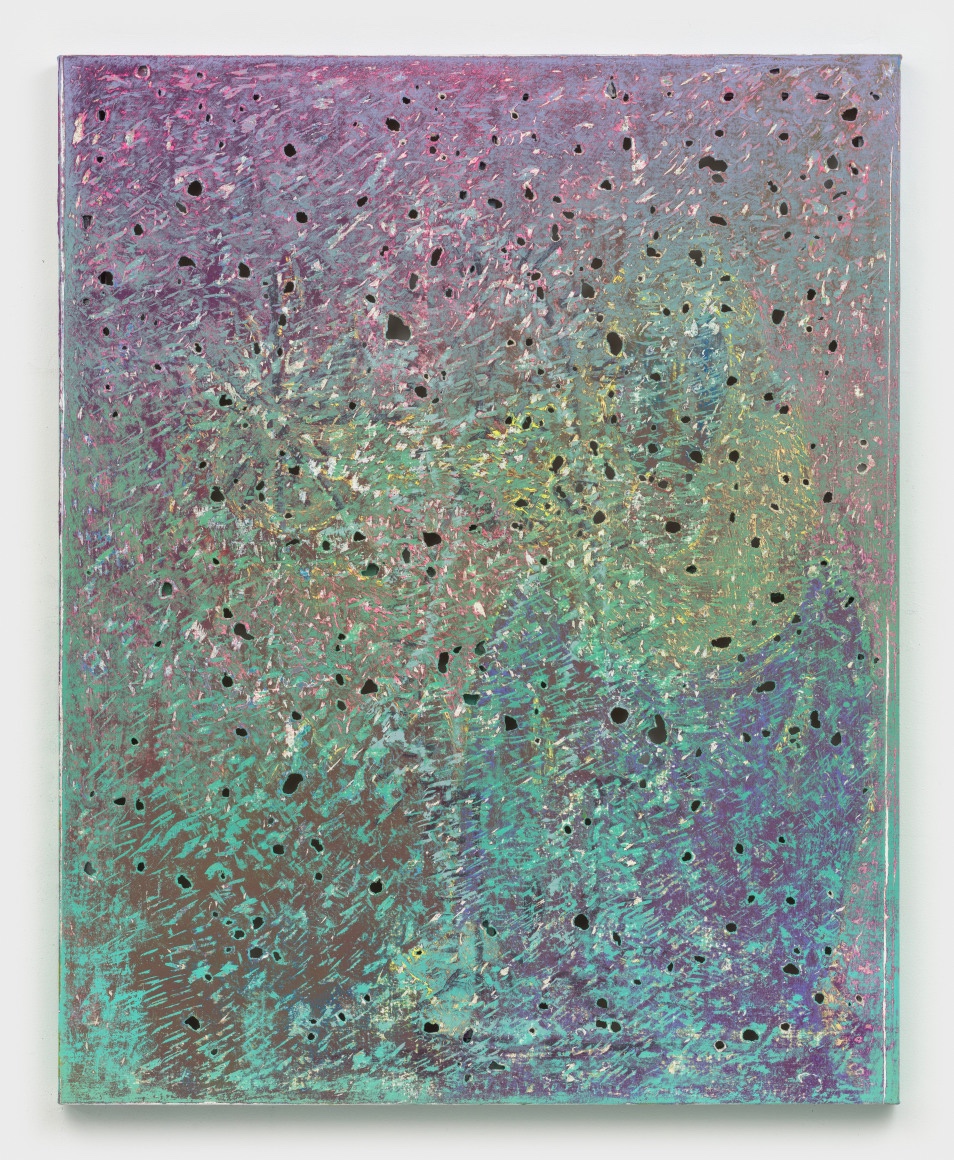
Sited below at Expo Chicago- it’s actually a functional drum. Apparently as always I’m the last to be on the know (he has almost 30k followers). His work has headed in new directions (although the galleria at informed me he still uses some of the drums in performances).
#jeffreygibson
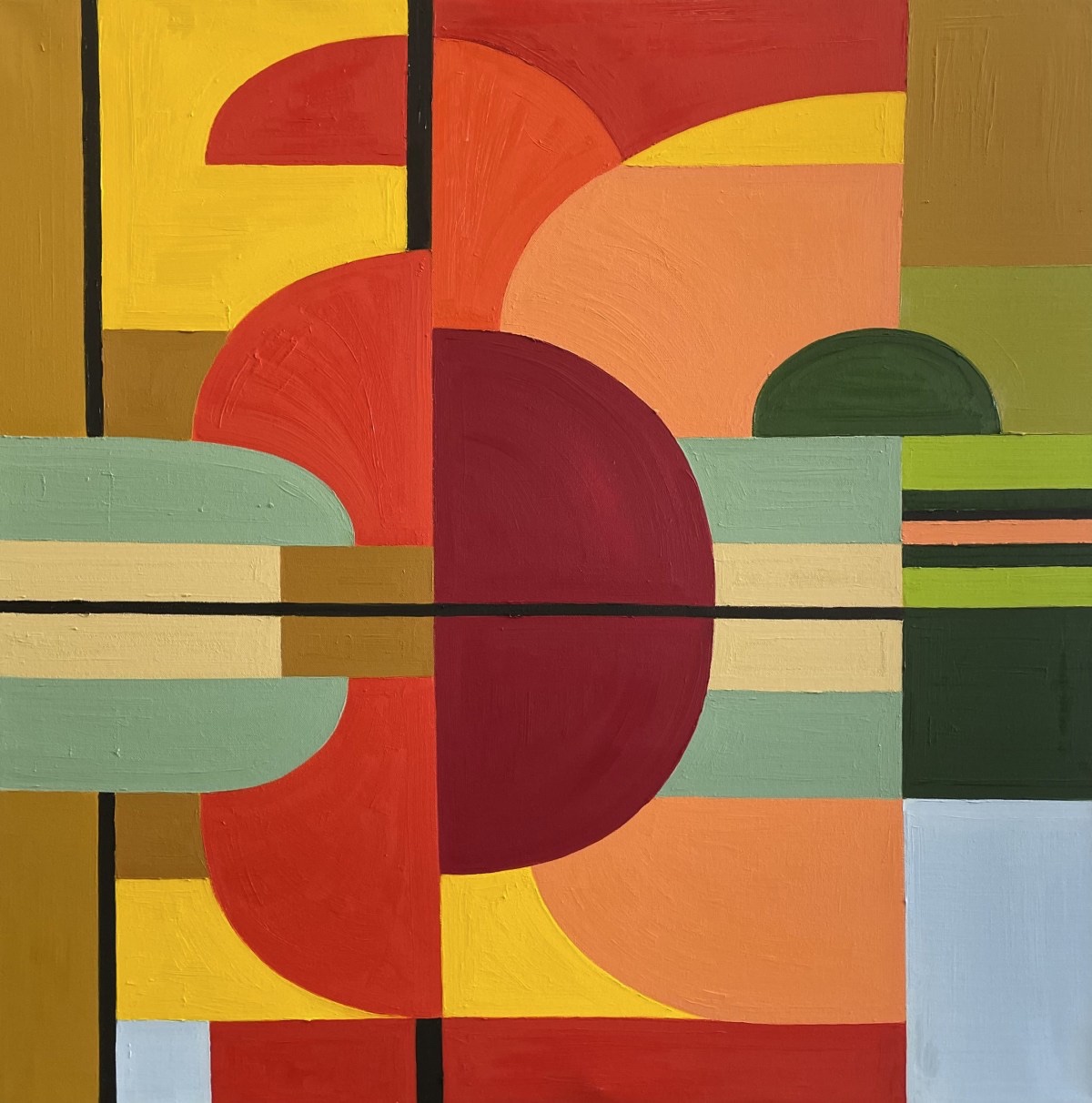
Below spotted at Expo Chicago in the Miles McEniry booth with a number of other creatives crushing it in the abstract “game.” Perusing his IG feed, looks like he enjoyed some of the work I did. I see some strong Overstreet influence at work (Rico is also a Black painter).
#ricogatson

Helen Saunders (4 April 1885 – 1 January 1963) was an English painter associated with the Vorticist movement. Vorticism was a London-based modernist art movement formed in 1914 by the writer and artist Wyndham Lewis. The movement was partially inspired by Cubism and was introduced to the public by means of the publication of the Vorticist manifesto in Blast magazine. Familiar forms of representational art were rejected in favour of a geometric style that tended towards a hard-edged abstraction. For a brief period Vorticism proved to be an exciting intervention and an artistic riposte to Marinetti’s Futurism and the post-impressionism of Roger Fry’s Omega Workshops.
#helensaunders

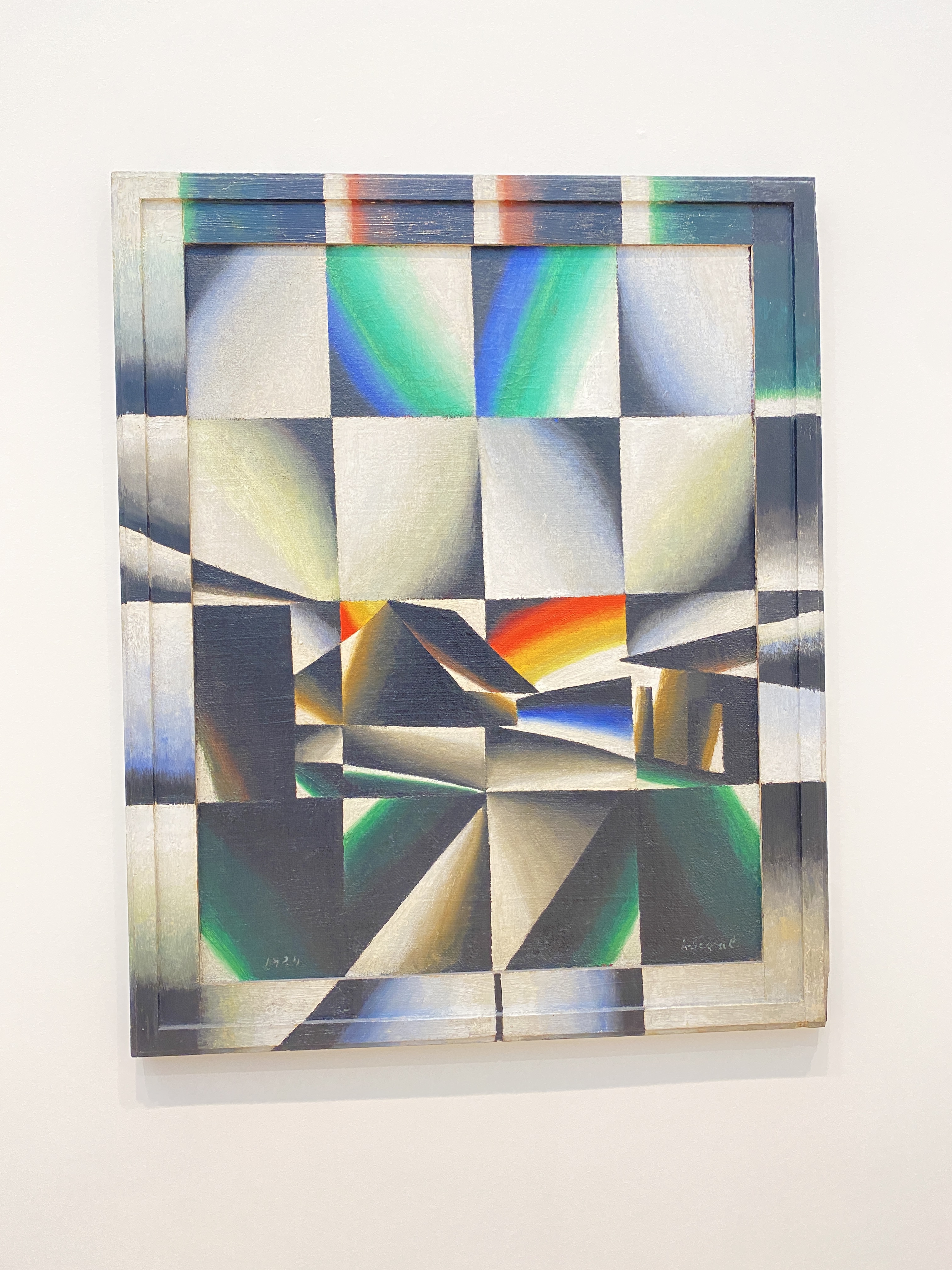
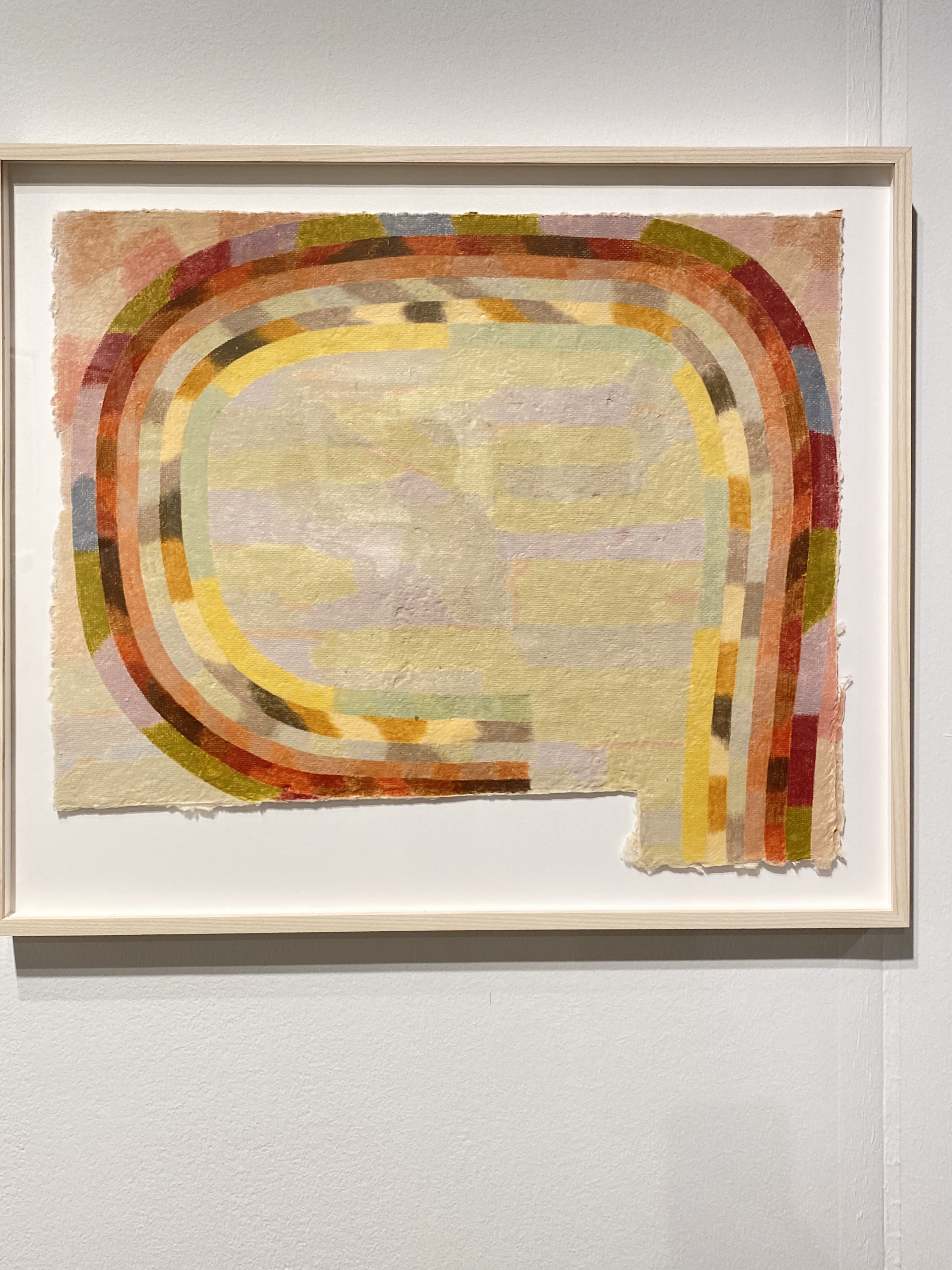
Romanian Arthur Segal was firstly a painter, and his early work was heavily influenced by impressionism and neo-impressionism. From around 1910 he began a more expressionism and dadaism style, and around 1916 found his own modern style. As well as painting, he also produced woodcuts from 1910, many of which were anti-war themed. Segal was also the author of many books, articles, and often gave lectures. I saw below at the Art Institute recently, an example of his “modern style.”
#arthursegal
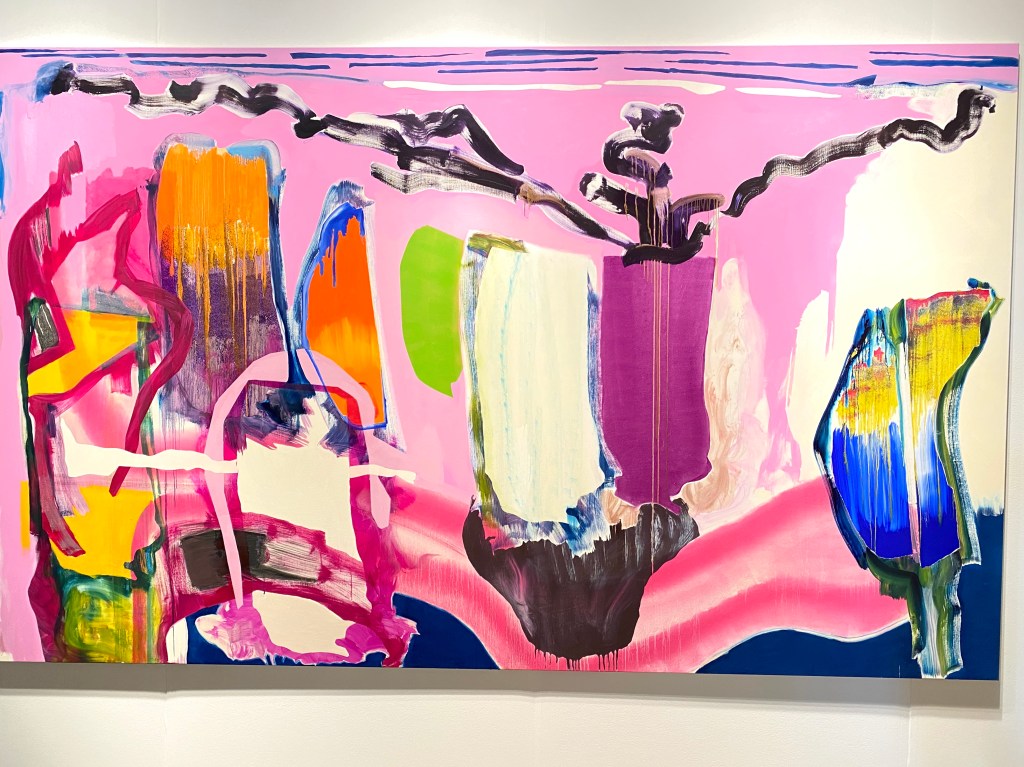
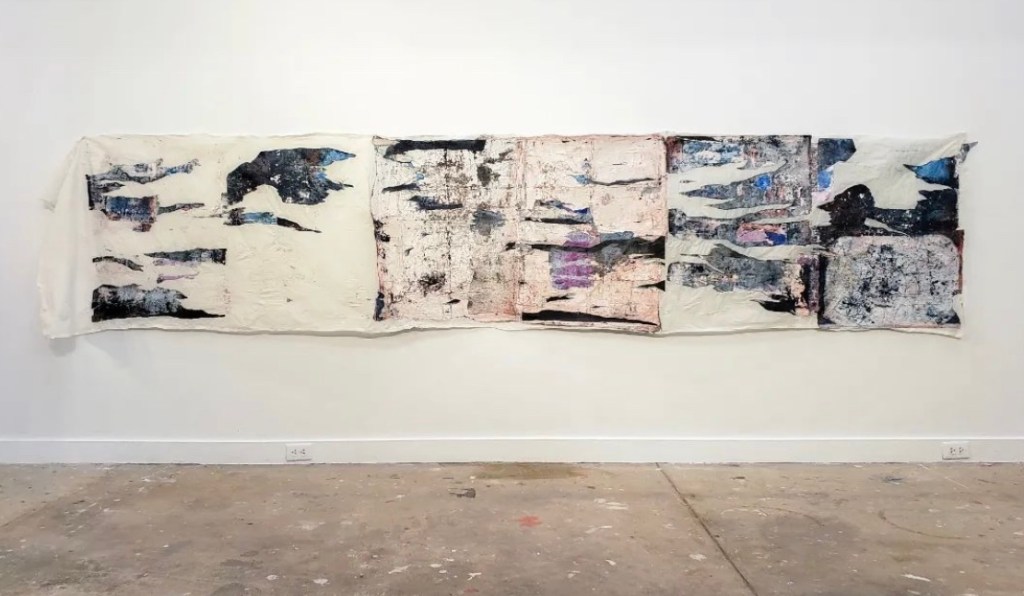
Saw below at Expo Chicago- my homeboy and I agreed it was top 10 for the fair.
#moniquevangemderen
This is a fun word to try to write about on my Art blog because we use this word all. the. time. in the business world. I’m not sure if it has a lot of meaning inside the Art world. My inclination is to say “I’m pivoting away from drawing” and hope that lands.
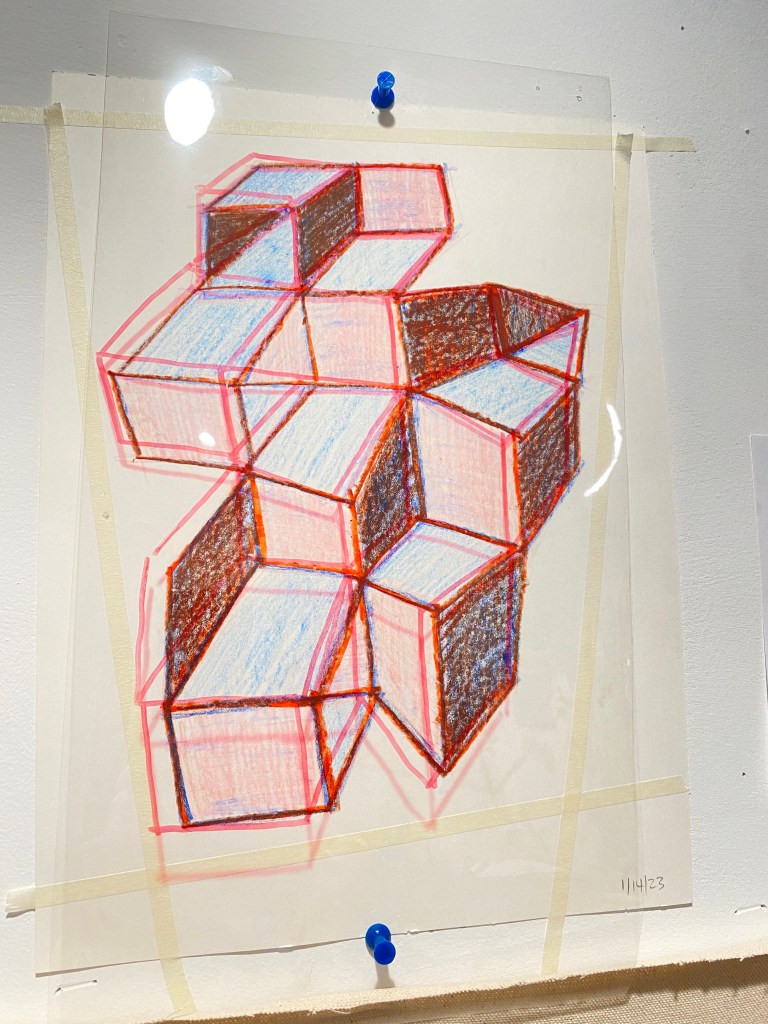
Regular readers know that at the beginning of the year I picked up Oblique Strategies, thinking (after learning about the project which is part of the musician Brian Eon’s visual art practice) it would fun to “draw my may” through all 100+ cards. I definitely benefitted from the activity of drawing every day. I also found I was inevitably forcing my drawing preferences (isometric cubes) into an exercise that was really meant to be a catalyst for writer’s block. I did benefit from being required to think about “why” as I began to draw I’m sure, and as an abstractionist I of course loved the unplanned element of getting an unknown prompt and responding to it. And every once in a while there were gems like below, which I really did take as a sign that there wasn’t a good conceptual reason to resist my natural drawing instincts.

And, I got some good drawings out the process, all the evidence once should need that there’s not need to make things harder than they need to be.

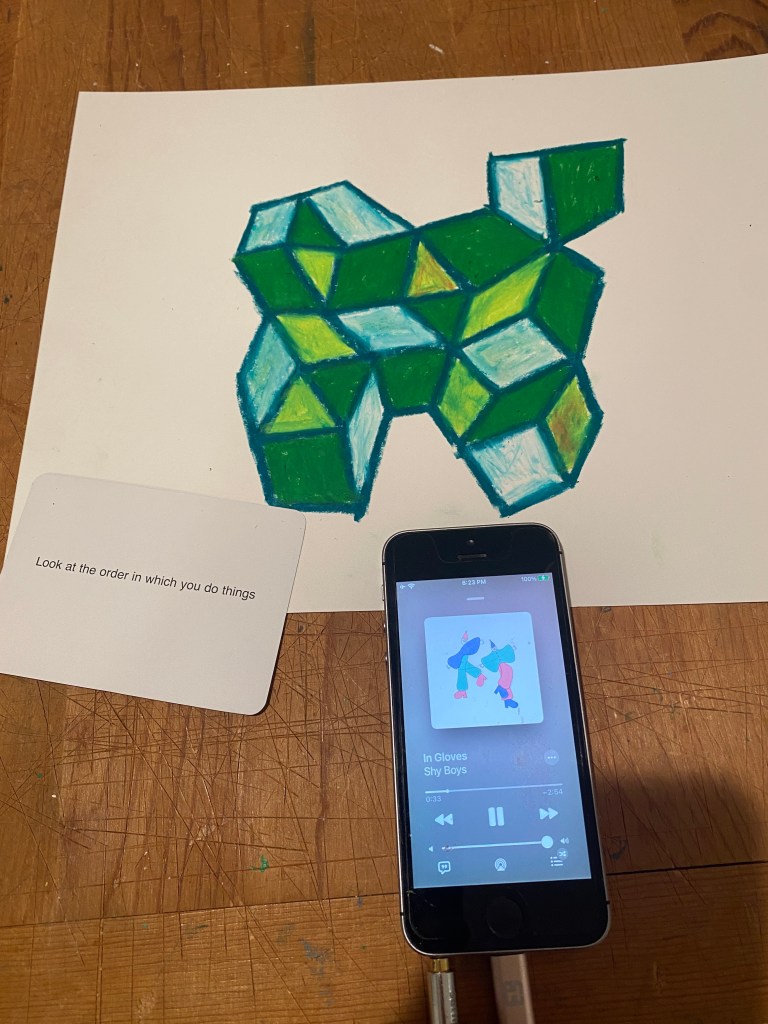
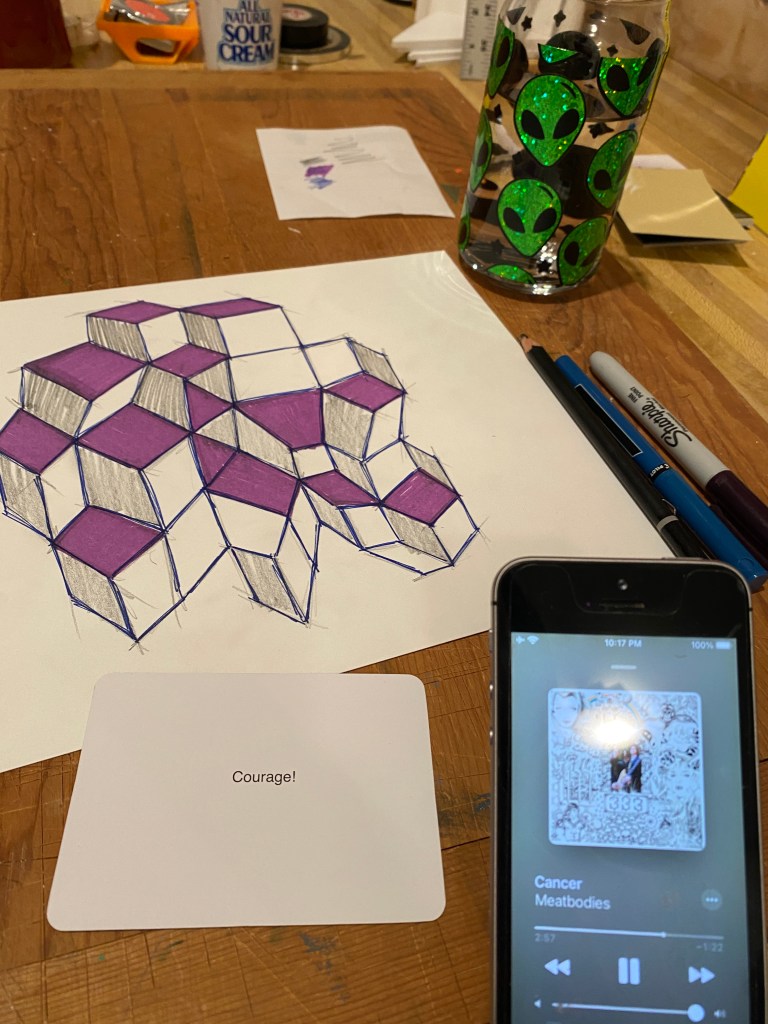
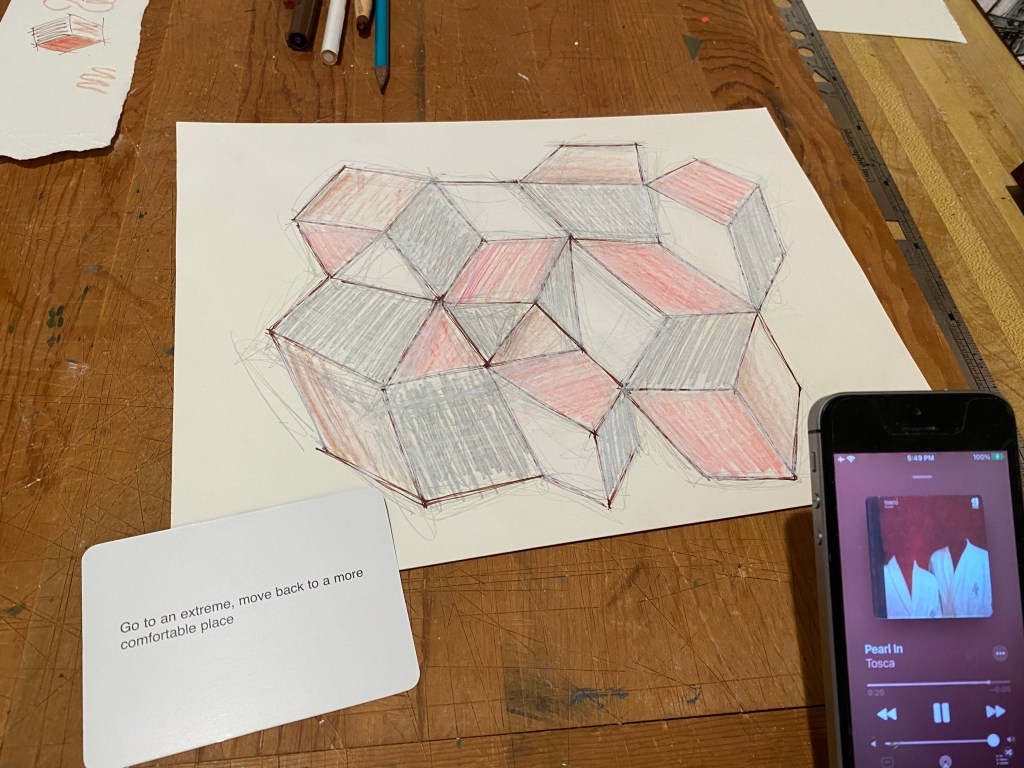
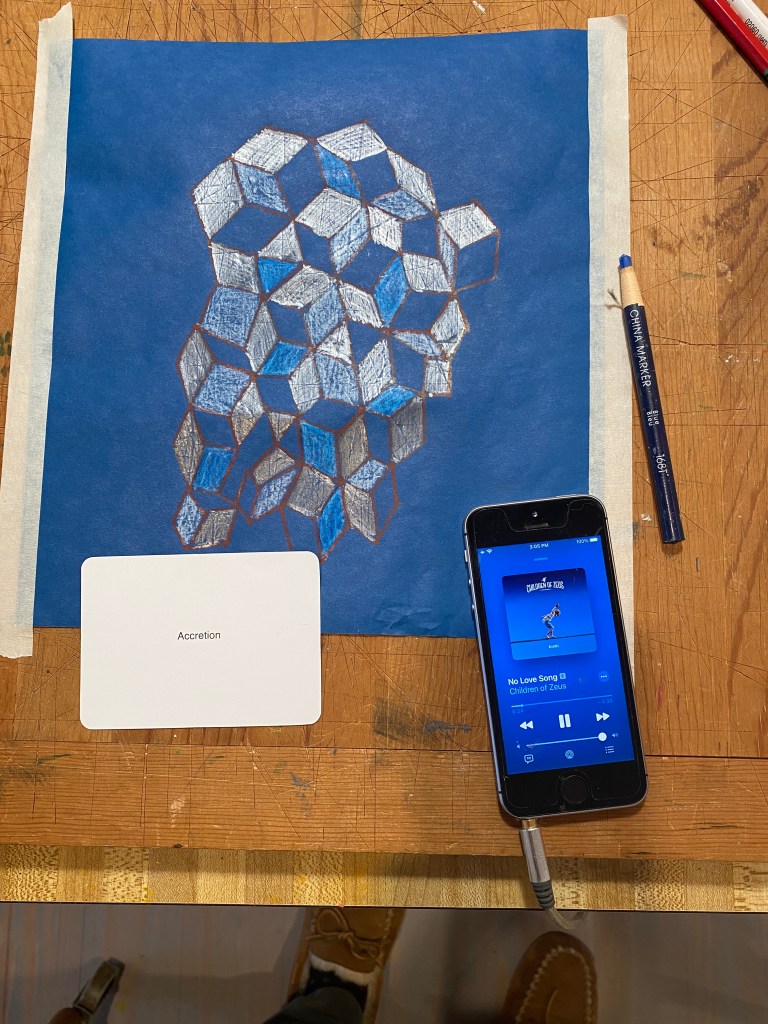
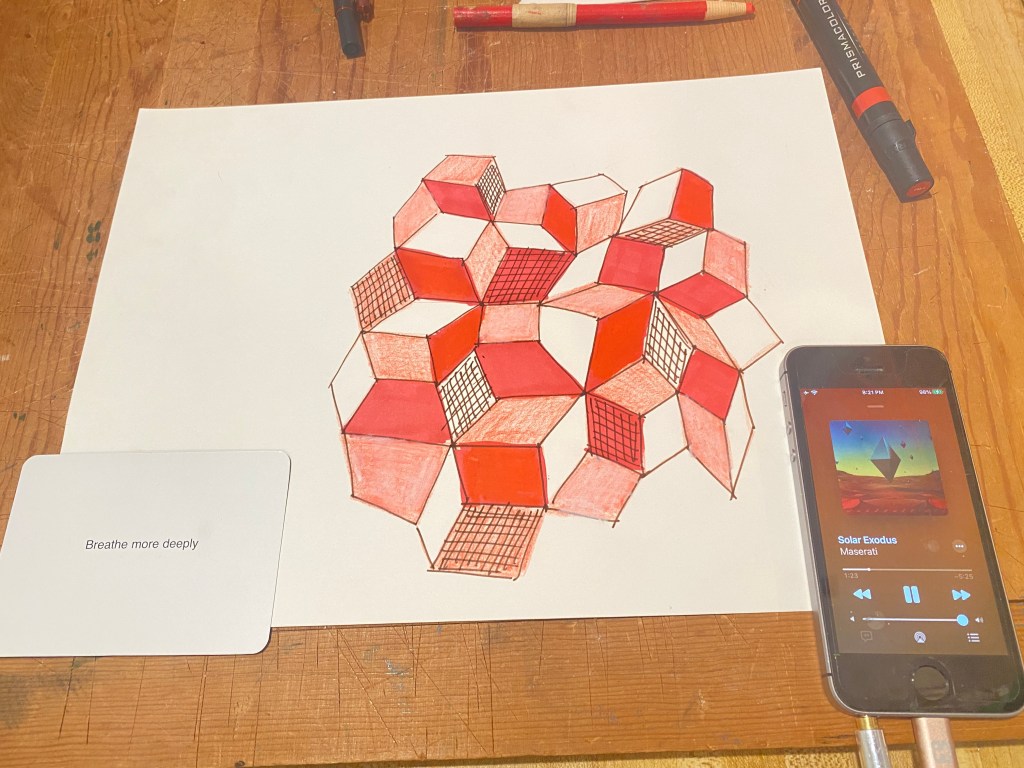
As time rolled on, around 70 drawings in, I began to think that maybe the exercise of forcing my practice into this kind of construct wouldn’t be as productive as, say, taking the good compositions and working on them some more as, you know, paintings. I had tried some smaller scale paintings recently (below) and that smaller scale seemed liked the first place to start.
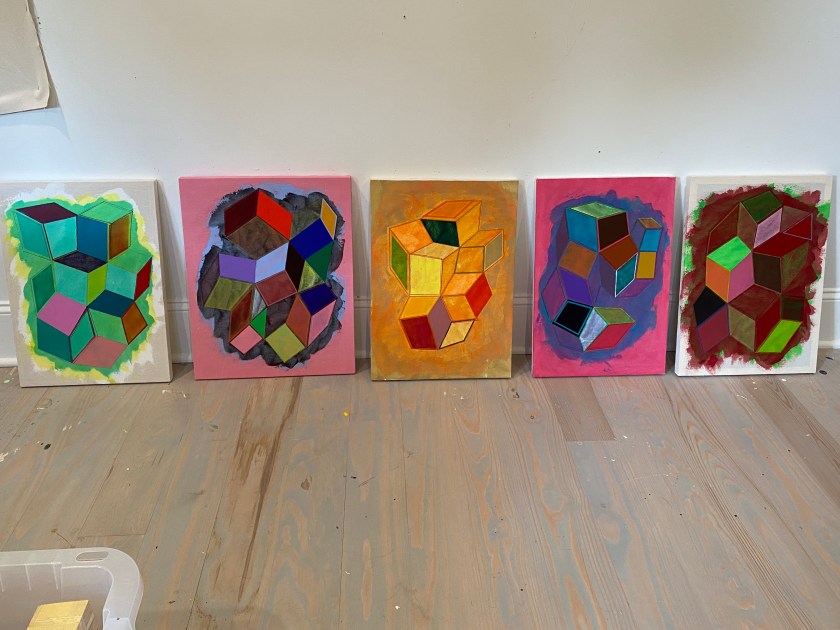
So I picked 3 of the compositions (I had already pulled a few aside as TBC material) and am in the process of translating both compositions (via projector of course) and application strategies into some smaller scale paintings. I’ll continue to look for the right polygons to enclose them as I have with recent paintings (ergo the tape around the sketches visible in 2 of the images below).





 Painting After Art is Dead