paintings are driven by process and rooted in the history of abstraction. He combines gestural brushstrokes, drips, and stains with graphic elements like grids and patterns, using highly saturated pigments on large canvases and paper.
#jorgerios
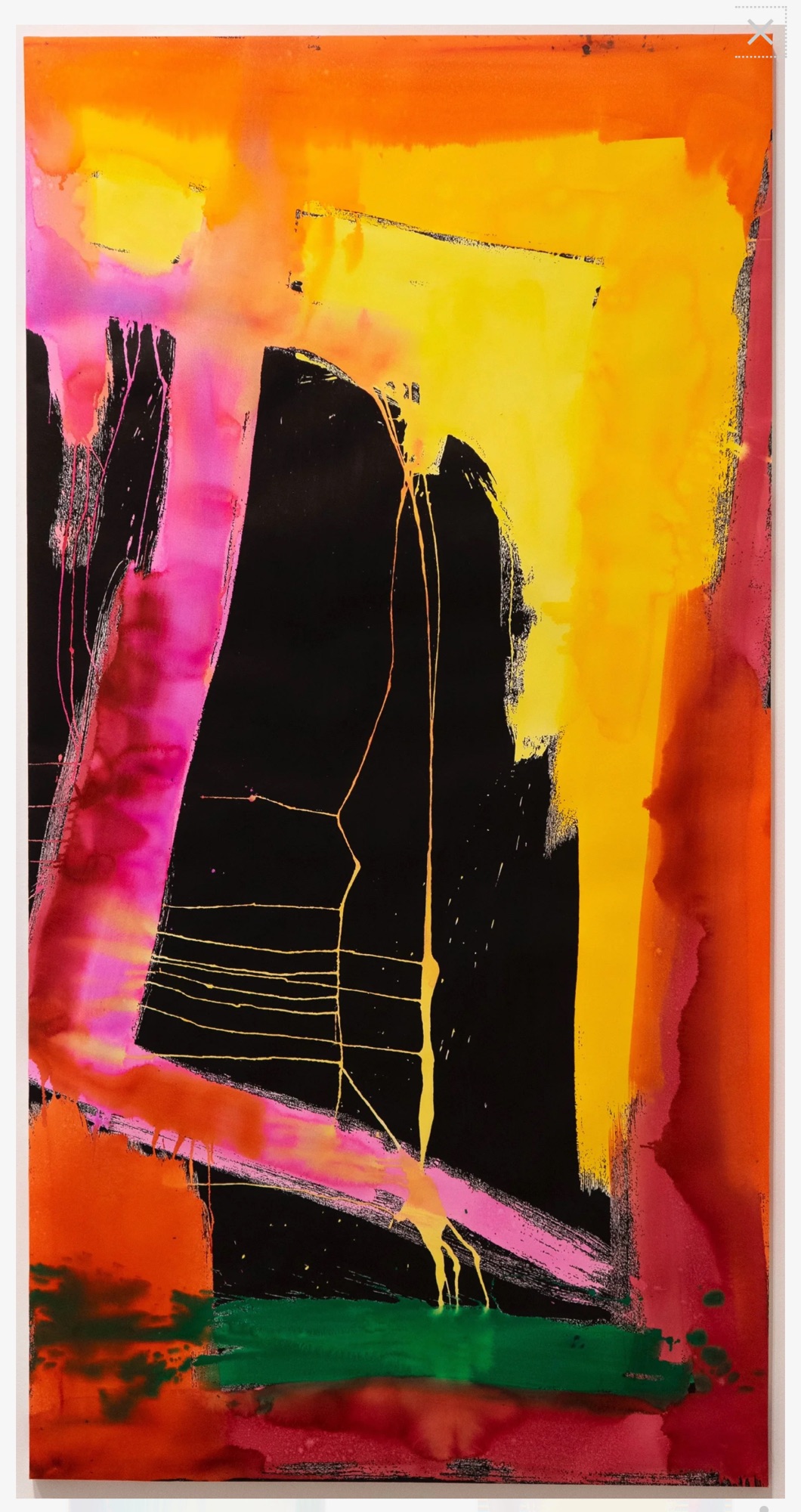
paintings are driven by process and rooted in the history of abstraction. He combines gestural brushstrokes, drips, and stains with graphic elements like grids and patterns, using highly saturated pigments on large canvases and paper.
#jorgerios
(from the Weatherspoon) Lucy Bane-known as “Mackey” to her friends-had an early interest in art, but Virginia Agricultural and Mechanical College and Polytechnic Institute (now Virginia Tech) did not offer any classes in the discipline, so she majored in science. Some years later she began studying art again, this time at Woman’s College (now UNCG). Her most influential instructor was Gregory Ivy, founder of UNCG’s art department as well as this museum. Progressive and somewhat controversial, he was known for urging his female students to seek and value freedom of expression. Ivy was Bane’s mentor throughout her student years and beyond.
Ivy (below) was painted in honor of this notable teacher and illustrates Bane’s decidedly abstract style.
#lucymcdonaldmackeybane
#mcdonaldbane

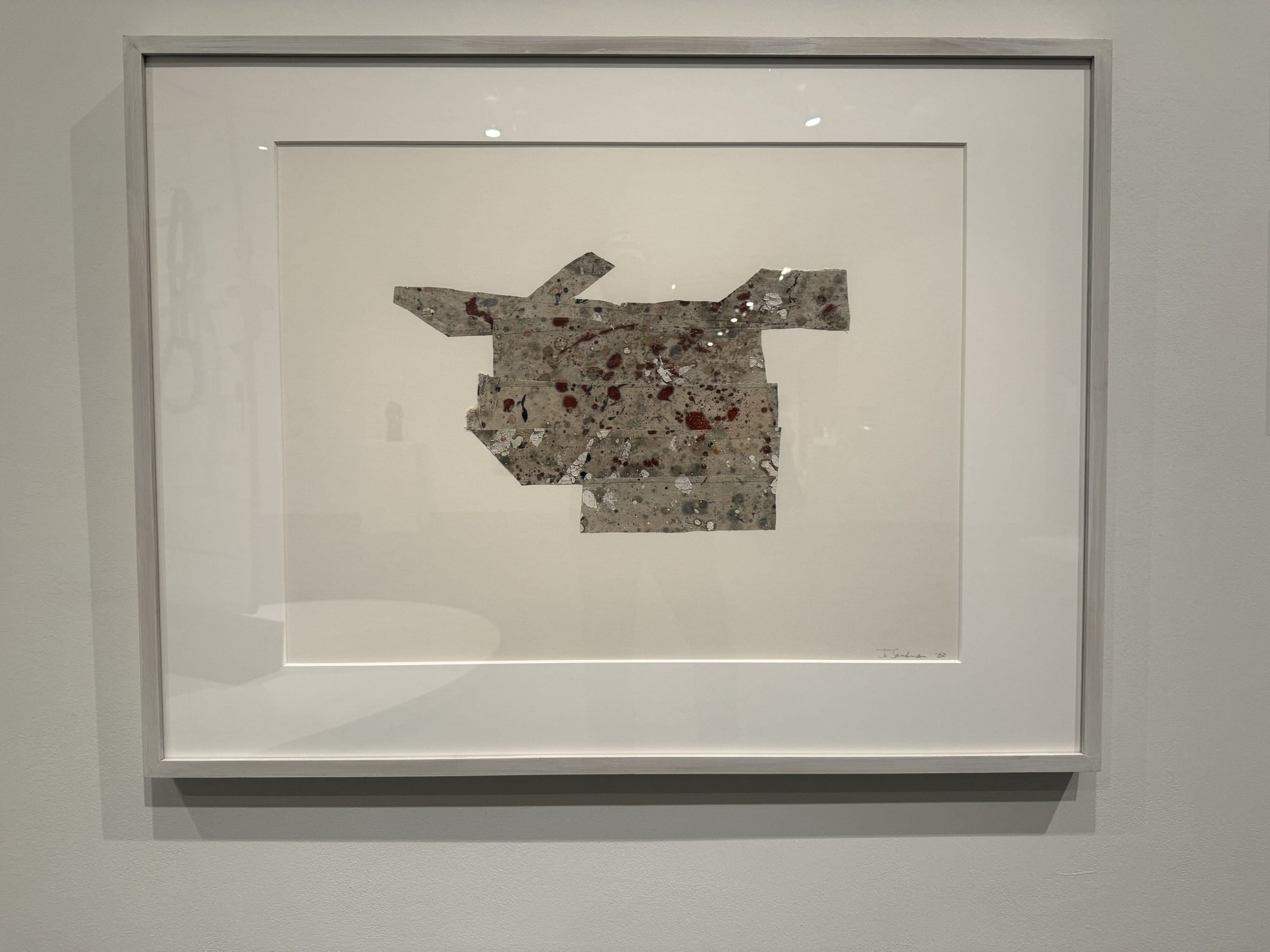
Trained as a painter, artist Jo Sandman went on to create experimental drawings, sculpture, and photography during a career that spanned seven decades. Working with dropcloths acquired from “crusty old house painters who had crusty old tarps,” she created what she called drawings or glyphs-perhaps recalling time she spent at Black Mountain College near Asheville. These stained and splattered dropcloths demonstrate her embrace of unconventional materials and desire to explore abstract shapes to express her concept of a poetically visual language. Below is from the Weatherspoon collection.
#josandman
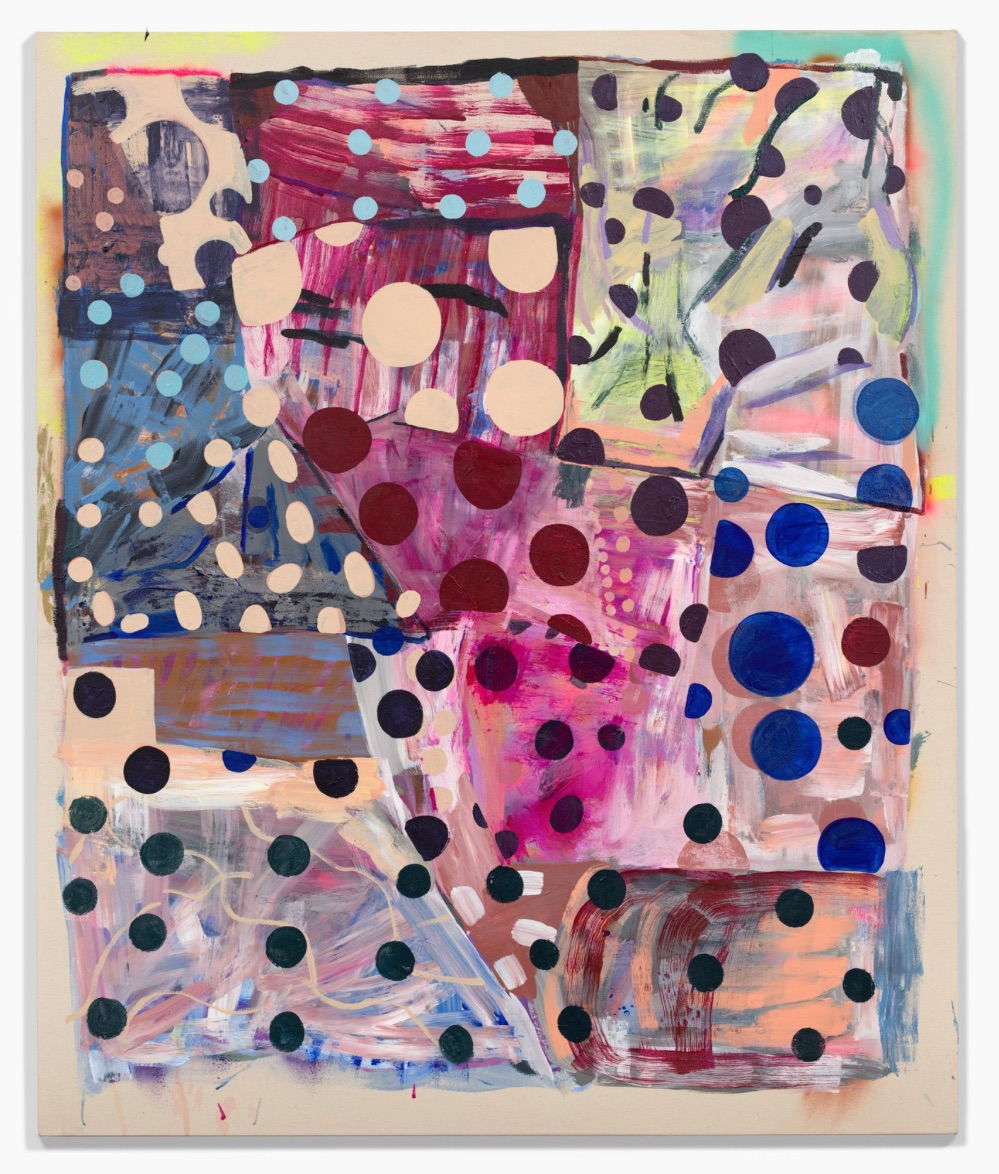
A vital part of Jen’s current practice is the ongoing exchange between her fine art identity and her alter ego, Jenny Pennywood. Jenny began in 2008 as a practical solution, but quickly became a container for rhythm, pattern, color, and experimentation, allowing her to step sideways from the discomfort felt in the fine art space. Jen is grounded and analytical; Jenny is expansive and intuitive. Their dialogue continues to shape the work.
More
#jengarrido
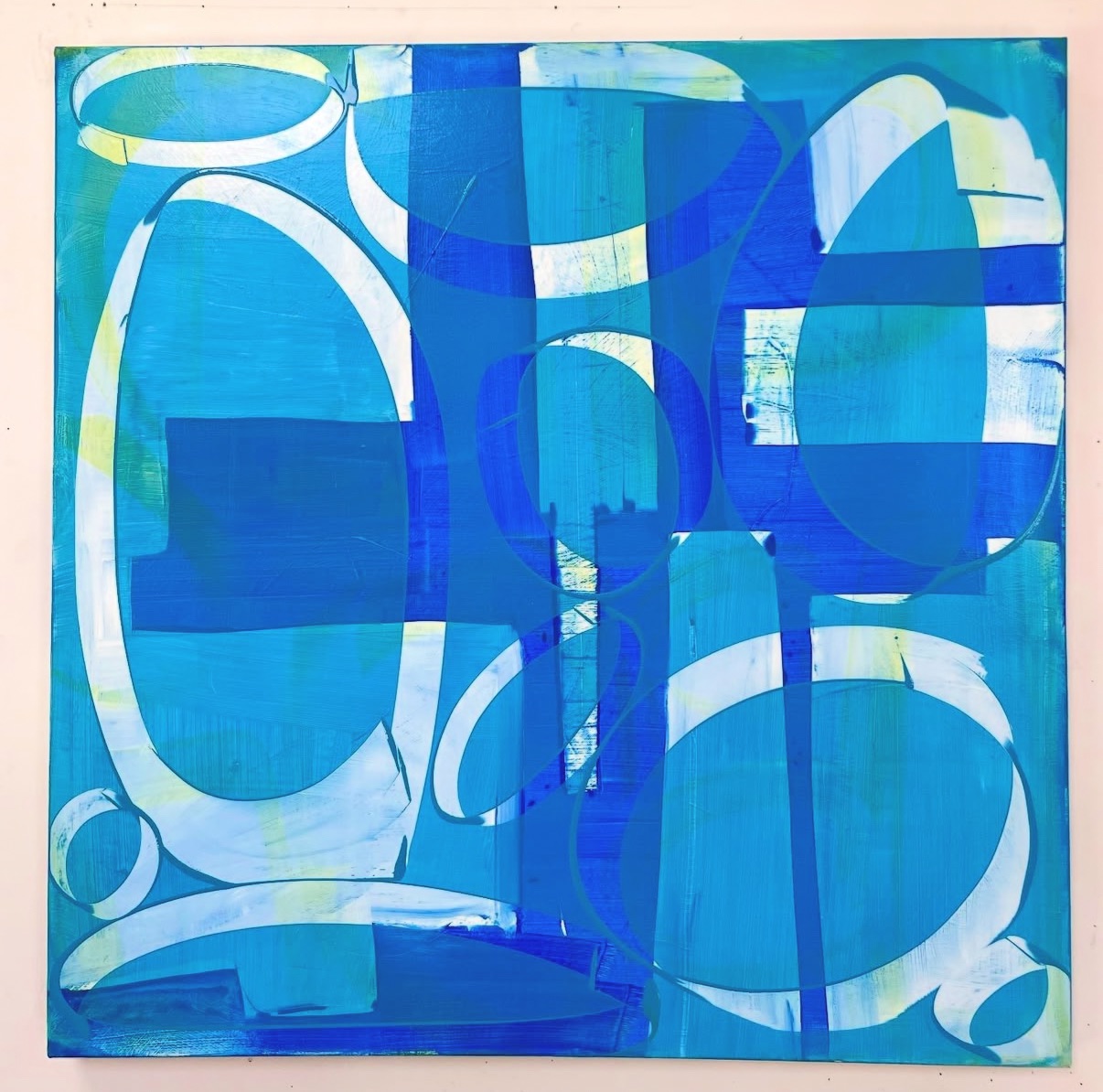
works in a space where intuition overrides control, embracing coincidence to reveal new possibilities through abstract collages, drawings, sculptures, and installations. She shows with 68 Prince Gallery.
#monikazarzeczna

process often involves building, covering and excavating; consecutive layers of addition and subtraction combine to create a whole where there is an ambiguity of space.
More (“found” Beth because of Raccoon Energy)
#bethfishman
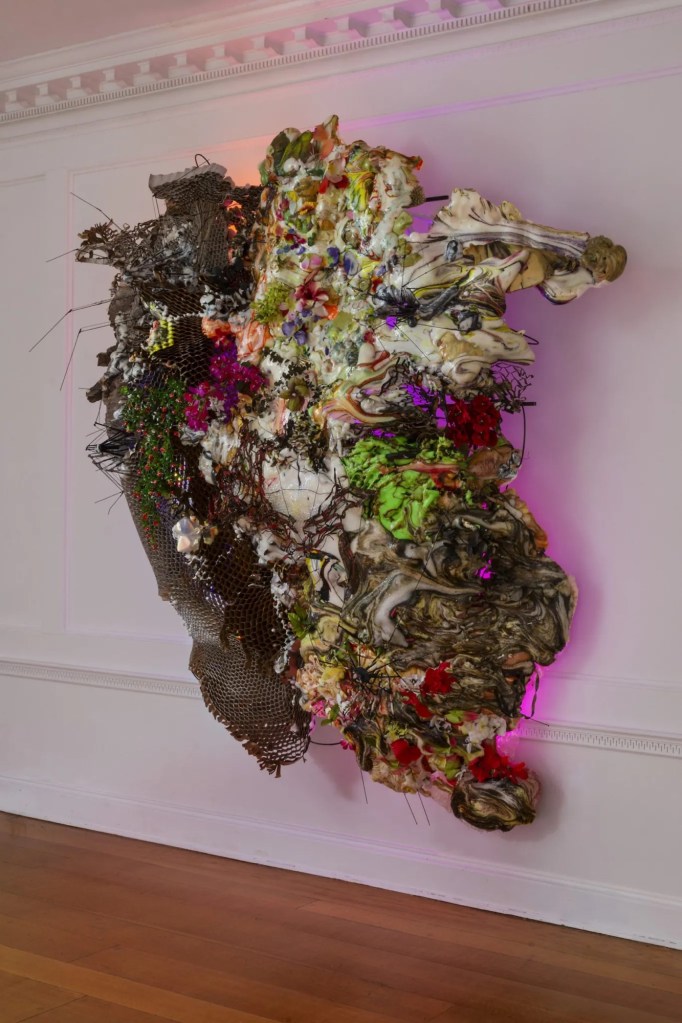
was surprised to see when blogging about Helen that I hadn’t yet touched on Judy’s work (she is also in Destination Earth). There’s often recognizable… stuff in Judy’s work (here is Hyperallergic on Real and Imaginary from last Fall). Sort of like Liz and Jessica. Readers who like this sort of maximalism will also like Sarah’s work.
#judypfaff
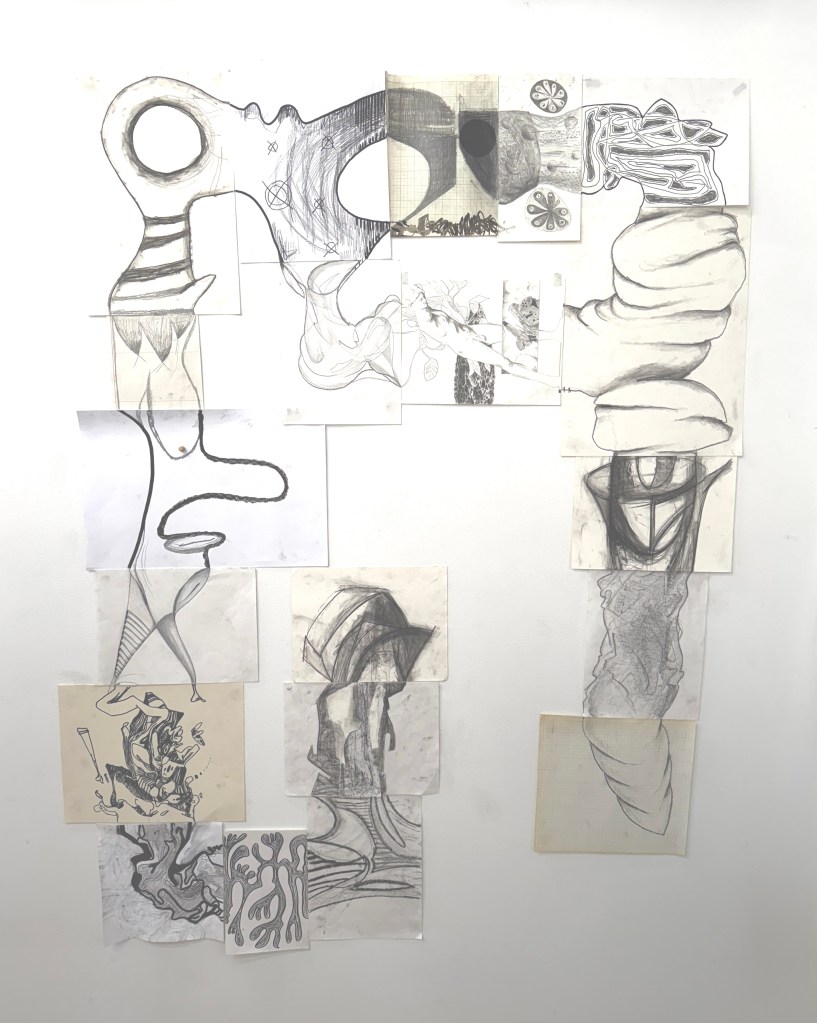
Last time I wrote for myself (and for you, whoever you are) I touched on the word impulse (in the context of my recent project, village impulse). “Village” was very much at the center of the project for myself and the core group of creatives that drove it (and part of why we opened up this project to others outside of that group). The image below of a human-scale exquisite corpse drawing that was in the show (it morphed into something else at one point) includes contributions from at least 8 artists.
The textbook definition of “village” is a small community. If you’re reading this particular blog, you’ve definitely heard someone utter and likely even used the phrase “arts community” yourself. They are often small (arts communities), like a village, so, I guess, they are a village.
A number of things come to mind for me when I think of communities- shared interests, sticking together, aid for each other in times of need*. At least, communities that operate in a healthy way have these attributes. The impulse to find a village is a thing, for those reasons. *If you wanna help out, Orange County Arts Commission has some ways given the recent impacts of Chantal on the Hillsborough community.
Surrealists and Dadaist were drawn into villages in the aftermath of WW II. I can’t imagine how horrific that epoch must have been. For me it stands as an example of one of the truths we try to internalize when practicing the tools and skills in dialectical behavior therapy- I am suffering, and, I am capable of making changes to my circumstances.
This project also has a relationship to Modernism, through Surrealism and Dada. Modernist were proponents of many ideas, a number of which could roughly and collectively be tossed in the bucket I’ll call the universal village. If you’ve visited here before you are not surprised to hear me return to this territory. The similarities of context to this epoch and the Modern era (generally I’ll call it rapid change) merit a reconsideration of the ideas that developed in that time. Both to re-center constructive, empathetic thinking about a holistic view of humanity and our value as individuals and unified collective, and learn from the places where the raw aspirations of the ethos soured and turned against any sort of “universal” mission to unlock human potential and freedom.
Any who, as usual I’m ruminating more than presenting a thesis statement; trying to sort out my own values in words. If any of y’all figure it out just holler. If you like these words share and tell a friend to tell a friend. Be good to your village and nurture it, loves.
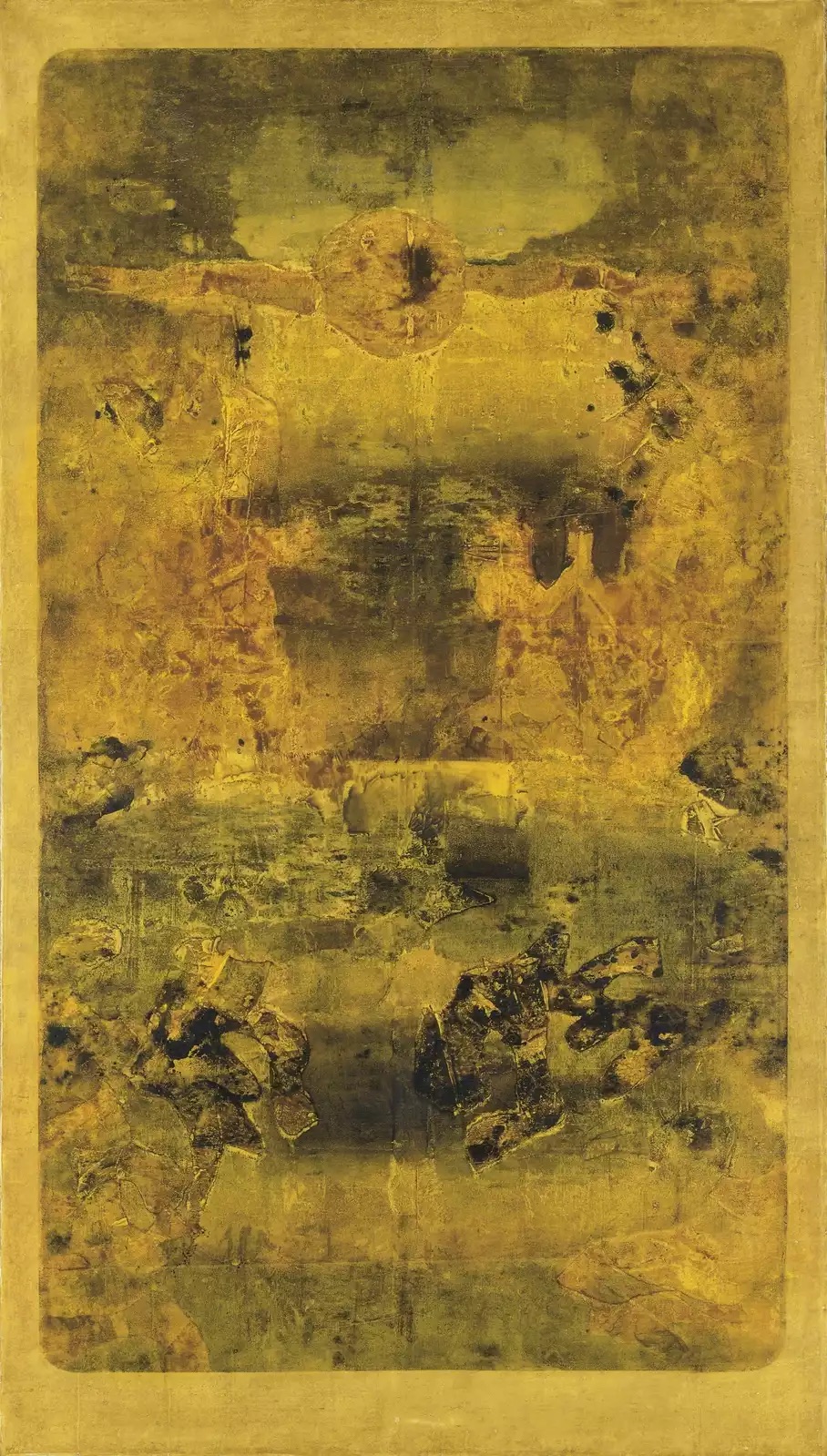
One of India’s most influential modernists, Vasudeo S. Gaitonde was at the forefront of the abstract painting movement in his native country; his work has drawn international acclaim since his death in 2001. Gaitonde was a member of the Bombay Progressive Artists’ Group, which pushed against folk art traditions. He participated in the Venice Biennale in 1954 and 1962.
#vasudeogaitonde
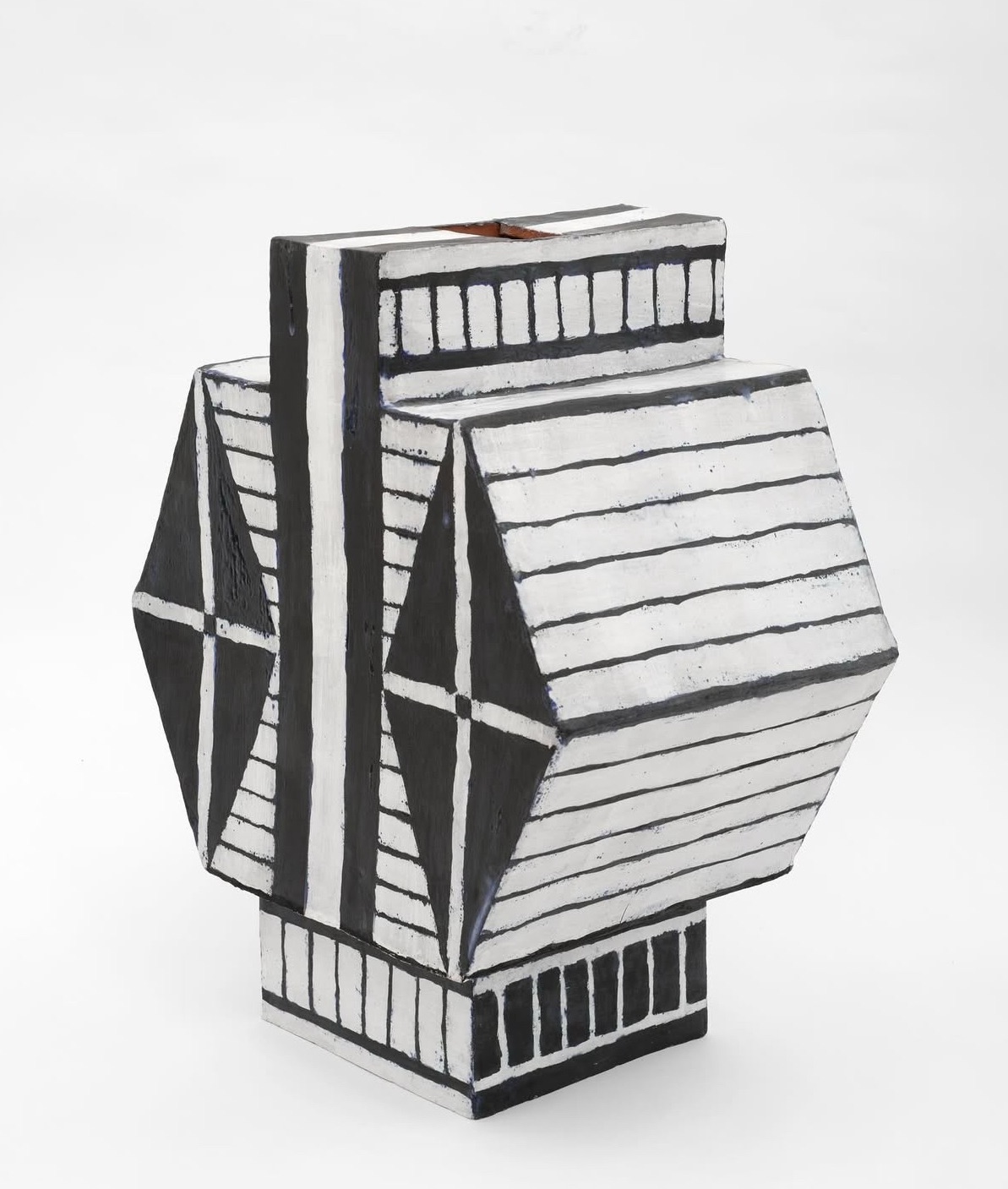
Peninsula is showing Sacred Geometry (big surprise there would be something in it I’d like… link is pdf btw) which includes some intriguing objects by Elisabeth.
#elisabethkley



 Painting After Art is Dead