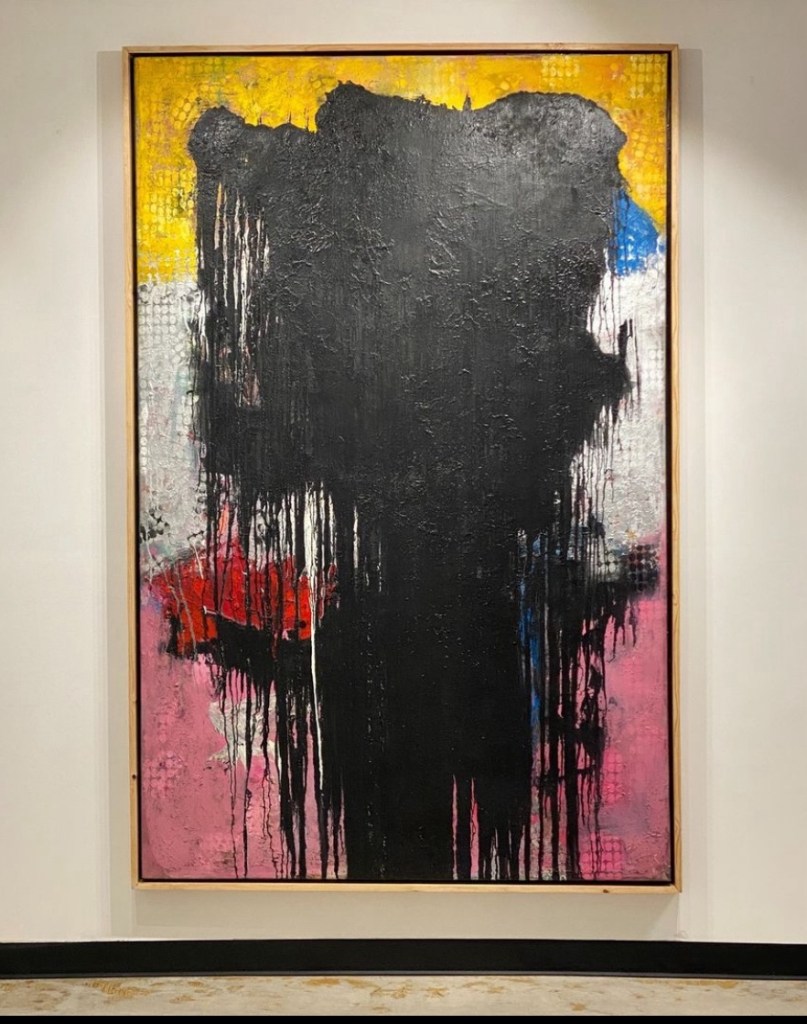
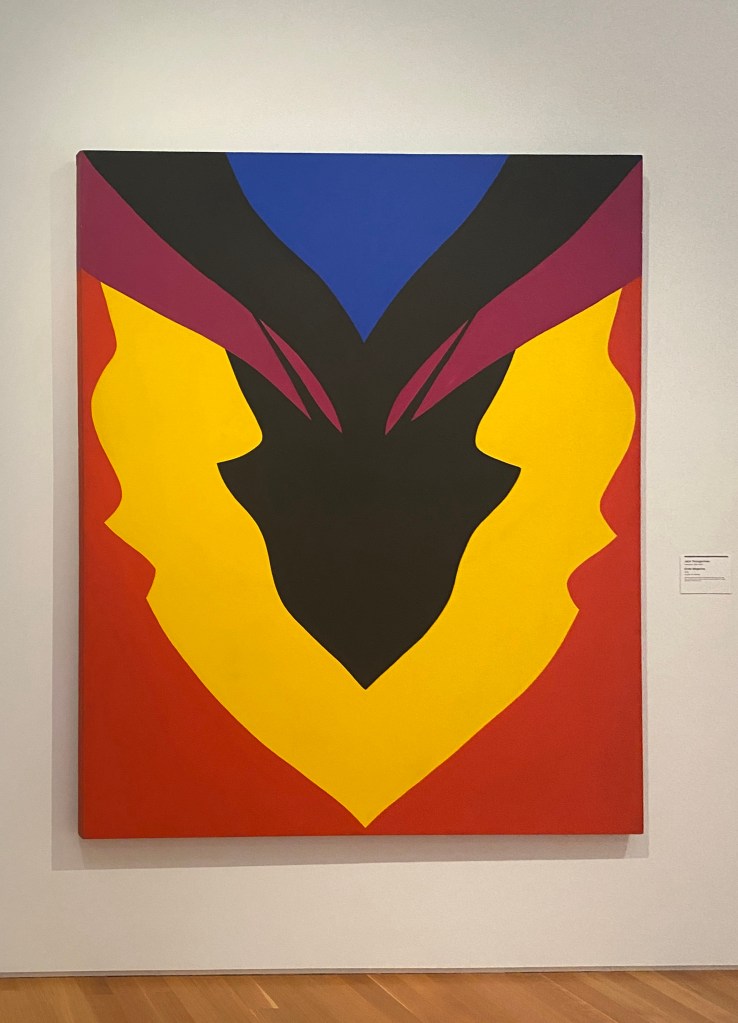
is an American artist who makes abstract paintings characterized by luminous color, sensuous surfaces, and iconic geometric configurations. His works are composed as sensate visual events that embody potential states of being. They invite meditative encounters with the viewer’s perception and imagination.
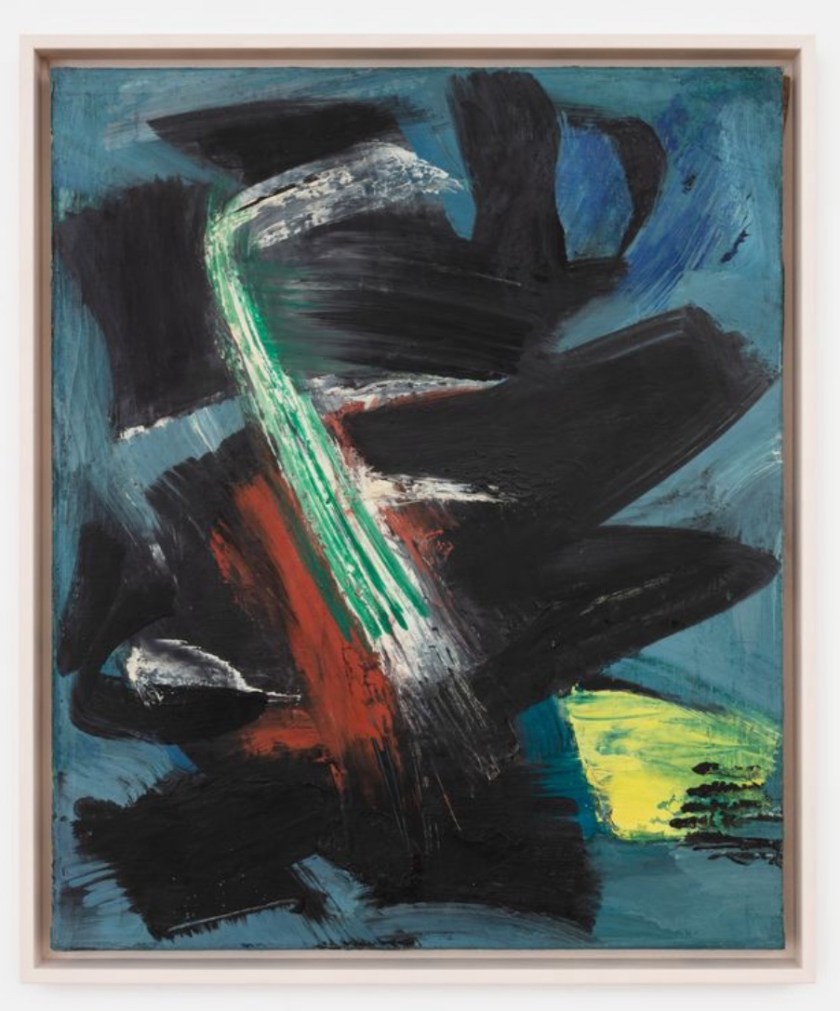
Perrotin recently presented Rhapsody in Blue, the first exhibition of work by Gérard in the United States in over a half-century. Pioneer of Lyrical Abstraction, Schneider’s aesthetic is raw and vibrant, physical and unrestrained, reflecting his intention to translate pure emotion into painting. The works on view will span Schneider’s almost seven decades long career, focusing specifically on the artist’s relationship with the color blue. #gerardschneider
I’ll begin my run-down for the exhibits I enjoyed the most this year by using the same phrase I began last year’s wrap-up post– I am not even sure how to write a sentence that expresses how lucky I feel to live in the Triangle. In terms of what it means to me to have a community within which a satisfying practice can be established, I can’t think of a better area to settle (this year was number 20 living here btw).
I’ll also append above to note that the Triangle is home to a (really big) handful of the venues that the Carolinas have to offer, and there were certainly exhibits in other cities that I enjoyed immensely- a worthy aspiration to think about having the time to visit every city in the Carolinas regularly. While I don’t repeat local venues below, I’ll also note that all of them had more than one worthwhile exhibit this year, and there are other locations that are not included that I hope you will also continue to give your attention in 2024 (I will). Regular readers will also not be surprised by my preference for non-figurative work- I also hope that the presence, even predominance, of narrative work in this “review” is evidence that the Art world remains a place to surprise each of us if we are open.
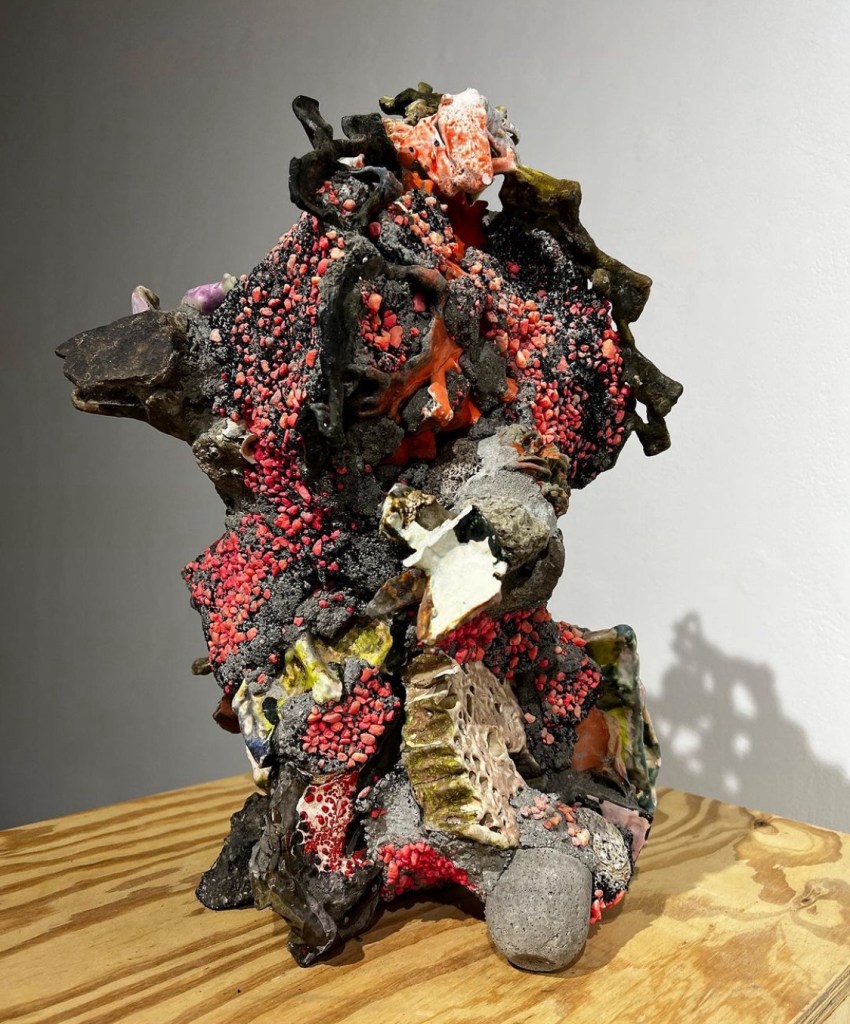
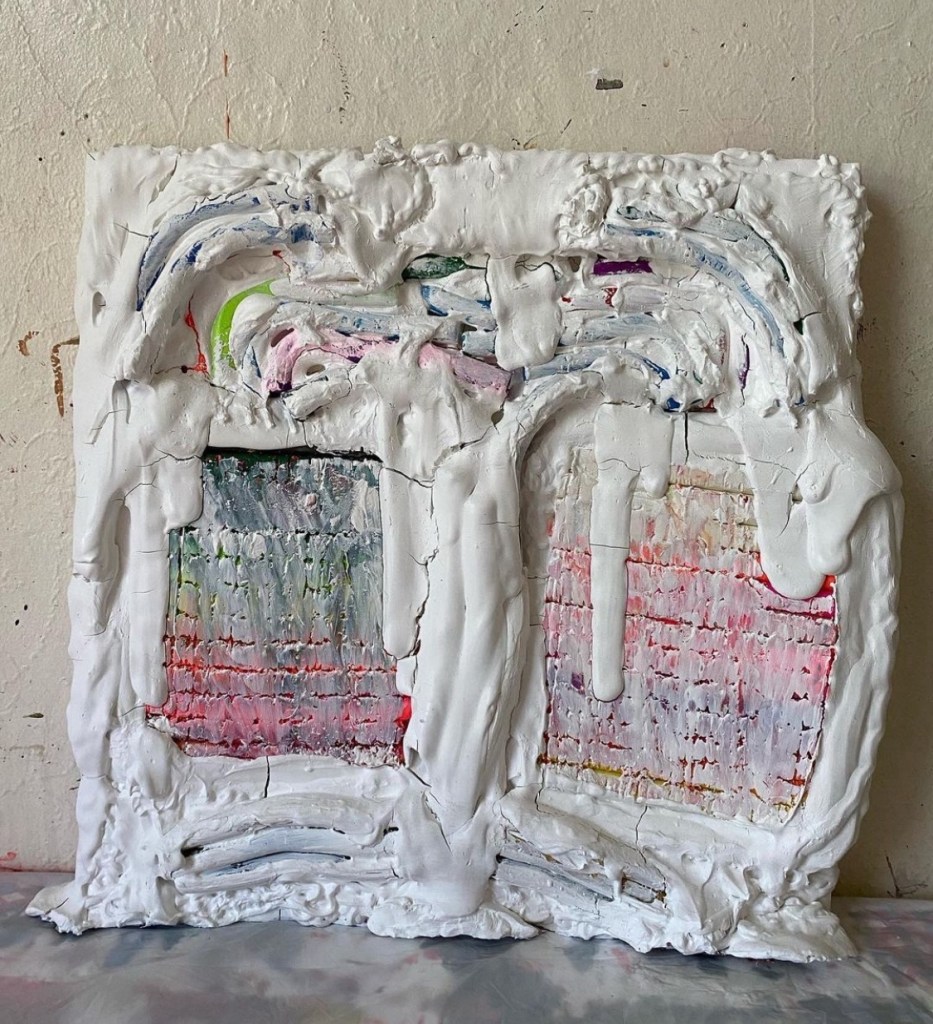
Just like last year, this year I also had a favorite show. The CAM‘s Neo-Psychedlia, co-curated by Dr Kathryn Desplanque and Raj Bunnag (two outstanding and quickly rising stars in their own right) features Kathryn’s work as well as that of Charlie Dupree, Chieko Murasugi, Jerstin Crosby, Tonya Solley-Thornton and Zach Storm. The strength of the painting (and love of materials in general) in this show aside, I can’t hide the fact that the premise of the show resonated strongly with me because of themes that influence my own practice. I’ve written recently myself about the idea of revisiting former epochs, so I relate to Desplanque’s jumping off point which she conveys in the show statement (IE noting the what/when/where of Psychedelias’ original iterations). She then points to the context of our current moment and the relationship of the impulse to create alternative realities to a broader cultural and social agenda. Plus, the CAM is such an amazing venue.
BTW, despite this truly being my favorite exhibit, I was hard to keep to my rule of not repeating venues, given how important From Warehouse To Our House: The Monumental Work Of Vernon Pratt was to me, as an abstract painter. So, we’ll give that one an honorable mention. Go team abstraction!
Anchorlight brought us Maxito: A Memorial Exhibition by Lope Max Díaz mid year. Anyone who ever thought hard-edge abstraction was cold and impersonal should consider this work. Wonderful to see Lope’s production and the arc of his career here in the Triangle recognized, and this particular group of objects were/are a solid synthesis of high Modernism’s calls to contemplation with a context (Lope’s loss of his son unexpectedly) that merges the personal with the universality of loss.
Lump was home this year to the largest group show they’ve hosted in a minute, with the fantastic name Slump (I hope in the future they’ll program Plump and Clump, Bill that’s a note for you if you’re reading). With 19 artists in all, the exhibit schlizerped its way around the entire building- floors and all areas on the walls- snatching your eye and mind in what felt like 1,900 directions. Fantastic curatorial effort by Jerstin Crosby.
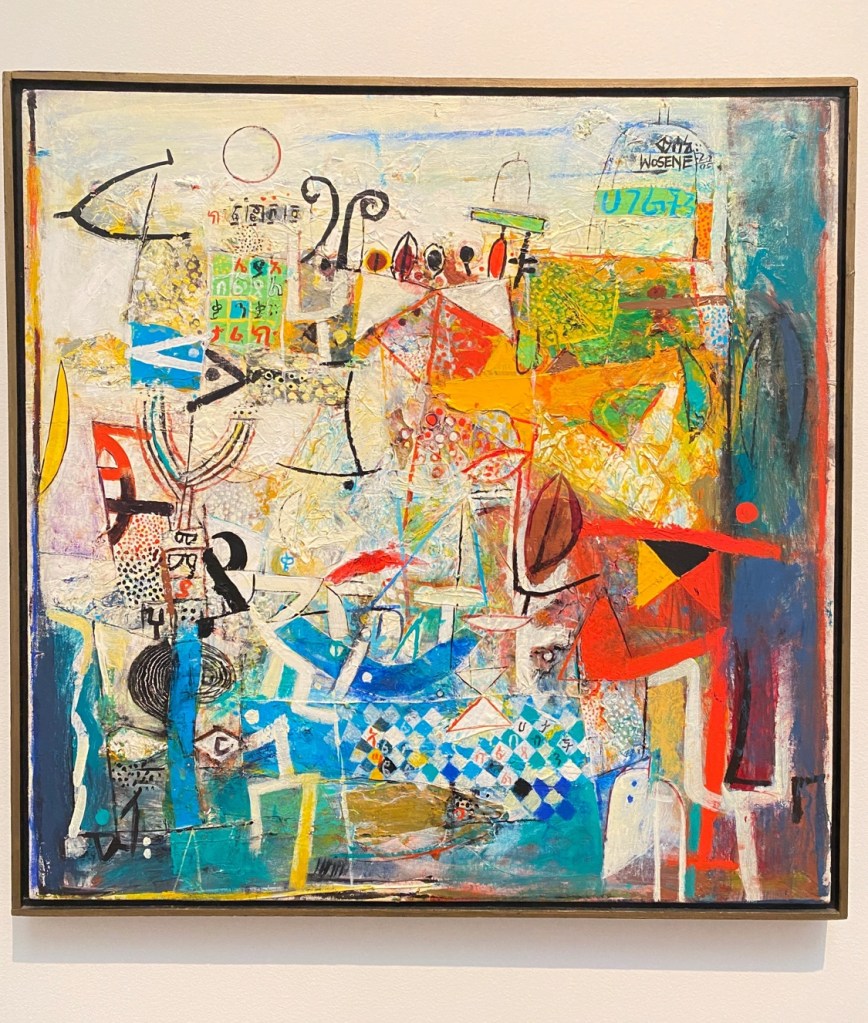
Diamante Arts and Cultural Center really blew me away with Ambiorix Santos Huellas. It is/was a tour de force of gestural abstraction which I visited a couple of times. I was inspired to see another painter who is not afraid at all to reach and strive, who is confidentially making marks and dealing with the results as they happen, keeping what matters and obliterating what doesn’t. Kudos to Peter Marin for programming this one (and for having an outstanding show there himself earlier in 2023).
Meredith College Weems Gallery was the site of Nathan GrimesHome | Body. It’s really hard to convey just how monumental this show was in terms of breadth and scale and diversity of strategies for shaping and informing physical space. There were elements of sound and touch at work as well. I truly hope you all got a chance to spend some time with it and I also hope very much to see it programmed in other venues in our region soon- it is mature work that needs to be seen. I am sure part of the connection I felt to Nathan’s work was the shared adult experience of reflecting on and moving past damage done to us during childhood. I look forward to seeing what Todd Jones programs for this venue in 2024.
Adrift by Oami Powers takes the every day, or at least things we would say we know, and, somehow, makes it strange (or perhaps reminds us of the strangeness that all we can ever say about a thing is to attempt to recount our own memories with which it is associated). Powers notes in her show statement that elements “shift in and out of focus, a dreamlike, fragmented realism that blurs into abstraction.” For me, this exhibit was a very direct way to point at things we can never quite put our finger on. Well done, as always, Annah Lee and Artspace, which continues to be host and home to so much creative energy.
The Rubenstein Arts Center at Duke was the site of Marie-Louise Bennett‘s thesis show Returning to the Point of Entanglement which also leveraged multi-media to deal with the theme of memories as well as societal expectations and one’s place of origin, among others. Like Powers, Bennett uses things with which many of us have experiences- church pews or a “fort” made of household furniture and blankets- as jumping off points that lead to questions (like Powers she also tied the exhibit together through use of materials and color). I thought about the “doll” with an old, analog camera instead of eyes, and reflected on how we store memories in our mushy, very human brains, without meta-data or a cataloging system or anything approaching objectivity, for many days after viewing it.
Popbox project brought us what was easily the most meta exhibit of the year in Jim Lee‘s upstART Gallery project which pointed at the world by pointing at how the art world points at the world. The fact that Jim’s practice was new to me was a welcome reminder of just how rich our scene is- the number of co-collaborators that provided work for this project speaks to how much this practice is respected locally as well. Similar to Nathan’s show, it’s pretty hard to capture the breadth and scope of what Jim accomplished with this project, both in terms of the magnitude of work inverted and emphasized by its scale, and in terms of it galvanizing a community (I found this show in my social media feed continuously for several weeks as we all celebrated it). I very much hope to see what the duo of Mavis Gregg and Laurie Ritchie bring us in 2024.
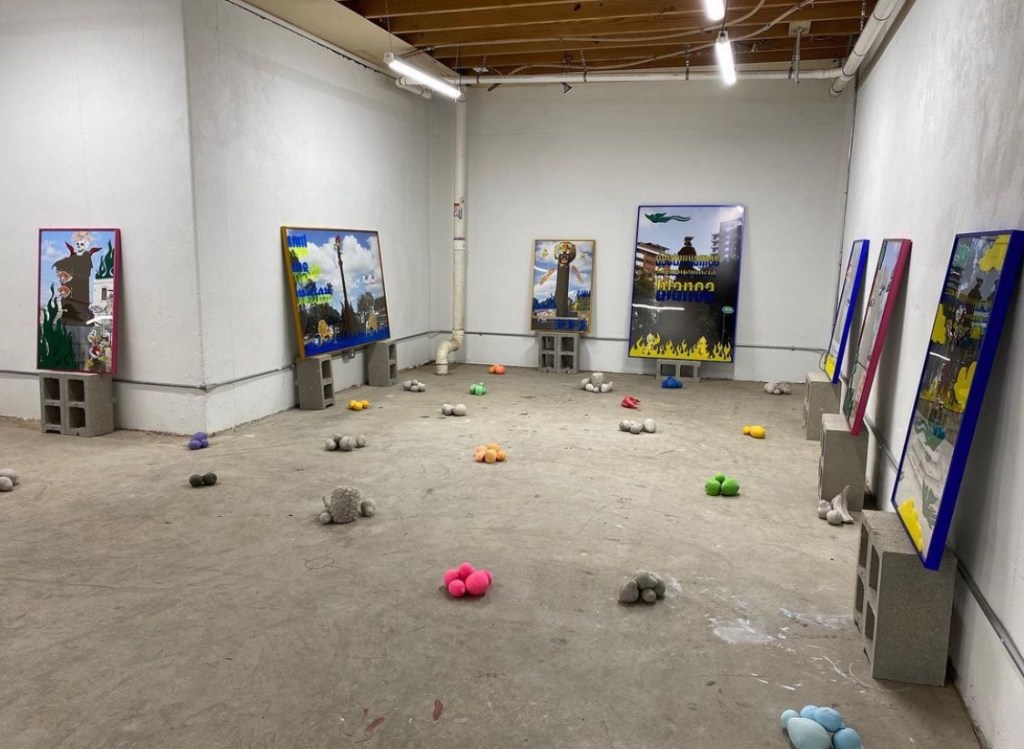
Those of us who have wanted to see what’s next for Basement were rewarded with a near perfect merging of setting and objects in Martiń Wannam‘s La Eterna Injustica. Having seen the call for the Radicle residency, it’s clear the team at Basement were looking for a creative that would make work for the space. Sure, I share a love of maximalism, and there is also an element of contradiction at work here as well. Then again, maybe what I loved most was the unfinished setting for the unfinished project of building an inclusive future. The team at Basement did us all a service by bringing a vision of life from outside American culture to the Triangle.
And last but definitely not least I want to give big propers to our (NC) Museum of Art for their reorganization of The People’s Collection (and yes, I am totally blissed out that they’ve used the opportunity to pull some amazing abstraction out of storage). The job of museums (this writer thinks) is to educate, and this re-contextualization of our permanent collection was a welcome and necessary move towards celebrating the diversity of human experience and ensuring that future generations have a comprehensive understanding of what they are seeing. And also, abstraction.
I’ll also note that I am very satisfied (and immensely grateful) for having the first two attempts at curating myself this year. In April I got to organize ExtraSpectral in partnership with Durham Art Guild, which featured Jerstin, Tonya and Zach as well as Leif Zikade and Jane Cheek. And in July I was honored to be among some amazing peers in Peter as well as Carson Whitmore, Cindy Morefield, Freddie Bell, Jason Lord, Jean Gray Mohs and Natalia Torres del Valle as a part of Open Source which was shown at Lump and Sertoma Art Center, and which is an exhibit that already has planned future iterations. I’d clearly be biased to include either in my favorites list, and I’m confident that the artists I got to work with have and will get the recognition they so deserve through our involvement together in these projects. Here’s to even more amazing things in 2024! Thanks for reading whoever you are and please share this blog with your circle. Cheers, Sterling.
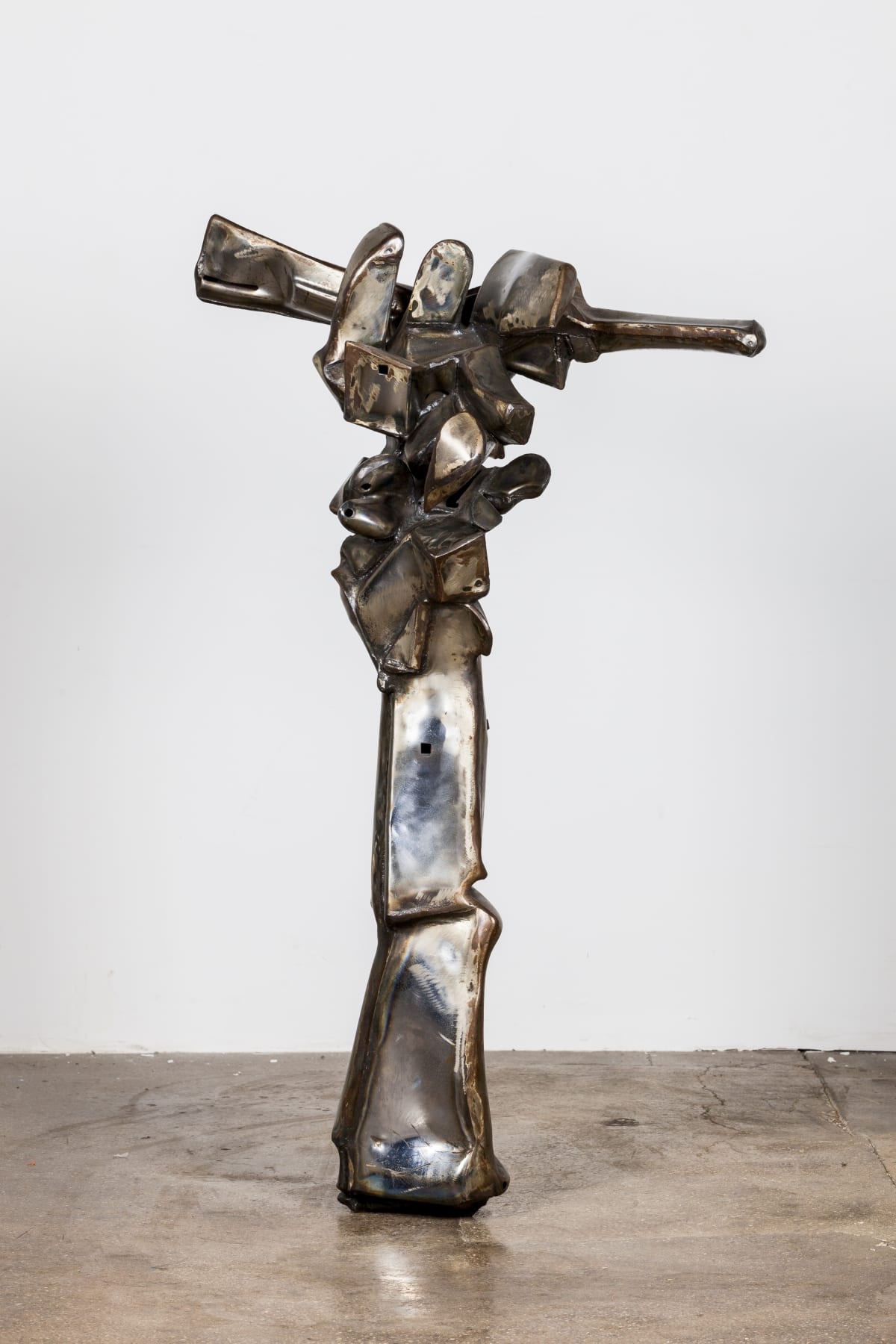
Hunt, a descendant of enslaved people who in the last half of the twentieth century rose to become the world’s preeminent African American abstract sculptor, died on December 16 at his home in Chicago. Hunt created sculptures that appeared almost weightless despite the heft of the materials from which they were made, evoking ascent, escape, and freedom. His monumental works grace public spaces around the globe. Visit his official site to see quotes about Richard from some titans of the Art world.
#richardhunt
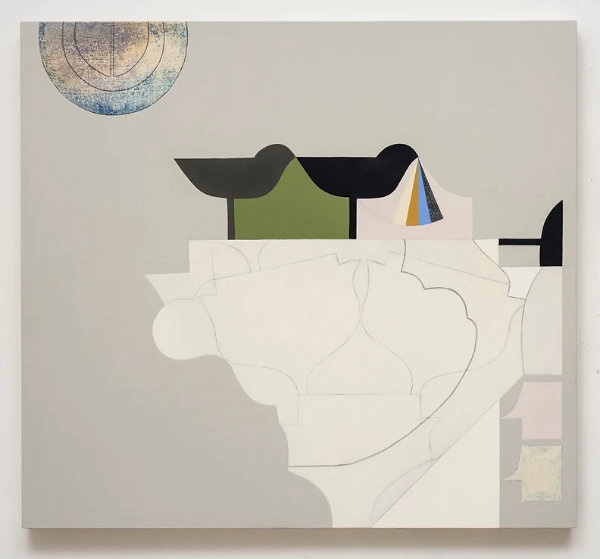
Sharon at Two Coats of Paint says Patricia and Fran are the heirs to Thomas – high praise indeed (I don’t know many painters who don’t hold Nozkowski in the highest of regards).
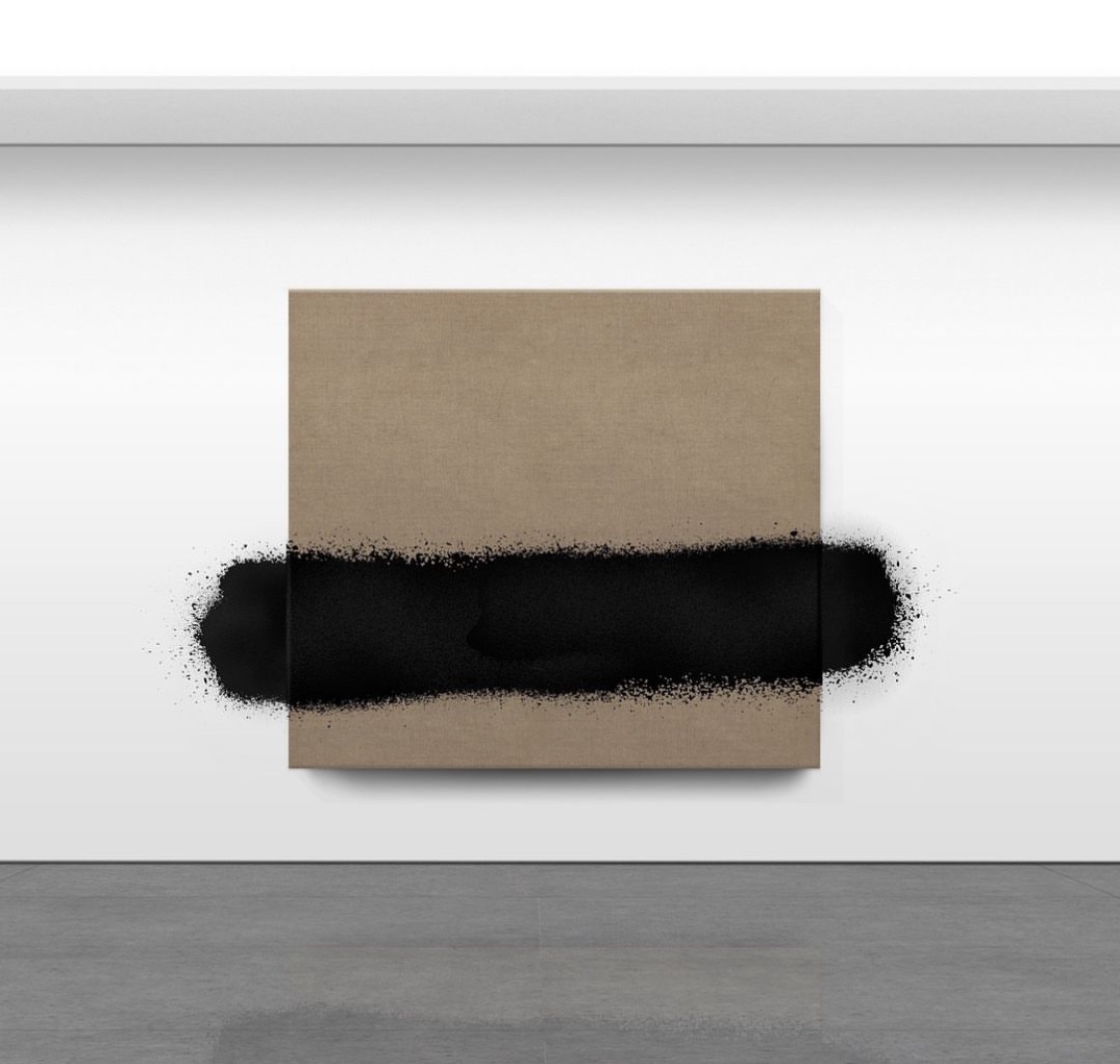
Noël Dolla is a French artist, and if he is known at all in the United States it is for his participation in Supports/Surfaces, a collective of like-minded artists who in the late 1960s to 70s shared common ideas about the identity and symbolic function of art. Their project emerged as the political and philosophic debates arose from the student and worker protests of May 1968. These debates, which had their foundation in Marxist and post-structuralist thought, emphasized the questioning of all established norms and led to a re-evaluation of how we perceive, represent, and understand the complexities of the self in the world, ushering in the critique of modernism that came to be known as postmodernism.
recently showed Squish at Tracy Morgan (with the use of simple shapes and a limited color palette, these works explore the visceral experience of living at this current moment).
has recently been the subject, belatedly in the opinion of some, of a retrospective. A colorful and wide-ranging retrospective of the Chinese American visual artist and poet might finally change that. The show, titled “Walasse Ting: Parrot Jungle,” opened on November 10 at the NSU Art Museum in Fort Lauderdale, Florida, and sheds light on an artist who spent nearly five decades living and working in Europe and United States across several styles and movements (he made both figurative and abstract works), but whose impact and influence was often overlooked.
Earlier this week I was reading this Adam Simon piece on David’s newest in which Adam notes at one point his impression that Diao is “working out his complicated relationship to modernism.” I also think a good bit about that epoch, both as a creative whose forms reference it and whose studio practice could fairly be described as Modernist (in the sense that my visual vocabulary is intentionally stripped down). I’d say to follow that up that I relate to Simon’s description of one particular aspect of Diao’s practice- the recognition that the artist is clearly rejecting some of the ethos (in the terms that motivate me- it is true that both Modernism offered us new, relevant ways of seeing *and* had problematic aspects that contemporary artists should address).
One of the general tenants of at least late Modernists was a general belief or at least a sense of some universality of humanity. I won’t spend time unpacking the ways that’s problematic (it’s class 2) as I’d rather use the references of my work to the Modern epoch as a sort of key that contemporary art viewers should think about those ideas (as they might be applied today). Naive notions about universality aside, I think it is valuable to explore ideas about the desires we share- to be as free as possible (I’m not a Libertarian) and if possible loved, and certainly, *certainly*, to belong. I’m not sure how human society exists without some tie that binds us.
It is (was) the prominence of this concern among many Modernists that led to many, probably most if not truly all, of them espousing various forms opposition to war. I think have written (though I can’t point to a specific post) about similarities between the epoch of Modernism and our current moment. To be specific, I think many people share a general belief that our past institutions and values are not likely to serve as if we desire to move into the future. War, as state-sanctioned and enacted violence, has no place in a prosperous, meaningful future. We must end it if we wish to preserve human life on our planet, and we must relinquish it as a means to resolve human conflict.














 Painting After Art is Dead