David Carrier at Two Coats makes the case (in the context of Berry Campbell’s recent Woman in Nature: Paintings from the 1950s) that Ethel is Canon-adjacent.
#ethelschwabacher
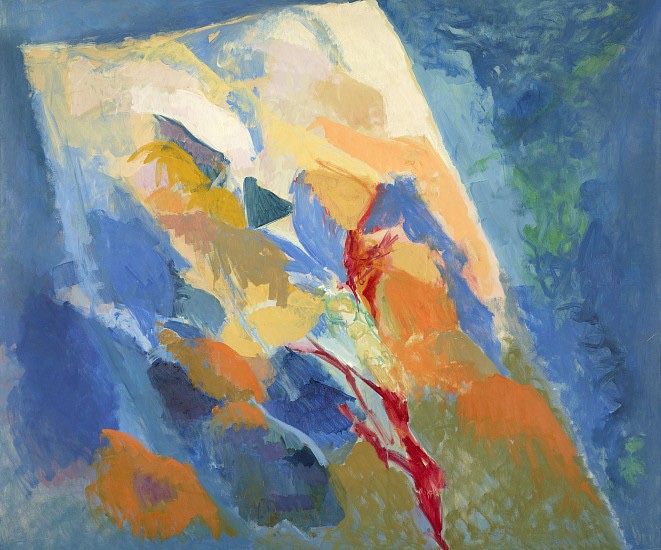
David Carrier at Two Coats makes the case (in the context of Berry Campbell’s recent Woman in Nature: Paintings from the 1950s) that Ethel is Canon-adjacent.
#ethelschwabacher
like Peter was represented in Light, Space and Surface at LACMA.
Craig Kauffman is the only one of his Light and Space peers who, in a substantial way, came to his artistic vocabulary through a historical knowledge of modernism, in particular Marcel Duchamp’s Large Glass (1915-23) and Lászió Moholy-Nagy’s Plexiglas works of the 1940s. In his Loops series, including Untitled (below), Kauffman molded Plexiglas sheets to incorporate a fold and then sprayed them with acrylic paint, creating a hazy atmospheric field that hovers just off the wall. The shadow Untitled casts on the wall takes on the yellow hue of the sprayed paint, as if color could be both distilled from and independent of actual paint.
#craigkauffman

Saw below at LACMA recently. Peter is part of the Light and Space movement. Here’s an interesting convo on YouTube with him and Helen and De Wain Valentine discussing how new materials created the space for their work.
#peteralexander

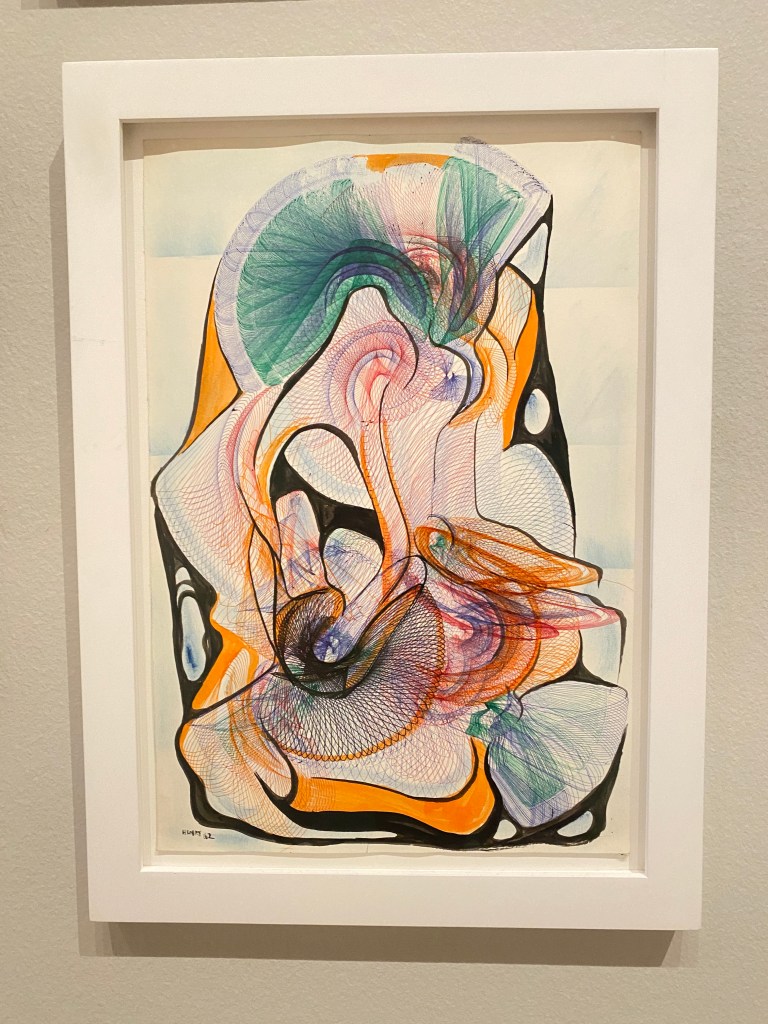
was like Joan and Jean-Pierre featured in Coded (which gets a look from at Hyperallergic). The author and I agree the piece below was one of the most intriguing in the exhibit- it was “made” by the algorithm in a WWII era analog “computer” used to plot bombing maps.
#desmondpaulhenry
I wrote this essay originally in May of ’23. Below is an update from Oct ’25.
…
Conventionally- academically- the word “formalism” has very specific meaning:
“Formalism describes the critical position that the most important aspect of a work of art is its form – the way it is made and its purely visual aspects – rather than its narrative content or its relationship to the visible world.“
The Tate (source of the quote above) clarifies that this tendency was both a beginning point and a path that lead towards a culmination. As a description of an approach to object-making in the visual arts, “formalism” elicits images of work and words related to the ideas of many artists we classify as Modernist. Most likely, college educated American artists immediately think of the second generation of abstract painters (Frankenthaler, Olitski, Poons) who advanced ideas imported from Europe by their immediate predecessors and often peers, who valued process and intuition. As the story goes, they eschewed gesture and surface and focused on color and shape (form), and were themselves forbearers of artists who followed through on a general reductionist mission for its own sake (Stella, Downing, Kelly et. al.).
The notion that art could not just be but in fact *was* at its highest level of intended function *only* to be understood “on its own terms” is a distinctly Modernist idea that is very humanist and Euro-centric. Its cultural dominance and embedded notions of the supremacy of Western civilization mean it is associated with most of the evils that propelled the last century (pick one- militarism, Capitalism, racism) and often with good reason. Because of the association of this cause célèbre with the often acerbic and always arrogant Clement Greenberg, formalism as an ethos is out of fashion, to the point that “clembashing” is still an activity that causes practitioners of the modality headaches even today. The contemporary painter Andrea Marie Breiling has commented that she finds herself asking (in the context of wanting viewers to see and experience with purpose) “How could I make work that sucked people in and lifted them to a higher state? A spiritual place itself and not a place of painting for painting.” Tldr- the specter of Modernist formalism is real for many a contemporary abstractionist.
While formalism begat reductionist tendencies and was certainly in vogue for a non-trivial amount of time, its dominance was not total. Note that the larger, meta-cultural question “what is Art” of which formalism is a progeny also lead to many investigations which pointed creative activity away from not only abstraction (eg Warhol) but from painting itself (eg Duchamp) on the same and similar timeline(s). In particular those of us who are instructors *must* be clear with our charges that figurative painters like Jack Levine and Romare Bearden were active and making important art during formalisms’ heady heyday, and further that the conclusion that formalism as a response to the question “what is Art” was either inevitable or the most logical response is just a silly position to take, then, or now.
It’s also worth noting that most artists who practiced “painting for painting’s sake” (or at least were celebrated by the art critical community for doing so) did so out of a commitment to a broader, cultural mission to create new ways of seeing, suited to a new world that needed to abandon outdated institutions and mores (avant garde anyone?). I would argue the cultural context of this activity is definitely part of its content, even if it was not to be considered primary.
I find Adam Simon’s review of Tom McGlynn’s work published by Two Coats of Paint (a legit source of love for painting) enlightening in the context of these considerations. Adam notes that, for the contemporary artist considering reductive forms “these basic shapes are historically weighted signifiers, no longer free of association. One cannot now make a geometric abstract painting without it also being a depiction of a geometric abstract painting.” It’s also very much worth reading what Saul Ostrow wrote (also in Two Coats) about Jeremy Gilbert Rolfe’s Paintings from 2009 to 2022 at David Richard to further flesh out the idea that no form used today can be considered bereft of “content.” BTW, these two writers don’t necessarily agree.
One of the distinctions I am quite interested in, as a way to understand artists who leverage formalism as either a generative strategy or an ends, is exemplified by the North Carolina-born painter William T. Williams. WTW is known for his process-based approach to painting that engages motifs drawn from personal memory and cultural narrative to create non-referential, abstract compositions. He is known to have said that “my art is about my experience which, by nature, makes it about other people’s experience . . . I’m trying to evoke human response. My demographic is the human arena. I hope my work is about celebration, about an affirmation of life in the face of adversity, to reaffirm that we’re human, that we’re alive, that we can celebrate existence.” I think this illustrates a very humanist, and therefore Modernist, tendency within William’s oeuvre. The Concrete Art movement, as described by the historian Werner Hartmann in this excellent Wikipedia article, summarized their ethos thusly- “Art should endeavour to give form to life itself.”
For this writer, I find the phenomenological musings of Robert Irwin of greatest influence on my approach to making work which seeks to engage the imagined viewer in a sense experience distinct of narrative and subject. This is possible or at least conceivable for Irwin, and myself, because of bracketing. Irwin also elevated questioning in his practice. For this creative, questioning- probing a form or strategy until it reveals a direction or intention- is a if not the central strategy for generating objects. If there is an example of what a practice which centers the “language” of color and shape looks like, I would offer it is Stanley Whitney’s, with his strategy of “following the painting.”
If a (revised? reformed?) formalist strategy can exist today, I think it’s clear it isn’t in the way that we are taught to use the word in academia. Jason Stopa hints as well that there is a possibility for a sub-set of the activity of painting to exist in a way that allows space for contemplation which is sort of parallel to “traditional” formalism- he calls it “self-reference.” He also sees the act of making the work as a reference to the world of ideas because the context of the activity is our very non-utopian society (I think this is very much like the way Williams approached painting). In an Instagram post (of all places) he dropped this gem (in reference to his exhibition Joy Labyrinth for which Raphael Rubenstein penned the catalog essay): “I see self-reflexiveness in painting as a means toward criticality. The utopian architecture I’m referencing in these paintings is about the impossibility to create ideal conditions, but our pursuit of idealism persists nonetheless.”
I really love the group discussion Jason put together just before the start of the pandemic with Katherine Bradford, Sharon Butler, Thomas Micchelli, and Craig Stockwell, who has this wonderful quote: “When things get real and very difficult, I need to turn to something that is sustaining. I think painting in all its forms is remarkably engaging as a thoughtful activity, as a thoughtful and physical activity. Personally, to go to the studio and have the experience of making, spending hours in this thought process, and responding to difficulties, seems so small in certain way, but it’s incredibly sustaining in a difficult time.” I don’t think Craig Stockwell would ever say he paints solely for “paintings’ sake” and I can’t think of anything else to call the impulse he describes other than a belief- faith?- that painting is valid as an activity that centers itself, full stop.
All of these words lead me to this series of thoughts, that are nothing more- or less- than the reason I am, to the amusing frustration of so many of my contemporaries, really quite comfortable referring to the object-based part of my own practice as “formalist.” Primarily, is it because, transparently, that activity, in the confines of my studio, centers form, line and color; thoughts shape my direction and words to contextualize editing decisions come after, but, in the moment, I am following the object. Further, the contemplation and reflection by an artist during creation and, later, an audience during display of the result(s) is an intentional activity that elevates and preferences the senses. The act of this contemplation and reflection is a social construct and a subject of philosophical inquiry and therefore can be both distinct of and content of the work itself. And, this act of contemplation, bracketed outside of our utilitarian social institutions, is imbued with the very spirit of the human condition and relates by default to identity, to politics, and to the striving of all people for connection and transcendence.
Saw below in The Holographic Principle at Philip Martin’s LA outpost. More (she also makes sculptures).
#remaghuloum

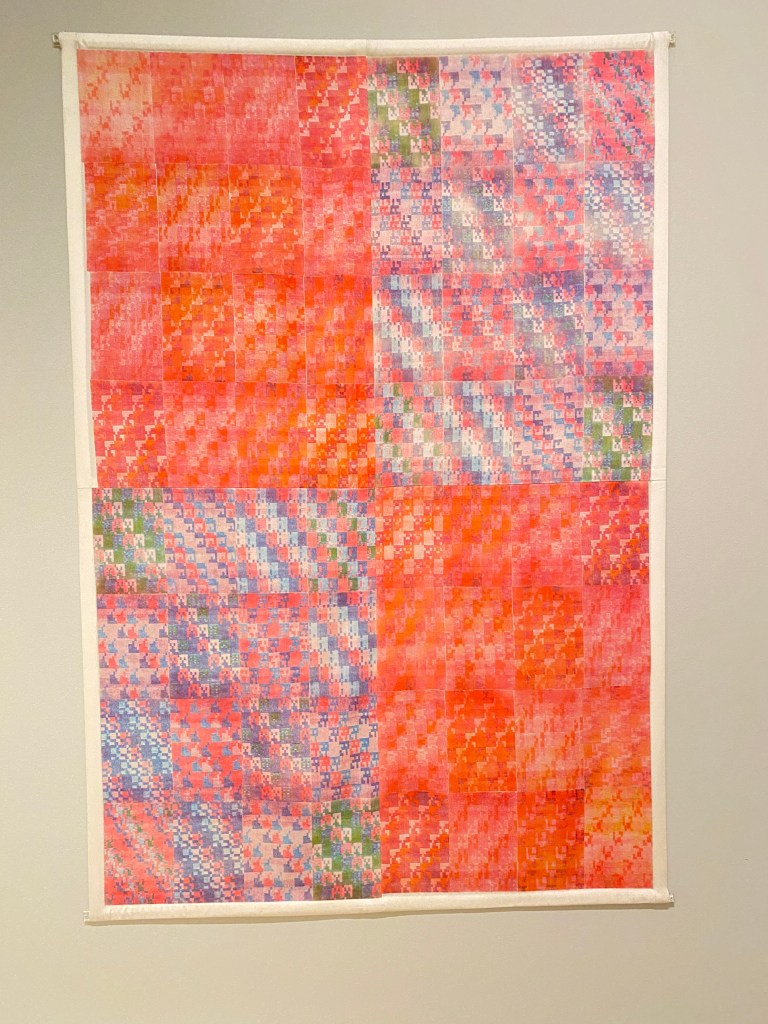
Saw Joan’s work Electronic Patchwork (below) in Coded at LACMA recently. It is composed of “patches” of patterns derived from algorithms for natural phenomena (such as wind currents or light waves reflecting off irregular surfaces). To transfer the images from her computer monitor, Joan upended the monitor onto a color copier and printed them onto heat-transfer paper that she then ironed on fabric to create a “patchwork” both digitally derived and handmade. More
#joantruckenbrod
Hebert described his work as “detalled projections in two dimensions of our complex multi-spectral reality.” Inspired by the geometric weavings of German textile artist Anni Albers (1899-1994), he began to explore computer programming in the creation of art in the early 1970s. Eventually Hébert pushed the boundaries of complexity, pursuing, he wrote, “an ideal of beauty and ideal Platonic forms, inspired by my interests in patterns of geometry, mathematics, physics, land] nature.” Saw below in Coded at LACMA. More
#jeanpierrehébert

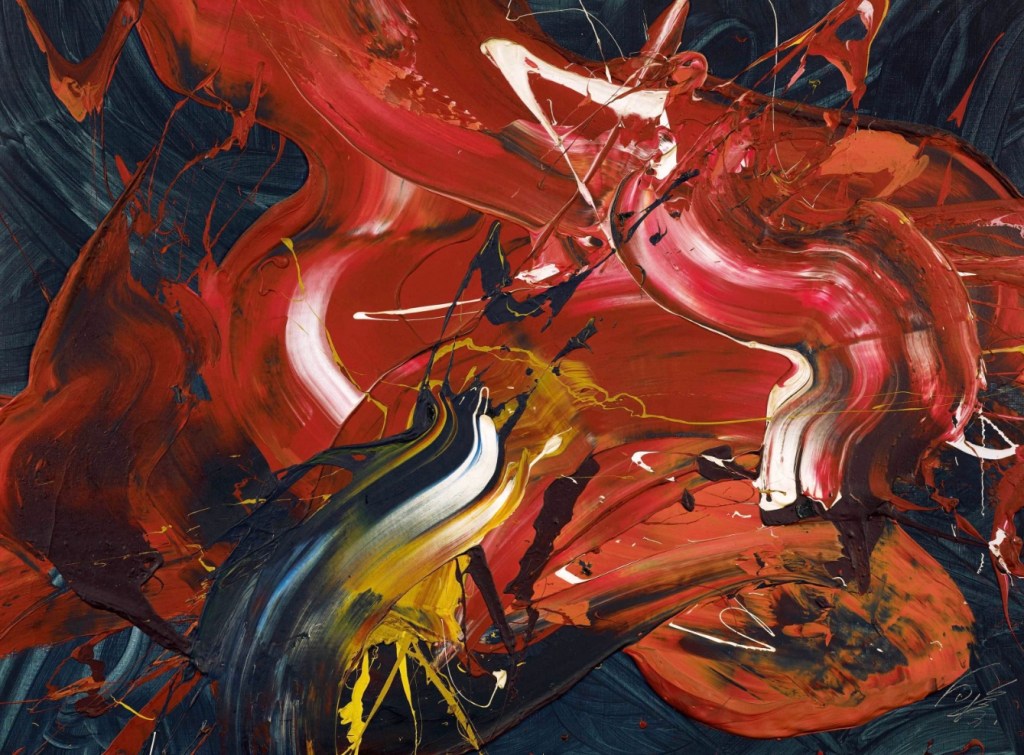
Kazuo Shiraga (白髪 一雄, Shiraga Kazuo, August 12, 1924 – April 8, 2008) was a Japanese abstract painter and the first-generation member of the postwar artists collective Gutai Art Association (Gutai). As a Gutai member, he was a prolific, inventive, and pioneering experimentalist who tackled a range of media: in addition to painting, he worked in performance art, three-dimensional object making, conceptual art, and installations. Sam Francis was influenced by this group of artists.
#shiragakazuo
Saw below at LACMA (a recent addition to their permanent collection). Krasnow worked mostly in Southern California from 1922 onward, becoming an important advocate of modernism in Los Angeles. During the final years of World War II, he began a series of abstract paintings featuring interlocking rectilinear forms in candy-colored hues. Conceived in response to the horrors of the war, paintings such as K-3 were intended to evoke harmony and optimism. “Between alerts, blackouts, rationing, brighter grew my palette,” the artist remarked. “When tragedy was at the deepest point, my paintings breathed joy and light-color structures instead of battle scenes, symmetry to repair broken worlds. A means of protest to ease the pain.”
More (scroll down for bio)
#peterkrasnow #feivishreisberg

Saw below at LACMA recently. Titled
Around a round, it was included in the landmark Four Abstract Classicists exhibition in Los Angeles in 1959 and reproduced in the show’s catalogue. As Fred described his intuitive process of creation,
“I compose a painting by hunch…. At first I would paint a shape that I would ‘see there. That one colored shape in that canvas would work, or fit. The next shape would come from the feeling of the first plus the canvas. This process would continue until the last shape completed the picture.”
Since 2009, the Frederick Hammersley Foundation has been dedicated to furthering Frederick Hammersley’s artistic legacy through charitable activities that expand the public’s awareness, appreciation, and understanding of his art and life, and of the cultural and art historical context in which he worked. It has also been committed to promoting the value of art in the life of the community and to supporting the advancement of artists’ education and creative processes.
#frederickhammersley
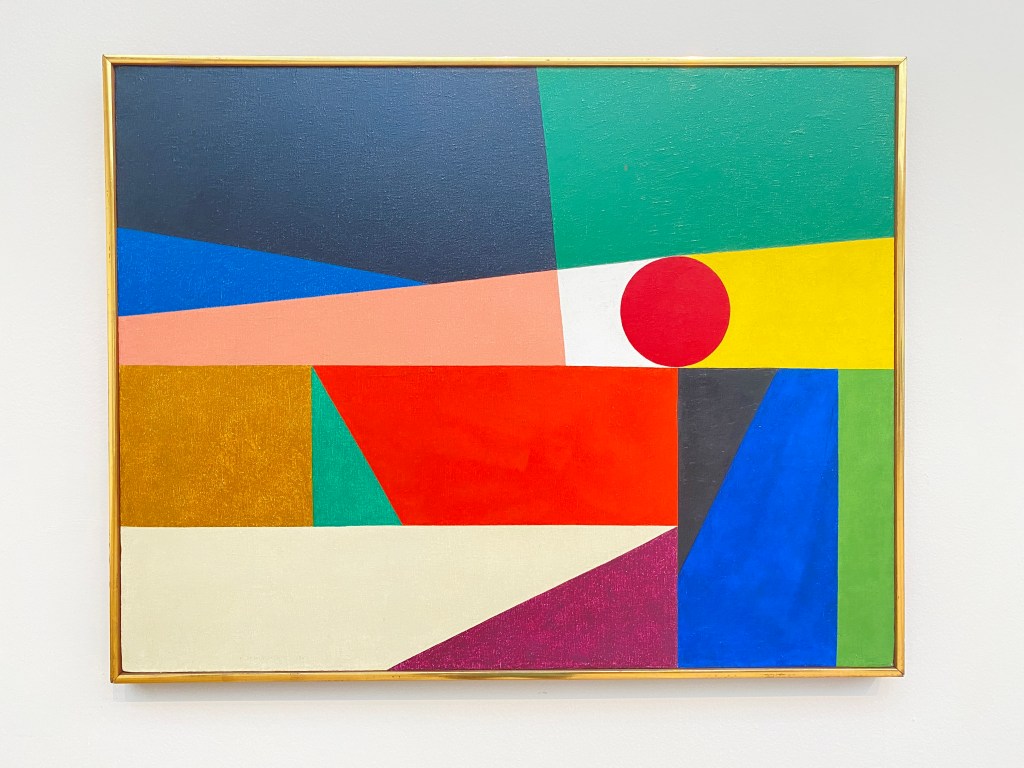
Saw below during a recent visit to LACMA. In the 1920s, Carlos Mérida was deeply committed to the Mexican muralism movement and to extolling the peoples and traditions of Mexico. In the 19405 and 1950s, however, he began experimenting with a greater range of styles, including abstraction. Increasingly distancing himself from the muralists, Mérida developed a dynamic, geometric style that is as much indebted to Cubism as to international postwar geometric abstraction.
#carlosmérida

is an anonymous artist that has caught, among others, John Yau’s attention, who notes that “the months and years it takes to make them are a celebration of time and its vagaries.” And that the “palette of blues, greens, browns, reds, and yellows evokes nature, while the sensuous materiality of the paint suggests that time’s pressure can be embraced.”
#new.shiver
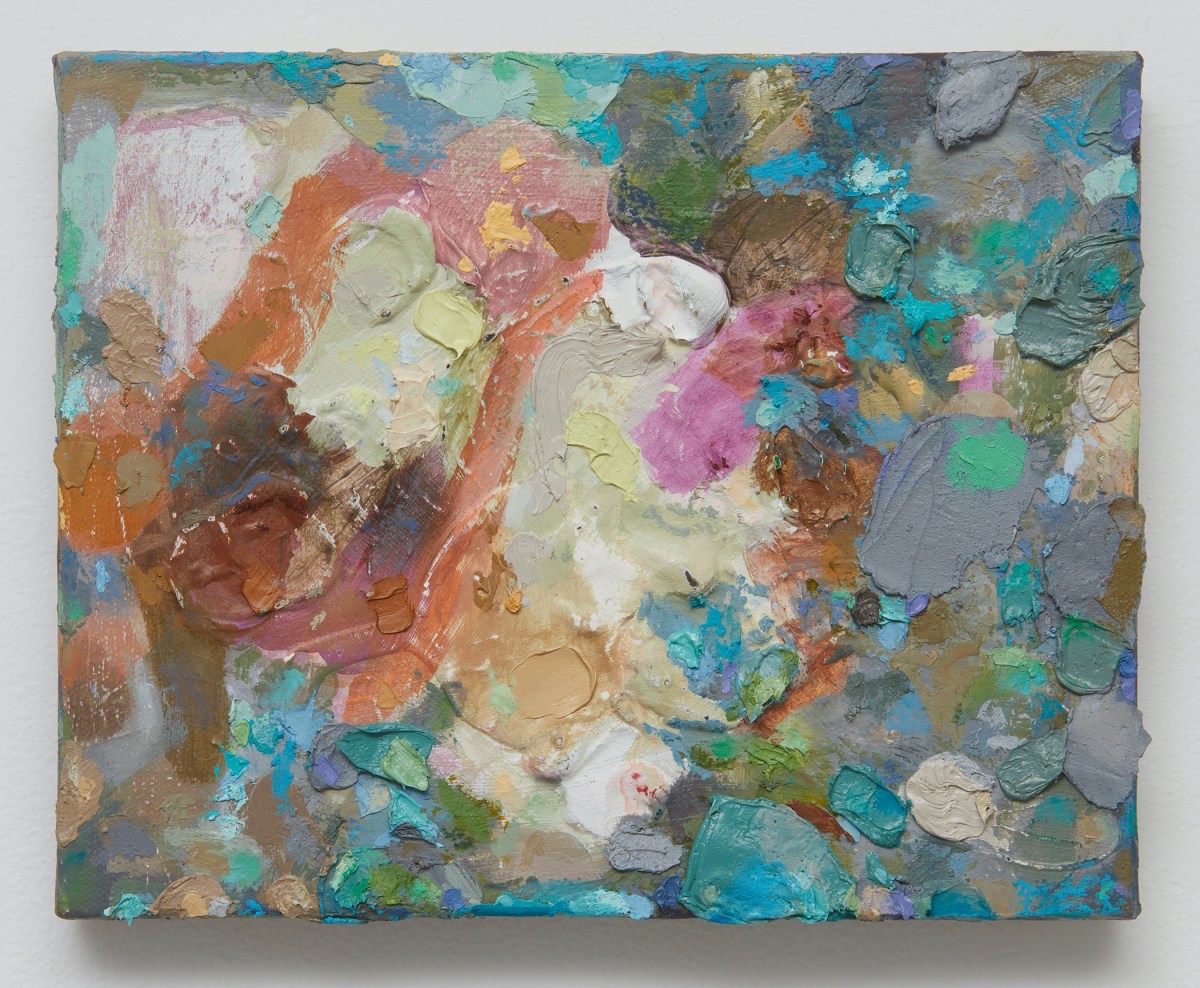
Off Paradise recently showed Nocturnes, recent work by Maximilian.
#maximilianschubert
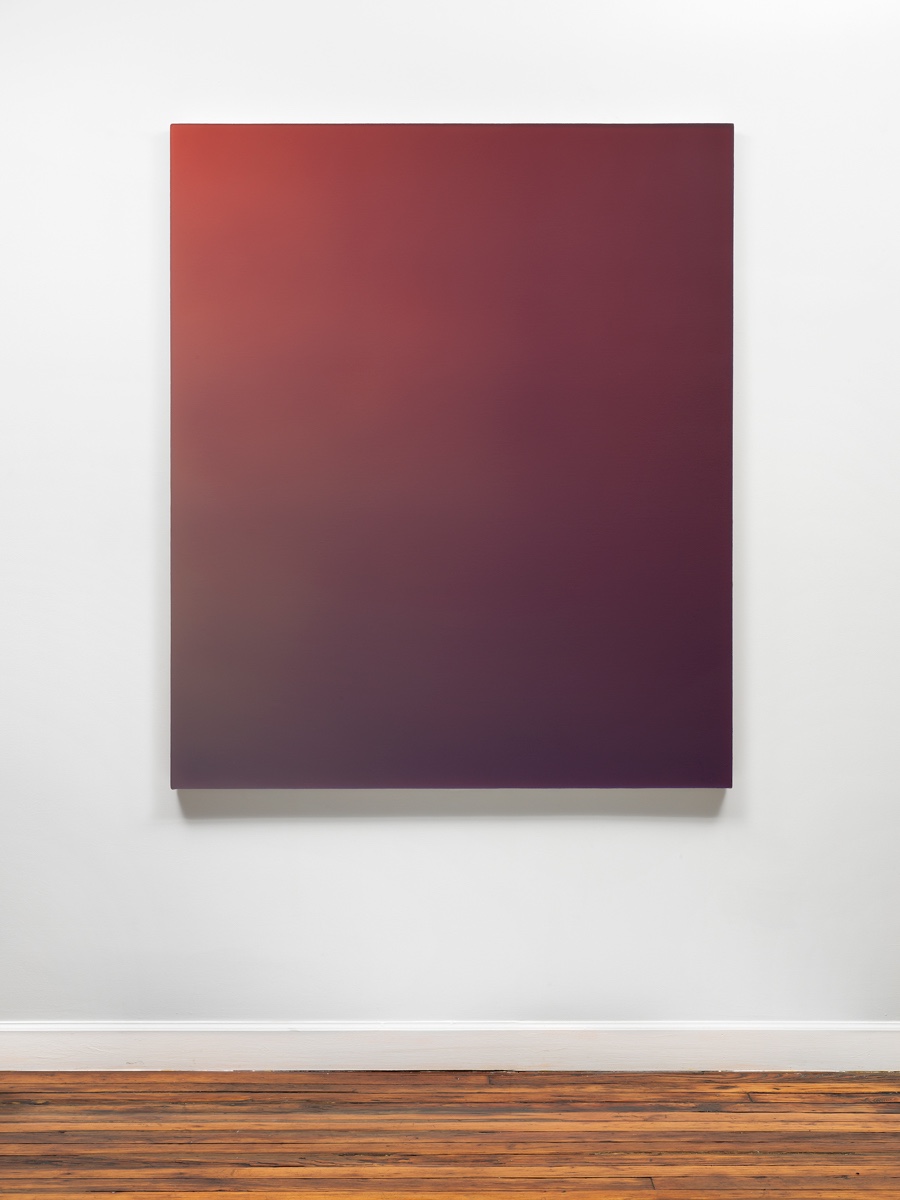

 Painting After Art is Dead