is pretty honest about being a formalist.
#joannemattera
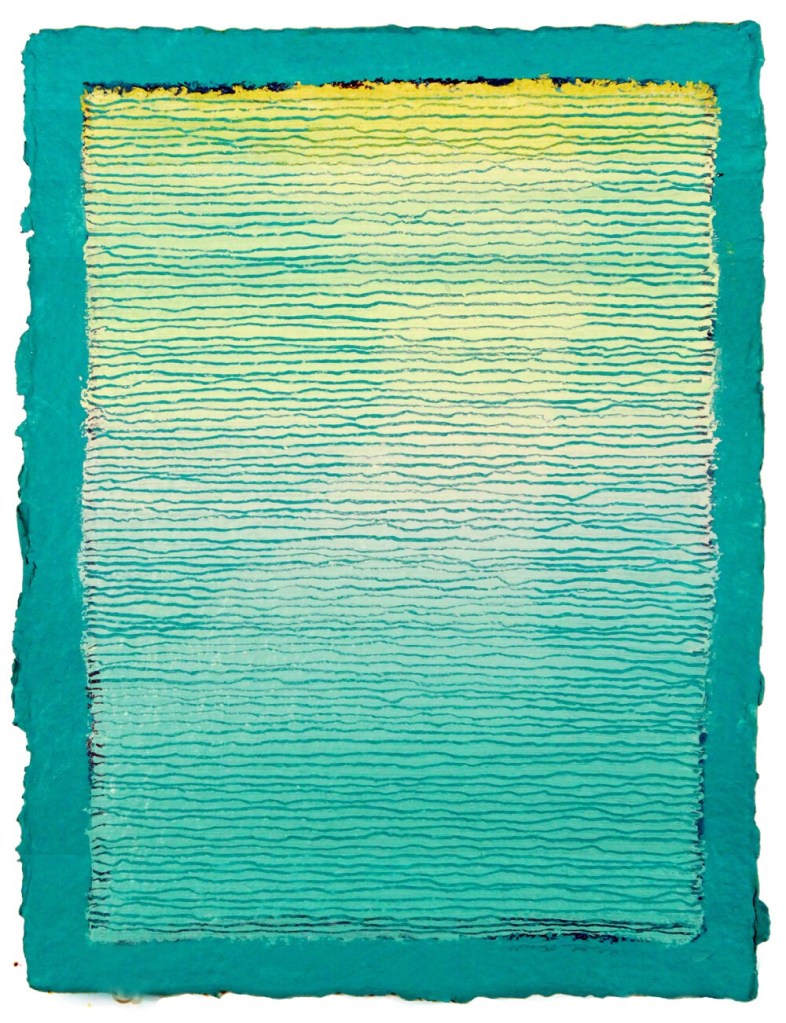
observations of air and water pollution, and the increase in severe weather patterns due to climate change, contribute to the acidic aspect as well as the spatial shifts in their current work.
#nancymanter
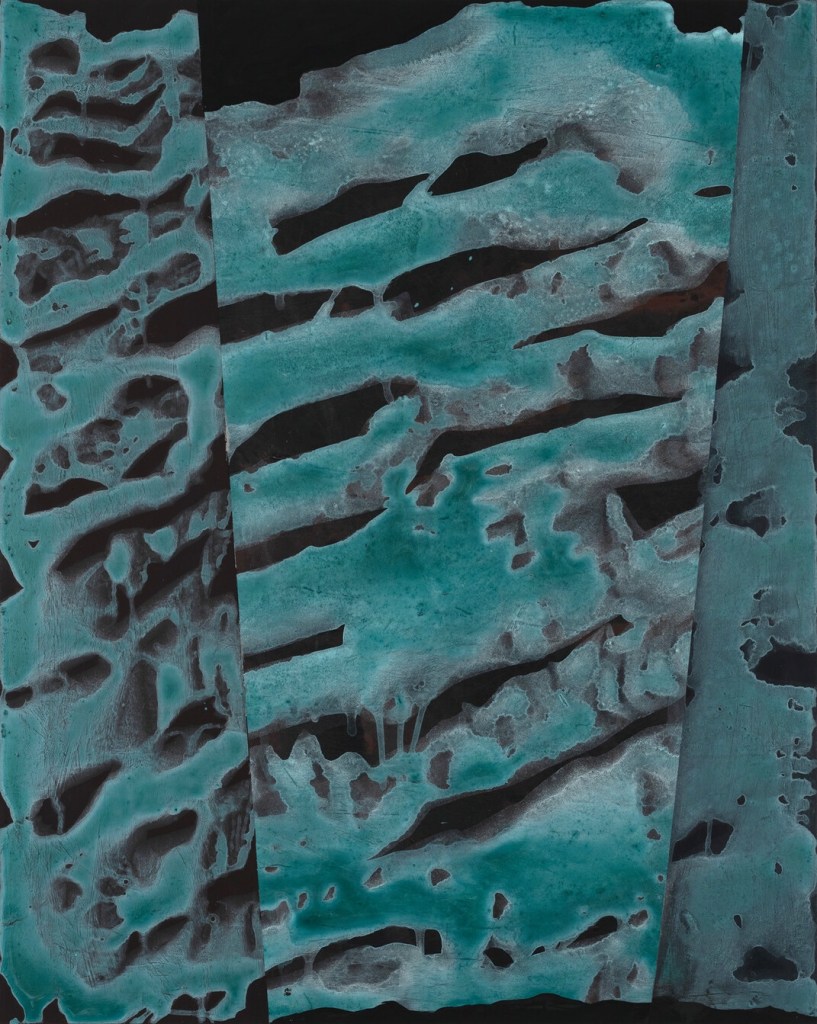
rage for order is balanced by her love of storm and accident, according to the essay for an exhibition of her newest, at The Painting Center, Speed Bump.
More
#suehavens
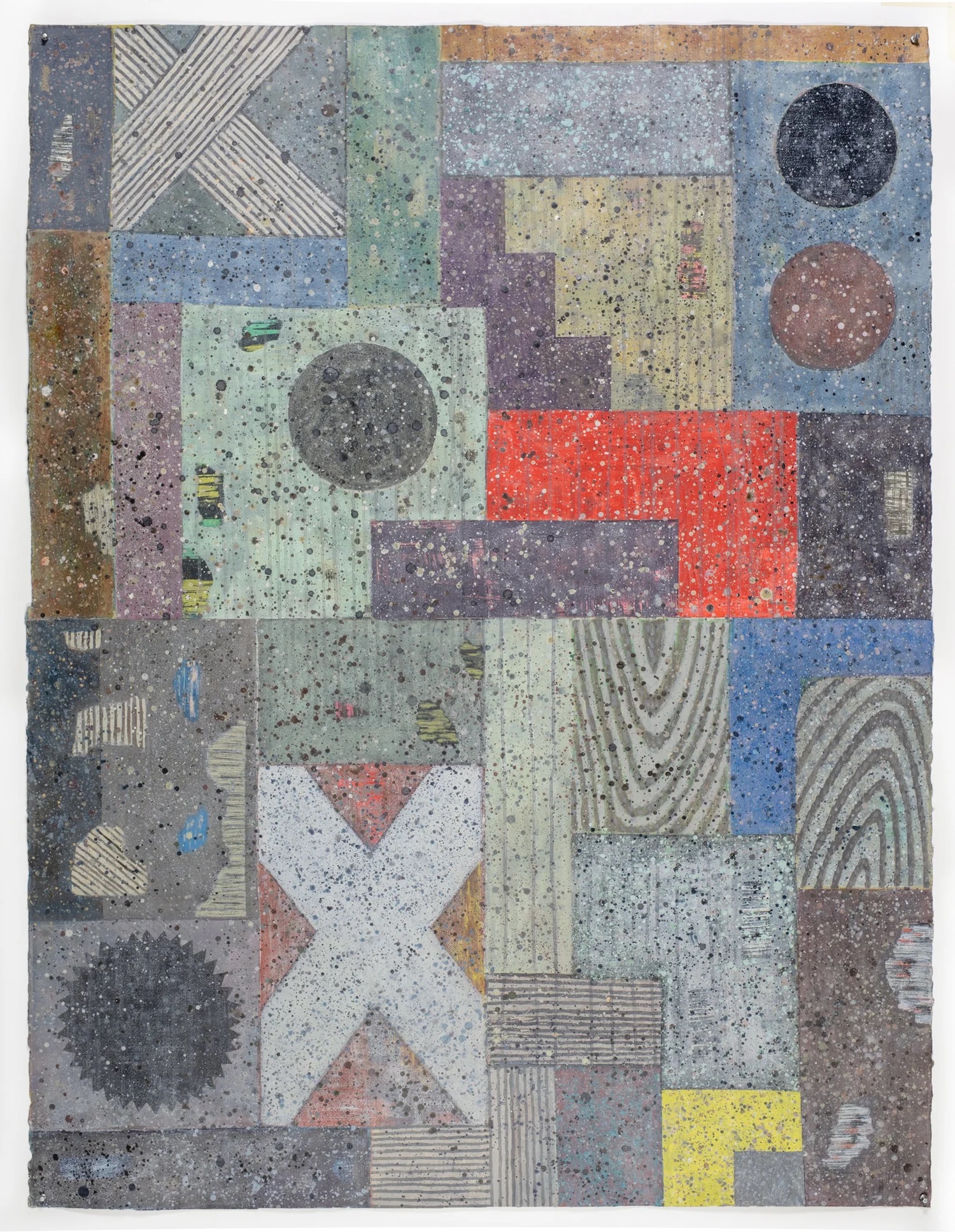
Sweet shades of Carlos Cruz Diaz these are some sublime paintings. Suzanne shows with White Cube.
More
#suzannesong

Today I begin my 52nd trip around the sun. A little context for why I am thinking about how we assign importance to occurrences, and mark the passage of time.
“Occasion” like so many English words and phrases has multiple uses of course. “A special occasion” or “on the occasion of” or “I had the occasion to,” etc . Occasions- noting and referring to them more specifically- show or reveal the outlines of how we see ourselves in our own story, which is shaped by our relationship to time as we both remember past events and have hopes for the future.
When we refer to “an occasion” we are noting that we have “marked” a moment in time, or, in the case of ceremonies and celebrations, multiple moments over sometimes long periods of time. A painting is a way of marking the passage of time also. I should clarify that I’m talking about how I feel about abstract painting. One of the ways I’m giving in to nostalgia this weekend is looking through my slide library, which I can do because I still own a light table (I just admitted I’m 51). I found images of work I was making in the late ’90s “about” mapping, conflating wood grain forms with contour maps, which are both snapshots of geologic time. I was mostly just pointing at painting as a record of its own creation.

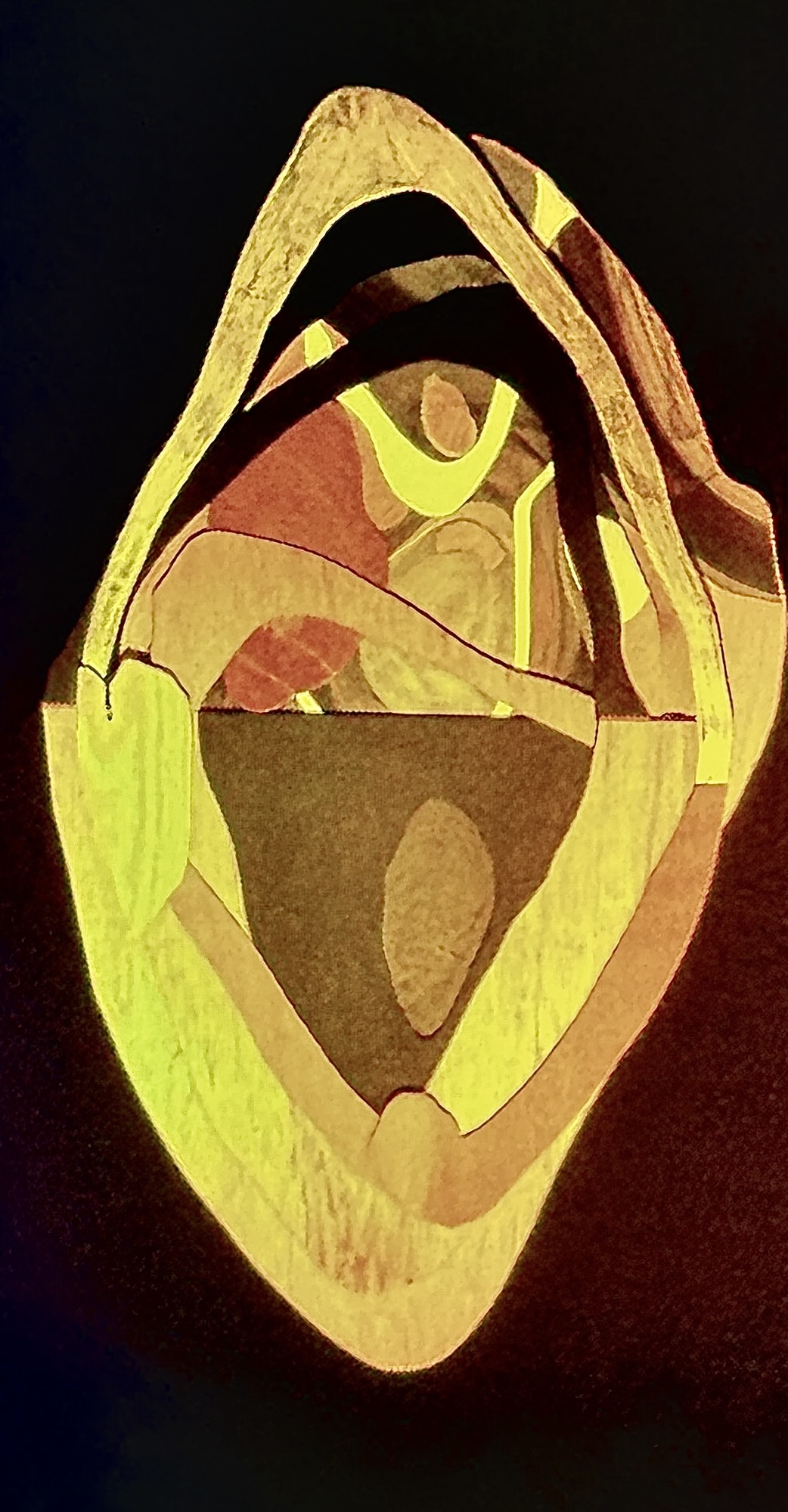
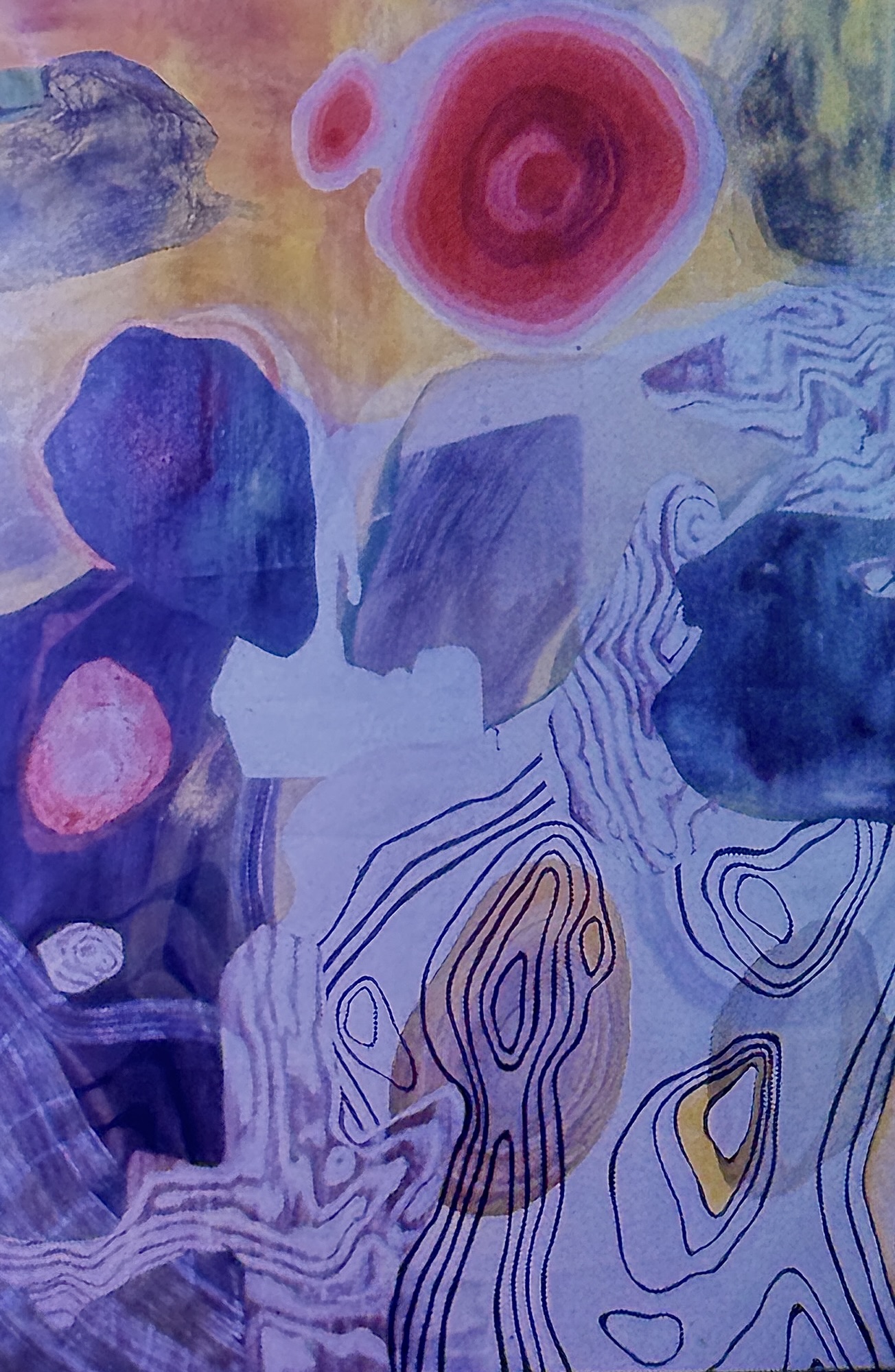
The (poorly photographed) “map” works were probably, OK, *definitely* artist statement cover for my formalist tendencies. Maps and mapping are pretty rich terms for those of us who are part of the first generation of art students to get educated almost exclusively by postmodern era instructors. On this occasion of reflecting about the past, specifically on my college (over)education, I can see, as the artist I am today, how that facet of the development of my practice shapes my relationship to and wariness around plenty of concepts. Not just maps and mapping. I catch myself constructing an argument as if I’m arguing with some of “them,” pretty regularly, especially when I engage with topics like progress and universal humanity. It’s been a bit of, while not rebelliousness (no artist apologizes for *that*), definitely a reaction on my part, which comes with some of the feelings, as the kids say.
I don’t think mine is a unique situation, to value the existence of an institution like “Art” and also to have been drawn into its dynamic of simultaneously venerating and eschewing the past. It’s almost like a parent-child-family sort of relationship to the past and future. Our weird little village is, well… BTW, “yes” it’s totally one of many contradictions that animate and motivate me that I have developed an academic approach of using words, while having and expressing resentment towards the Academy. Maybe that’s just a way of saying I’m bought in on this idea that I’m an Artist with a capital “A” though- I mean the resentment of my elders, not the snootiness. Maybe that too, though…
Anyway, a birthday is an occasion as experience filtered through memories of past, similar experiences. Its shape is sort of wild if you think about it that way. Part of the context for these reflections on the passage of time and memory is that I’m working on a collaborative piece about memory, specifically nostalgia, and the way it is a broken map, but, that’s a blog for another Sunday. Be good to each other lovelies.
Sharon Butler of Two Coats gives some love to Chicago-area painter Anne Hayden Stevens, their newest resident (Bryce is also a past resident). Her primary endeavor is to examine how we navigate and relate to physical and psychological spaces.
#annehaydenstevens

David Carrier has words about I Believe I Know (which closes soon), which closes Maggie (and Elijah). I don’t know if she would call these “abstraction” (one is reminded of Dorothea).
More
#maggiebjorklund

Martin sits down with the always insightful Amy Sillman (courtesy of Art in America) to unpack signs and symbols and semiotics in general and the context of his most recent (he is showing now at Sikkema Jenkins Molloy in New York).
#cameronmartin
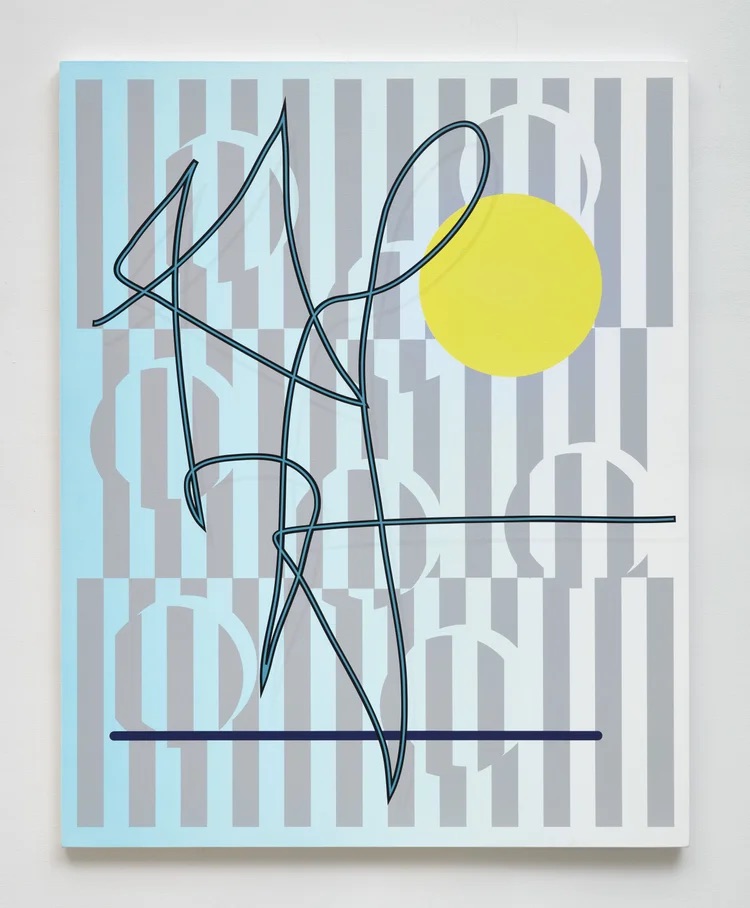
work explores the intersection of pattern and symbol in Surinamese Maroon culture, the larger African Diaspora, and twentieth-century modernism. He was recently in Carried Over as part of the International Studio & Curatorial Program.
#remyjungerman

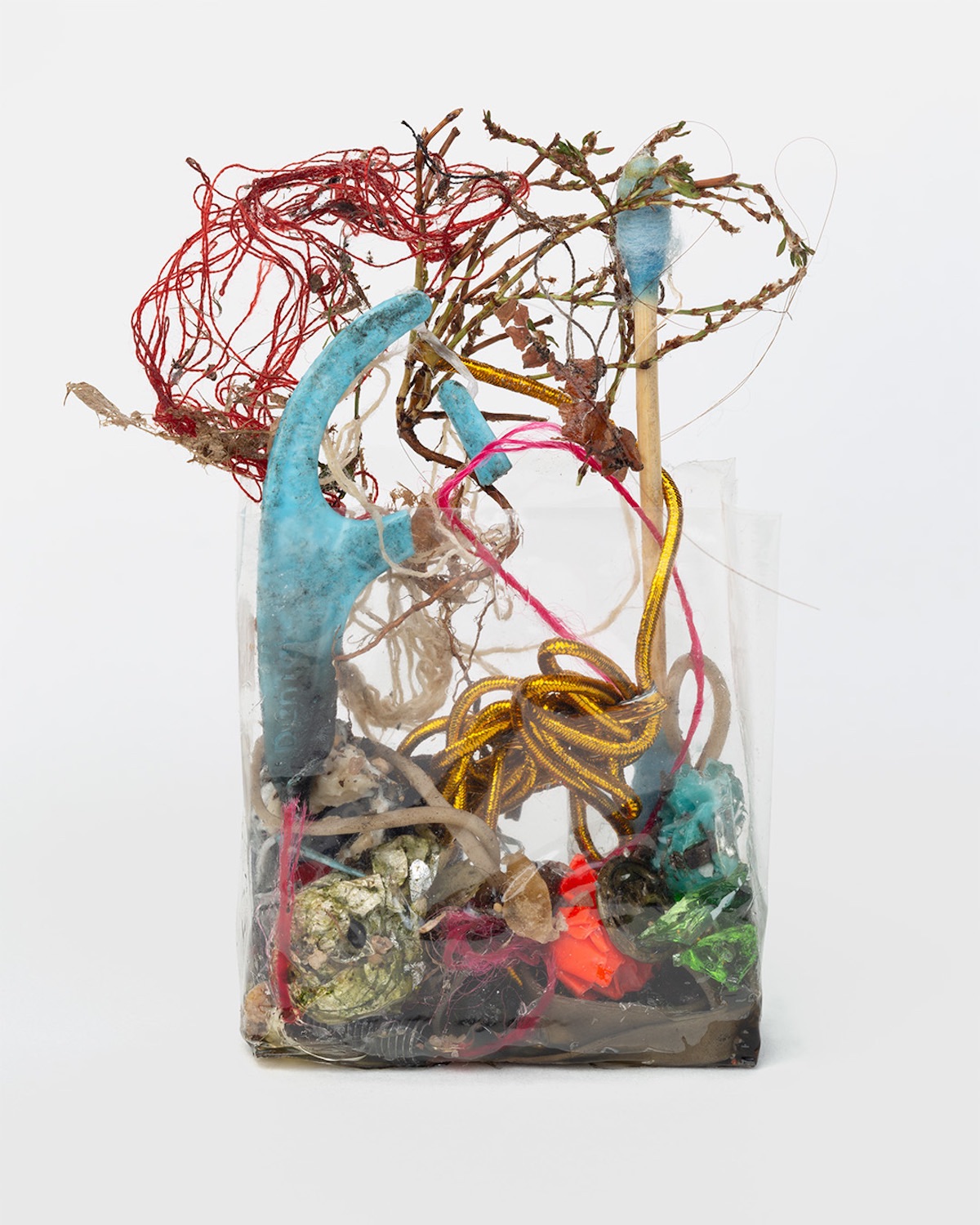
Back in May, Debra at Hyperallergic drew our attention to the unexpected beauty of detritus. Specifically, how, through his art, Yuji brings reverence and discipline to the job of living, and acknowledges each human’s durational condition. They are abstract in the sense that compositional decisions are driven by formalist prerogative (they are clearly recognizable materials also).
More
#yujiagematsu
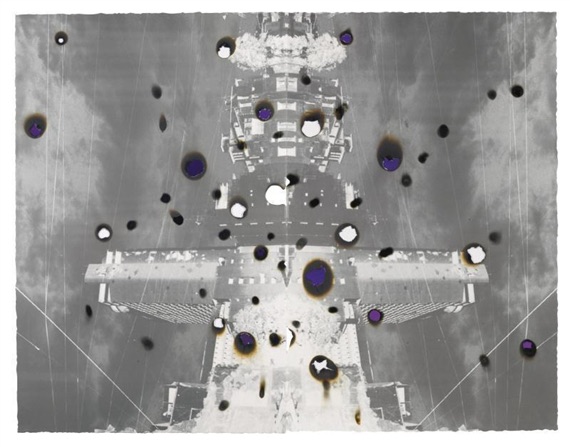
born in Chicago to a Lebanese father and American mother, John studied architecture at Washington University, St. Louis (BA 1990) and fine art at Bard College, New York (MFA 2005). Taught at School of Visual Arts (2008-11) and as visiting professor at Cornell University (2010-11). Manifold group exhibitions, mostly in U.S.A. (predominantly New York and California), but also in Lebanon and Canada. Prolific lecturer/panel member for Lebanese and Middle Eastern art. Based in Brooklyn, New York.Also shows with Walter Maciel.
More and more
#johnjurayj
I think one of the best parts about the city I’ve chosen to live in, and specifically its Art scene, is perspective. Regular readers know I love the Triangle of North Carolina. I think it’s not on a lot of people’s radar who aren’t here or from here. That’s not shade or being jaded. The ubiquity of social media cuts both ways in this instance- “yes” more people can know of what we do because of platforms like Facebook, Tik Tok and Instagram, and, there are probably other, similar cities and regions that are also clamoring for love from the algorithmic overlords of the internets.
An example of the value of perspective that you can only see from a place like here? To get to my point, I’ll point you to an example in a recent essay over at, yep, Two Coats of Paint. Anna Gregor‘s The Art Critics Who Don’t Want Better Art gives it to multiple someones with both barrels. I was dying to know who, too, but (spoiler) she doesn’t, although Jacob Brooks came over the top a couple days after her essay was published and spilled the tea- we’ll get to that. Anyway, I think the gist of her article is she ain’t feelin’ the love no more. Not that she makes the case that the purpose of a critic is to be a stan.
I’ve touched on the role of critics as well. I think a perspective Anna and I share is that the art writing we enjoy the most comes from a place (my words, from link above) of belief in the value of the things about which the author is writing. Anna goes further- “The critics who have developed this power will create works that open up artworks to those who want to engage with them but aren’t sure how.” I don’t know that this is the truth, or strive to make the case that there is a way to be (or specifically, to write) that is “right.” I’m pointing to something we have in common on my way to where my perspective differs.
I also continued in my essay linked above by saying that I’m trying to create an “us.” While by that, I didn’t mean a new paradigm that is a clear set of rules for what goes in the “Art” box, and also I didn’t flesh my notion of an “us” out in the succinct way Jacob did in his response to Anna’s essay (told you we’d get there). He calls for “forms of expression that deny the individual and the market… a deliberate embrace of obscurity that algorithms cannot parse.” He also clarifies that this is not a “call for new games as a nostalgic plea for a new avante-garde, with its worn-out fantasies of shock, rupture, and eventual assimilation… but a wholesale expansion of expression and thought that cannot be transformed into commodities.” What does the… (?) editor of a blog titled “Painting After Art is Dead” think about shattering paradigms and hewing to the idiosyncratic? Glad I asked.
Related to the (a?) notion that there is a possible “us” worth contemplating, over at Brooklyn Rail Bob Nickas had another enjoyable piece of brain candy (for me at least) that came out this last ~week. Maybe not candy in the sense of being sweet, since I find myself feeling contrarian about it. The set up was ‘Has Contemporary Art Run Its Course?” which, of course, said editor of this blog has clearly answered. Not really answered in the sense of a “yes” or “no” to the particular question asked in Bob’s essay’s title (else, why write this) but answered in the sense that I do in fact think some aspect of history has, in fact, run its course- and so does he. Not sounding contrarian, yet, I know.
I’ll move to the offensive then and note that, actually, I disagree with the premise that contemporary Art has run its course. Beyond the obvious fact that this author is sitting down on a Saturday morning to write about Art (for the love, as discussed above), I think my issue is the closing phrase of the sentence. And I don’t mean to boil the article down to the title, because Bob makes some quite interesting points- I’ve read it twice before starting this essay and by the time you read this I’ll have done so at least a third time.
I’ll disclose my interpretation of the phrase to clarify- “run its course “means complete its natural development without interference.” It’s “development.” I see my practice as continual development. If I stop or stopped developing then sure I might agree. I’m guessing if you’ve read this far you care enough about Art that you’ll not only agree with Anna’s thesis that good criticism makes you want to get out and see Art you’ll likely at least sympathize with my hot take that you view being an Artist as a strategy to living in the world, more so than it being a job (it certainly is work of course to be an Artist), or agreeing with Bob’s broader point, with which I also take some issue, that we need a master narrative to connect to give Art meaning (I’d argue it’s the reverse that’s true- that narrative only comes after we have a sense of the meaning of what we all did.)
…
And… they’re all talking about NYC. Right? I mean, yes- the authors are discussing “the Art world.” But “obscurity,”? Really, Brian? From the editor’s desk of Two Coats of Paint, which has never, ever covered a single show outside of the state of New York? The sheer volume of things to see and do in NYC is astronomical. I’m hoping I can take my first pilgrimage there since 2020 soon, so, again with the “no shade.” All three authors really should come hang out with us though. I spent like 2 hours looking at Art last weekend. And I didn’t have to jostle with ten bazillion New Yorkers to do it.
Look, I read what the people wrote, because I see value in their perspective that only they can have. I just wonder what perspective they’d have if they really embraced the type of broad, post-historical narrative they’re espousing and got out of the damn City and hung out with those of us who are committed to practicing a vibrant, challenging, diverse and fucking meaningful practice without needing to be in the center of the Art universe. Bless their hearts.
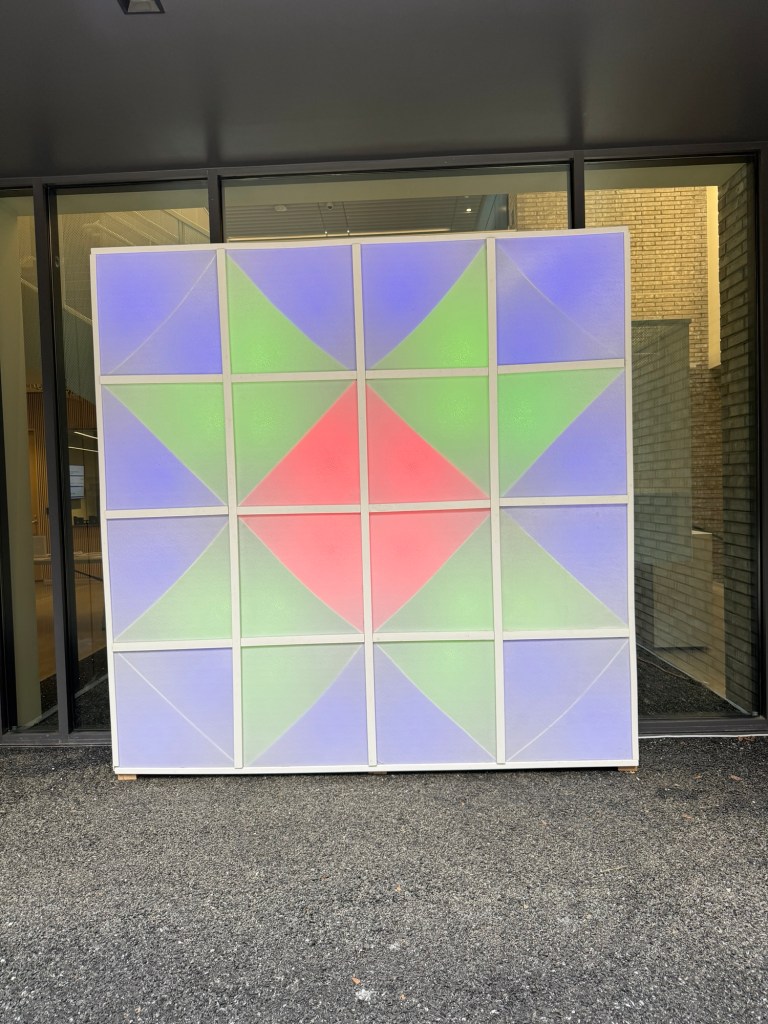
Saw below during Uproar which featured lots of NC artists like Jane and Carson.
More (her practice is broader than below)
#juliagartrell


 Painting After Art is Dead