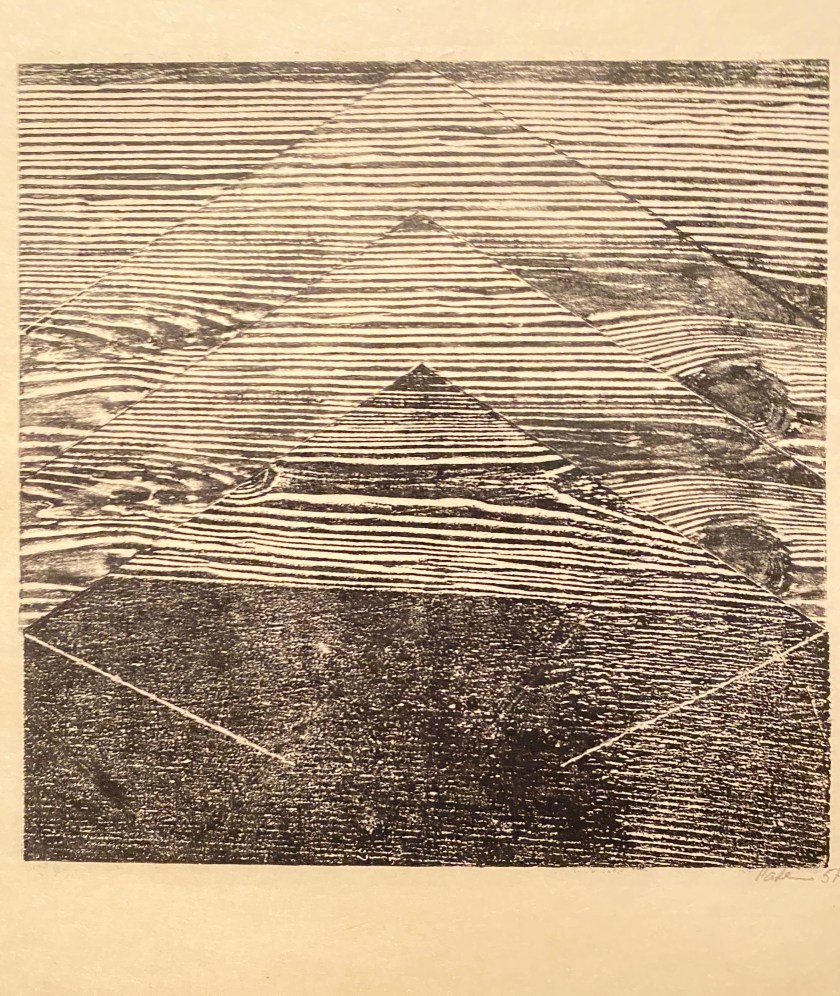
Lygia Pape (7 April 1927 – 3 May 2004) was a Brazilian visual artist, sculptor, engraver, and filmmaker, who was a key figure in the Concrete movement and a later co-founder of the Neo-Concrete Movement in Brazil during the 1950s and 1960s. Along with Hélio Oiticica and Lygia Clark, she was an important artist in the expansion of contemporary art in Brazil and pushed geometric art to include aspects of interaction and to engage with ethical and political themes.
I saw below at the Art Institute in Chicago recently, part of an exhibition of her prints.
One of the (many) ways my community is awesome is Jean Gray, and one of the ways Jean Gray is awesome is a discussion group she’s recently started, Discourse and Dialogues. And “yes” this article is a form of endorsement, next event is 5/24 for Raleigh folks (and you can put a reminder on your calendar that they meet every 4th Wednesday). FYI, I’ll be leading the discussion this time around as we dig into what formalism can possibly mean in 2023. If you miss it, I will definitely cover the topic in a future update.
As part of participating in this group, I found out about another awesome, new organization in Raleigh that you all should be following, Small School, a new, art-based alternative educational platform. Primarily focused on lectures/discussions to start, the plan is to offer… more, down the road. Check out their site, sign up for their list, and show up for an artist talk. The one I attended with Killeen Hanson and Leslie Vigeant was amaze balls- big surprise that it drew me in with a title like How Do We Pay Attention to What We’re Paying Attention To?
Through the Discourse and Dialogues discussion group, and participation by the Small School staff, I learned about Akiko Busch, the next visiting artist, who is also an author of several books, including How to Disappear. I’m getting there… the book touches on this study by Paul K Piff and others that explores “awe” as an “emotional response to perceptually vast stimuli that defy one’s accustomed frame of reference in some domain” (generally, in specifically, experience as part of viewing art) and pro-social behavior. I’m just now beginning to dig in on this work (for the ;tldr crowd def click on the hyperlink to the recording of Paul’s talk) but the high-level take-away as the kids say these days is that the study is actual, hard science, focused on “awe felt during experiences with religion and spirituality, nature, art, and music” which often centers upon two themes “the feeling of being diminished in the presence of something greater than the self, and the motivation to be good to others.“
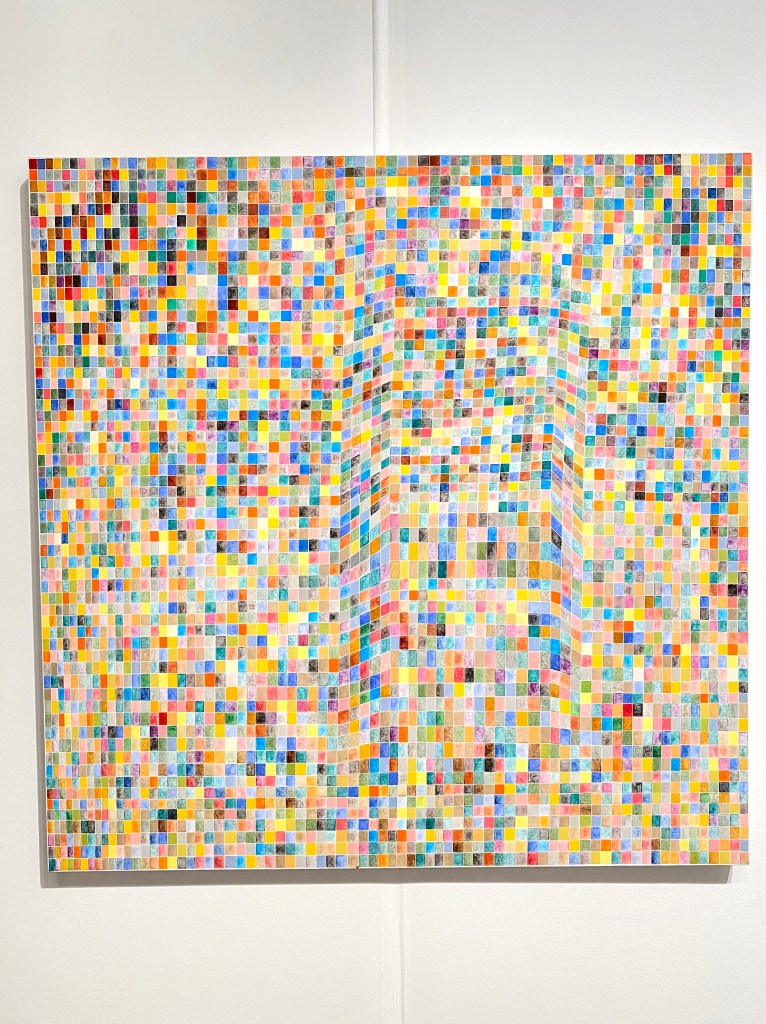
Spotted below at Expo Chicago. Howard was (1928-2021) an African-American artist, designer and collector. He worked with paper, pigments, wood, clay, textiles and metal. He designed for industry—e.g. print textiles for Vallila, tableware and interior items for Arabia (the esteemed ceramics factory in Helsinki). He planned interior designs for corporate offices, public buildings and cruise ships. He especially enjoyed recycling items like scrap metal, used cardboard, castoff clothing–which he took and created into whimsical compositions. More





 Painting After Art is Dead