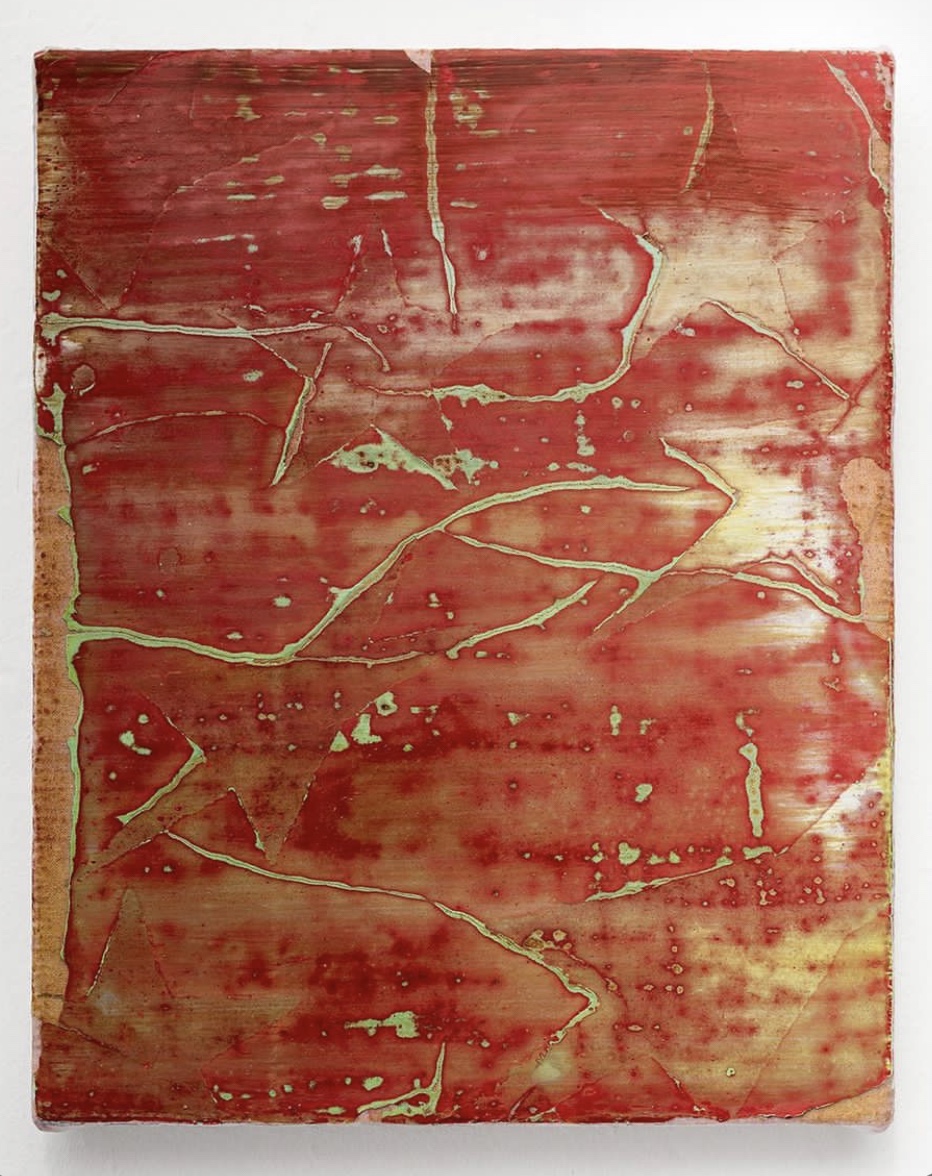
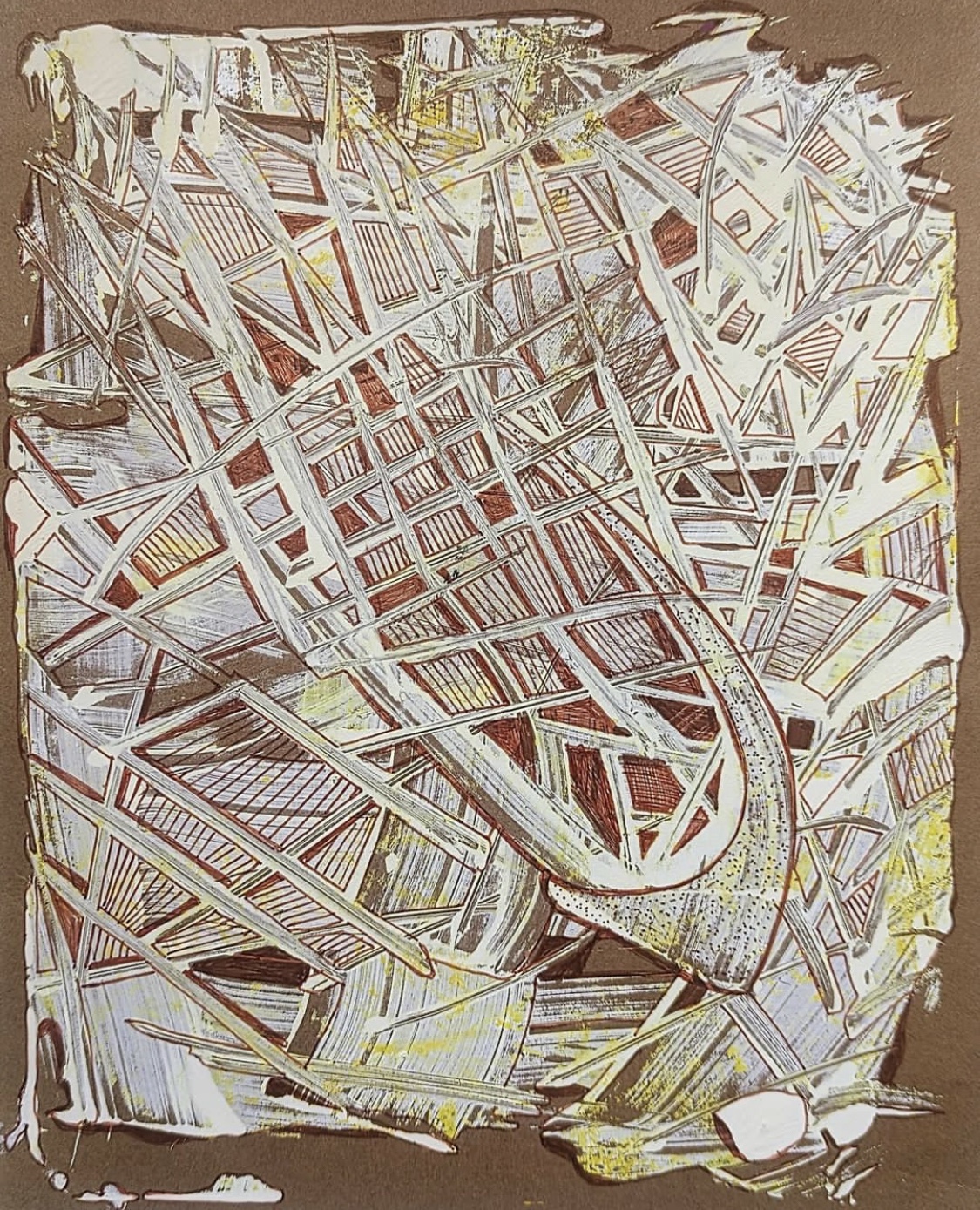
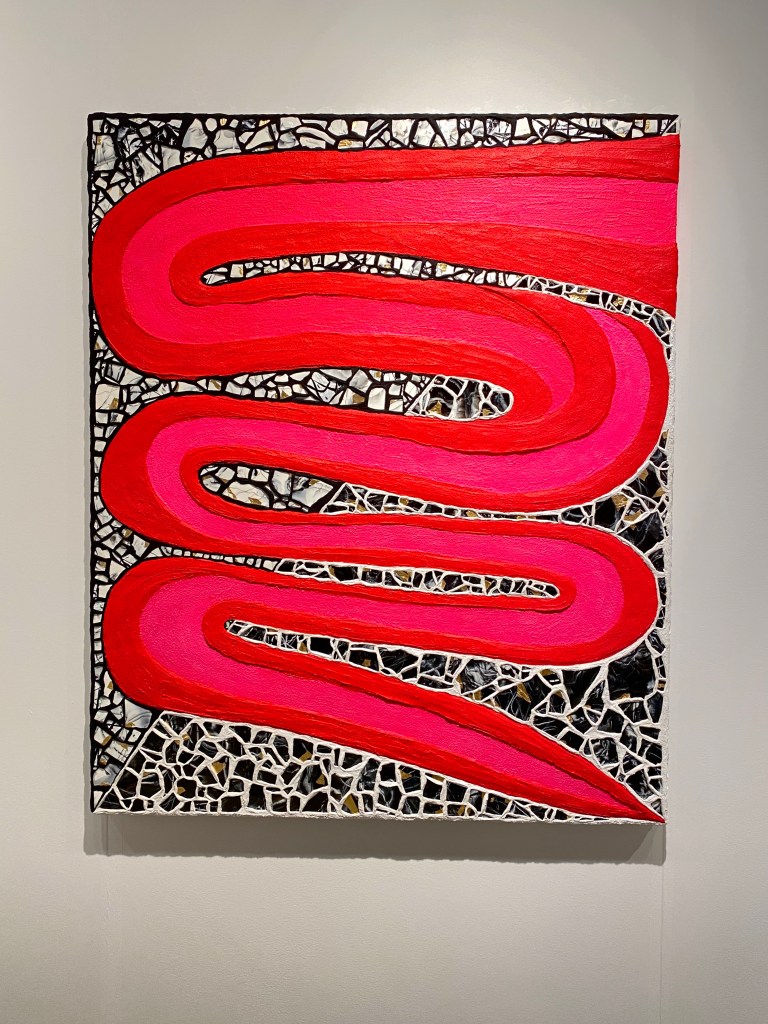
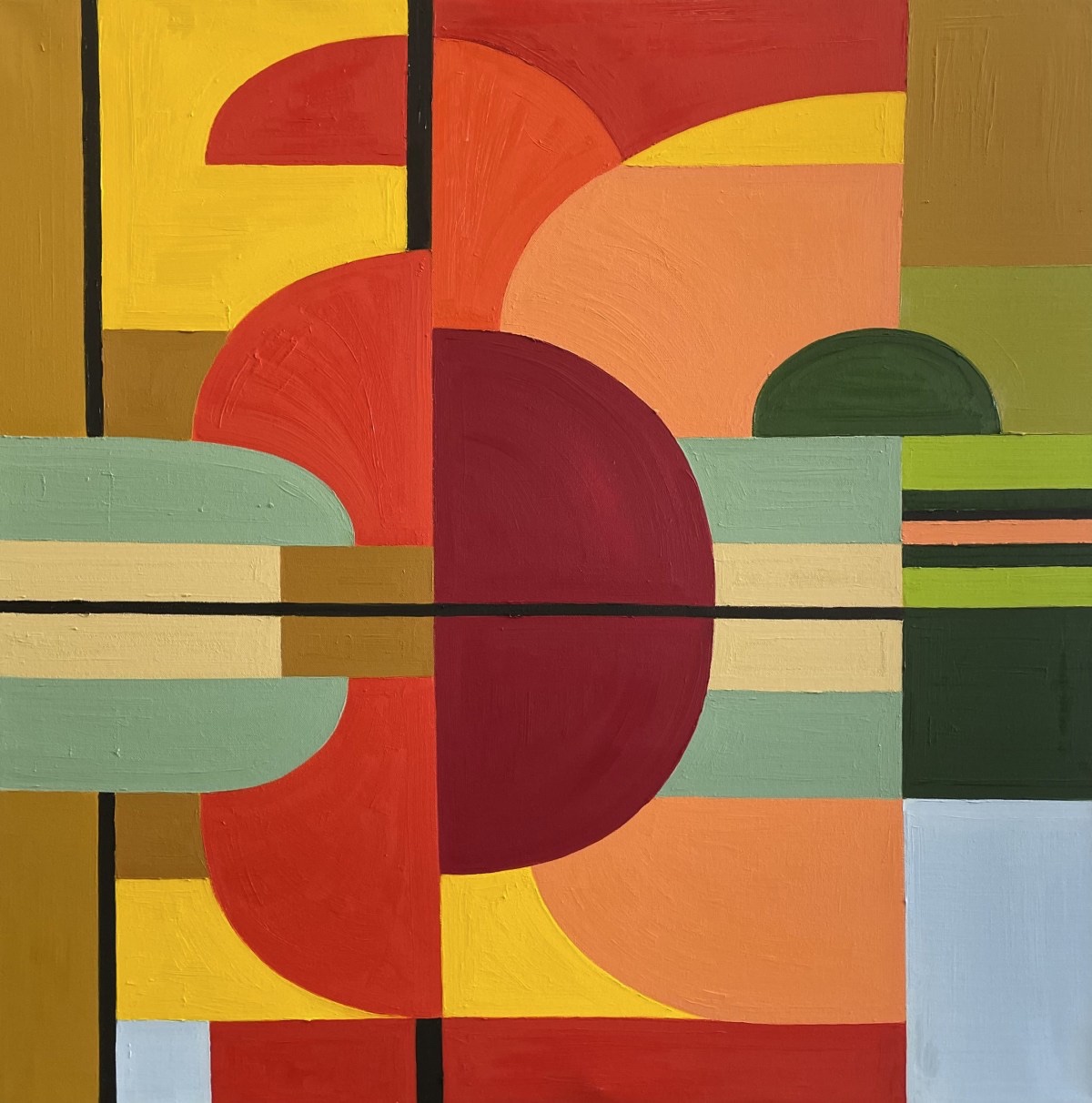
Helen Torr

Below is part of the permanent collection at NCMA. Helen was an American early Modernist painter nicknamed “Reds” for her hair color. Torr worked alongside her artist husband Arthur Dove and friend Georgia O’Keeffe to develop a characteristically American style of Modernism in the 1920s. Like Alexander and Norman, abstraction was a part and not the entirety of her practice.

#helentorr

Stanton Macdonald-Wright

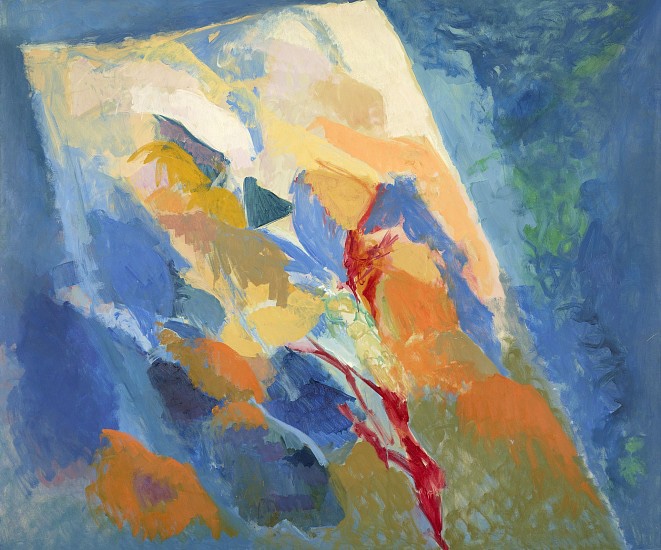
Saw below at the NCMA recently. As a young painter in Paris, Macdonald-Wright helped found a short-lived but influential art movement called synchromism, which proposed an abstract art based upon a musical/mystical interpretation of color. Returning from Europe, he eventually settled in Southern California, where he became an impassioned advocate for modern art. As exemplified by this painting, Macdonald-Wright’s late style is far more lyrical than the bolder paintings of his youth. One can attribute this gentleness at least in part to the artist’s devotion to Taoism, Buddhism, and Japanese art.
Even the title alludes to a Zen-like concern for the beauty of the ephemeral.

#stantonmacdonaldwright

Joan Truckenbrod

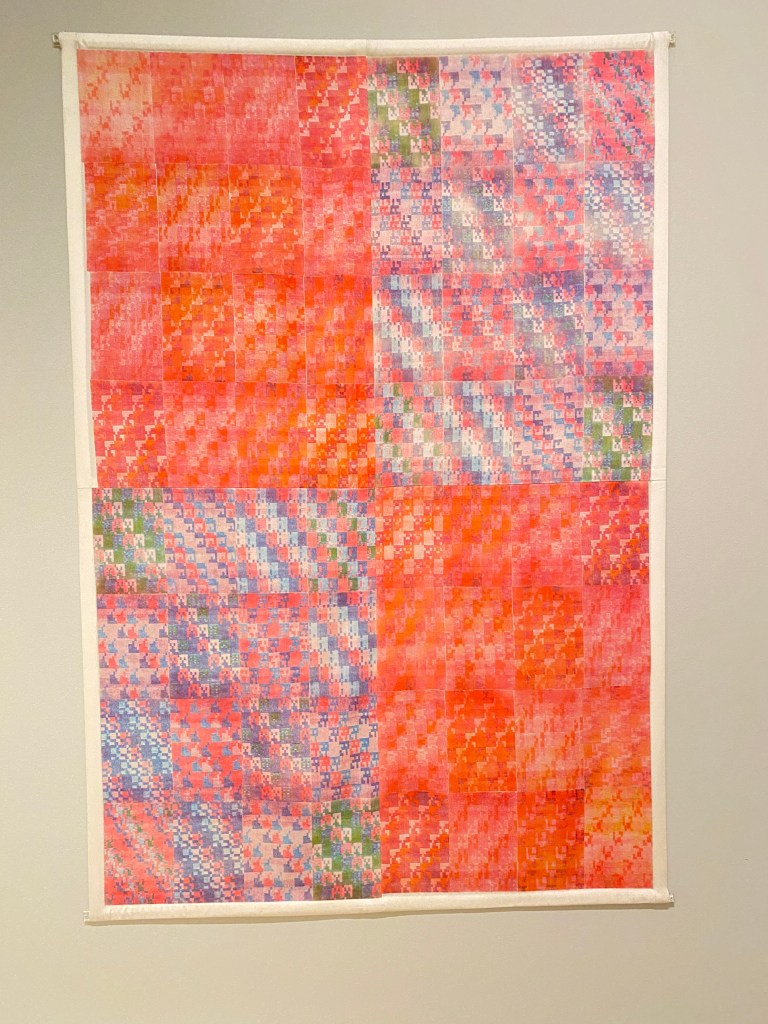
Saw Joan’s work Electronic Patchwork (below) in Coded at LACMA recently. It is composed of “patches” of patterns derived from algorithms for natural phenomena (such as wind currents or light waves reflecting off irregular surfaces). To transfer the images from her computer monitor, Joan upended the monitor onto a color copier and printed them onto heat-transfer paper that she then ironed on fabric to create a “patchwork” both digitally derived and handmade. More
#joantruckenbrod

Liz Markus

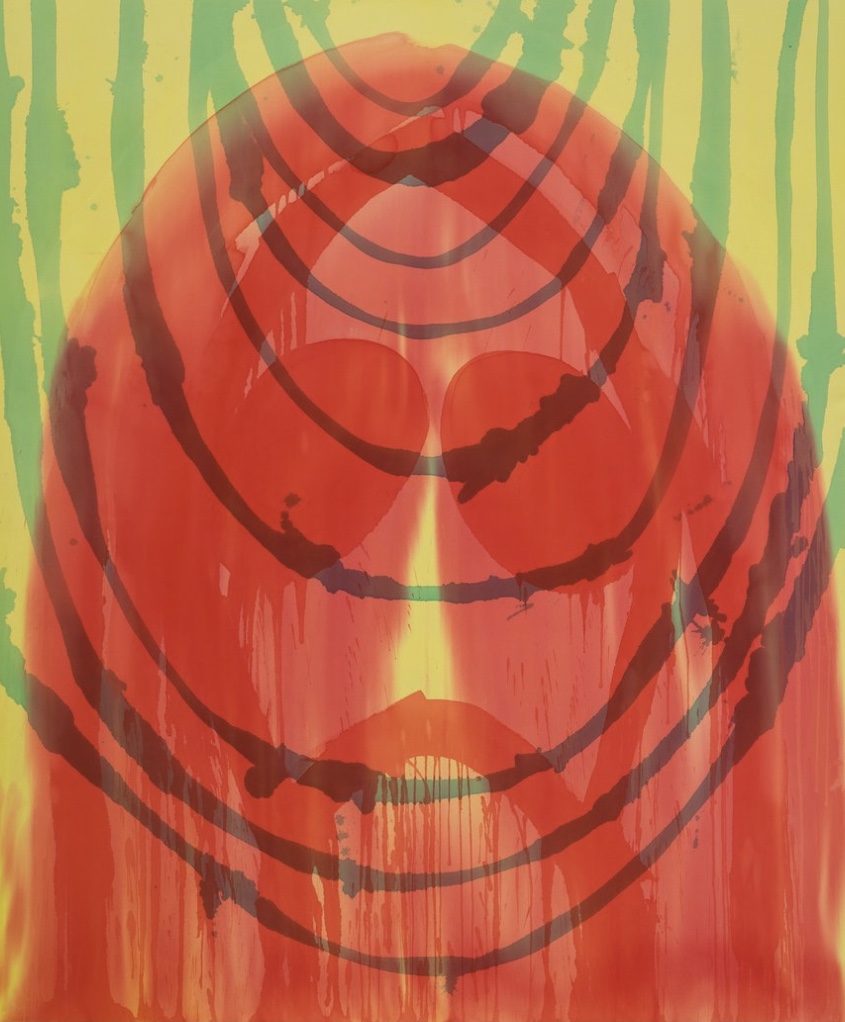
For her seventh solo in New York and her first with Shrine Liz Markus continues her Hippies series.  Her iconic hippie heads are each marked by Markus reaching for something – waves of energy, galaxies of stars, lush rainforests, vibrations of form, two-color pulsing auras. While Markus calls these subjects “hippies”, she almost obliterates their original countenance to create completely new emblems of freedom, living your own way and going with the flow

#lizmarkus

Lygia Pape

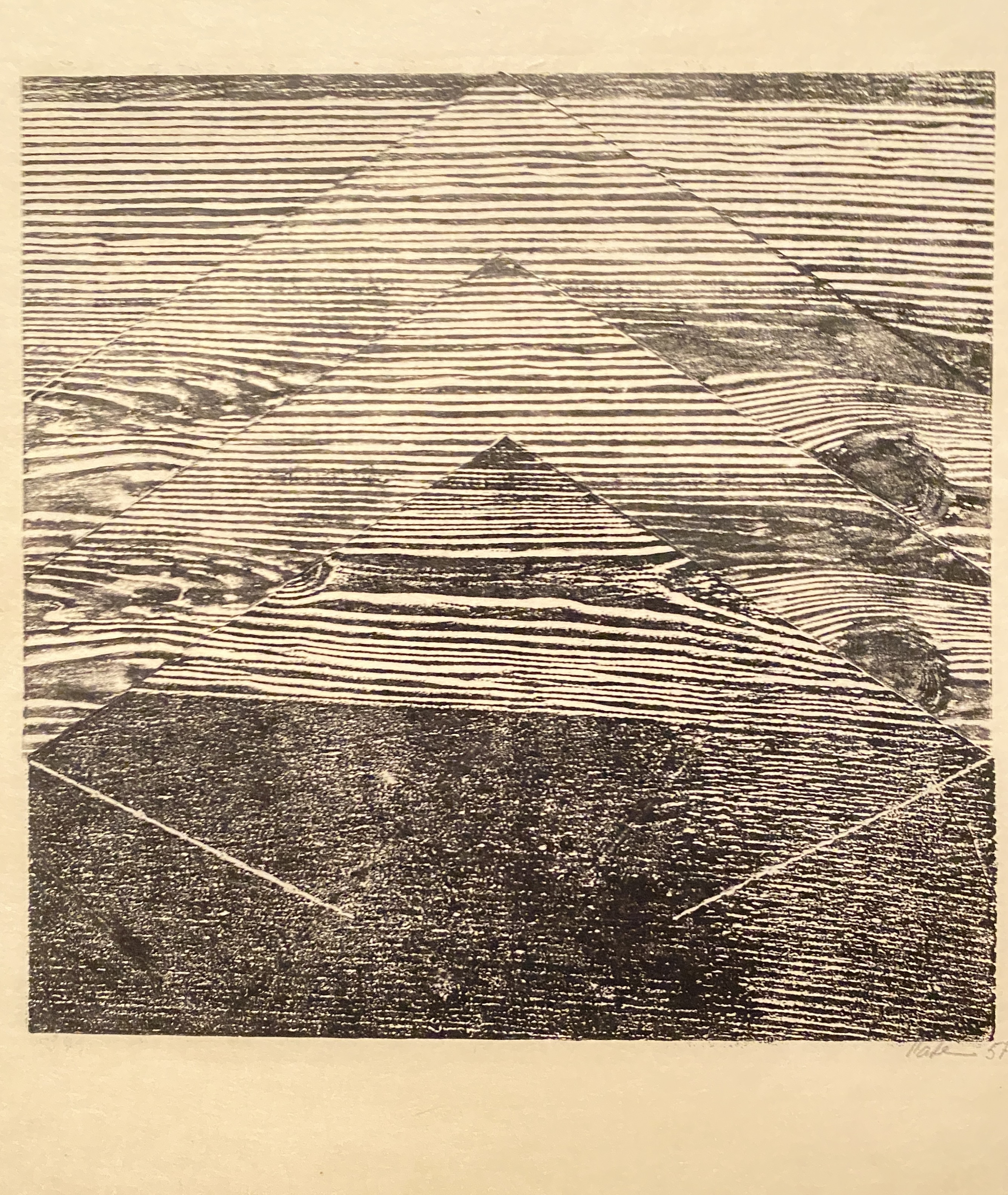
Lygia Pape (7 April 1927 – 3 May 2004) was a Brazilian visual artist, sculptor, engraver, and filmmaker, who was a key figure in the Concrete movement and a later co-founder of the Neo-Concrete Movement in Brazil during the 1950s and 1960s. Along with Hélio Oiticica and Lygia Clark, she was an important artist in the expansion of contemporary art in Brazil and pushed geometric art to include aspects of interaction and to engage with ethical and political themes.

I saw below at the Art Institute in Chicago recently, part of an exhibition of her prints.

#lygiapape

Ruth C. Smith

Ruth states that her creative process begins with “designing my work digitally. This gives me the opportunity to experiment and make mistakes while also setting up my designs to be laser cut in the process. These designs are typically geometric in nature, surfacing the hidden yet simple structures behind people or moments – a person sitting in a chair or a moon rising over a rooftop.”
#ruthcsmith

Adrianne Lobel

Hyperallergic says “In Reflections on a Pond, her fourth show at the Bowery Gallery in New York City, Adrianne Lobel presents a new series of graphic and geometric paintings inspired by the landscape and its reflection on her pond in upstate New York. She works en plein air during the warmer months and takes the work into her studio in Hoboken in the winter, creating larger, cleaner versions of the outdoor sketches.”

More

#adriannelobel

Helen Saunders

Helen Saunders (4 April 1885 – 1 January 1963) was an English painter associated with the Vorticist movement. Vorticism was a London-based modernist art movement formed in 1914 by the writer and artist Wyndham Lewis. The movement was partially inspired by Cubism and was introduced to the public by means of the publication of the Vorticist manifesto in Blast magazine. Familiar forms of representational art were rejected in favour of a geometric style that tended towards a hard-edged abstraction. For a brief period Vorticism proved to be an exciting intervention and an artistic riposte to Marinetti’s Futurism and the post-impressionism of Roger Fry’s Omega Workshops.

#helensaunders