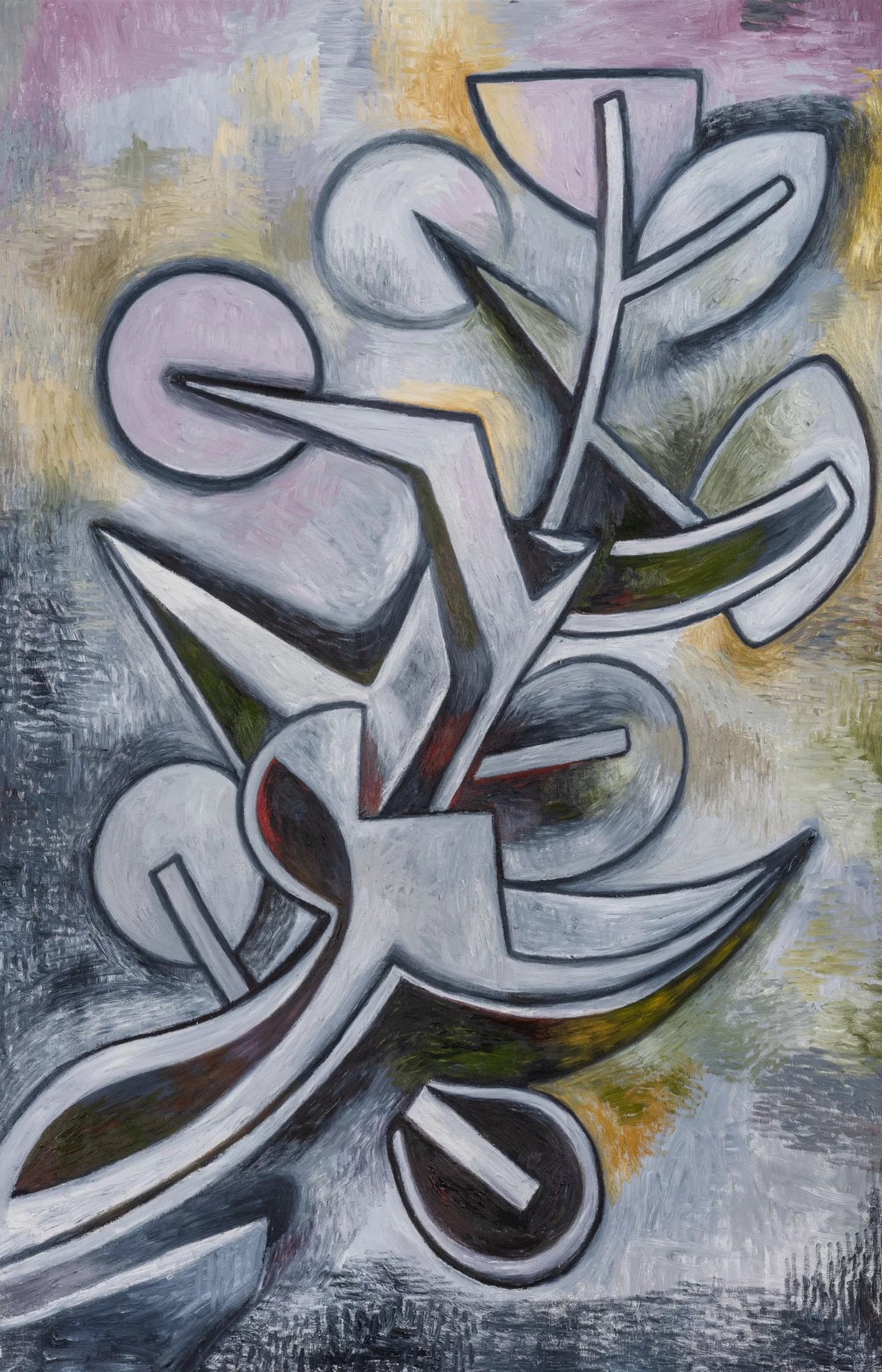
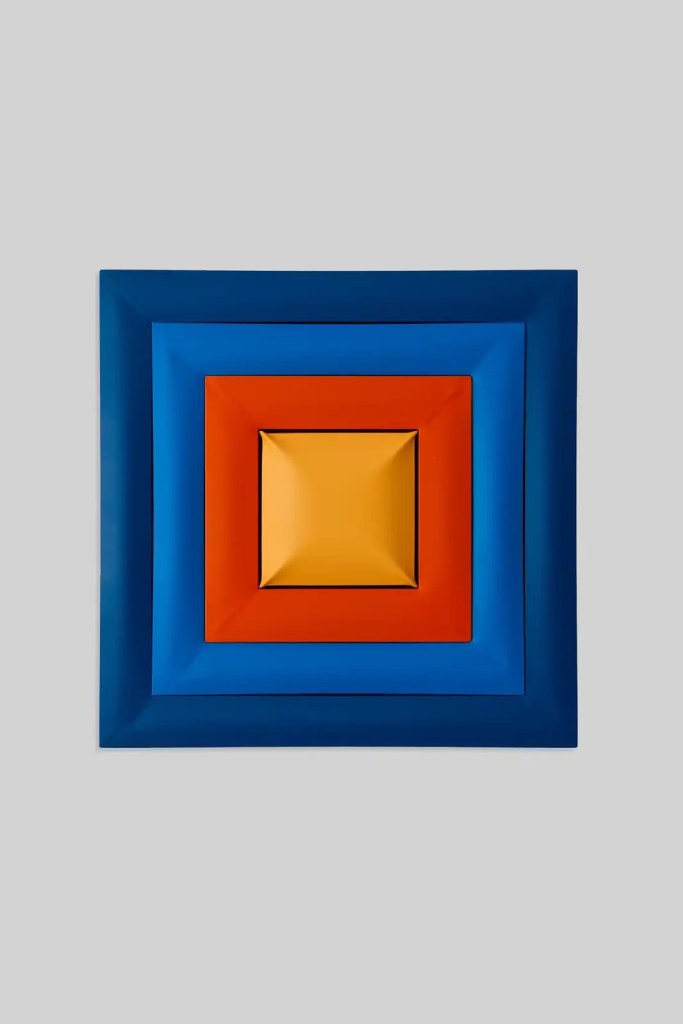
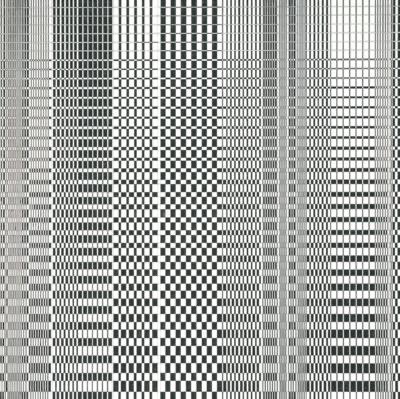
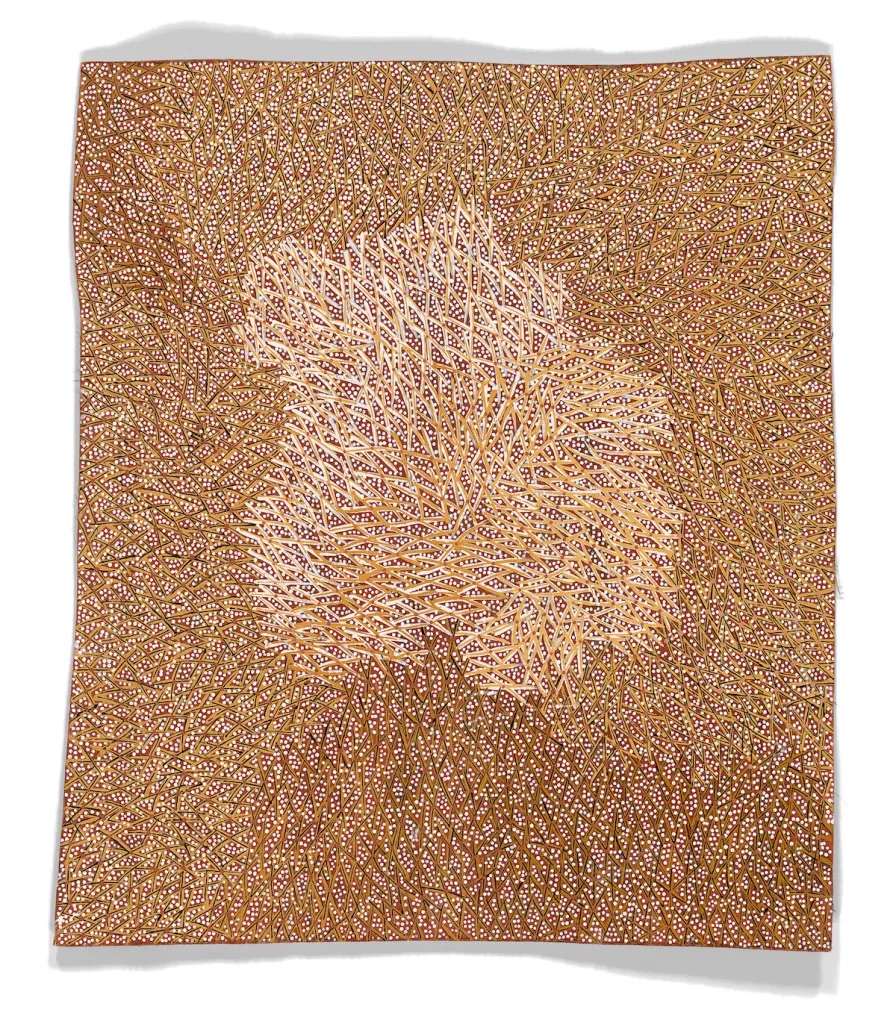
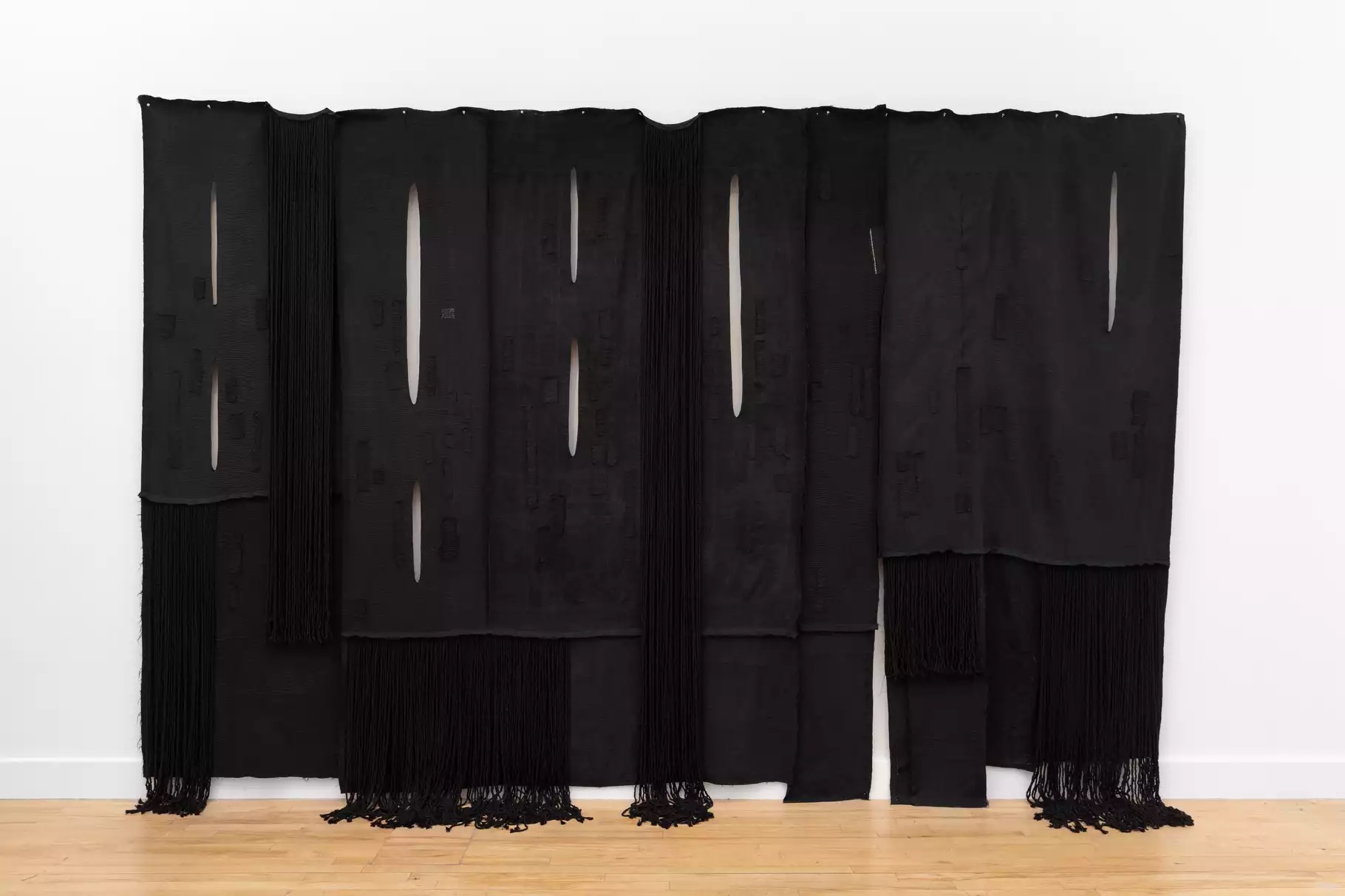
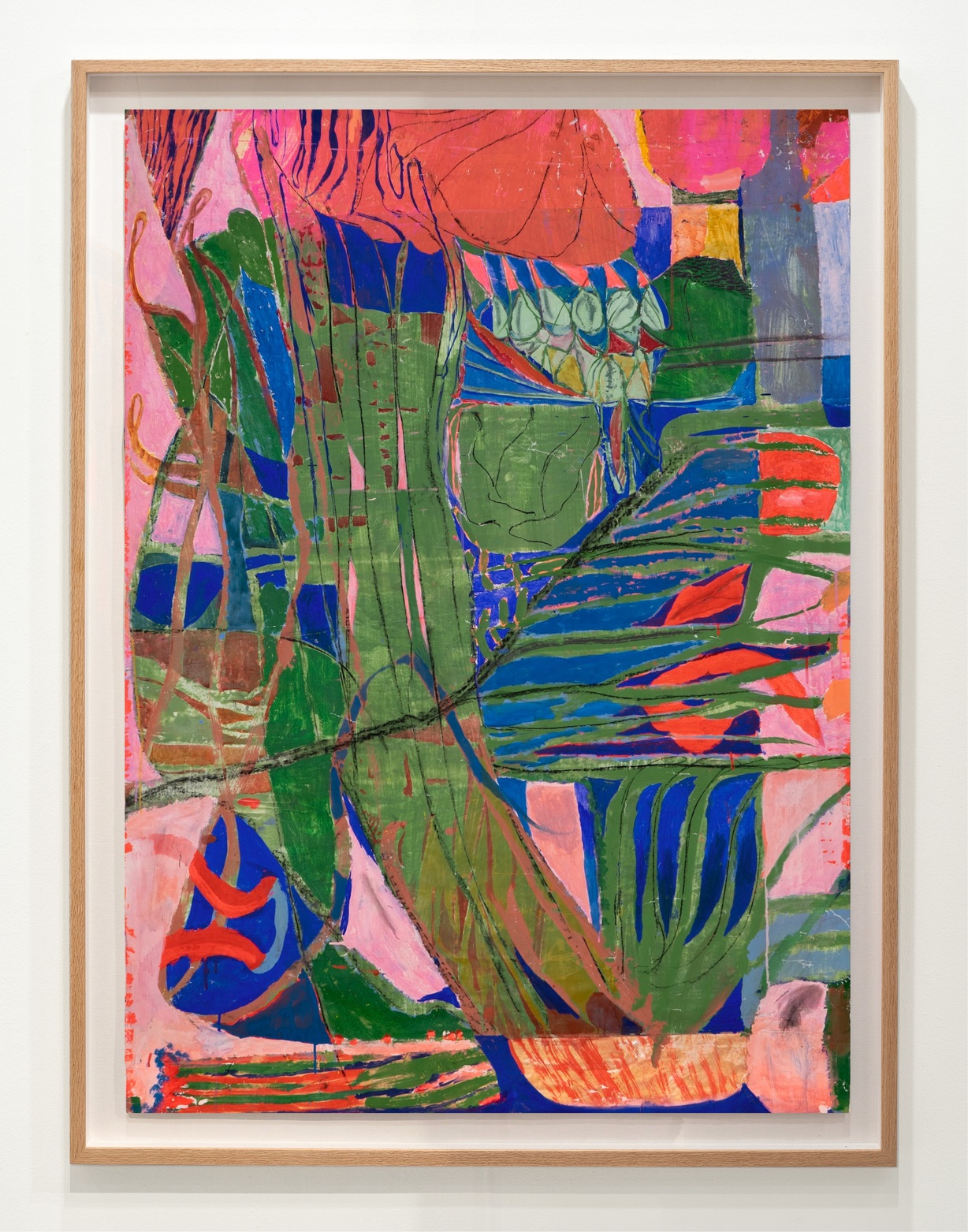
was a founding member of Supports/Surfaces, known for questioning pictorial illusionism with unmounted stretchers, flexible ladders, and assemblages of collected objects. He is represented by Ceysson & Bénétière.
#danieldezeuze

was a founding member of Supports/Surfaces, known for questioning pictorial illusionism with unmounted stretchers, flexible ladders, and assemblages of collected objects. He is represented by Ceysson & Bénétière.
#danieldezeuze

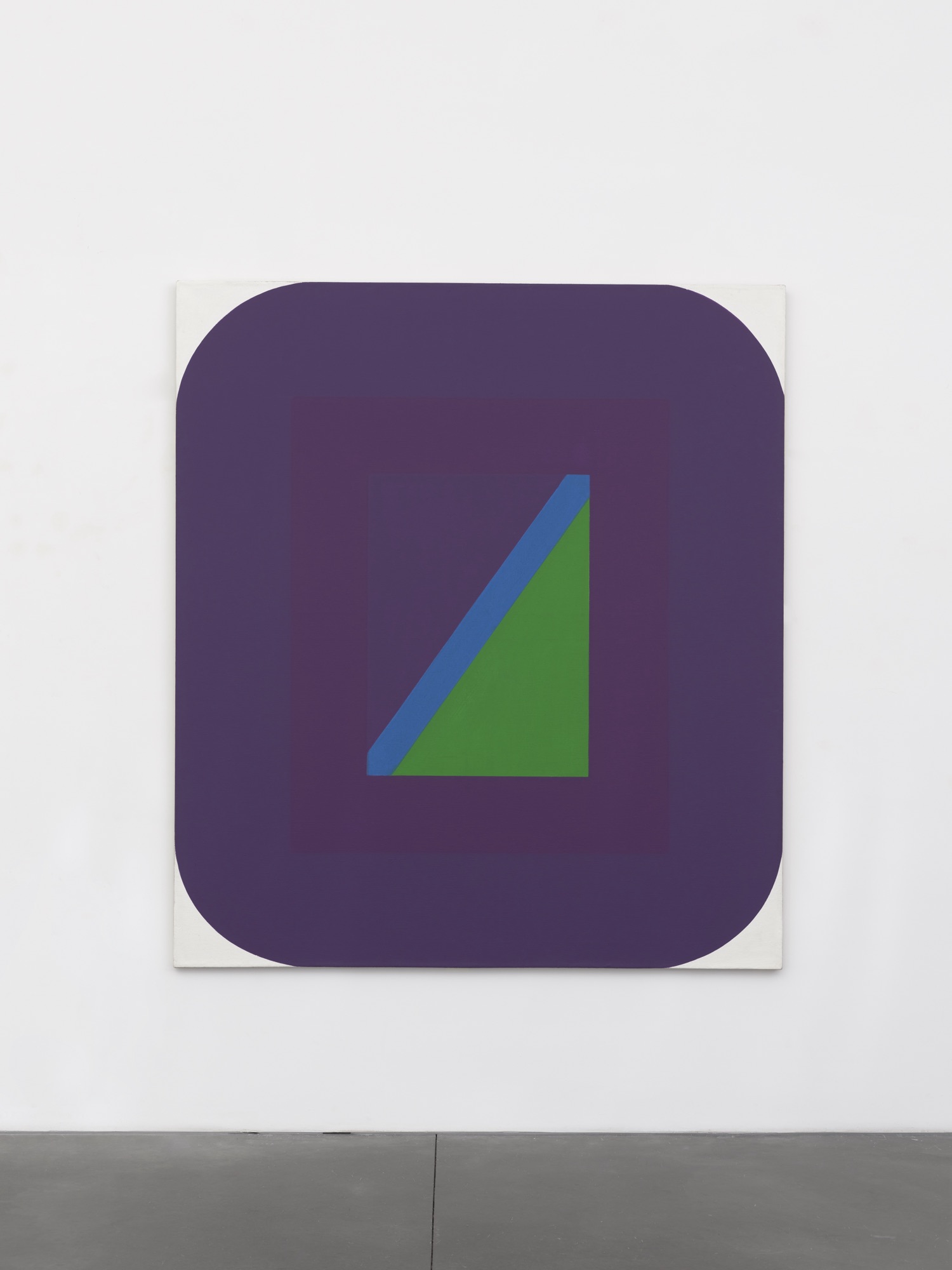
Karl at Whitehot has words about Georg’s chromatic logic (in the context of a recent, posthumous exhibit of the German artist’s work at Nino Mier Gallery.) Rising through the hard-edge movement after World War II, his work pivoted between Bauhaus experimentalism and New York’s emergent formalist abstraction.
More (estate IG)
#georgkarlpfahler

Jonathan Stevenson discusses Stephanie’s “coolly seductive” paintings on display at Kevin Kavanagh Gallery in Dublin. Below is one of many titled “Emotional Calculus” like the show itself. He notes that, in “due course, the paintings reveal deeper intent, which is to complicate and enrich your ultimate apprehension of the presumptively simple life.”
#stephaniedeady

makes objects through which we view space, light and surface; they relate to domestic spaces in his birth place, Puerto Rico.
#edrasoto

is one of the creatives featured (posthumously) in the group show “Fold, Drape, Repeat” now up at Ceysson & Bénétière (Two Coats essay contributed by Marjorie Welish). A select showing of work by the loosely aggregated French collective Supports/Surfaces, the exhibition embodies the very assembly involved in making art. Devade’s first intention was not to devote himself to painting. Initially a poet, fascinated by philosophy, it was when he met Marcelin Pleynet, who published his first poems in Tel Quel in 1964, that he became more particularly interested in painting. He became one of the main animators of the debates on the relationships between practice and theory in the field of visual arts.
#marcdevade

shows with Thaddeus Ropac (they show some names you know including Heemin and Joan and also Sean Scully who I just wrote quite a bit about). His work is on the edge of figuration/landscape like Dorothea and Maggie also Elliot.
#alibansidar

Local (to the Triangle!) writer Colony Little calls our attention to Uman’s kaleidoscopic journeys. Their journey spans from Somalia to New York (and soon the south of France); this self-taught artist transforms migration, memory, and emotion into vibrant worlds of movement and hue.
More and more
#uman

came up for me recently when writing Competition, as I was rereading my initial blog about Astrid and John Yau’s essay Whose Stripe Is It, Anyway? The subtitle conveys that Astrid was told that she could not paint stripes because Sean Scully and Frank Stella had done so before her (which I agree with John is a patently foolish statement).
So I’ve never blogged about Mr Scully. Reason being? I bet a number of you remember the Mr Shachter putting Scully on blast for a mind-boggling degree of self-regard in a BBC film about his life. In particular, the zinger in the article is that Scully says in the film “I’m the Donald Trump of the Art World.” Well I know the Brits were going through Brexit and Boris Johnson at the time (2019), and the amount of insensitivity it took to utter that really blew my mind and candidly broke my heart. 
Why? I’ve been moved by Scully’s work.  The first time I ever saw one in person was at the Met, and I remember coming around the corner to encounter a really large one in subdued colors on a dark wall and being almost overwhelmed with melancholy. He is often compared to Rothko, and my emotional experience of that work made it clear why. It was many years later that I also found myself inspired by his words – his Mark Rothko: Corps de-lumiere had a good deal of influence on me during my time in graduate school, as I struggled to describe how painting could “speak” to something directly, and in a way that words never could.
Have you ever seen his photography* btw???
So I am feeling grateful that a recent essay gave me a reason to revisit and sort through these feelings. I have said for many years now that part of the obligation that writers and teachers have in these types of situations is to point directly at the contradictions, and make the lesson that it is possible for canonic artists to be complex, flawed and gifted, as a way for us all to have a better understanding of the world and our selves.
*Also, and have you seen Ellsworth Kelly’s?
#seanscully

Heemin Chung investigates the material potential of digital images as she translates them into the mediums of painting and sculpture. Her work investigates how technology shapes contemporary perception and impacts our existential conditions. She is represented by Thaddaeus Ropac.
More
#heeminchung

Known for his folded canvas paintings, Simon Hantaï (French, born Hungary, 1922–2008) was an advocate for the consideration of canvas as a material unto itself. Yes one thinks of Sam when hearing that and the work also makes one think of fellow Washington Color School artist Alma Thomas.
#simonhantai

gets a nice nod for below (which is in Penumbra at Anat Ebgi) from Two Coats in their most recent gallery guide.
#sigridsandstrom

gets a nice nod in an Artnews article covering new acquisitions by the Tate (“yes” they were one of the included artists)
#lubnachowdhary

work is orchestrated with a collection of colours, shapes, and lines that have caught her eyes as she moves through daily life. These elements have slowly become the vocabulary she uses to tell her stories and give shape to her personal impressions of the world around her. Her hope is that her art becomes a space for the viewer to transcend the moment and to experience a sense of relief and inspiration, as a favourite piece of music might.
#mariongriese

has actually been mentioned here before, when he wrote for TUSSLE Christopher. They’re also a good writer: (from his statement) “Abstraction, now more than ever, has become an exercise in painting in tongues, pulling both painter and viewer toward a practice of highly idiosyncratic systems of signs, and paradoxically seems to be at the moment one of the best tuned visual instrument to explore our diverse commonalities.” He is one of the ten artists Saul Ostrow included in Building Models.
More (yeah I know, they’re pretty fantastic)
#gwenaelkerlidou