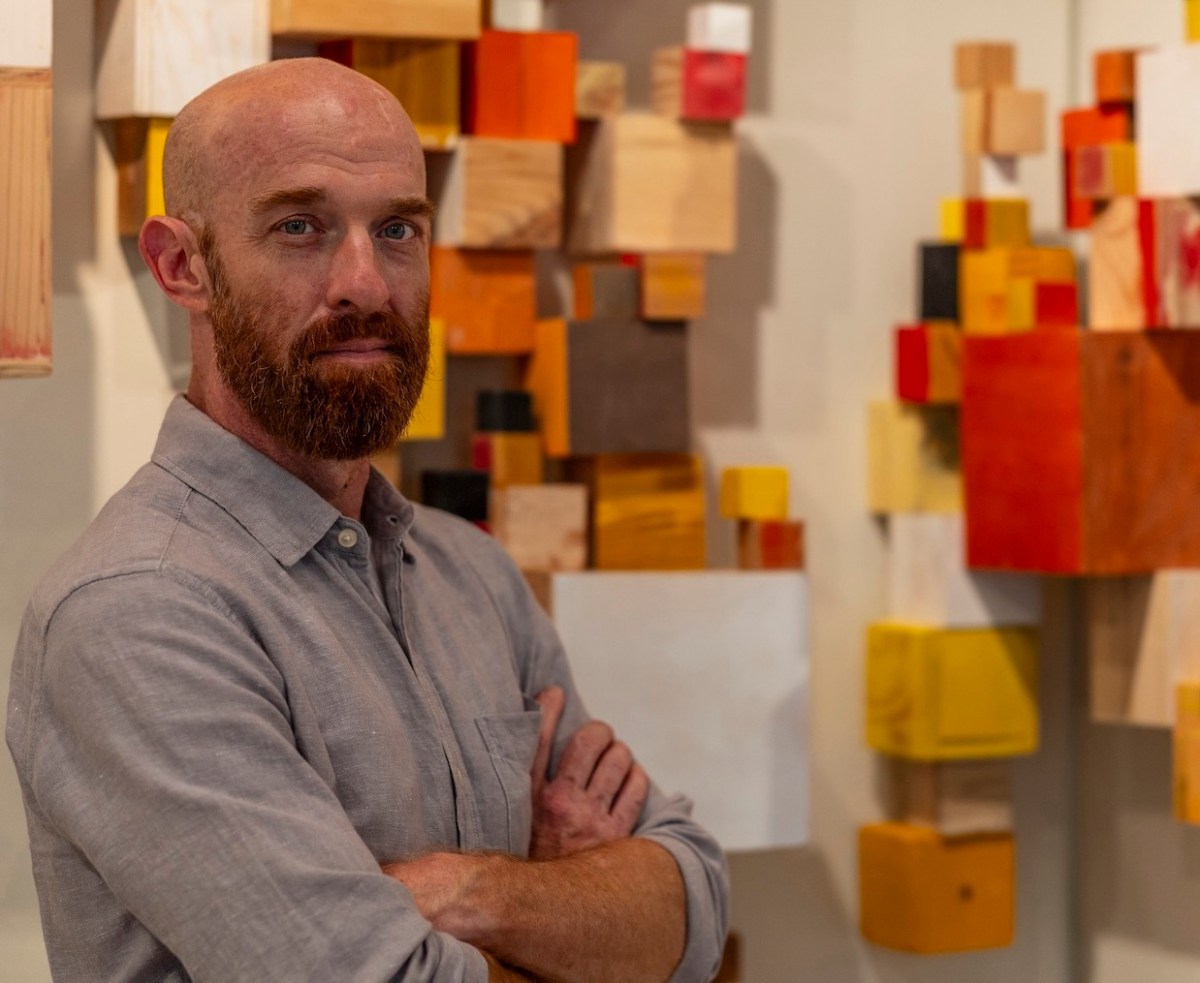
is the personal website and blog of Sterling Bowen. I’m an abstractionist, writer and curator living in Raleigh, NC. This WordPress-based site is also the host for my blog, which covers topics ranging from my personal practice to those of others, general musings on Art and an occasional reflection on social issues. Subscribe below…
This site is also the home of around 2,000 short blog posts about other artists, with a focus on non-figurative modalities. Thanks if that project is why you’ve shown up here. Search below…
Had a rough week personally. Things didn’t go the way I wanted them to at work- specifically, the challenges I faced were not of a sharable nature, requiring me to literally lie in response to the question “how’s everything going” several times, and I really feel terrible about myself when I’m not truthful. My spouse was out of town, which meant a doubling of responsibility of course (sharing is caring), and then the universe also picked this moment for one of the pets and one of the kids to have health challenges. I didn’t get into a show (that apparently I was more emotionally invested in than I realized) and I found out another one I was certain was happening and had been making work for had been axed. And, I had set aside a (beautiful fall afternoon when I’d rather have been playing basketball and drinking beer with friends) to gallery sit, as a forcing mechanism to get some art admin done, and didn’t get everything (OK, *anything*) on my to-do list do’ed.
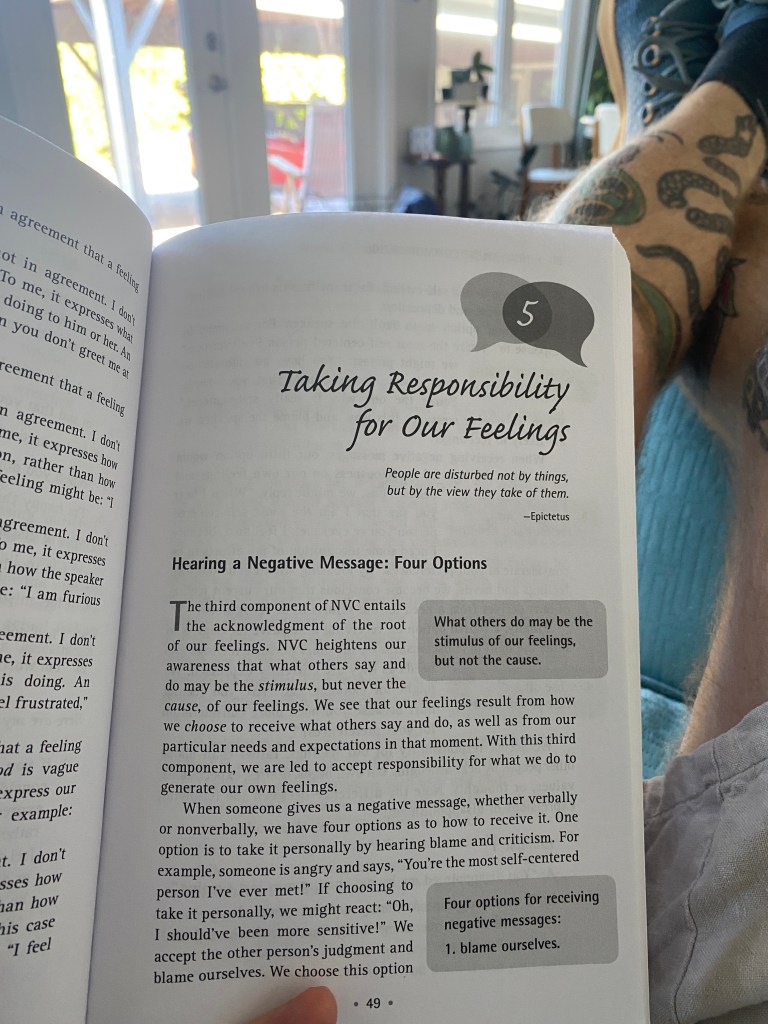
When we say we are disappointed what we are communicating is that we had expectations that weren’t met. That’s a totally normal feeling to have. There’s another step to take there, I think, which is examining why you feel this negative emotion. In addition to the help that Nonviolent Communication has given me in this area (below), I’ve been using Acceptance and Commitment Therapy of late. I’ve also been getting a lot of use and benefit from the mantra “I never lose, I only win or learn” (attributed to Nelson Mandela).
The show I didn’t get into? Yes it’s not a great feeling. When I chose to reflect on why I was disappointed I not only had some helpful clarity, I was able to share this with another artist who I had not yet had a 1-1 conversation with, and I learned more about them, too, as a result. Not winning, *and*, learning? Check!
Didn’t get everything on my to-do list done? When I chose to reflect on why I was beating myself up, I *learned* that I had underestimated what would be involved in a couple of the tasks, which will help me with setting goals in the future. And I did get several of the tasks started* which is moving towards the goals. Plus, a couple of the things that distracted me were items on my 3-month goals checklist. I also knocked one off this Friday, which was to hang work at the Carter Building in my friend Tom’s studio. It also helped that I went to an engaging workshop/discussion on the many paths to a rewarding practice which also centered my thoughts on my awesome arts community. And as regards my disappointment around the two shows that aren’t going to happen for me, one led to me experimenting with the work that got rejected for the first time in probably 8 months, and getting more time to work on the piece in the lower right- bladow!
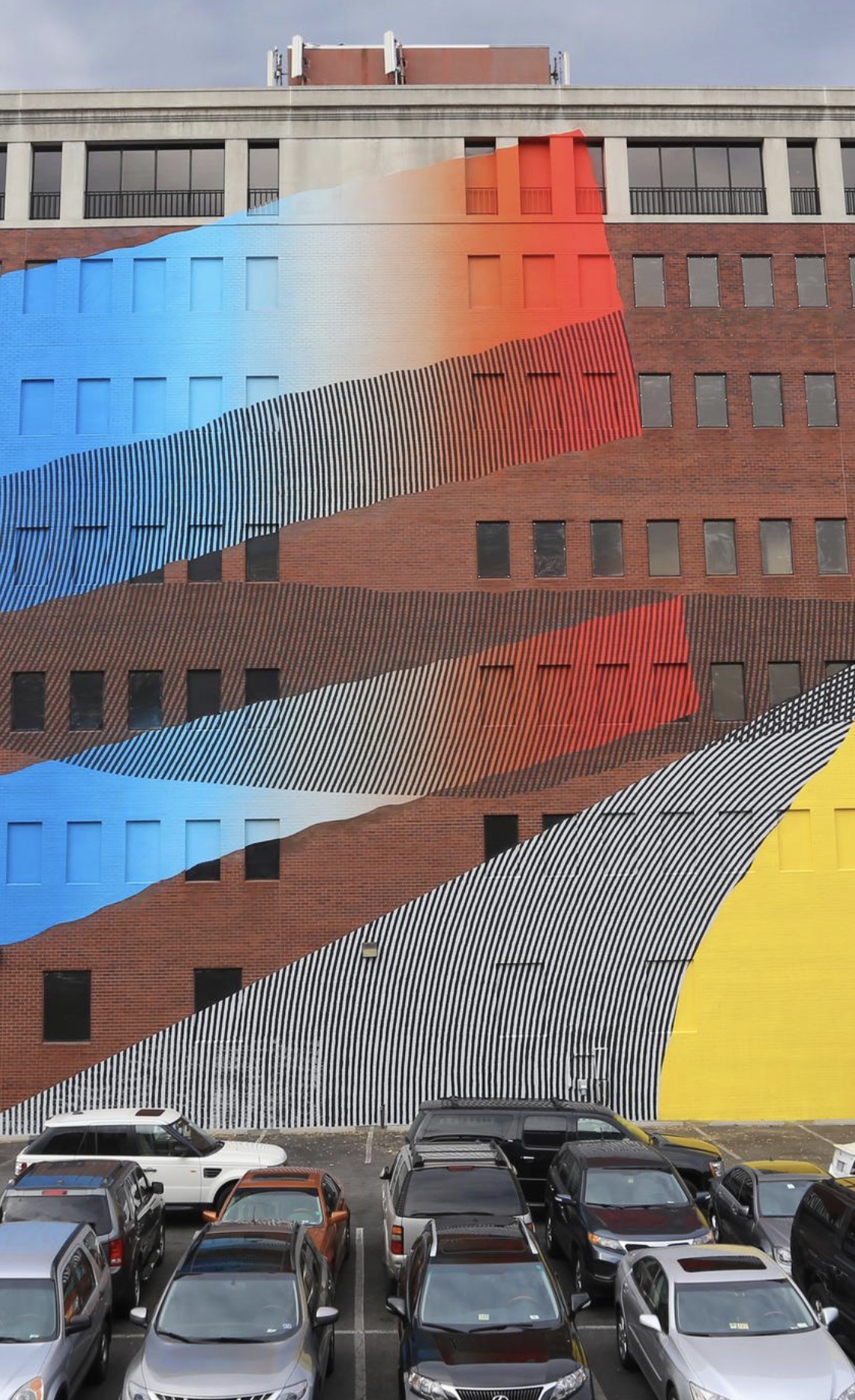
MOMO is an American artist who began his experimental outdoor work in the late 90s, with homemade tools and borrowed public space. Ten years of free ranging projects, centered around adapted masonry techniques, strategies based on collage, computer code, and seriality, came to form the basis of his visual language. This language finds its expression in paint, on commissioned walls and studio work from 2009 to the present day.
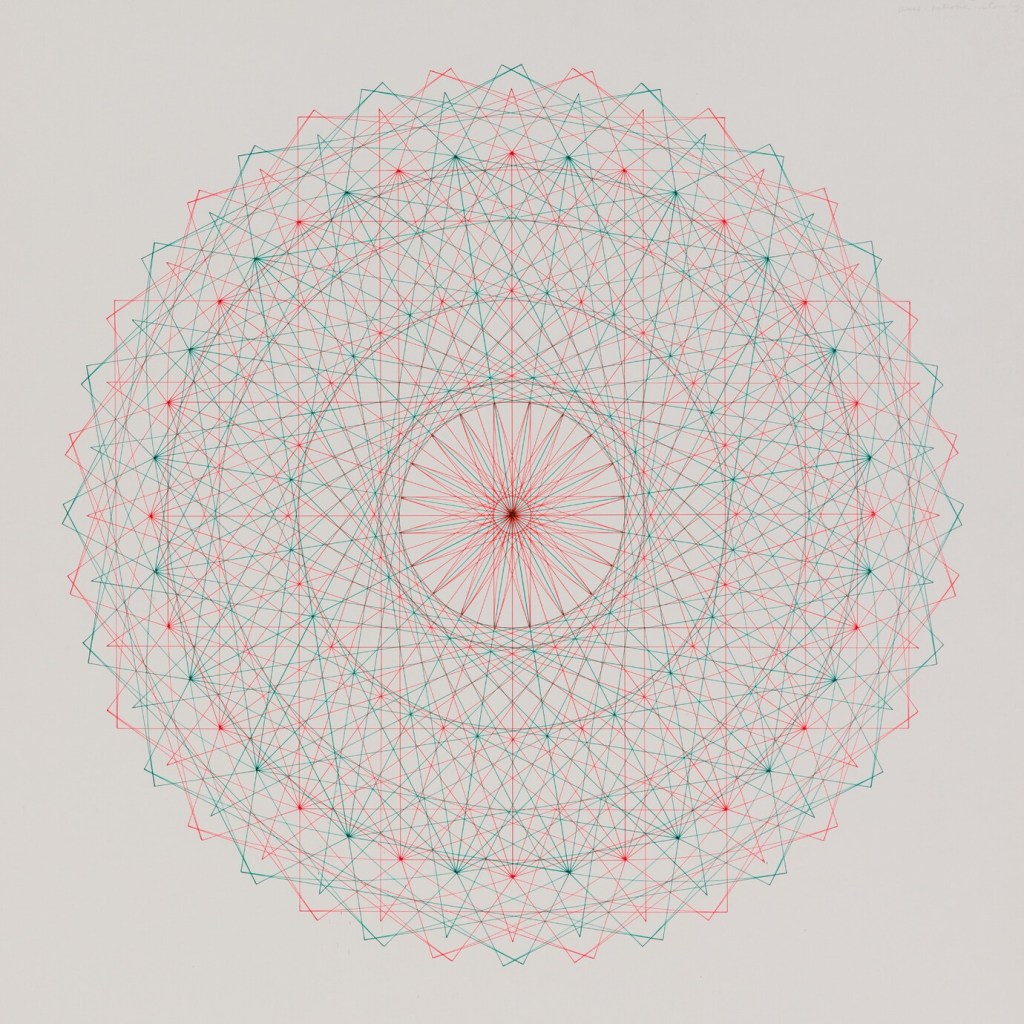
Art Sales and Research has recently brought our attention to Harold (1916-2007). He completed his four-year college degree in three years at Quinnipiac College in the 1930s. He worked for Wallace Silversmith’s as an accountant and then opened his own accounting practice in the late 1940’s. In 1953 he opened a furniture store in Wallingford, Connecticut. His ledgers and journals were like works of art, they were so detailed and meticulously written in pencil. Harold retired in 1979 and acquired a Texas Instruments calculator as a premium from a local bank. He began to use it for various calculations and one thing led to another and soon he was back to his early love of geometry and mathematics.
Two Coats of Paint featured below in the email version of their October Hudson Valley Selected Gallery Guide- Kyle’s work is up for auction as part of Artists for Pride, Benefiting the Ali Forney Center . To be fair, some of his work has images (including below) and he also does installation and fashion work.
Jane combines traditional and contemporary materials, exploring the relationship between abstract minimalist composition and the sentimental qualities of ceramic, textiles and found objects. Here is her video The Colour of Words, a recitation of some poetic musings by Jane about colors she encounters over a montage of related images- not abstract, and also about color in the abstract.
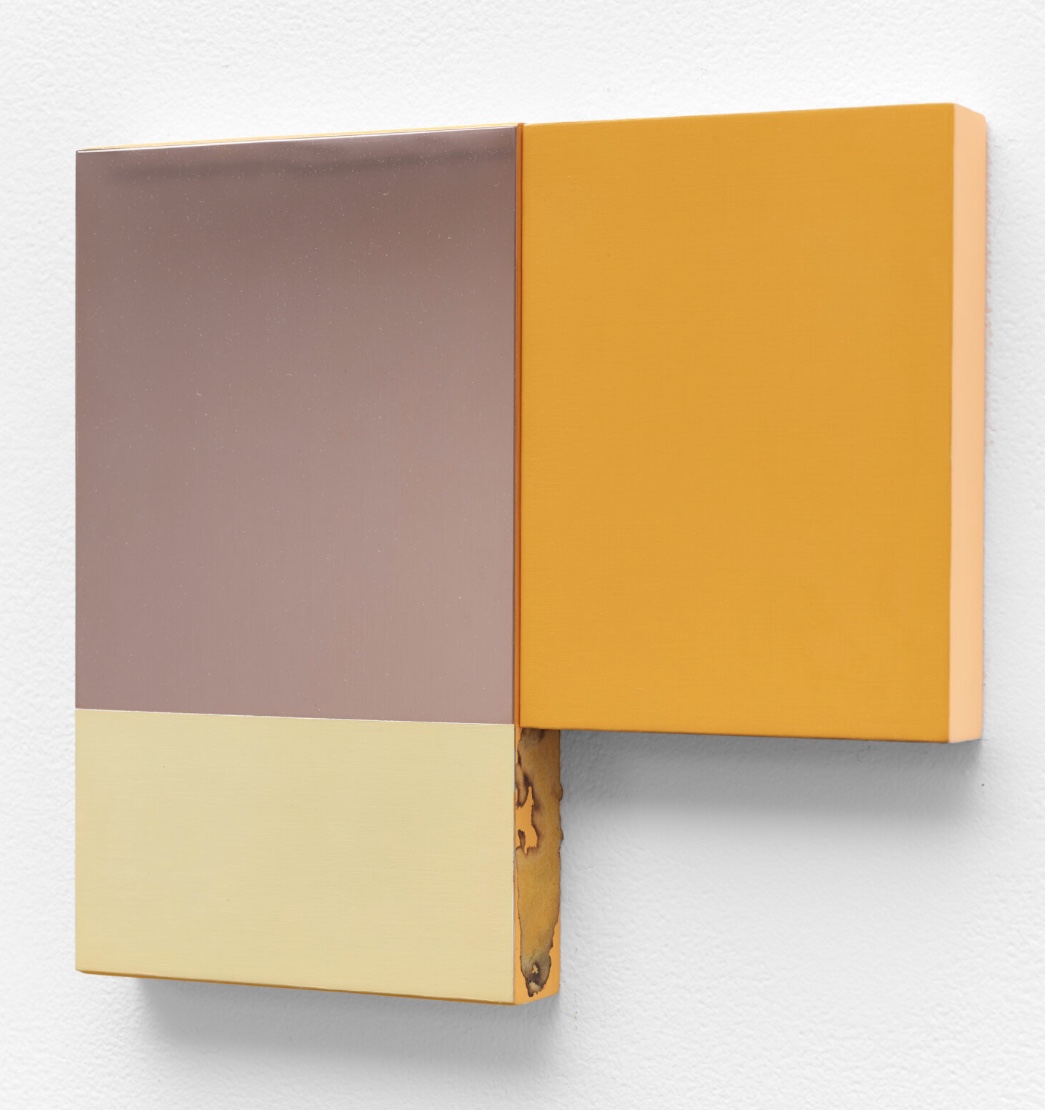
was included in Tina Kim’s Frieze London booth. Suki assembles her sculptures according to an idiosyncratic syntax of form, material, and referent. In compelling the viewer to navigate around and amongst these constructs, Kang suggests an awareness of how one occupies space and navigates the interstices of self and other.
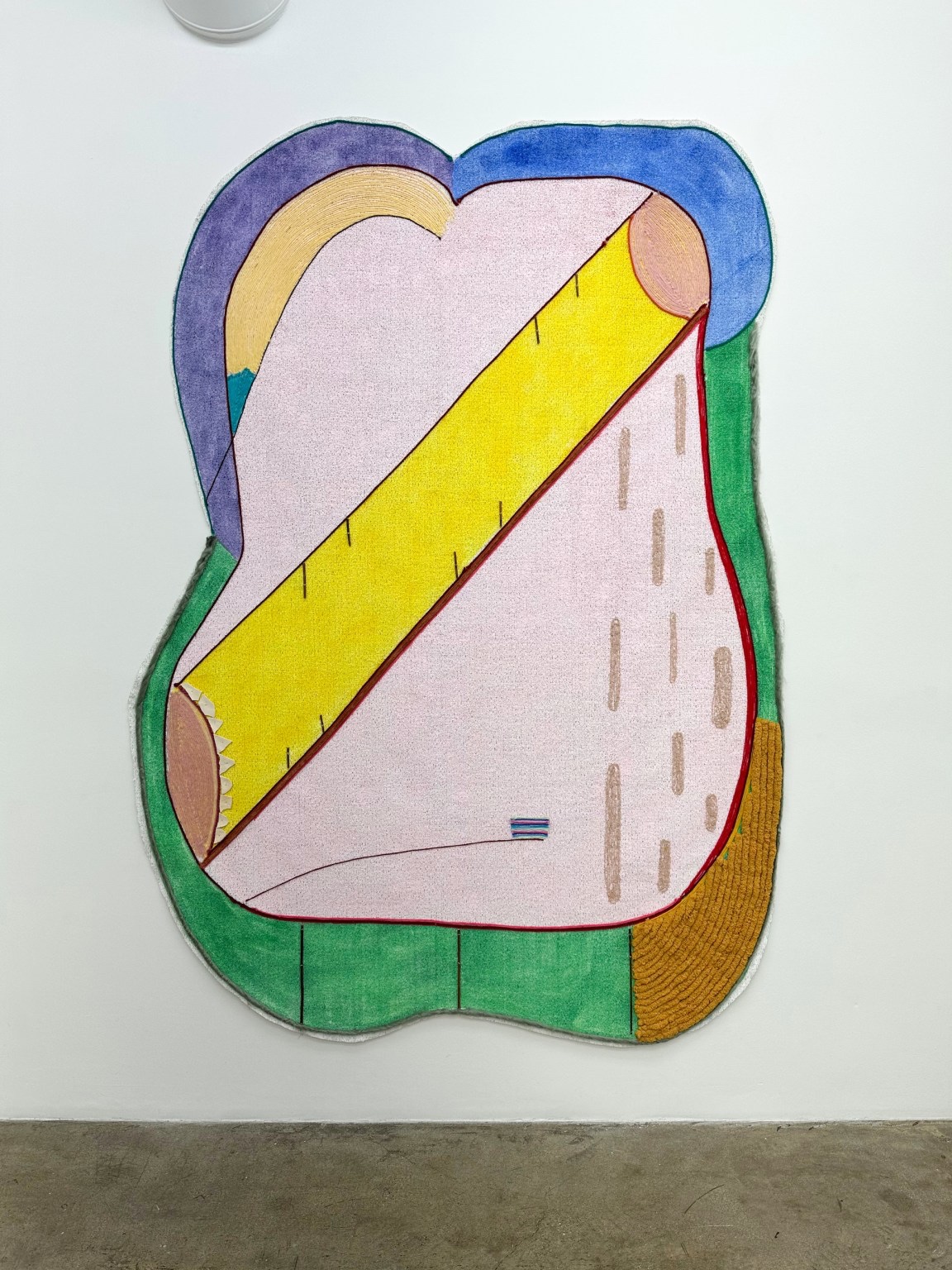
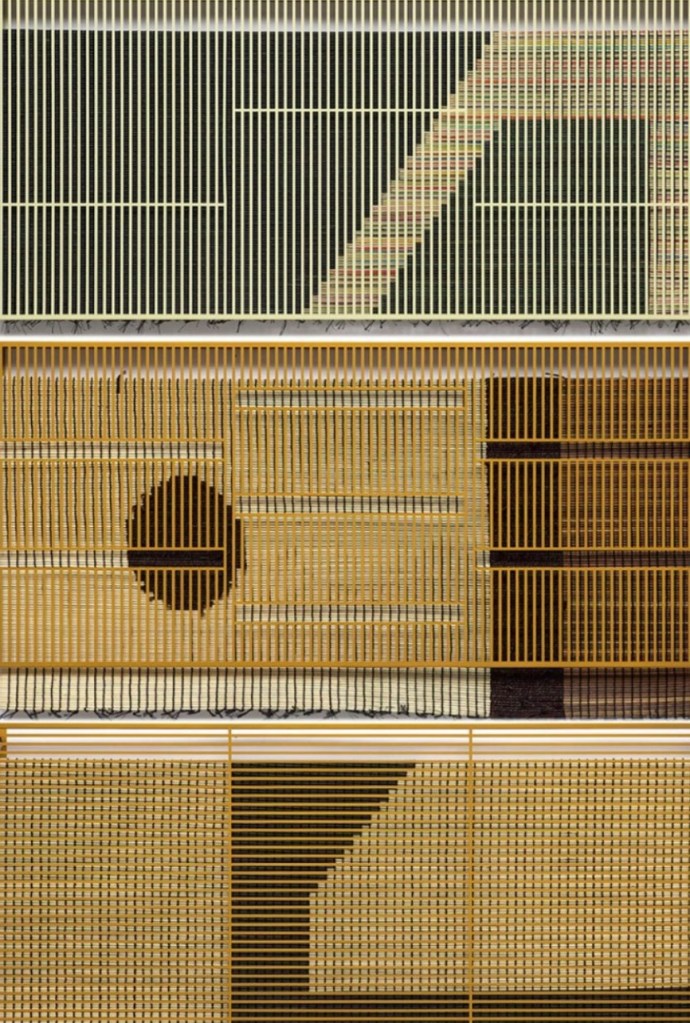
had the lovely piece below in Art on Paper 2023: The 47th Exhibition. Combining the unusual and routine, the extraordinary and mundane, she brings together life’s many aspects of inherent spontaneity and attempted order. She merges handmade methods of sewing with the mechanical technology of the risograph-a now outdated printing machine once used widely by schools and churches to create materials such as worksheets and pamphlets.
No one word title or reflections on words/ideas this week. Object making is the core of my practice so I’m checking in with myself and you the reader on where that sits atm. Not that organizing and managing forward momentum towards goals isn’t important, and in fact, given the collection of projects that is my studio (and a reflection of my ADHD) it is as much an area for learning as the former. But I digress…
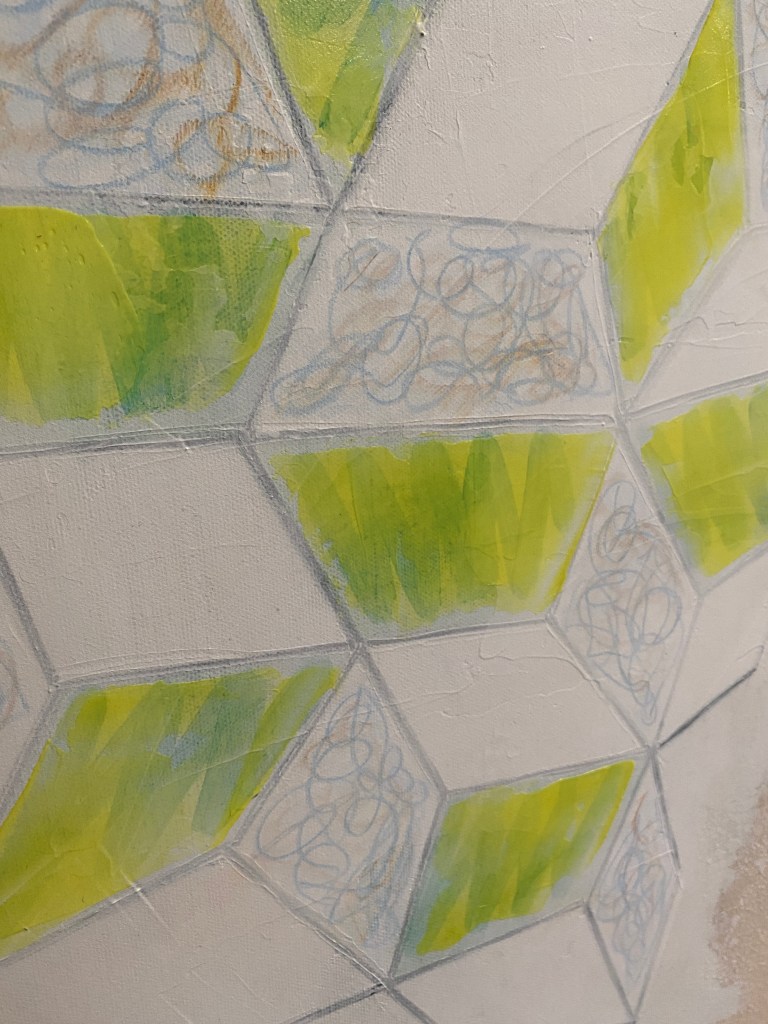
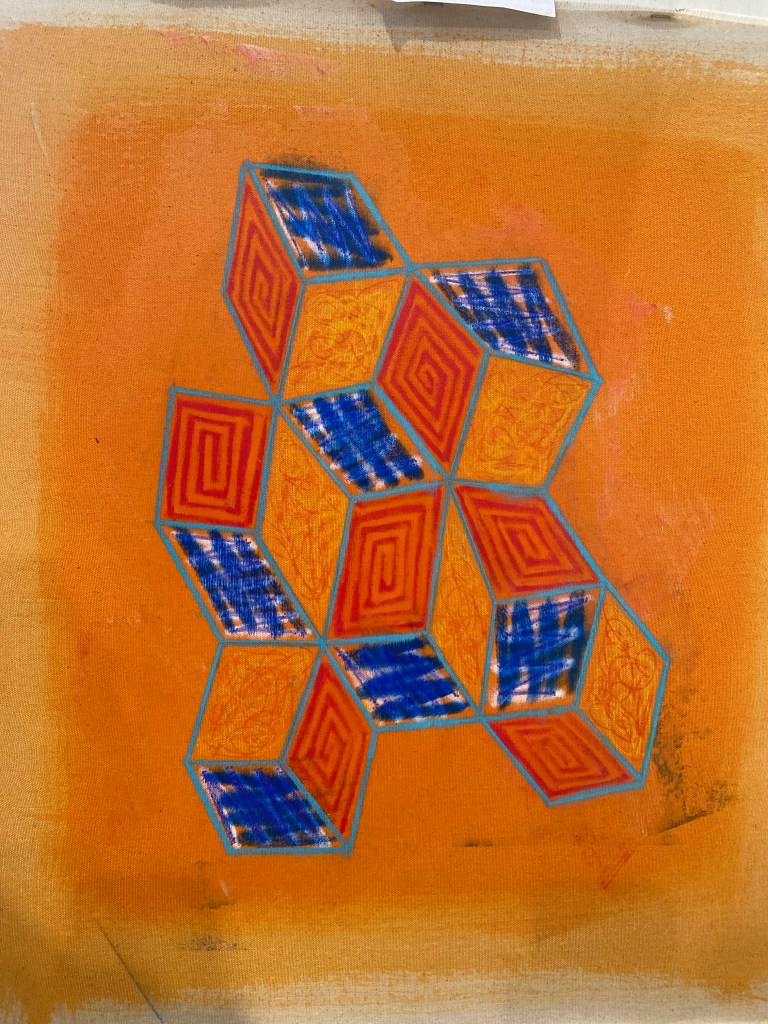
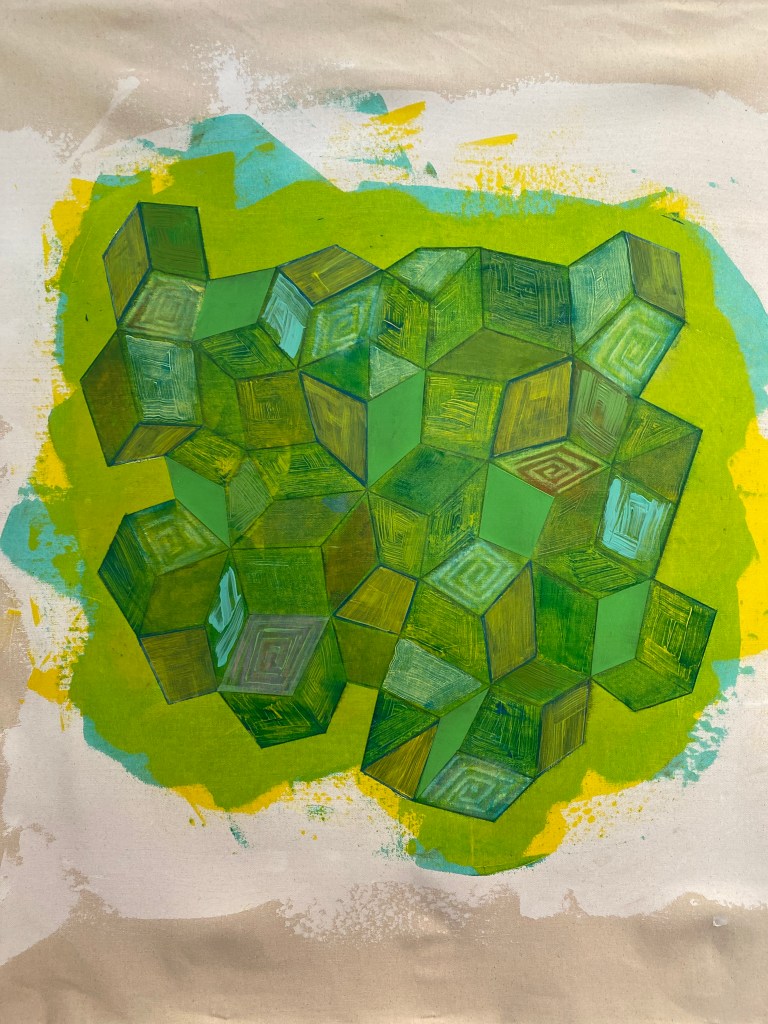
I’ve finished up a working on new shaped canvas and have a couple more small pieces in process. I also stretched two large canvases in order to begin larger versions of a couple of smallish pieces (last two images)- all are developments of sketches or work done during my sabbatical, for which I remain grateful.
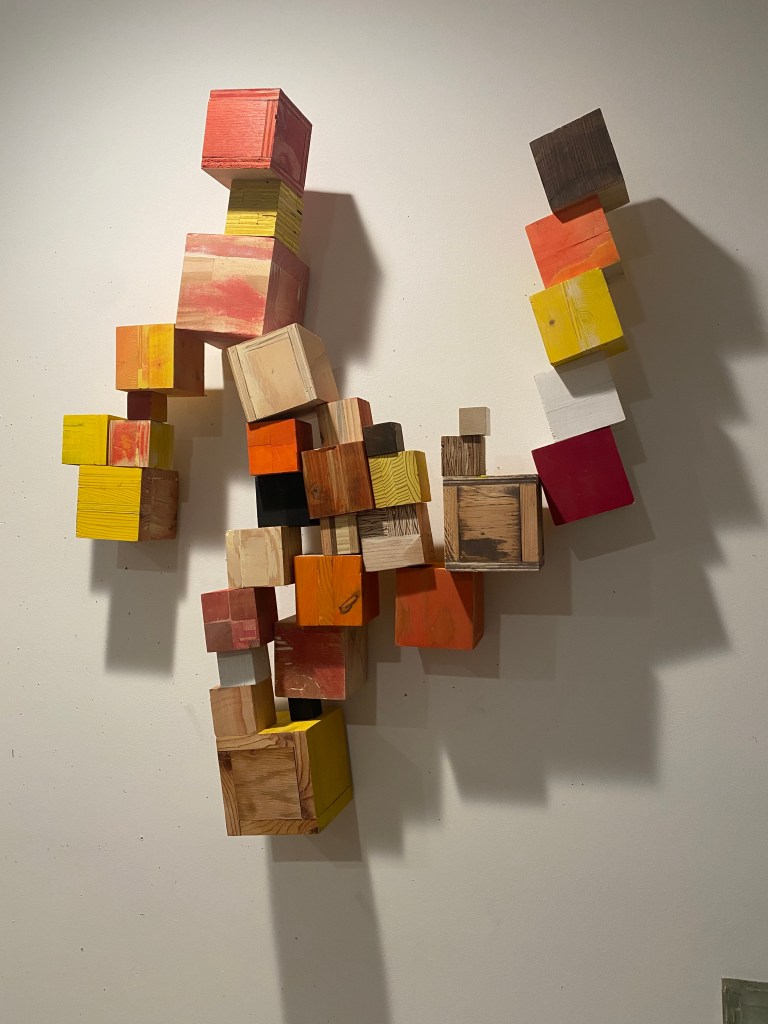
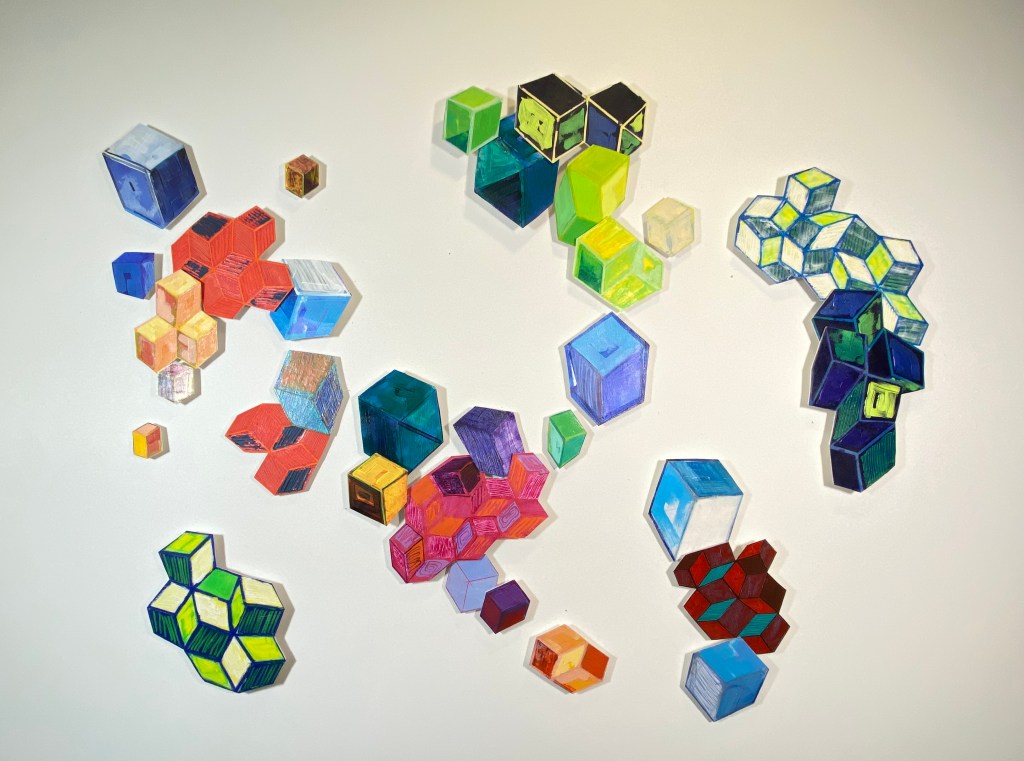
The main project that has been drawing time and energy is new iteration of a project that I used to call remixes. Local folks have seen iterations of this project (first two images) at Golden Belt Arts and also at Hartwell in partnership with Charlotte Russell, and will also have the chance to see the newest piece in December at Lump in this year’s iteration of Strictly Voluntary. There is a hint at the upcoming development in the short video below.
Time lapse of me creating the modular pieces for this work (seen collected in a box above as well).
Voila!
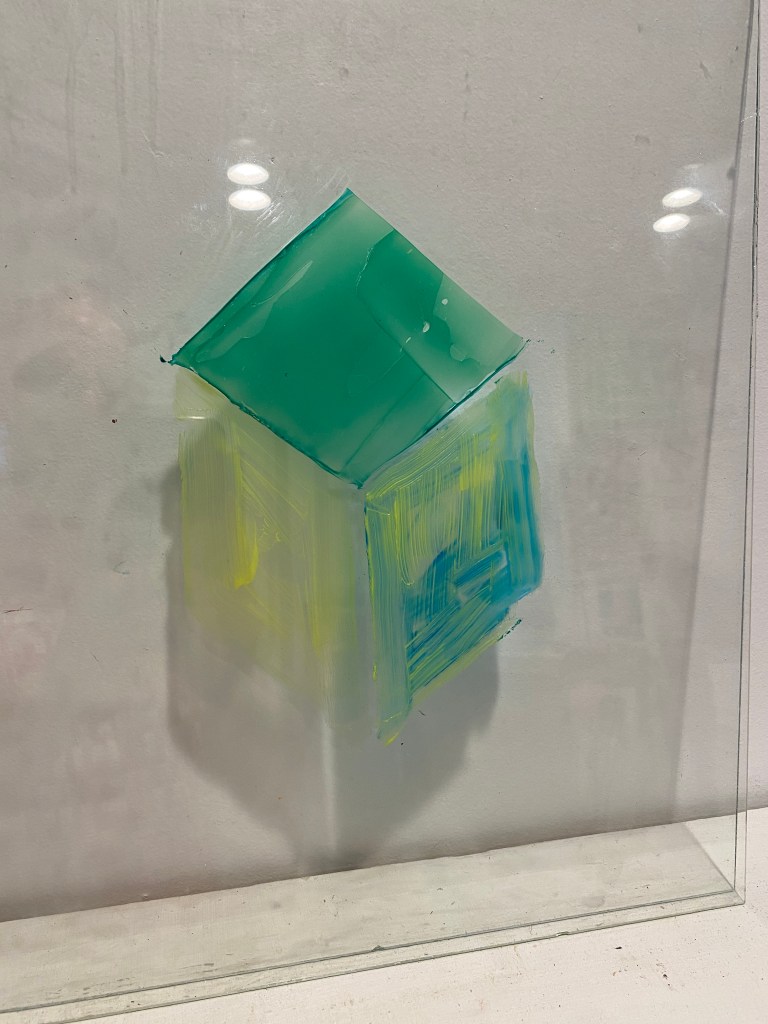
I’ve also collected some glass- a lot of it actually- and doing what can only be described at this point as experiments with different paint applications, mostly with a high level of transparency. In addition to developing ideas about material reuse (which relates to the project above) the substrate relates to my interest in the Light and Space movement. Part of the “work” (I hope) will “exist” on the wall as reflected light. I also really like the contradiction of making the paint both more physical- that’s all there is, right there on the glass- while simultaneously undermining the same via transparency. Lots of iterations to do and decisions to make, including how (technically) to photograph any finished work.











 Painting After Art is Dead