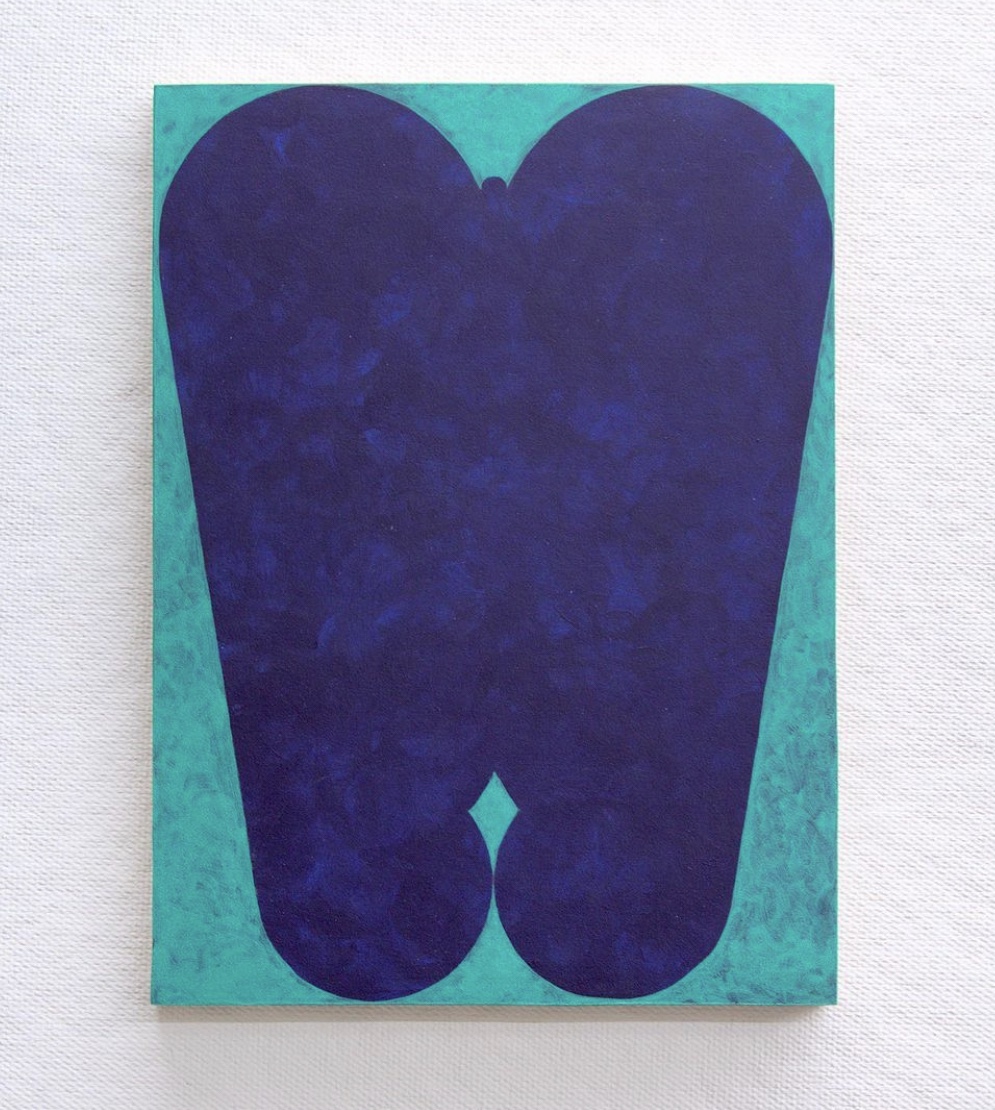
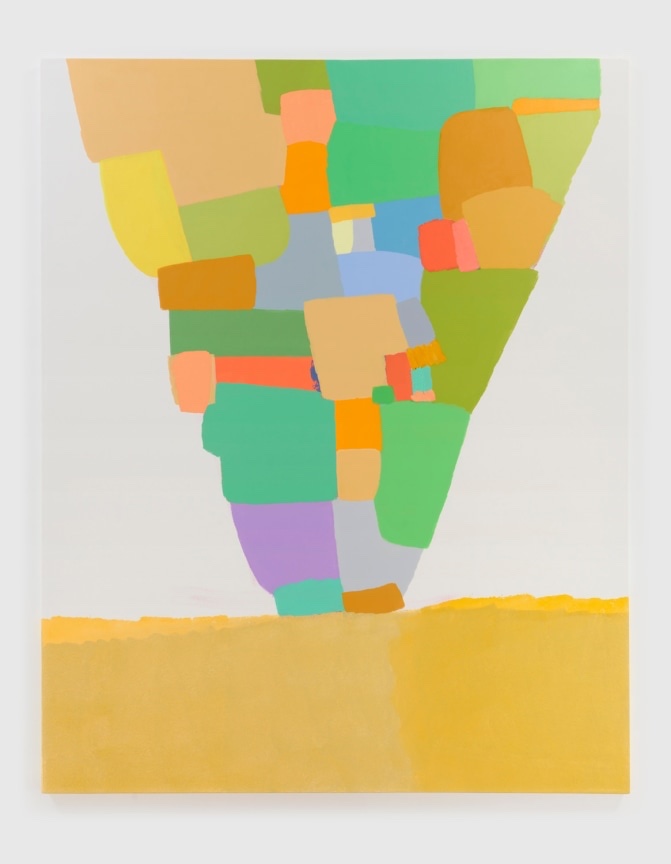
In his most recent exhibition, Federico Herrero once again suggested open questions about what landscape could mean, but also formulated an evolving proposal of what already exists.
#federicoherrero

In his most recent exhibition, Federico Herrero once again suggested open questions about what landscape could mean, but also formulated an evolving proposal of what already exists.
#federicoherrero

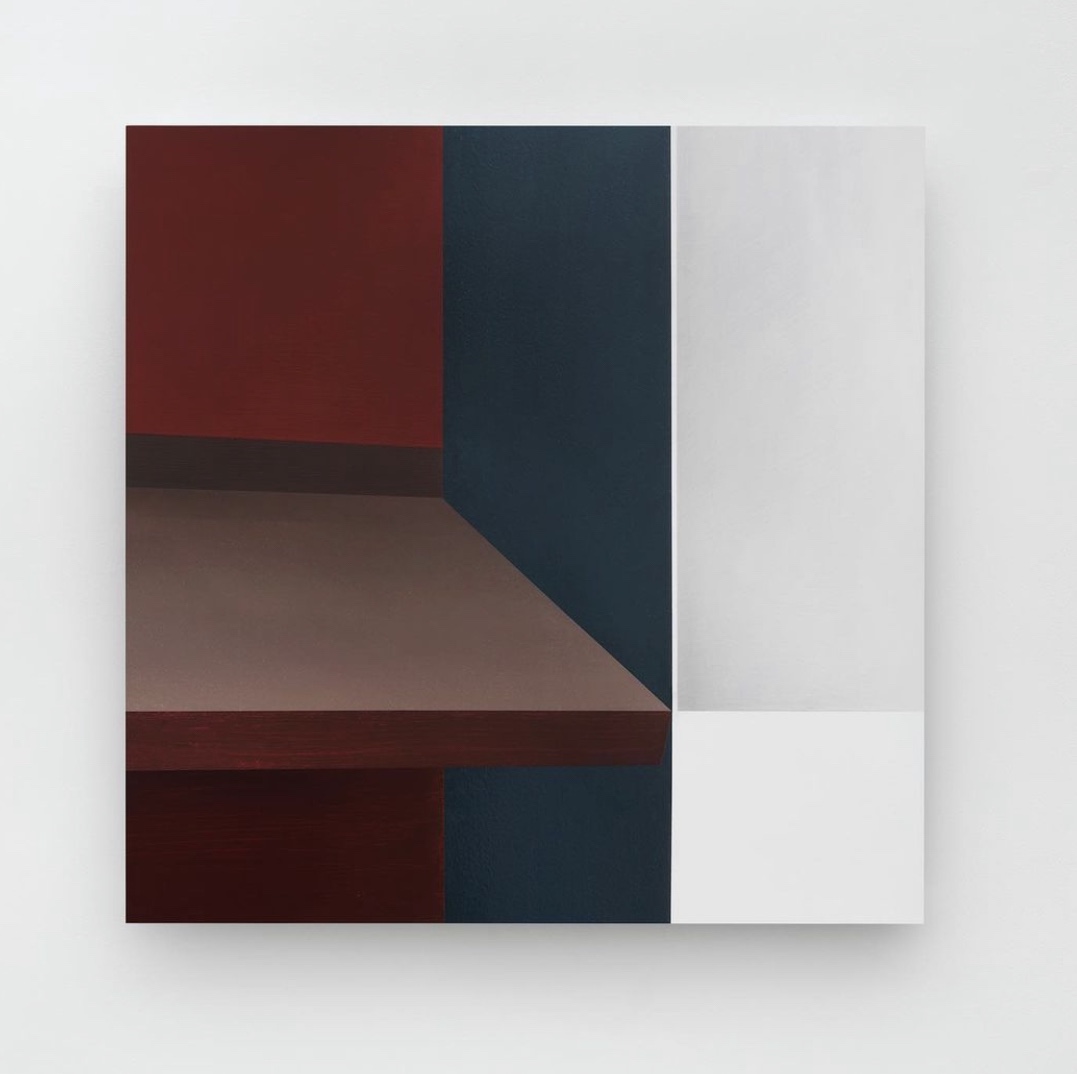
had new work up recently at Cathouse Proper (a space run by art). One of the links is to an interview with Tom.
#ethanryman

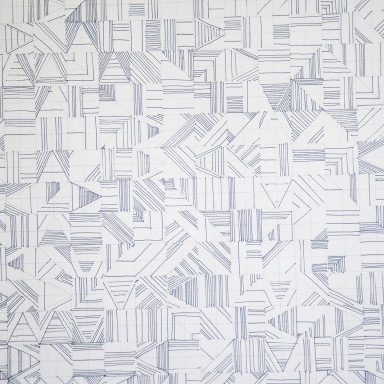
A 1927 painting by Paul Klee inspired this series by Vera Molar for which she programmed a computer to “place parallel lines within a square grid and vary the alignment (horizontal, vertical, diagonal) and the weight of lines as well as their closeness.” Numerous variations could be produced, which allowed her to “bring to light and to realize images…which only pre-existed in a vague, uncertain way in my imagination.”
#veramolnar

Saw below at the NCMA recently. As a young painter in Paris, Macdonald-Wright helped found a short-lived but influential art movement called synchromism, which proposed an abstract art based upon a musical/mystical interpretation of color. Returning from Europe, he eventually settled in Southern California, where he became an impassioned advocate for modern art. As exemplified by this painting, Macdonald-Wright’s late style is far more lyrical than the bolder paintings of his youth. One can attribute this gentleness at least in part to the artist’s devotion to Taoism, Buddhism, and Japanese art.
Even the title alludes to a Zen-like concern for the beauty of the ephemeral.
#stantonmacdonaldwright

Below spotted at Expo Chicago in the Miles McEniry booth with a number of other creatives crushing it in the abstract “game.” Perusing his IG feed, looks like he enjoyed some of the work I did. I see some strong Overstreet influence at work (Rico is also a Black painter).
#ricogatson

Helen Saunders (4 April 1885 – 1 January 1963) was an English painter associated with the Vorticist movement. Vorticism was a London-based modernist art movement formed in 1914 by the writer and artist Wyndham Lewis. The movement was partially inspired by Cubism and was introduced to the public by means of the publication of the Vorticist manifesto in Blast magazine. Familiar forms of representational art were rejected in favour of a geometric style that tended towards a hard-edged abstraction. For a brief period Vorticism proved to be an exciting intervention and an artistic riposte to Marinetti’s Futurism and the post-impressionism of Roger Fry’s Omega Workshops.
#helensaunders

Saul at Two Coats puts Li Trincere in context.
#litrincere

Larry Ossei-Mensah predicts to Artsy that abstraction by artists of color will become even more prominent in 2023. The genre, Ossei-Mensah believes, is essential to shifting the public’s belief that artists of color should only make representational work that is immediately legible. He refers to Atta.
#attakwami

gets the slug image for Hyperallergic’s take on the Chicago Drawing Biennial which “Has Something for Everyone.”
#geofferytoddsmith

Blogging about Mokha (who was Gene’s assistant) made me realize I’ve yet to cover Davis who was a major figure in 20th-century American painting and whose contribution was invaluable in establishing Washington, D.C., as a center of contemporary art. Davis also played a significant national and international role in the color abstraction movement that first achieved prominence in the 1960s.
#genedavis