Thomas Sills

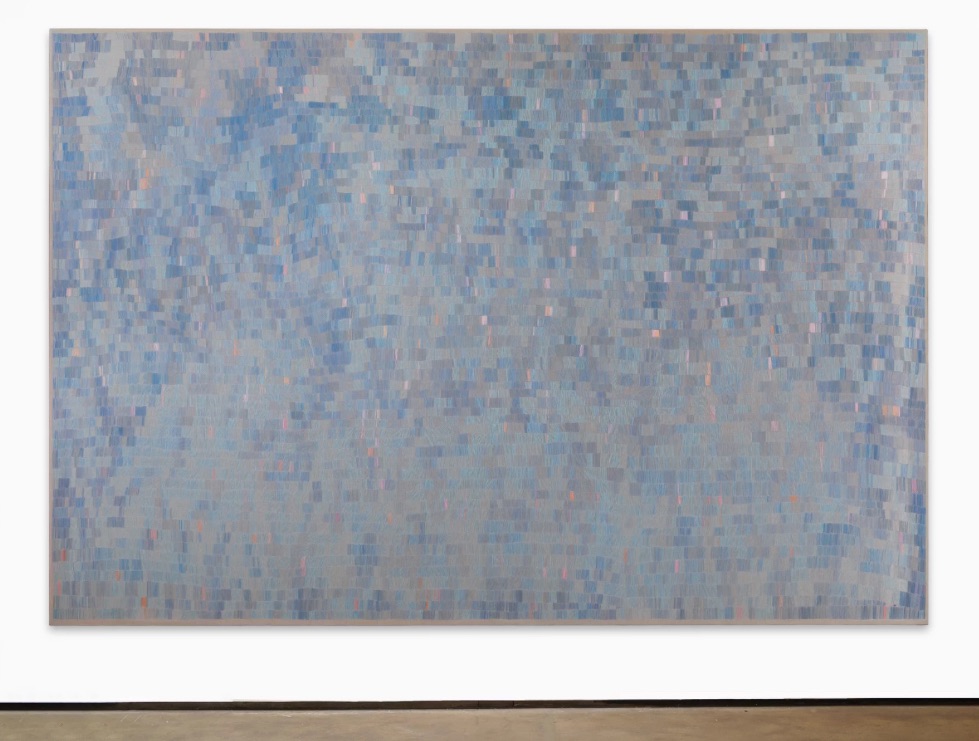
I saw below during a recent visit to the Greenville County Museum of Art, which hosted an exhibit of his work in 2022. Sills’ first solo exhibition was held at Betty Parsons Gallery in May 1955. He experimented with color and form his entire career, moving from the action painting of Abstract Expressionism to vibrant Color Field painting with energetic palettes and juxtapositions.
#thomassills

Alfred Manessier

Saw below recently at the Bechtler. (from the show placard) “Inspired by the environment of his birthplace in northern France, Alfred Manessier began to paint landscapes at an early age. Although his work became increasingly abstract in the postwar period, landscape subjects persisted throughout his career-specific places, indeterminate settings, and, as in Northern Spring, the seasons and his impressions of being in nature. The painting doesn’t portray recognizable objects; nevertheless, the lush green background teeming with jewel-like dabs of color surrounding a bright orange “sun” calls to mind a field of flowers in bloom.”

More

#alfredmanessier

Natasza Niedziolka

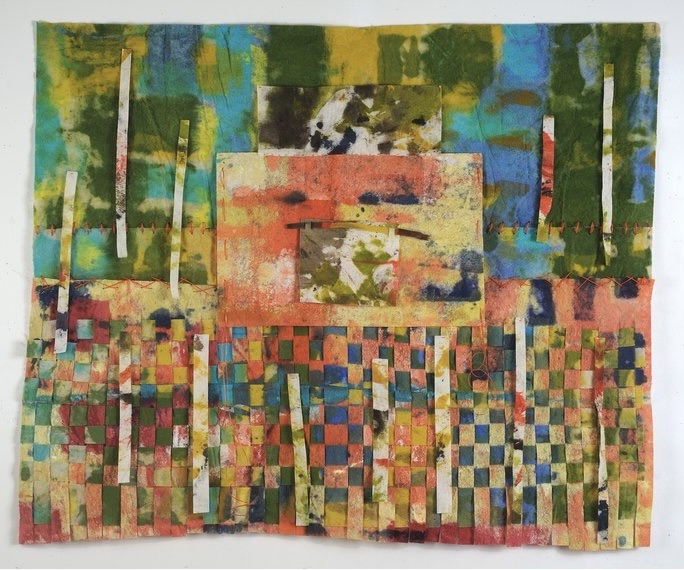
Interweaving modernism, folk tradition, and arts and crafts, Natasza Niedziolka knits and embroiders large works filled with bold colors and shapes. While her techniques are traditional and domestic, Niedziolka’s work is distinctly contemporary, merging modernist abstraction with the textile tradition.

More
#nataszaniedziolka

Josef Albers

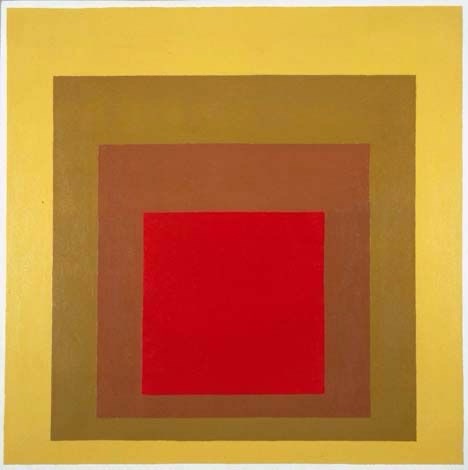
It would be hard to overstate the influence Albers has had on me as a creative and an instructor. I’ve written recently about this coming to the forefront of my practice including how my feelings about the moral deficiency of so many white l, male Modernists is a part of holding contradiction for me.

There is a foundation of course dedicated to the careers of Josef & Anni Albers.

More (my Pinterest board)

#josefalbers

Hildur Ásgeirsdóttir Jónsson

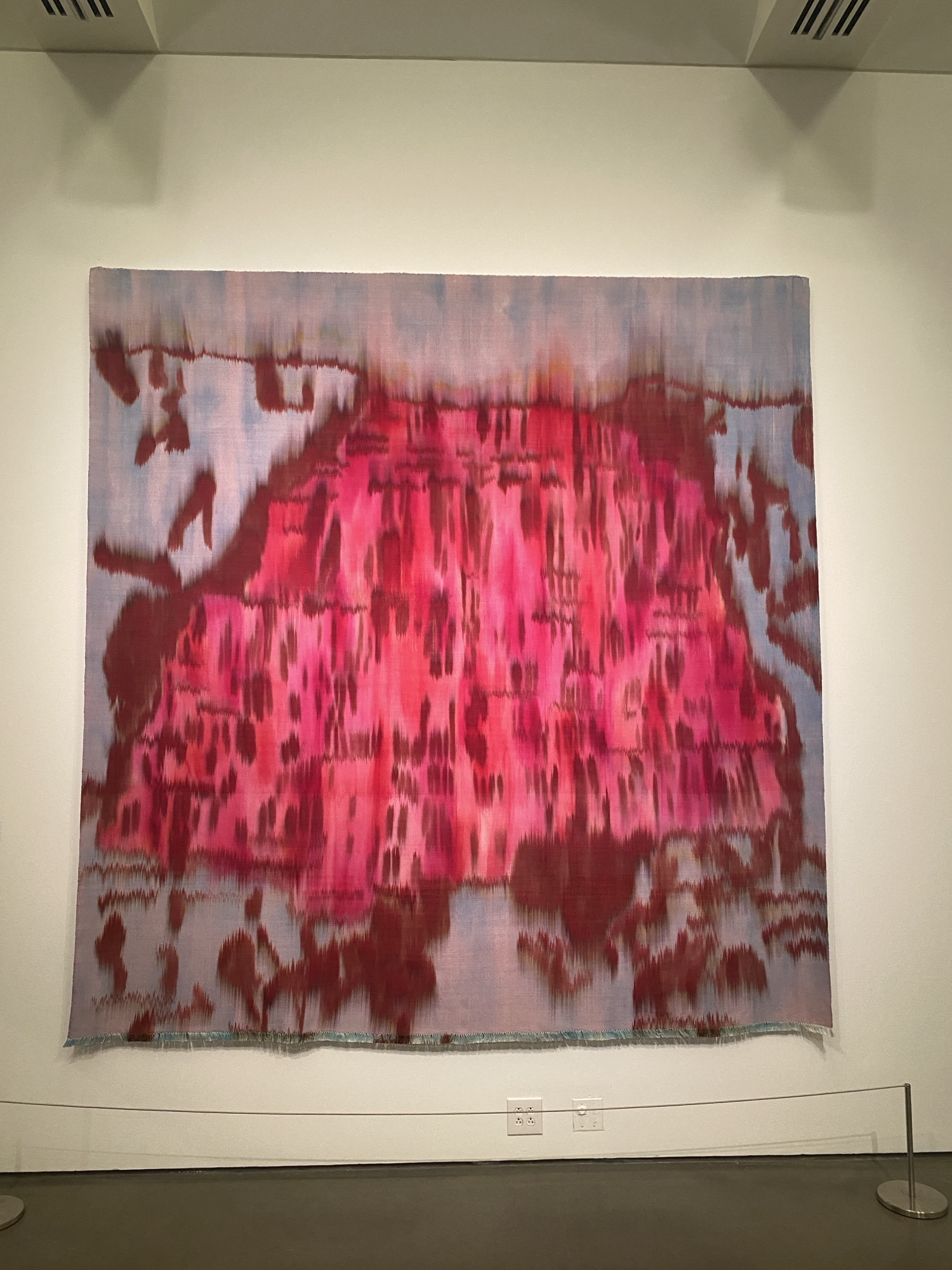
has an amazing exhibit up at the Bechtler. If you are in the Charlotte area any time soon I highly recommend it. The artist and her longtime assistant, Jillian Glass Braganza, dress a loom with silk yarn, a task that can take weeks for larger works. These threads, called the warp, will remain stationary on the loom during the weaving, but first, they are placed over the schematic drawing and soaked with water. Using fiber-reactive silk dyes, Jónsson either pours liquid in her desired colors onto the threads or dabs it on with a brush. While the warp threads are drying, Jónsson soaks and paints the weft threads, which will be drawn through and inserted over and under the warp, to run perpendicular along the length of the textile. When all the threads are dry, weft meets warp bit by bit on the loom, slowly bringing Jónsson’s painting into being.
more (video on process)

#hildurasgeirsdottirojnsson
Johannes Itten

As often happens with canon artists (given their numbers), I discovered recently while writing about my own practice that I had yet to blog about Johannes, one of the greatest colorists of the Modern era (probably only slightly less well known than Josef Albers). He was a Swiss expressionist painter, designer, teacher, writer and theorist associated with the Bauhaus school.

#johannesitten

Vibe

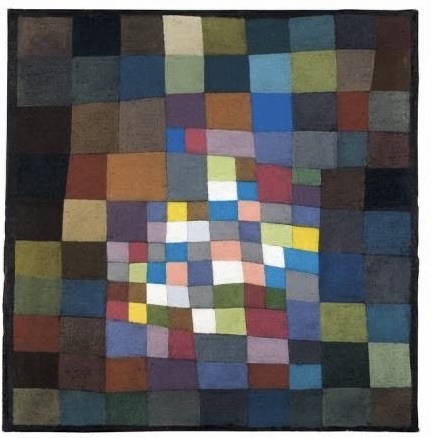
I’ve written recently about my feelings on Modernism in the general and specific. For sure there is an aesthetic draw for me to compositional strategies from that era and as I’ve written before I’m convinced that there is an experience to be had through Art that is unique to the same and exists- with immediacy– prior to our ability to describe it using language (tldr, I trust the vibe). A few examples of favs below (Johannes Itten, Ad Reinhardt, Richard Paul Lohse, Mercedes Pardo, Lorser Feitelsen, Paul Klee). Yes I see a lot of dudes, too.

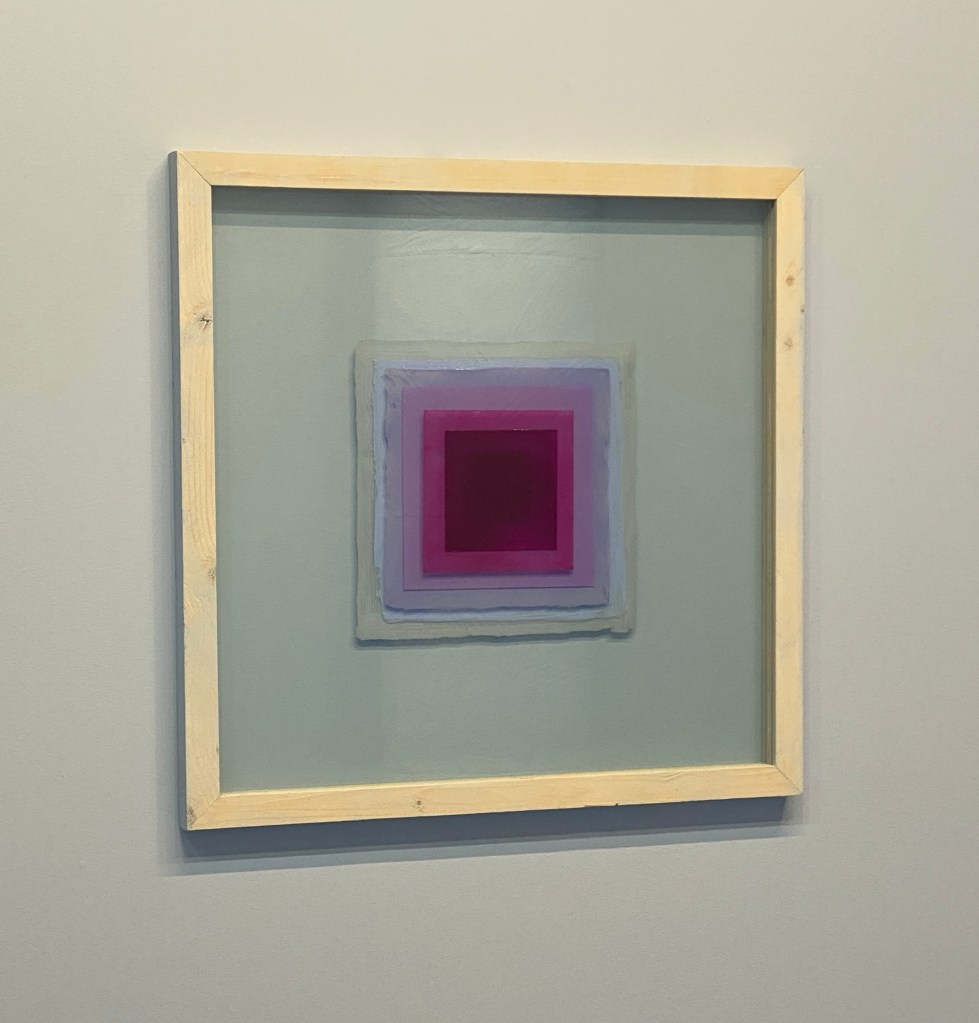
This weekend I traveled to Greenville, SC, for an opening of a show that included the piece below (which is the second of a new series that is anchored around “through”). During my time there I had several conversations of differing flavors and which shared a common theme of, generally, “how about this time we’re livin’ in?” Through many of the discussions I have lately I keep coming back to the thesis that I’m seeing a relevance and value in contemplation in this (insert your adjective) cultural and historical moment, so I’ll be rereading The Coming Humanist Renaissance by Adrienne LaFrance at the Atlantic this week and continuing to reflect in coming weeks (link is to a pdf of the article because pay wall so I may have to take this down at some point as I am not an Atlantic subscriber atm).