Wosene Worke Kosrof

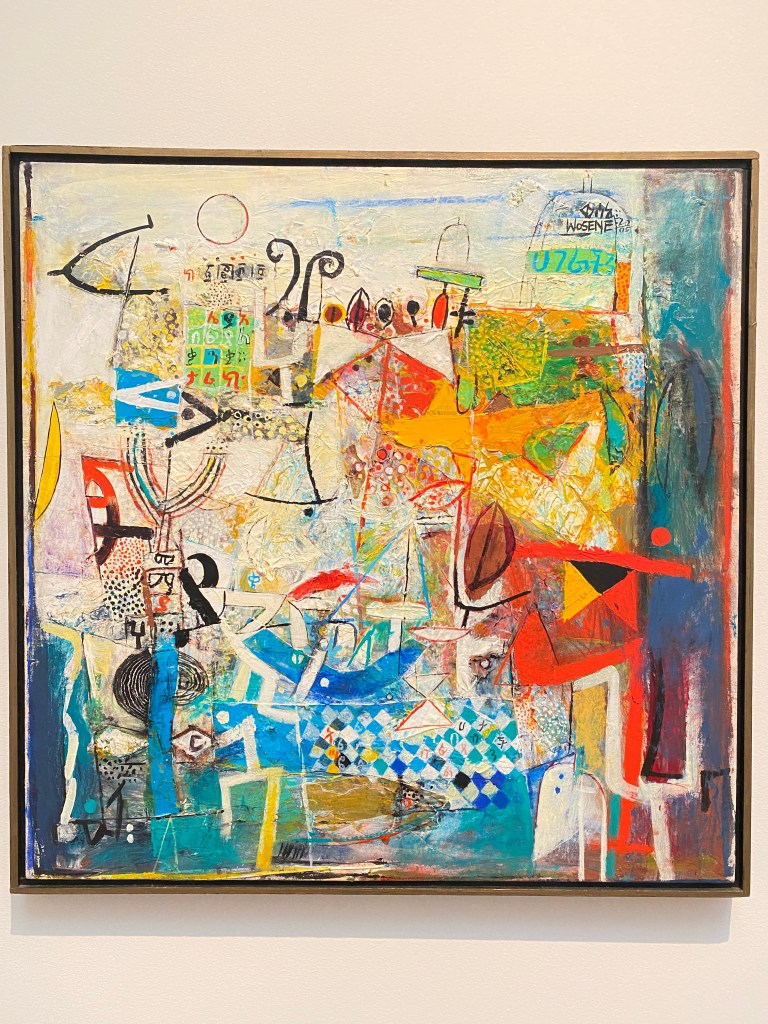
Wosene, who is Ethiopian born, nods to a multitudinous African experience of the Caribbean with this work (which is at the NCMA) and employs Ethiopian graphic systems, liturgical symbols, architectural forms, and Pan-African motifs. In drawing from such a rich vocabulary of written sources, Kosrof cleverly links past with present and Africa with diaspora, pushing the boundaries of visual literacy to new levels of hybridity.

#woseneworkekosrof
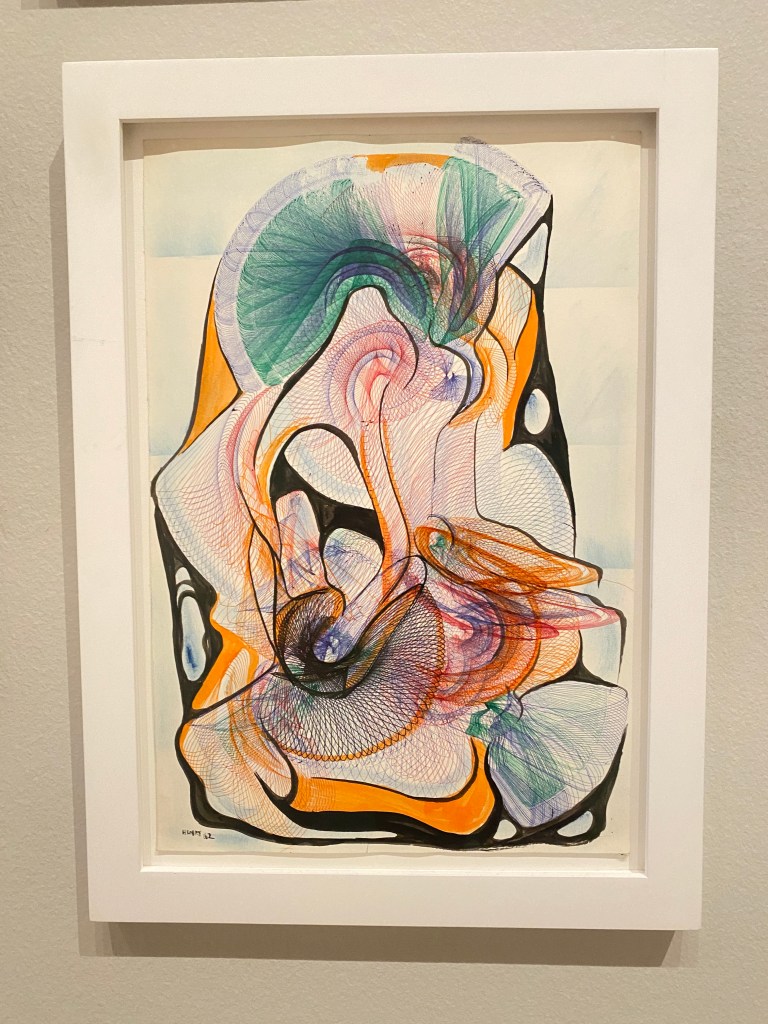
Jean-Pierre Hébert

Hebert described his work as “detalled projections in two dimensions of our complex multi-spectral reality.” Inspired by the geometric weavings of German textile artist Anni Albers (1899-1994), he began to explore computer programming in the creation of art in the early 1970s. Eventually Hébert pushed the boundaries of complexity, pursuing, he wrote, “an ideal of beauty and ideal Platonic forms, inspired by my interests in patterns of geometry, mathematics, physics, land] nature.” Saw below in Coded at LACMA. More

#jeanpierrehébert

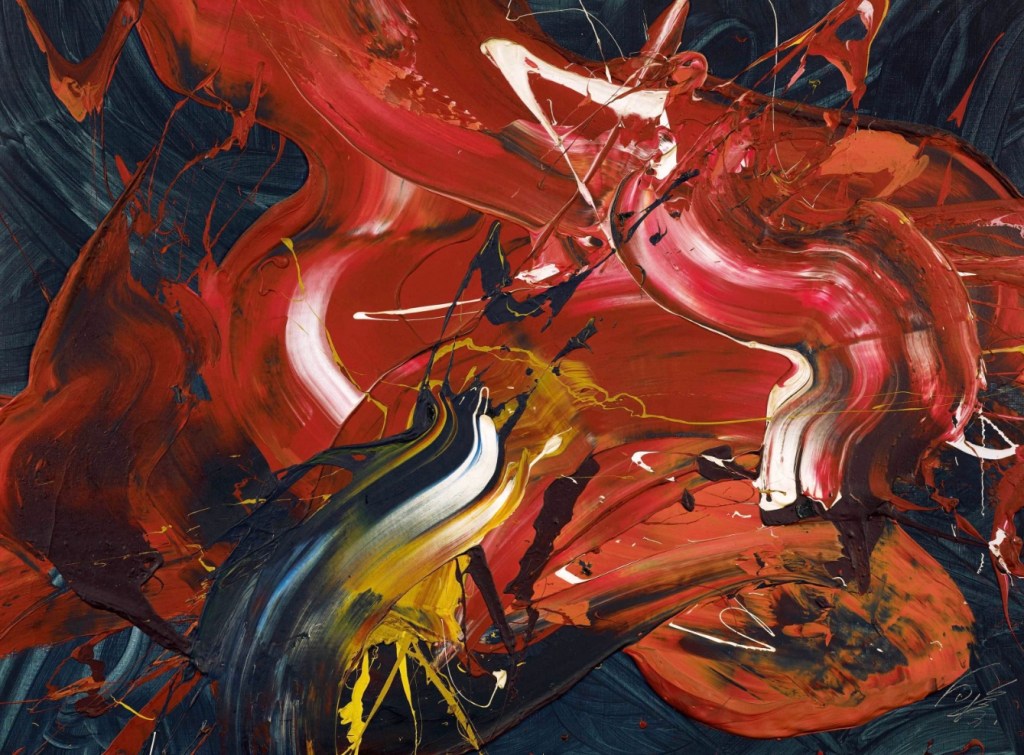
Shiraga Kazuo

Kazuo Shiraga (白髪 一雄, Shiraga Kazuo, August 12, 1924 – April 8, 2008) was a Japanese abstract painter and the first-generation member of the postwar artists collective Gutai Art Association (Gutai). As a Gutai member, he was a prolific, inventive, and pioneering experimentalist who tackled a range of media: in addition to painting, he worked in performance art, three-dimensional object making, conceptual art, and installations. Sam Francis was influenced by this group of artists.

#shiragakazuo

Peter Krasnow

Saw below at LACMA (a recent addition to their permanent collection). Krasnow worked mostly in Southern California from 1922 onward, becoming an important advocate of modernism in Los Angeles. During the final years of World War II, he began a series of abstract paintings featuring interlocking rectilinear forms in candy-colored hues. Conceived in response to the horrors of the war, paintings such as K-3 were intended to evoke harmony and optimism. “Between alerts, blackouts, rationing, brighter grew my palette,” the artist remarked. “When tragedy was at the deepest point, my paintings breathed joy and light-color structures instead of battle scenes, symmetry to repair broken worlds. A means of protest to ease the pain.”

More (scroll down for bio)

#peterkrasnow #feivishreisberg

Carlos Mérida

Saw below during a recent visit to LACMA. In the 1920s, Carlos Mérida was deeply committed to the Mexican muralism movement and to extolling the peoples and traditions of Mexico. In the 19405 and 1950s, however, he began experimenting with a greater range of styles, including abstraction. Increasingly distancing himself from the muralists, Mérida developed a dynamic, geometric style that is as much indebted to Cubism as to international postwar geometric abstraction.

#carlosmérida

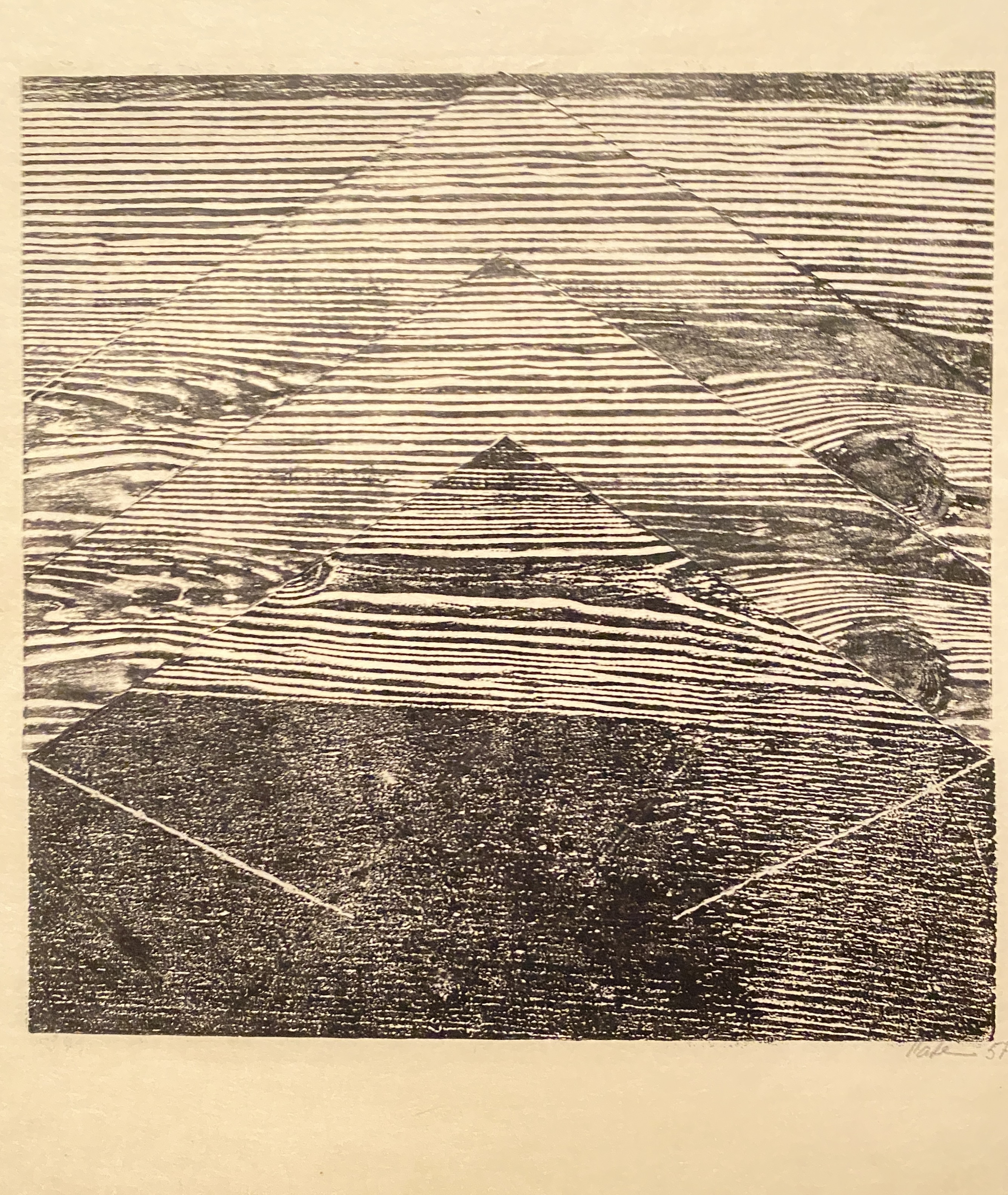
Lygia Pape

Lygia Pape (7 April 1927 – 3 May 2004) was a Brazilian visual artist, sculptor, engraver, and filmmaker, who was a key figure in the Concrete movement and a later co-founder of the Neo-Concrete Movement in Brazil during the 1950s and 1960s. Along with Hélio Oiticica and Lygia Clark, she was an important artist in the expansion of contemporary art in Brazil and pushed geometric art to include aspects of interaction and to engage with ethical and political themes.

I saw below at the Art Institute in Chicago recently, part of an exhibition of her prints.

#lygiapape

Helen Saunders

Helen Saunders (4 April 1885 – 1 January 1963) was an English painter associated with the Vorticist movement. Vorticism was a London-based modernist art movement formed in 1914 by the writer and artist Wyndham Lewis. The movement was partially inspired by Cubism and was introduced to the public by means of the publication of the Vorticist manifesto in Blast magazine. Familiar forms of representational art were rejected in favour of a geometric style that tended towards a hard-edged abstraction. For a brief period Vorticism proved to be an exciting intervention and an artistic riposte to Marinetti’s Futurism and the post-impressionism of Roger Fry’s Omega Workshops.

#helensaunders

Arthur Segal

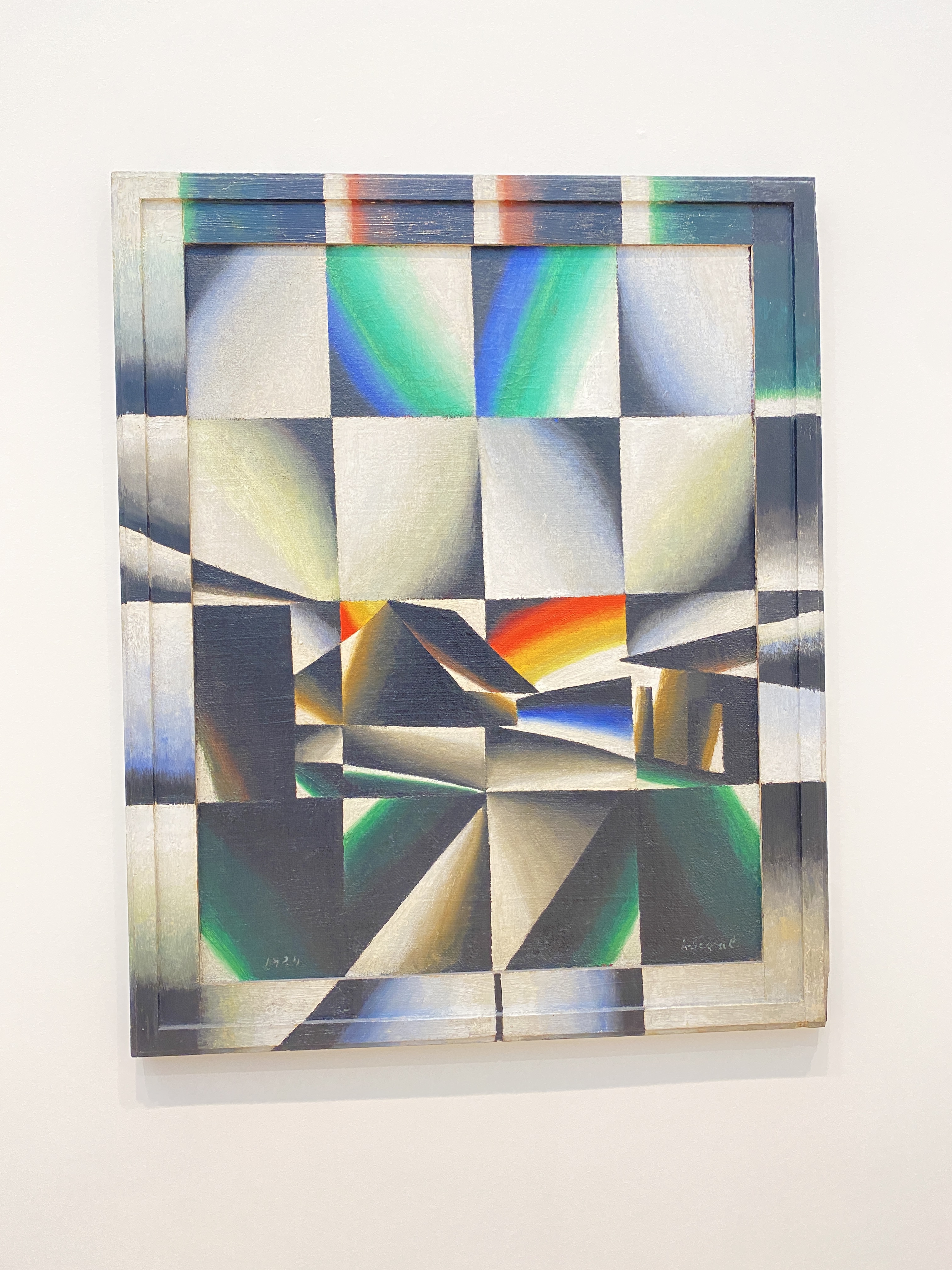
Romanian Arthur Segal was firstly a painter, and his early work was heavily influenced by impressionism and neo-impressionism. From around 1910 he began a more expressionism and dadaism style, and around 1916 found his own modern style. As well as painting, he also produced woodcuts from 1910, many of which were anti-war themed. Segal was also the author of many books, articles, and often gave lectures. I saw below at the Art Institute recently, an example of his “modern style.”

#arthursegal