Painting rules

It does of course but here I am referring to the rules I associate with my own painting. Or at least guidelines which, when followed, lead a certain direction. Who doesn’t like rules (probably lots of people, and good for them- rebel on)? Maybe a better question would be “Are rules useful?” For generating some types of painting, I would say “Yes.”

If you’ve been kind enough to read the words on this blog from time to time you’ll know I center the word formalism a lot. Formalists can have a lot of rules, I guess, or perhaps just a few. I think the general one we share is making our primary concern an attention to what our work gains from a focus on line, shape, and color. Surface should also probably should be on the list.

“But Sterling” you may say (or perhaps above was too boring to merit reading a third paragraph) “formalism sounds so empty.”

First of all- consider the viewpoint from which this argument is made (that a painting is an empty container that one must fill with something “else”). To this painter, that sound like devaluing the intuitive, the creative, the spontaneous, the impulse that is outside of words. In short- it assumes painting is more like a book than a song. I disagree, at least in the case of abstraction.

Perhaps consider this article by John Yau writing for Hyperallergic, one of the better Art e-rags around today, about the oustanding colorist Harriet Korman. Yau contends her work aspires to the state of music.

I also recently enjoyed this article by Laurie Fendrich of Two Coats of Paint (another outstanding source of art writing) where she discusses pleasure and beauty, with many references to the late David Hickey, in the context of the most recent Whitney Biennale. For the tldr crowd- there is a view of art (that I think applies broadly to abstraction) that our relationship to it is more immediate than words. The strange magic of knowing something this deeply is awe inspiring.

Maybe read this interview with Andrea Marie Breiling as well.

What does all this have to do with rules? Nothing more or less than noting that attention to and focus on the physical qualities of painting a) is a rule, b) is sort of outside language and c) isn’t “empty.”

Experiments in Form

Yesterday, I packed up some recent work for a group show install that has me pumped up- what an amazing group in which to be included!

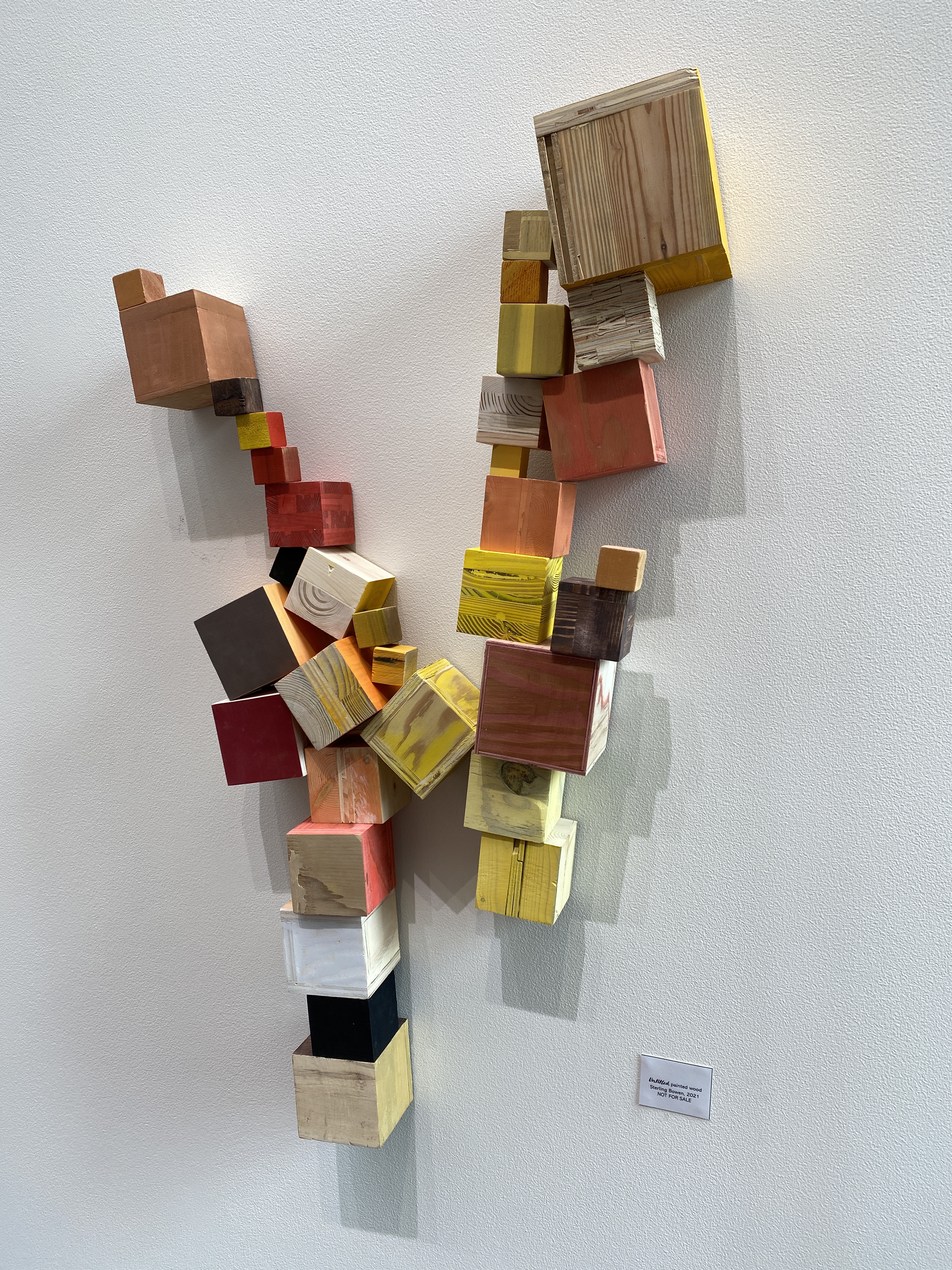
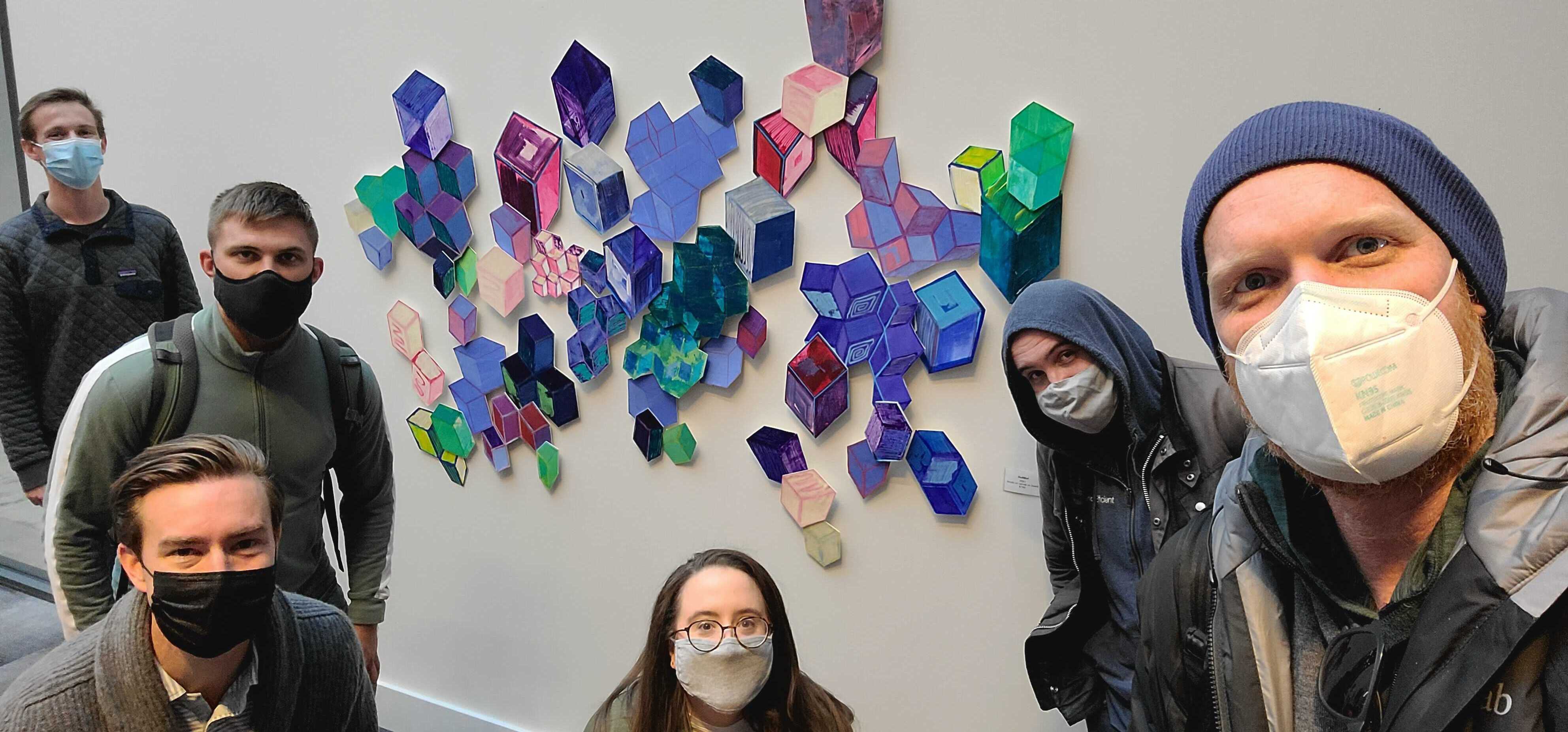
Curated by Charlotte Russell and on view at Hartwell in Raleigh, Experiments in Form features artworks by five Triangle-based artists, Sterling Bowen, Abie Harris, Mar Hester, Pete Sack, and Natalia Torres del Valle. Through their own unique process and materials, each artist experiments with spontaneity vs. control, interconnectedness, and the process of making. Below is a pic Charlotte caught of me installing an original composition made just for this show.

The show will be up through August so plenty of time to check it out. Follow Charlotte on IG to get the latest on this and other shows she’s curated, including a reception (TBD).

Building Blocks

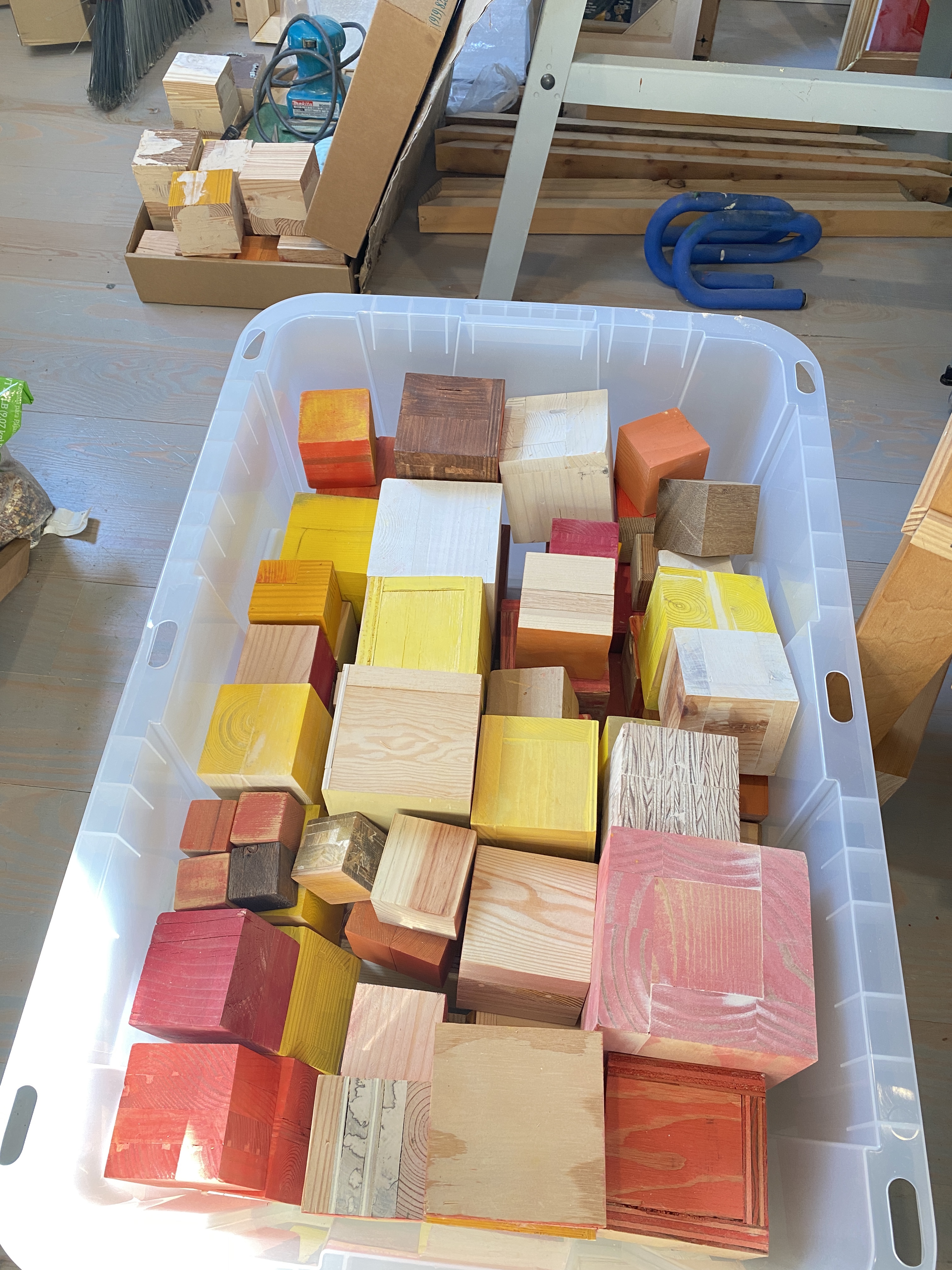
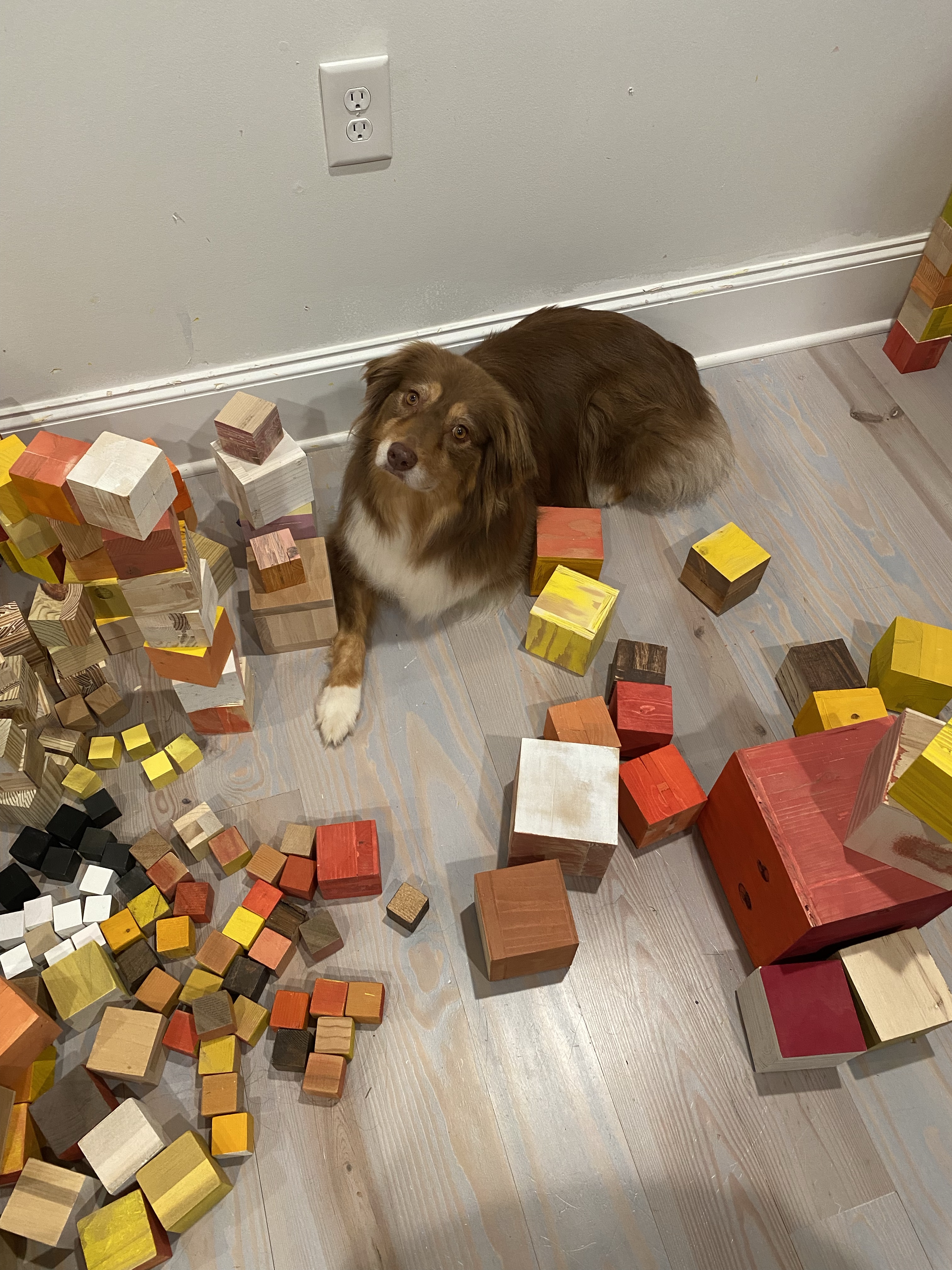
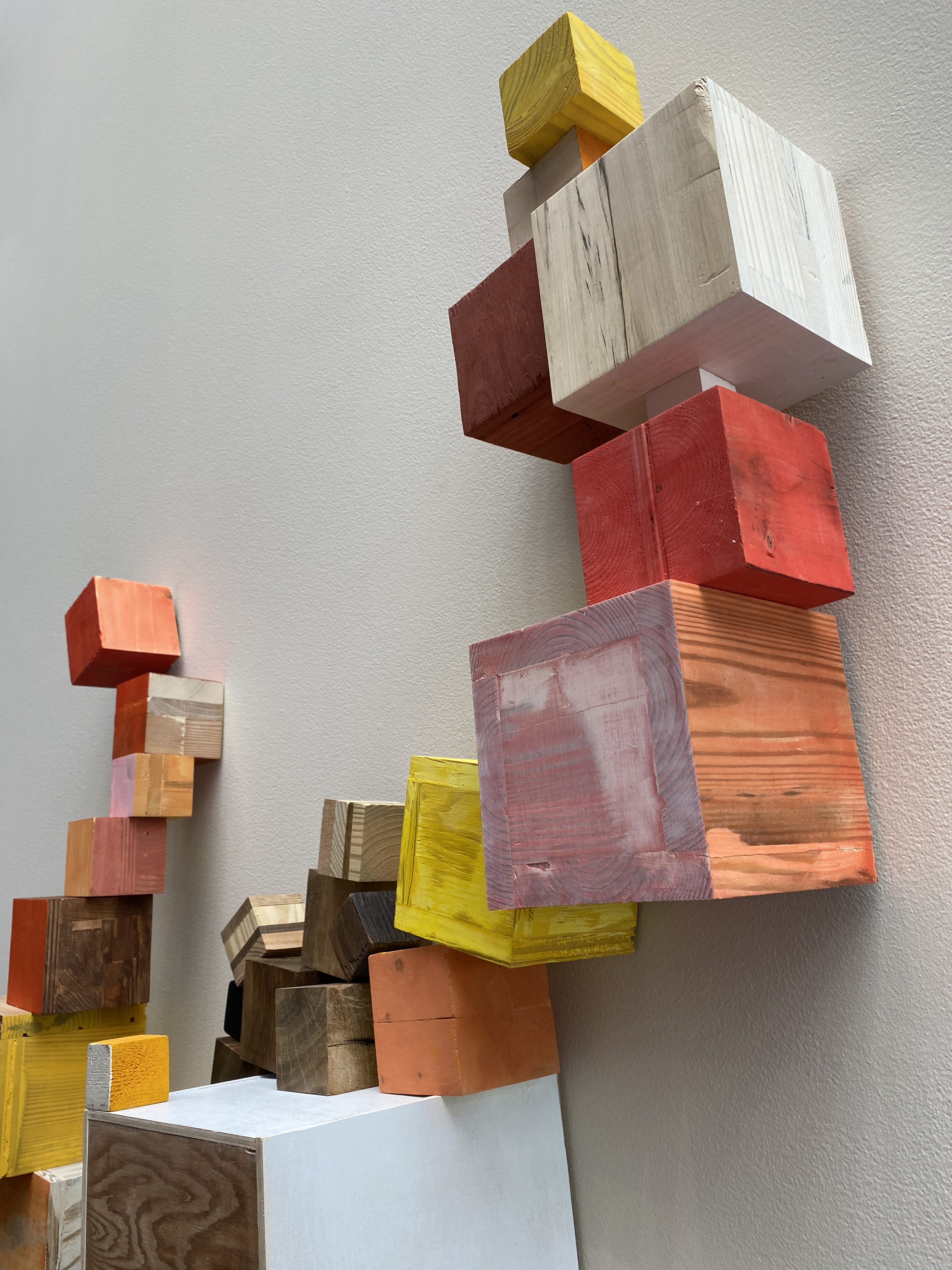
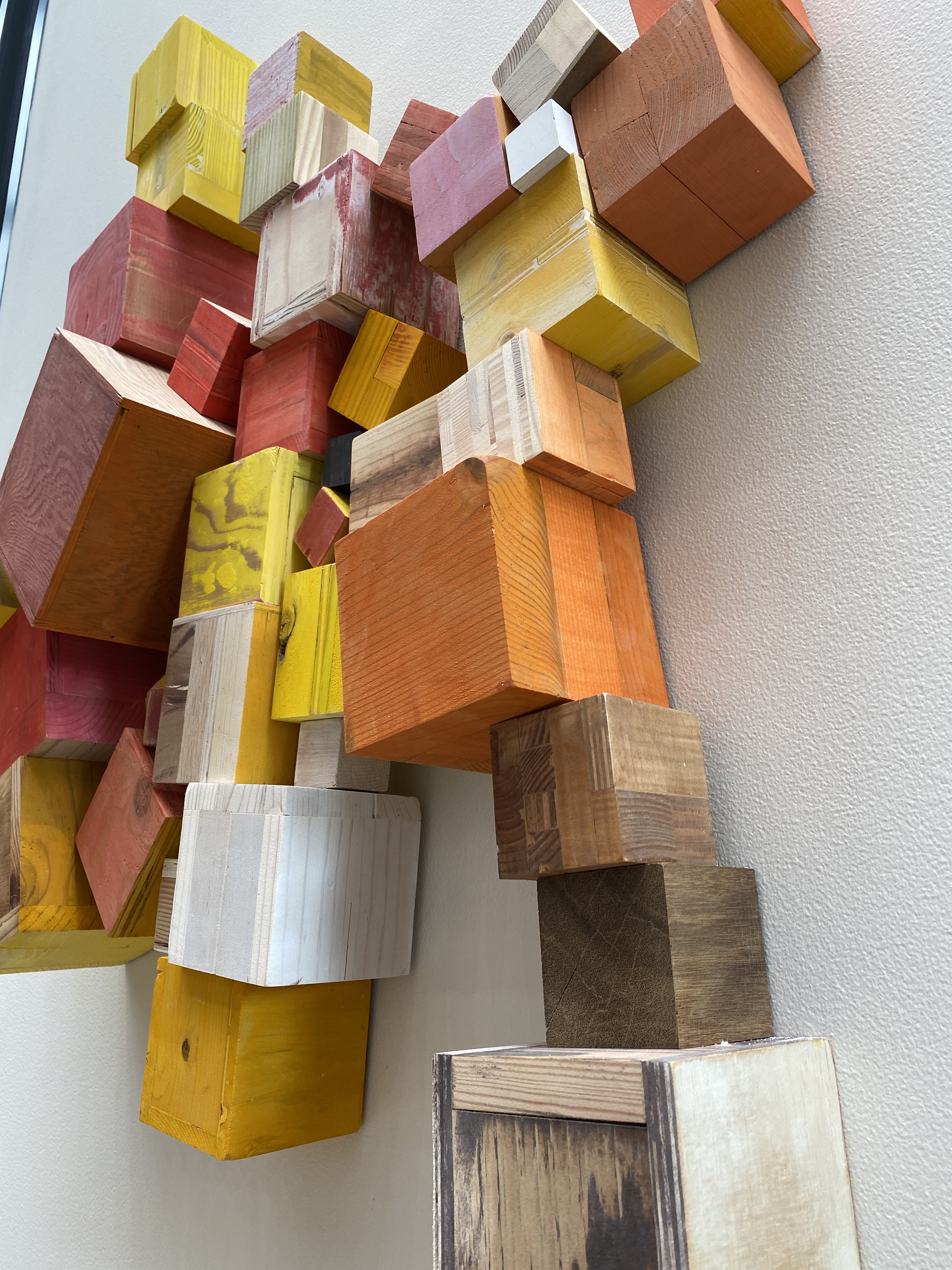
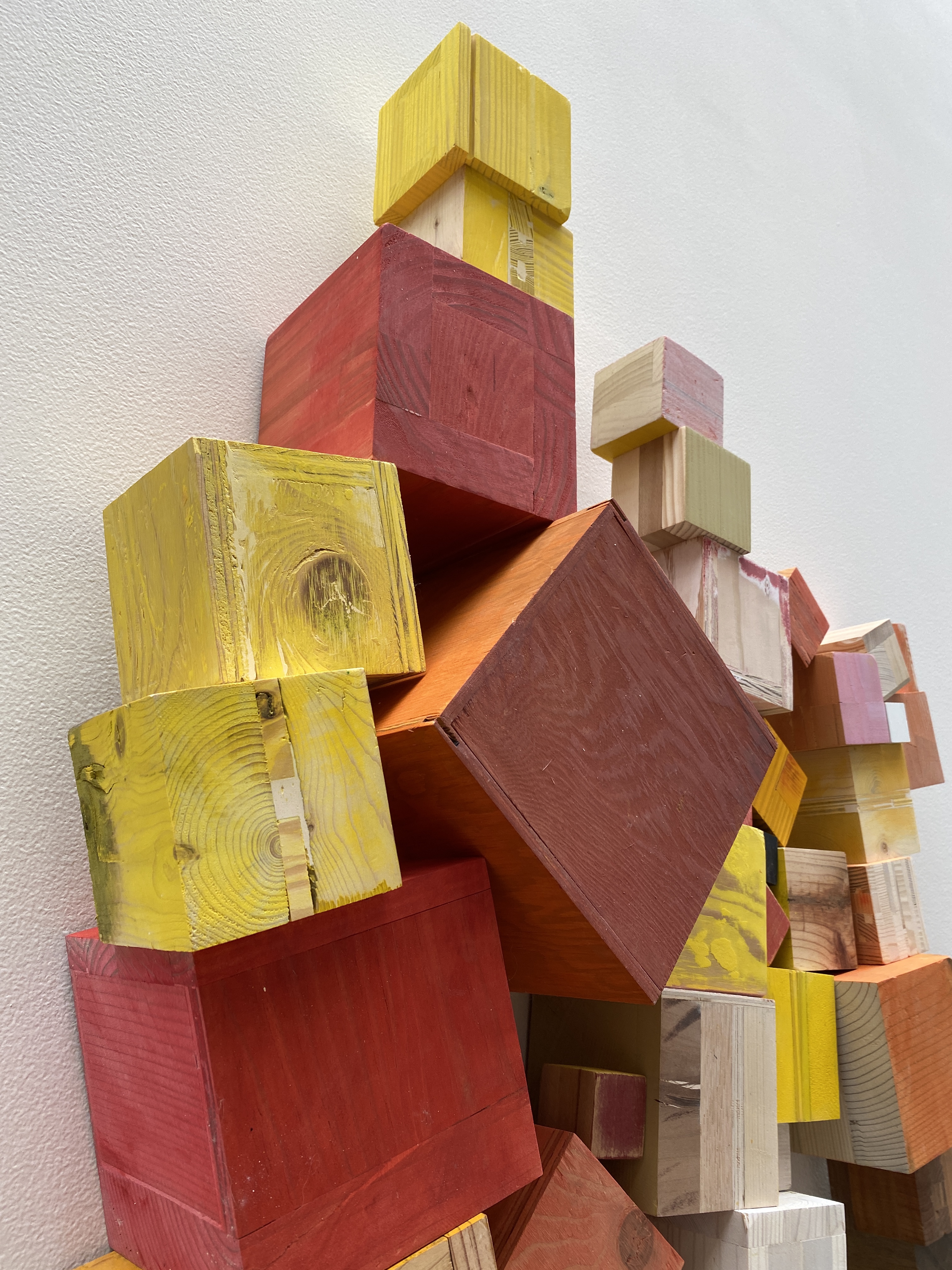
While painting is certainly my go-to medium, and I have work in progress, I’ve been spending a good chunk of my limited studio time lately building more of the wooden cubes that are the compositional elements in my installation work. Part of the reason for the shift in focus- beyond the fact that my focus tends to shift regularly (I don’t imagine that’s surprising to anyone who follows this blog)- is a series of proposals I’ve done or am working on that I hope will create some opportunities to interact with new spaces and create new, unseen compositions with all of the new elements I’m making (including an idea that is taking shape for how to engage an audience directly in co-creation, a follow up on the cube selector project)*.

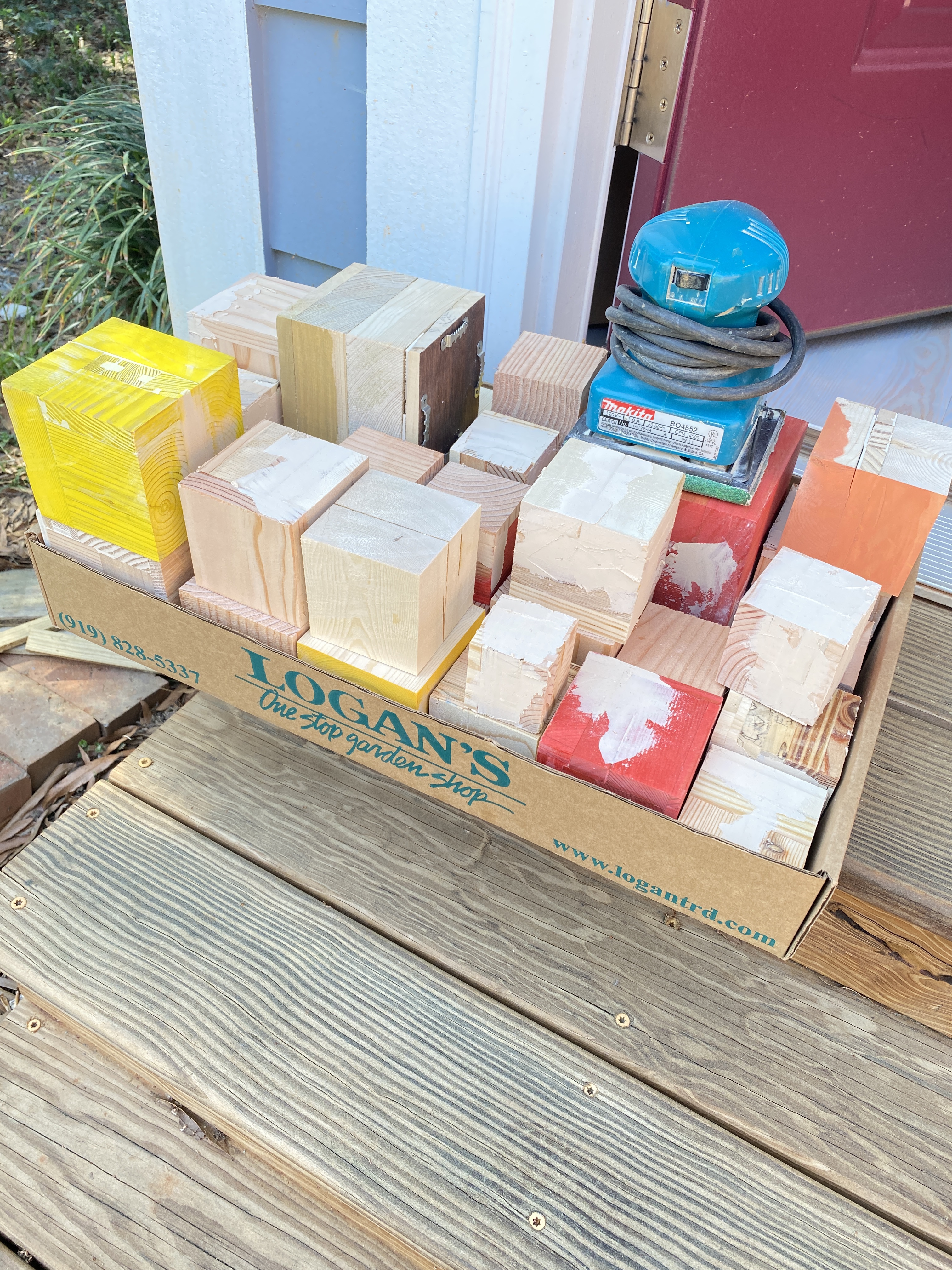
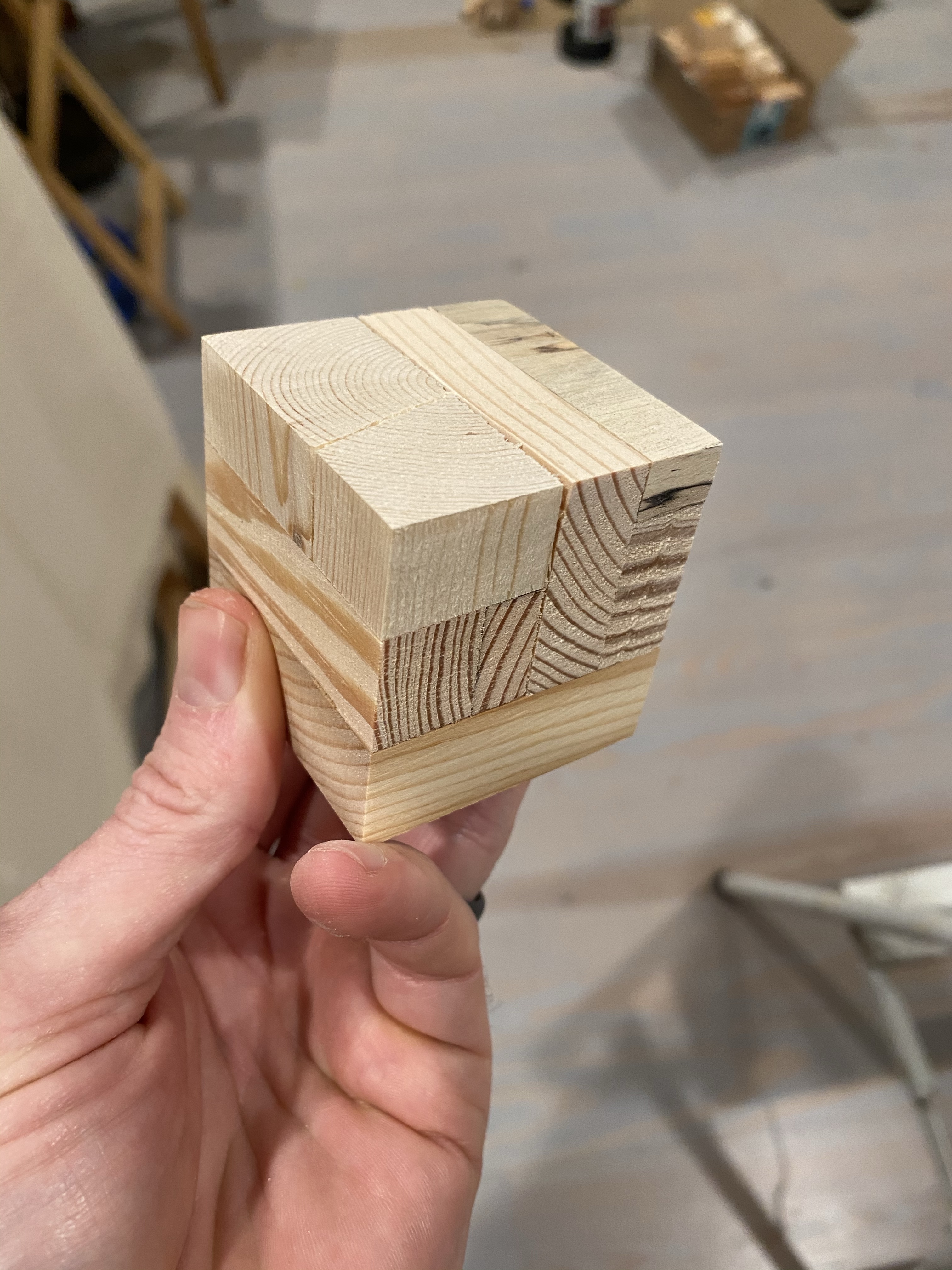
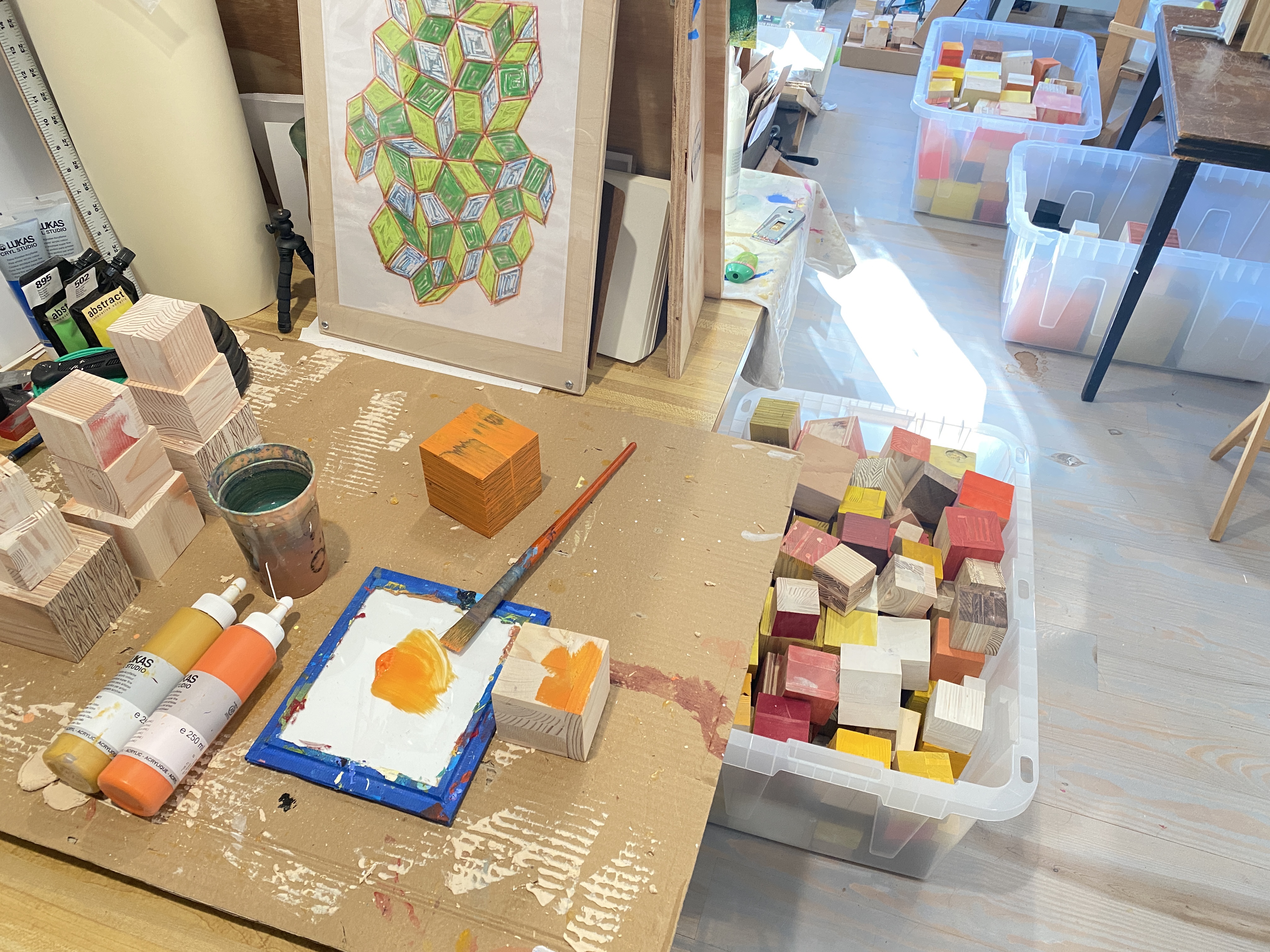
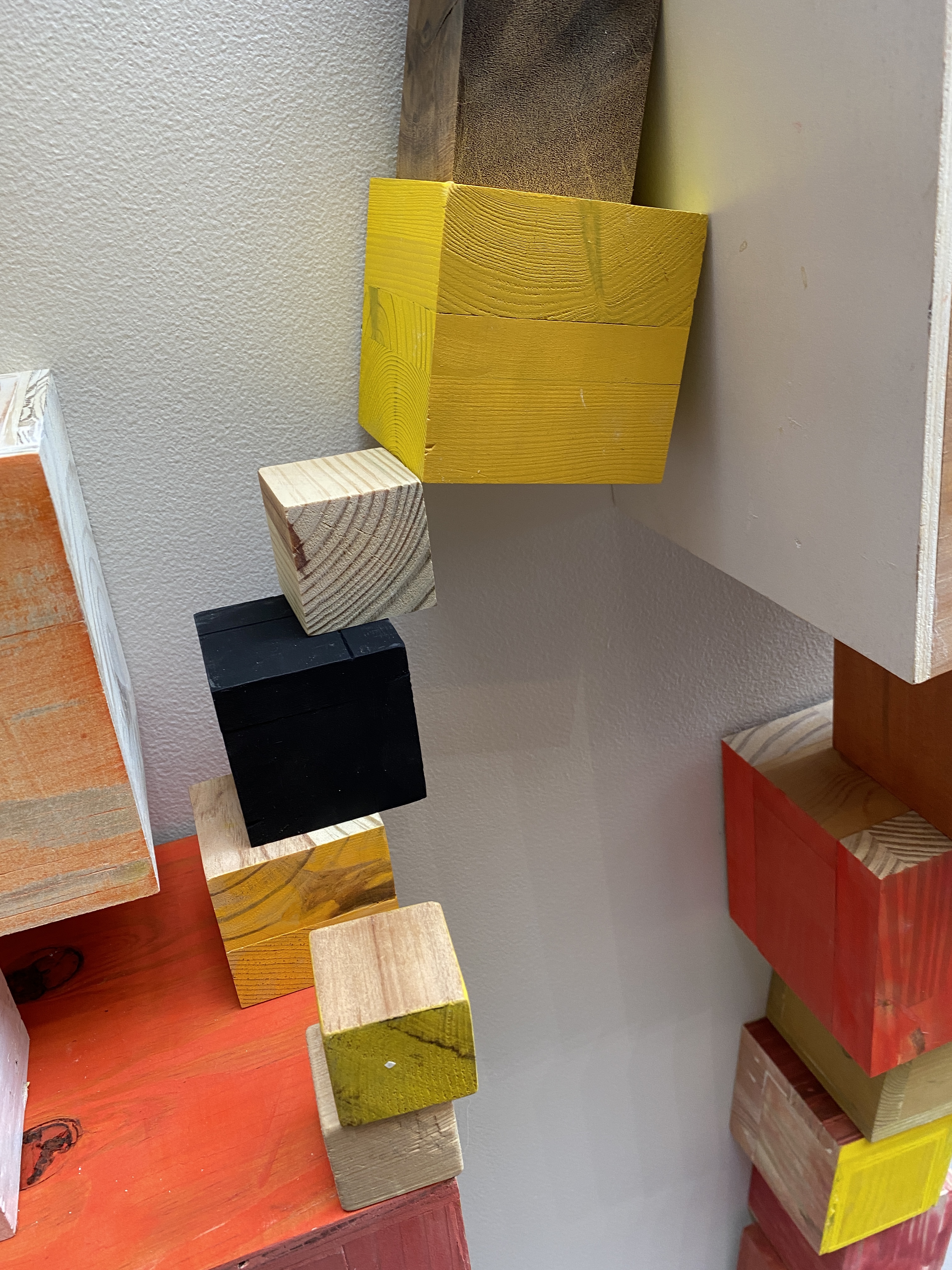
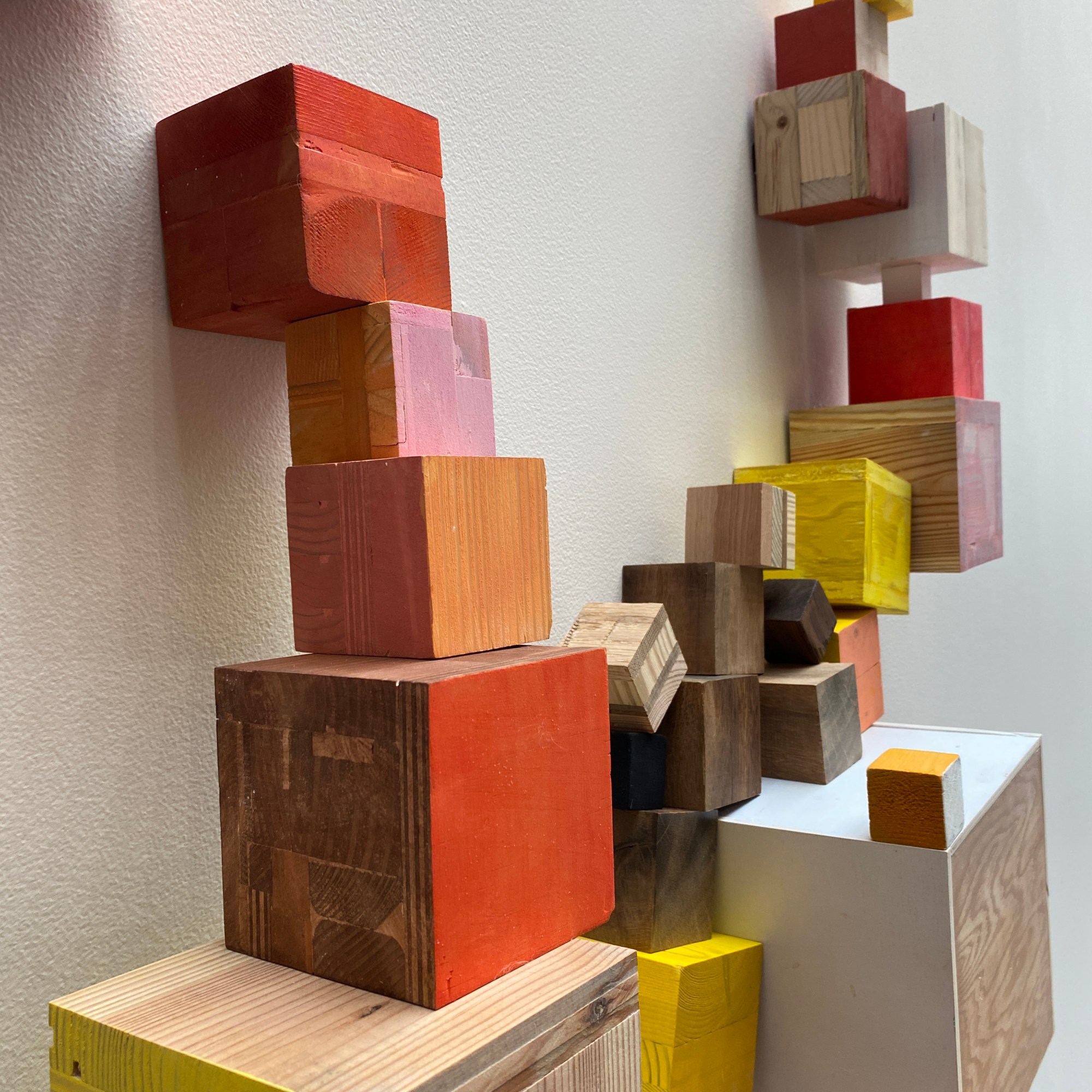
My process for creating the cubes has a few stages. The primary material (scrap wood left over from the addition to our hone that included my studio) is assembled into either 6-sided cubes (second image) or masses of scrap (first image). In the latter case, the mass has to be squared up on a miter saw. The cubes are puttied and sanded, and then painted. After that, it’s time to assemble the end results with help from my studio assistant…

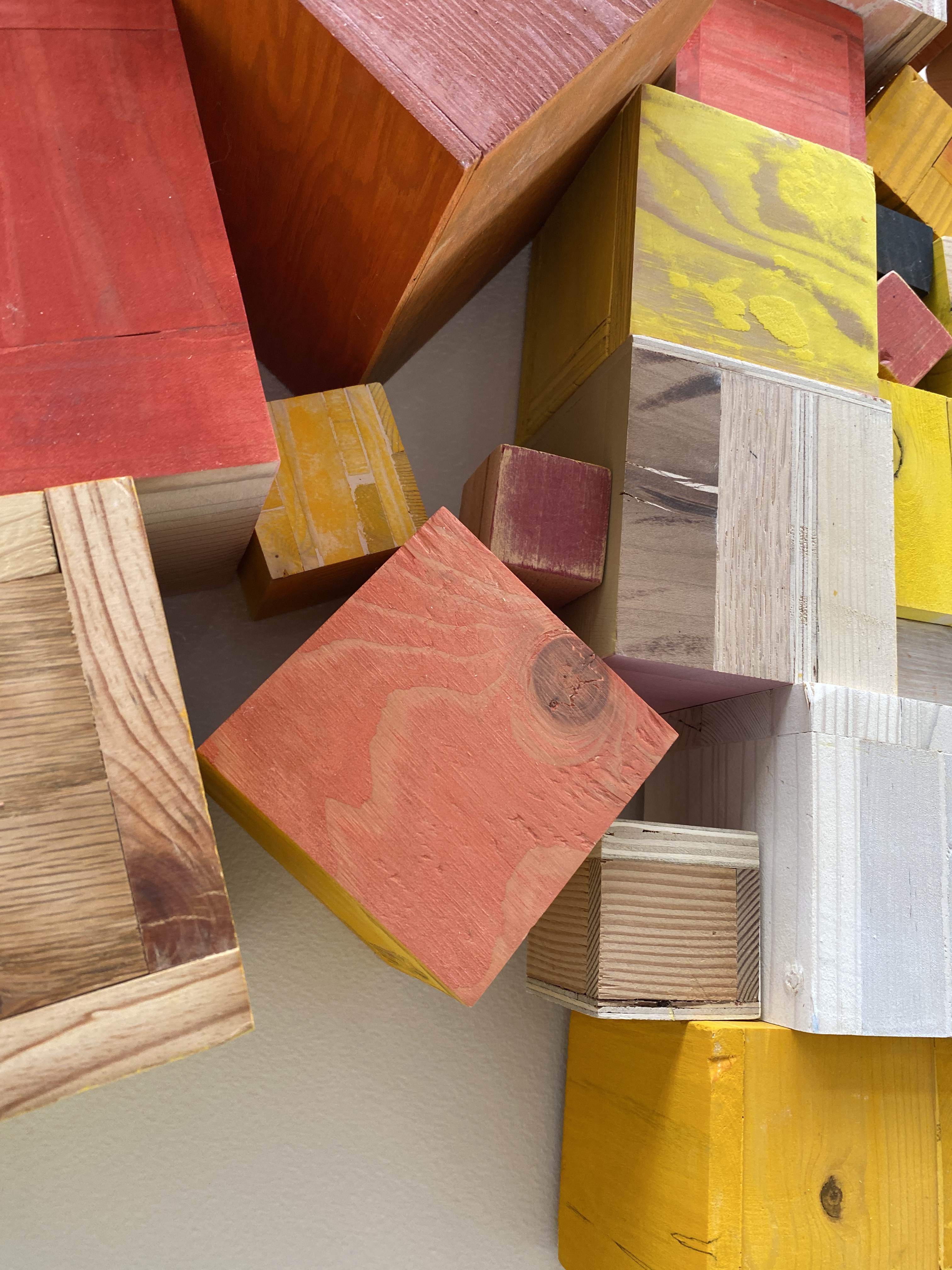
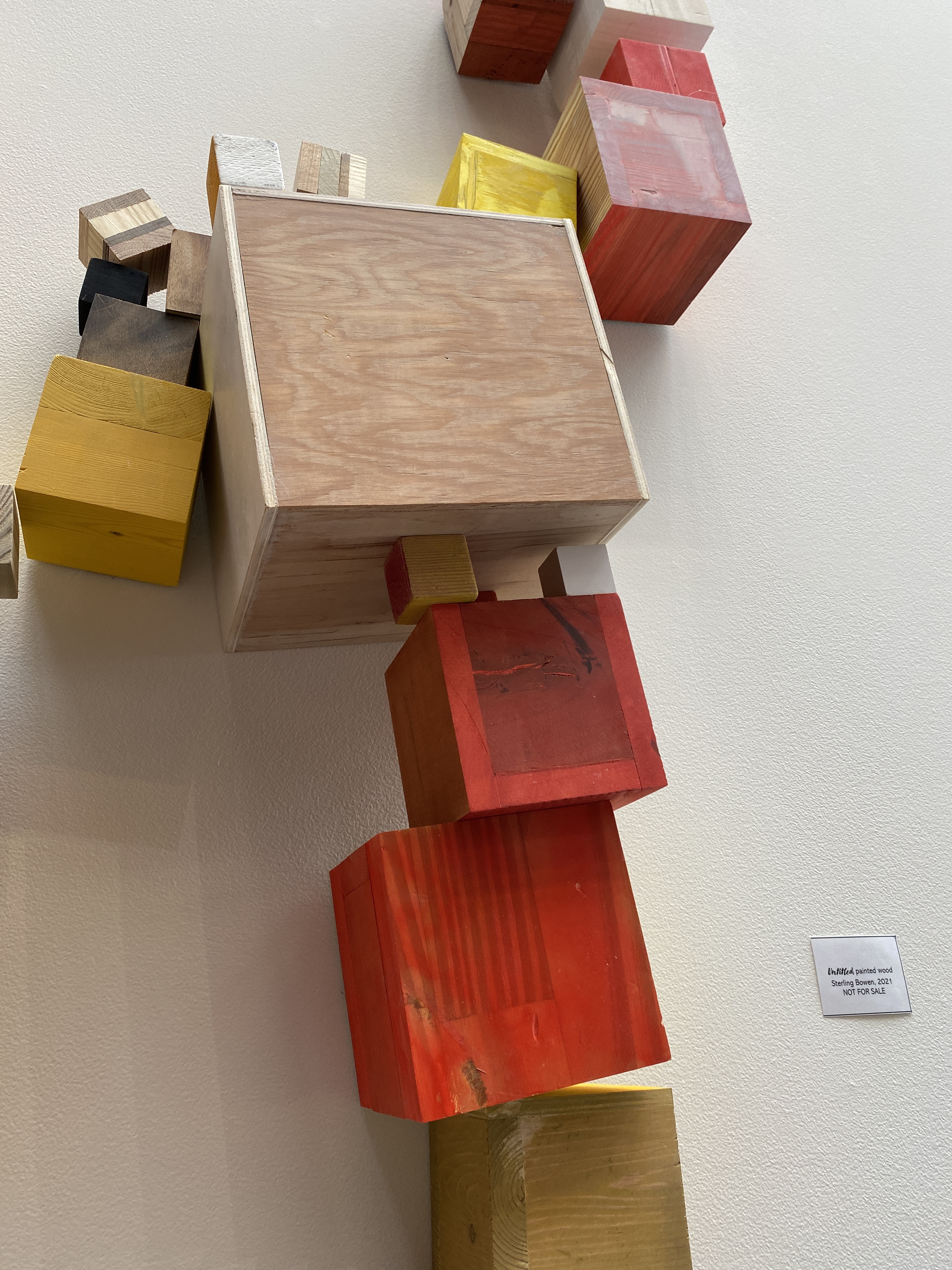
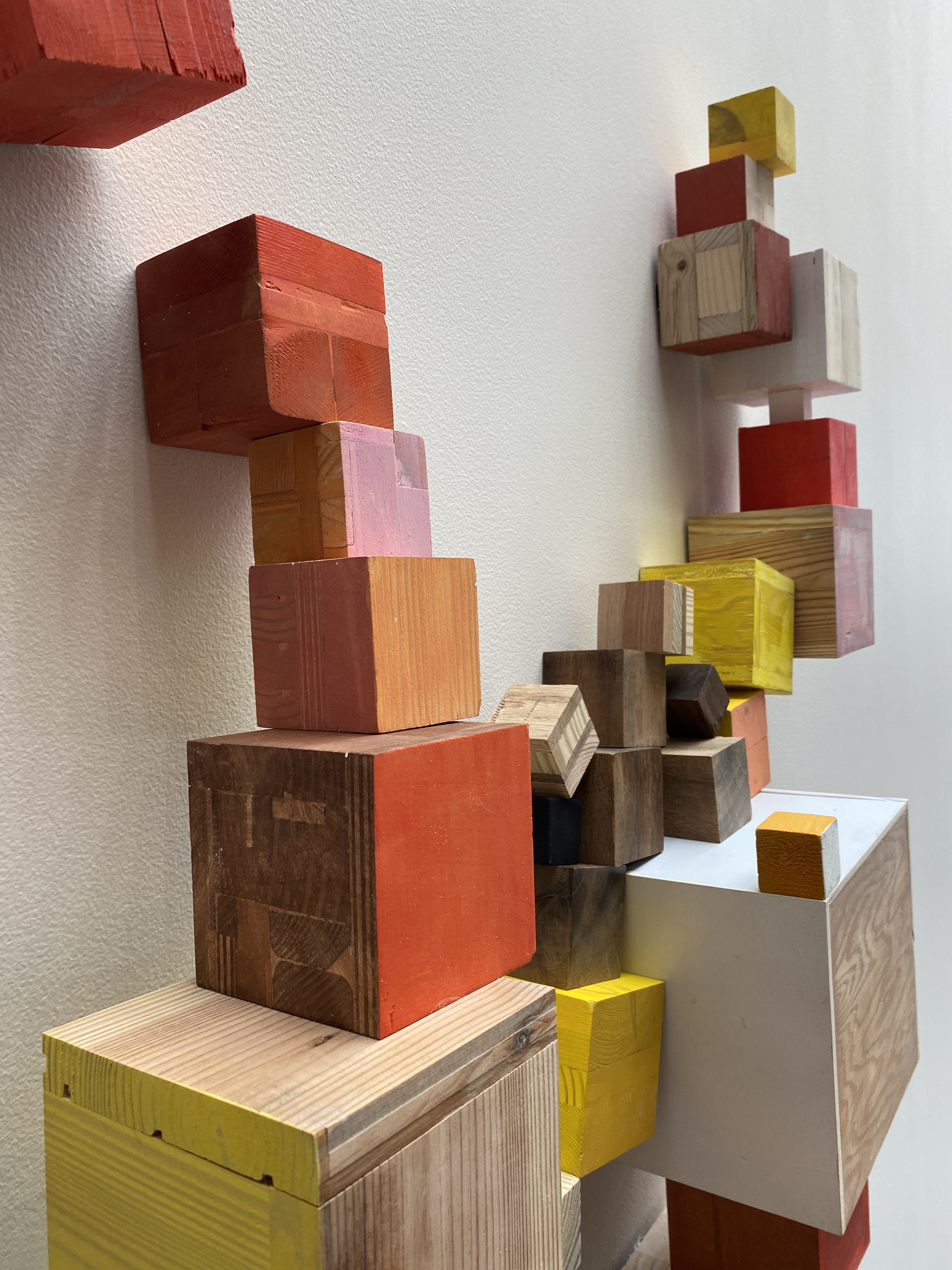
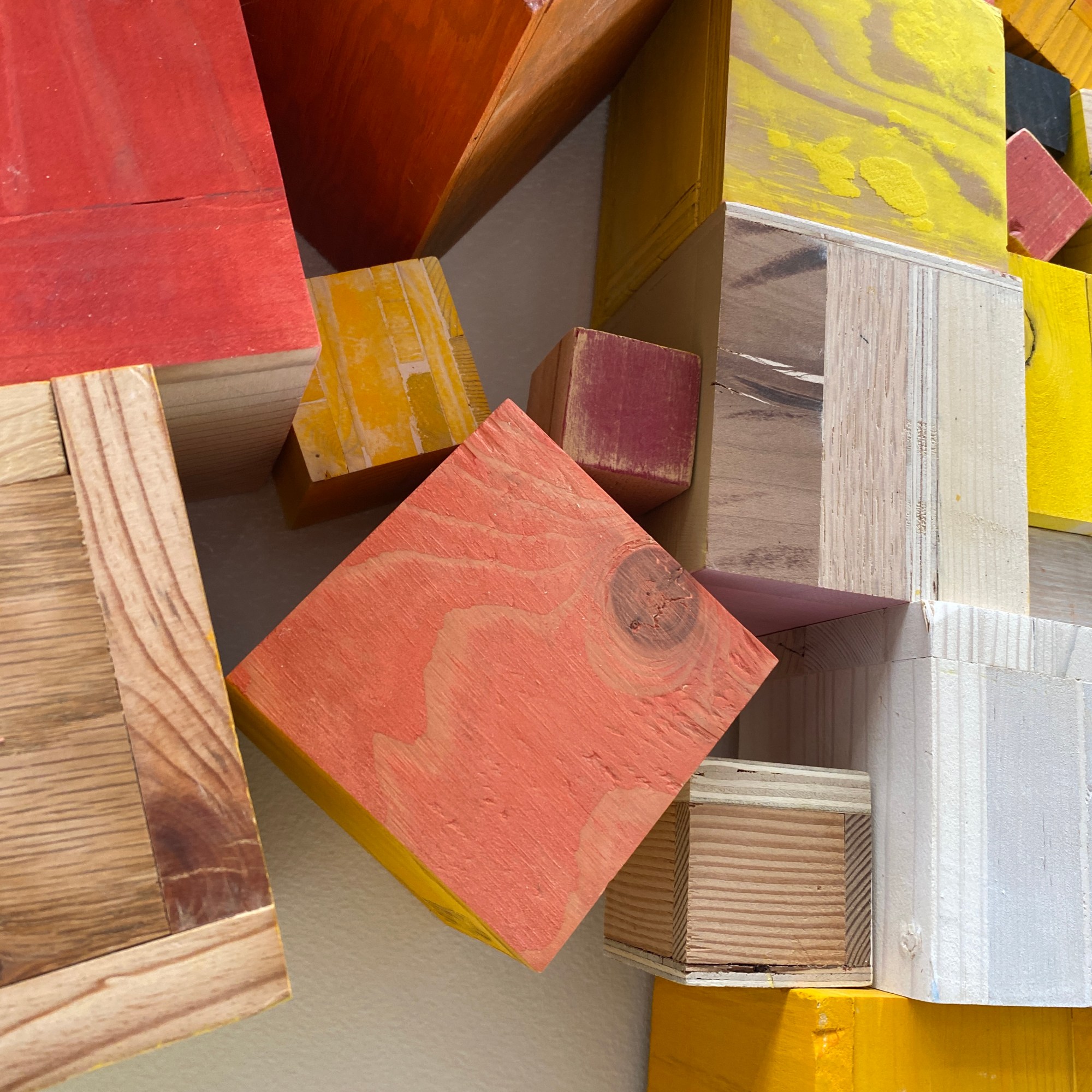
The end result are objects which I see as proxies for brushstrokes. Each of the cube’s 6 sides have unique surfaces/textures (a stand-in for impasto) and the color may be consistent/monotone or varied. The range of possibilities is vast, and yet constrained (by a single construct- “cube”- and a limited chroma/pallet). I’ve mentioned in my thoughts on painting the interest I have in truths that superficially seem to be contradictory, and in this body of work, the dualities at work are chance and planning, as well as the rigidity of a geometric form and the intuitive abstraction (something one would anticipate to be more fluid).

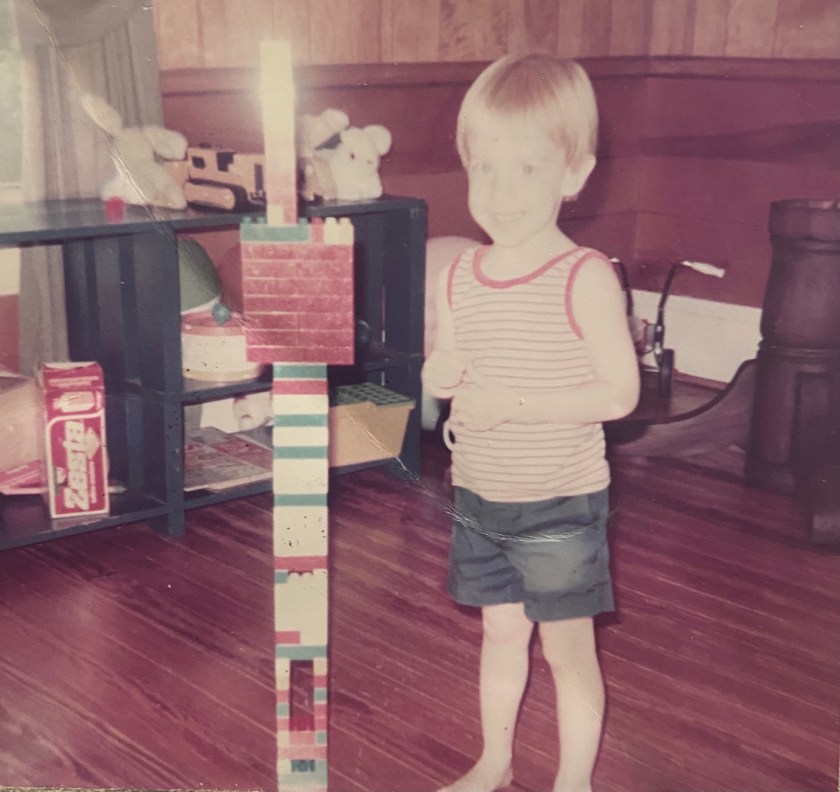
BTW, “yes,” building compositions with blocks has other, older associations for me than early Modernist strategies to foreground basic compositional strategies. While it might appear that I’m referencing early childhood play here (I’m not) it’s critical I think to be transparent about associations and also, while spontaneity and intuition are not in and of themselves “play,” the inner certainty that leads to choice isn’t necessarily different for me now, and a sense that something is “right” (compositionally) isn’t diminished because it’s origin is not semiotic or language-based. *Also, hopefully my next update will be regarding at least one of these opportunities manifesting in the form of a group show in Raleigh, stay tuned…

Layering

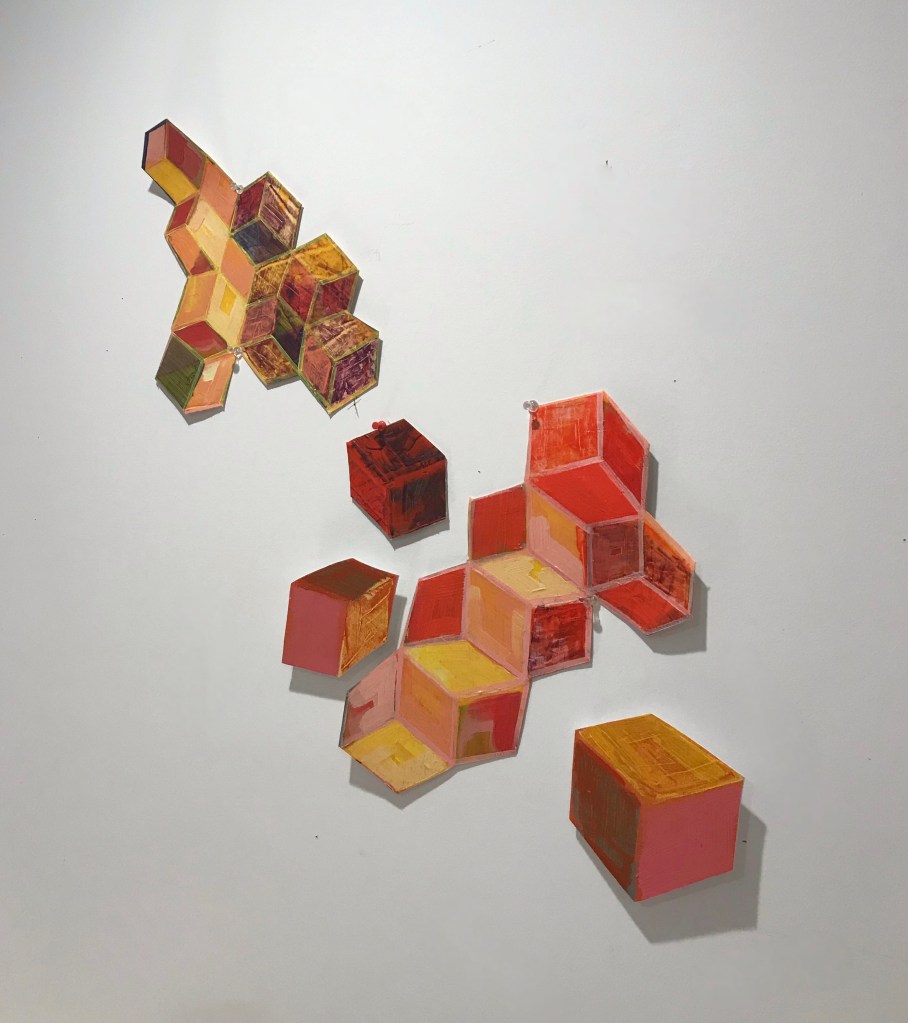
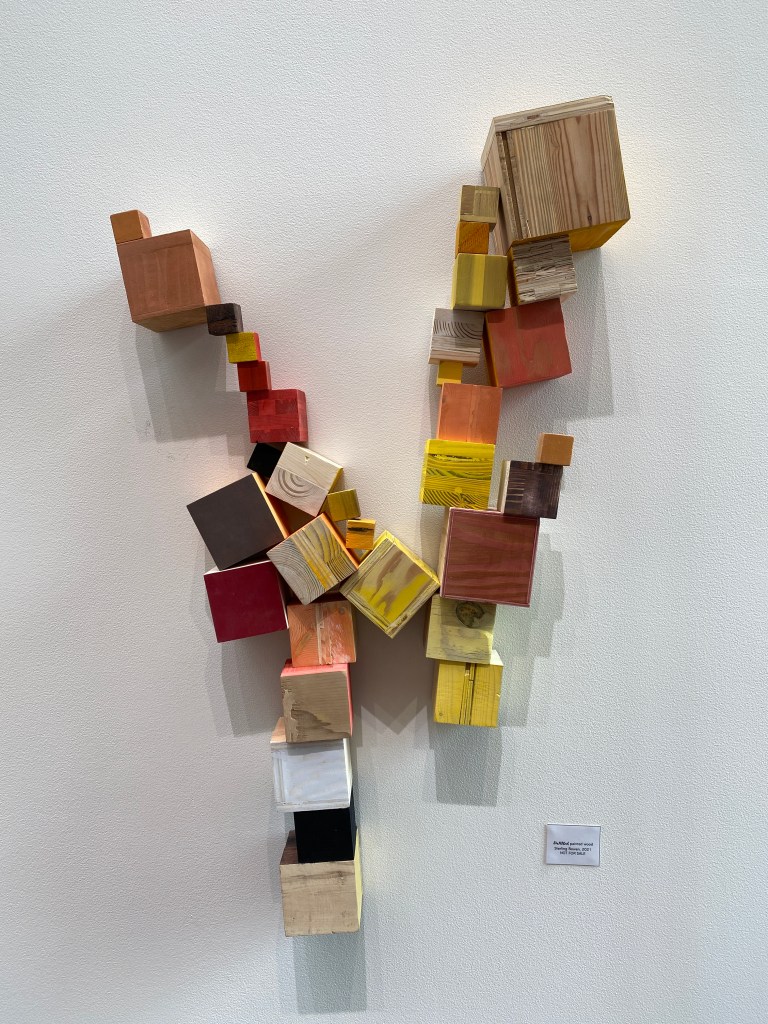
I’ve been working on a series of installation pieces that I call remixes for some time now (below, dates to May of ’20). They began when I realized there were some elements of paintings that (as a whole) I didn’t feel resonated, and began to cut up the canvases and thumb-tack the parts to the wall, rearranging them as if the cubes or clusters of cubes were individual compositional elements. Remixes belong to my generation so I’m quite comfortable owning that nomenclature and “yes,” I’m also down with the idea that the experiential element of music is quite often similar to the experiential elements of visual art (and I’ll note that just because music remixes are the most familiar instance of this modality, remixing is not unique to the media).

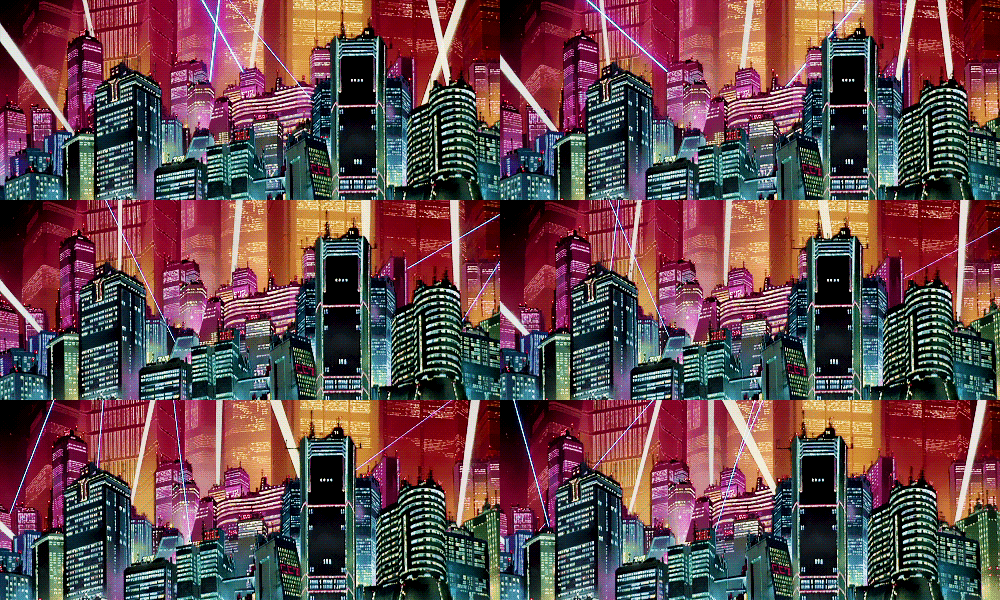
To me, the act of intuitive “play” without a known or pre-determined outcome- an objective- is what makes much formalist abstract art, well, non-objective. There’s something more with these reassemblies than the element of play though- they create or imply space (that they exist in it) by their proximity and overlap. The “pop” between these “layers” is something I’ve thought and written and talked about over many years, and I’m certain the appeal has something to do with the influence that cel animation had on my aesthetics (which in many cases is cooler than anything I’ll ever make, see example from Akira below).

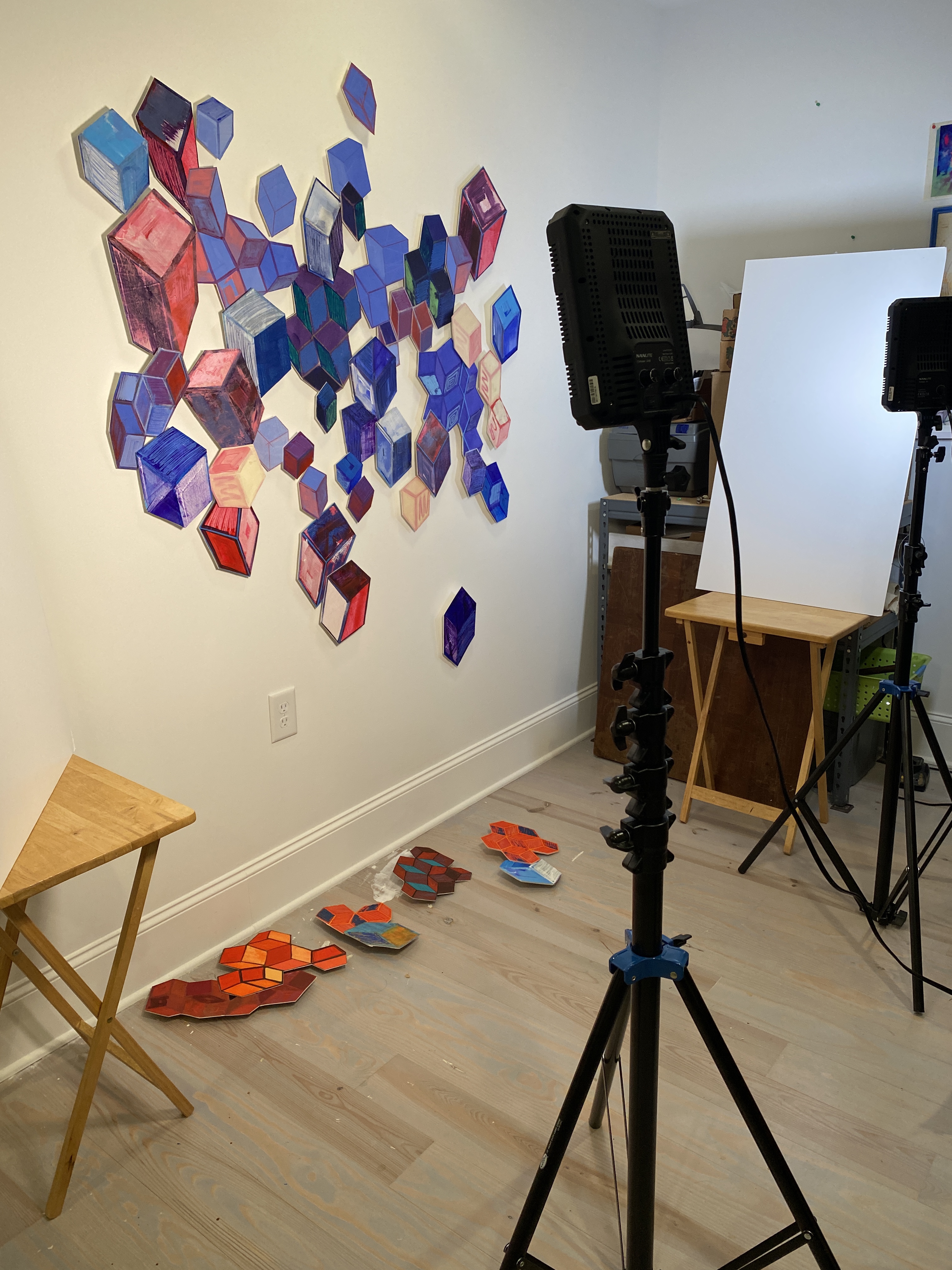
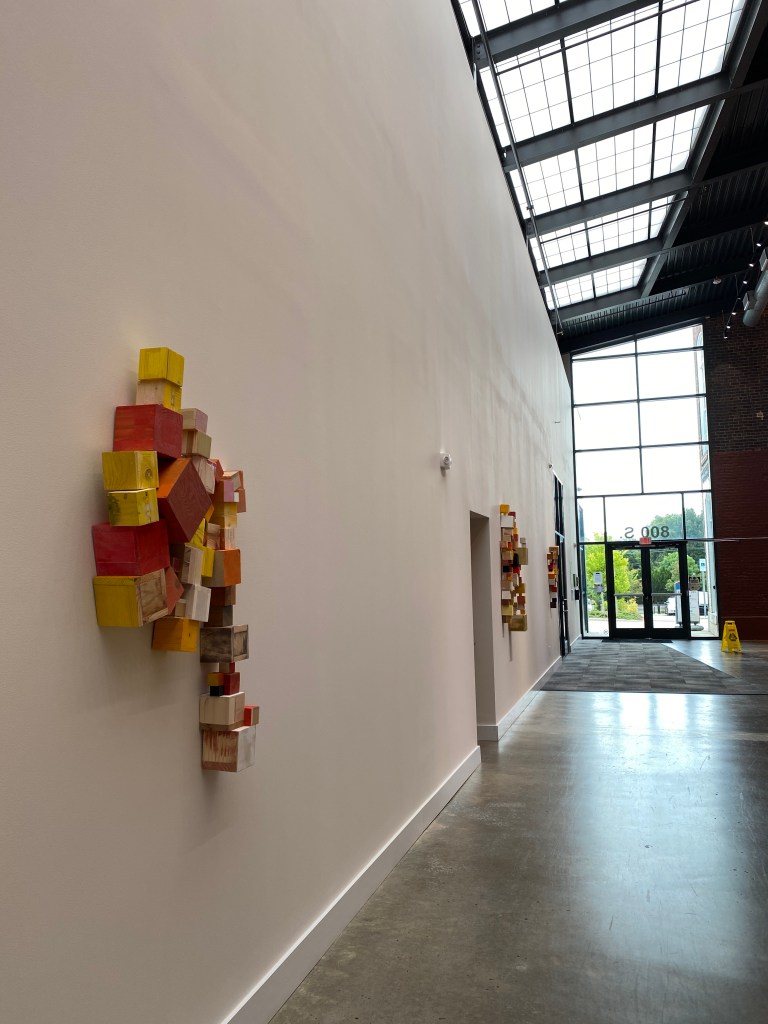
Of late, the compositions I’m exploring have not only scaled up (compare first image below of an early iteration to the last one) but also attempted to engage a more bombastic combination of chromas (second image). One of the things I learned when I showed them recently, too, is that, to enhance and foreground their experiential and temporary qualities, they should change each time they are shown. I’ve also recently purchased some lights so I can use one of the walls in my studio as a canvas (stage?) to work through new ideas/configurations (and capture the resulting compositions in hopes that I can also create some new opportunities for them to exist outside my studio).

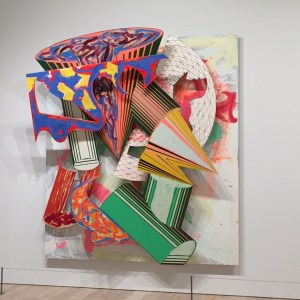
Also been thinking about some of the artists I’ve enjoyed over the years that have at times made work that engages negative space and/or implied space: Elizabeth Murray’s frenetic cartoon energy that defied the notion of the painting as a rectangle; Stella’s late work that reflected back to society the impact of digital imagery that overtook hand-drawn graphic design at the end of the 20th Century; Al Held’s non-sensical labyrinths; and Elsworth Kelly’s always amazing ability to energize the space around a shape.

Thoughts and reactions on Dimensions

So, I’ve had a little more time to process since my last update regarding the direction my work- or my painting at least- has headed since I installed my (solo!!!) show at Golden Belt’s Grand Gallery, Dimensions. And the thing I keep coming back to is gratitude, for this opportunity. It’s an incredible privilege to have the capacity to make work that doesn’t need to exist for commercial purposes- it’s liberating and I hope I can hold on to that context for a bit longer. And I won’t lie, some folks who are farther along in their careers than I (due to their work and commitment) have taken me more seriously lately, which is validating if perhaps a little egocentric (I am a frickin’ artist though…).

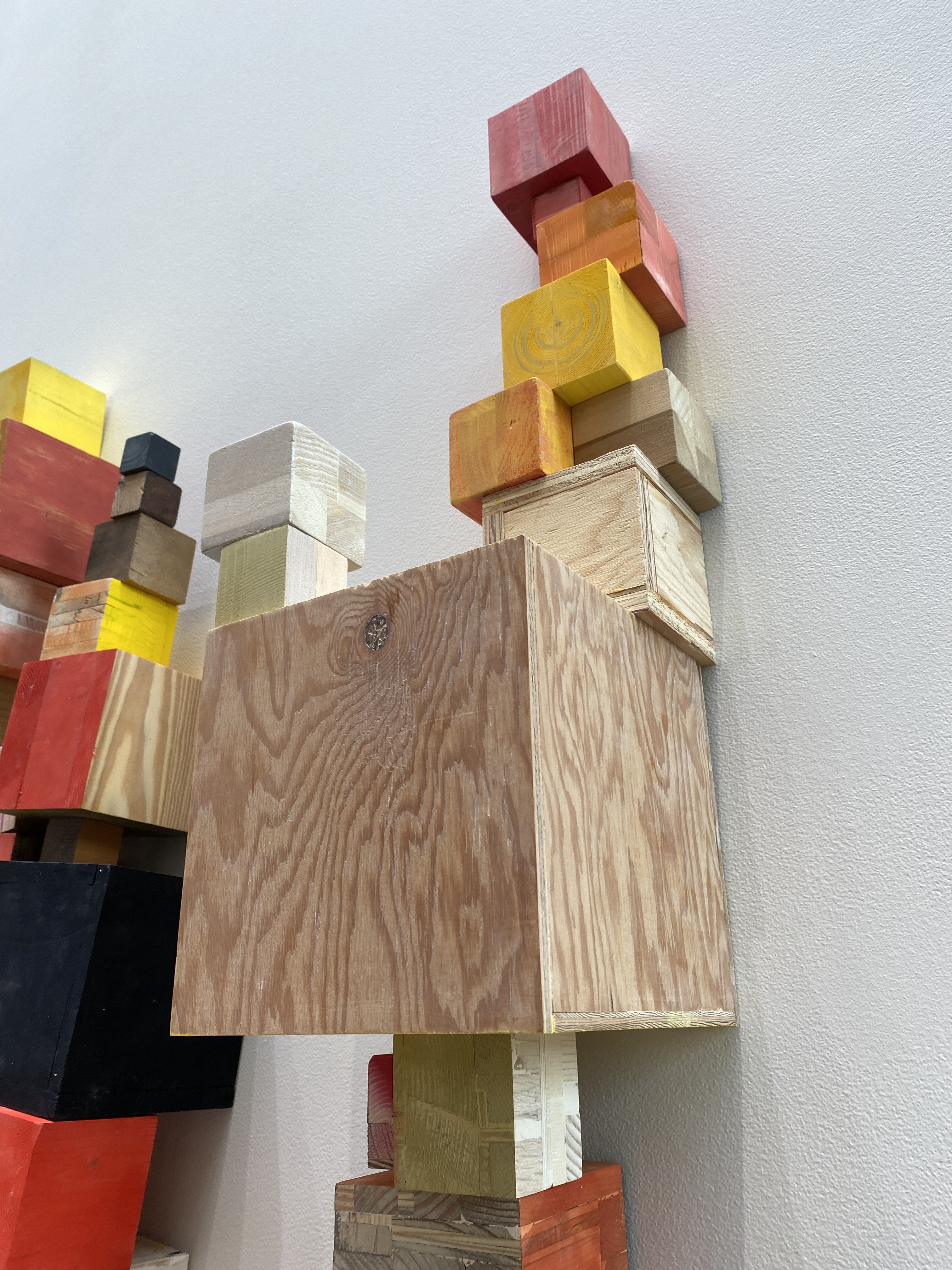
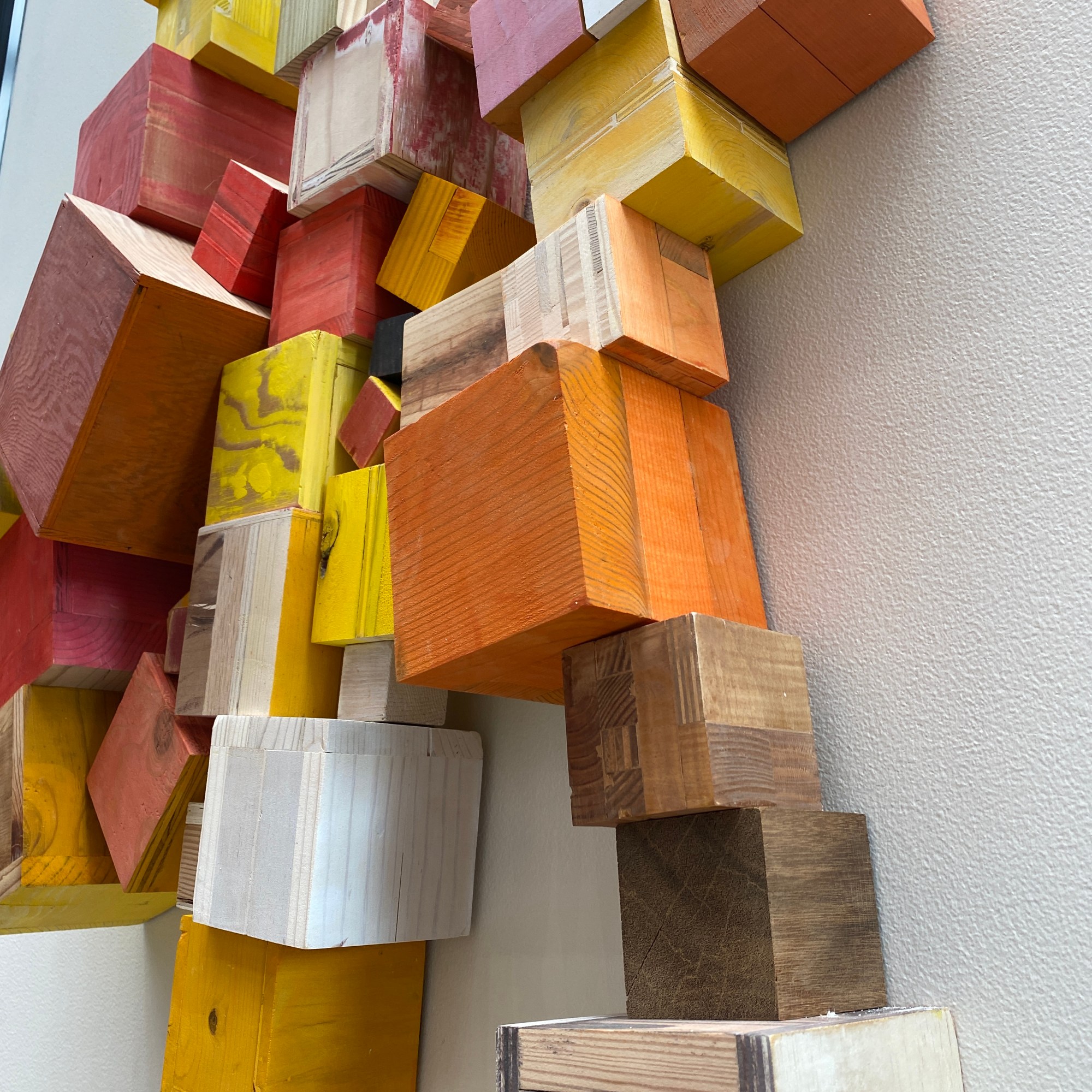
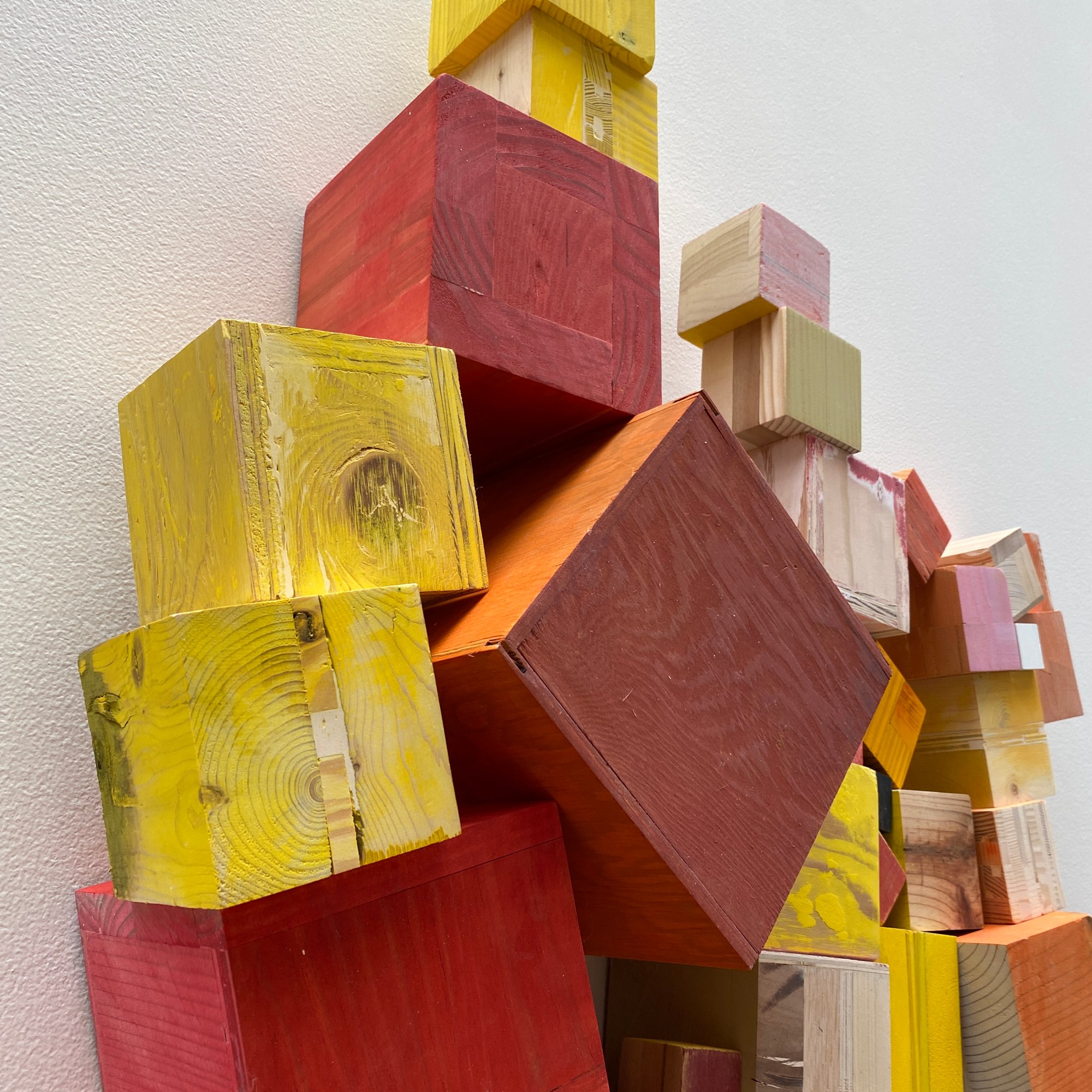
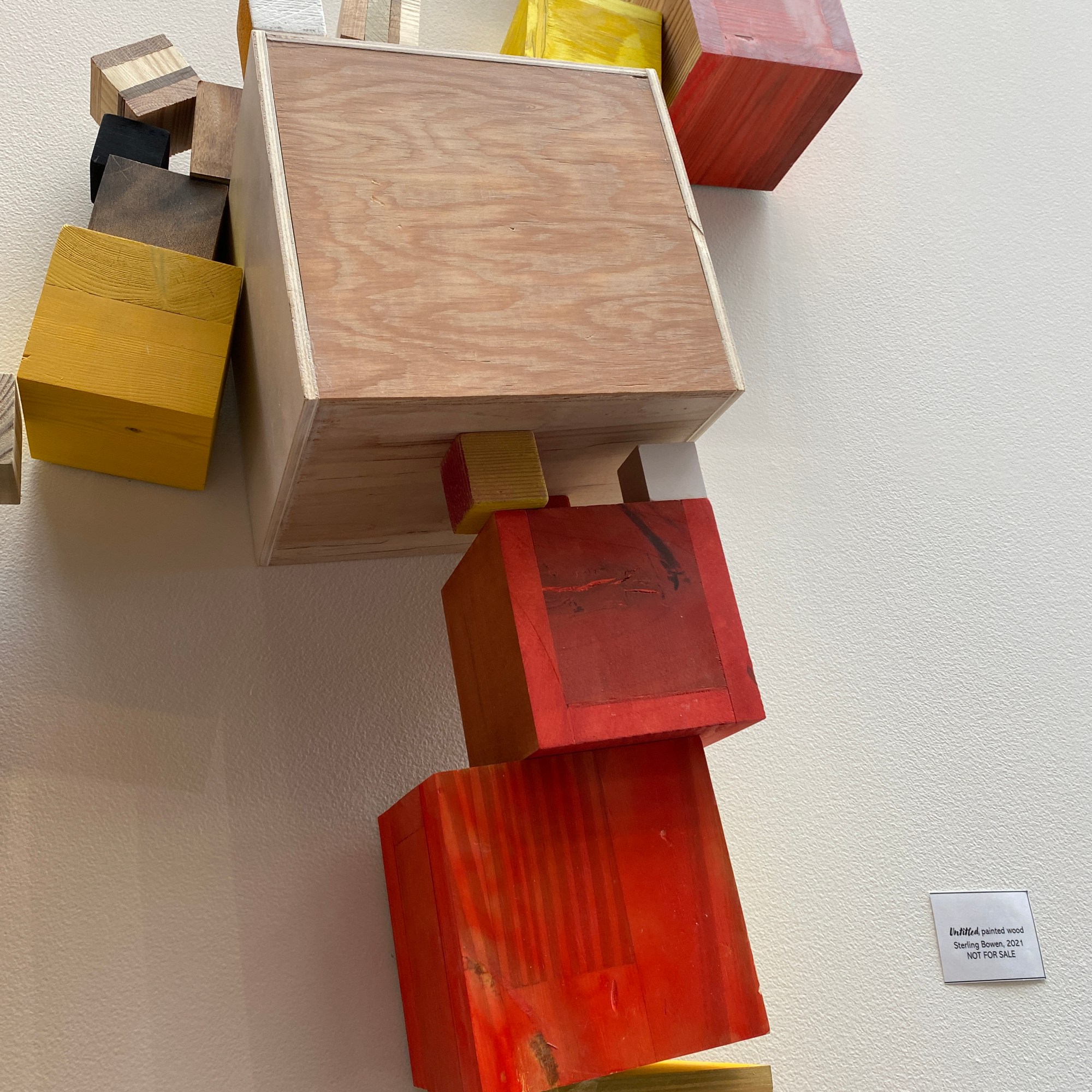
Some details- the natural light in the space is amazing, I’d have taken the opportunity to hang this show just to get some of the images I got.

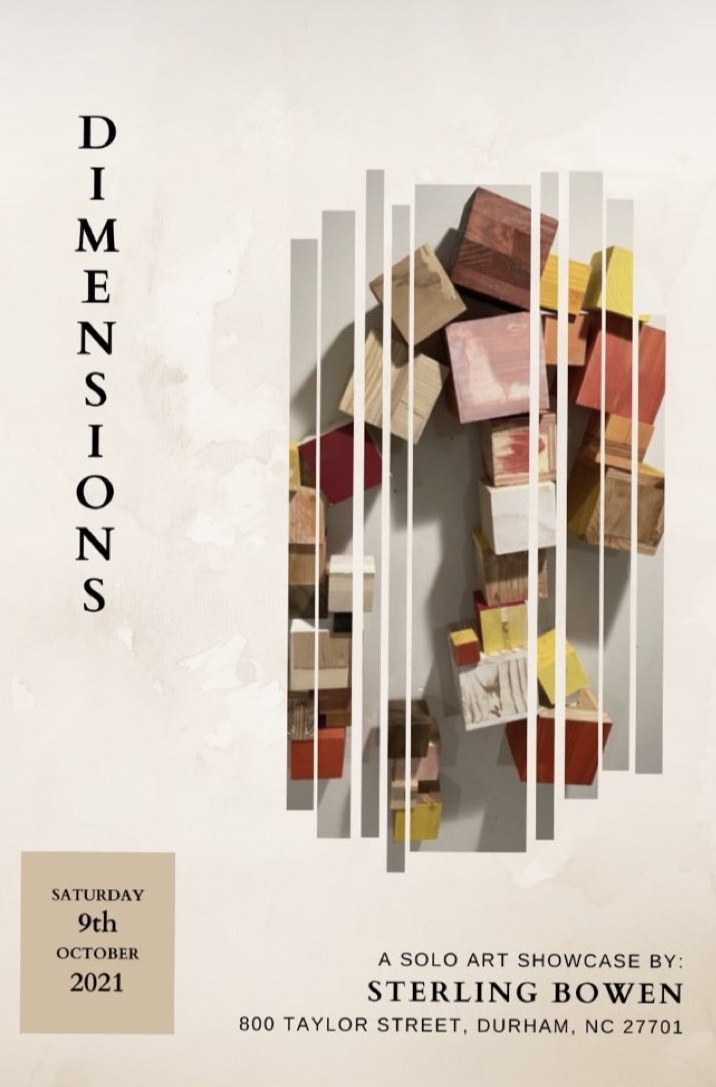
This is what I wrote as a statement for the show btw fwiw icymi: “Dimension is a noun meaning “a measurable extent of some kind.” Dimension also has another meaning- “an aspect or feature of a situation”- which, again, references attention towards the visual character of a thing. The contrast between the features- including the physical dimensions- of the cubes is the source of each piece’s dynamism. The cube assemblages-which are not attached permanently to each other or the wall-foreground gravity and light in a way that paintings cannot. I treat the cubes as proxies for brushstrokes as I spontaneously assemble them into temporary compositions that are never repeated. The process for making this installation relied on reacting to the cubes themselves and to the dimensions of the Grand Gallery. For many of us “dimension” also refers to time (an element of the sculptures as they are temporary) and space (which they physically occupy). For me, these untitled abstractions are an exchange of energy and experience with an audience- a dynamic that requires space, and the passage of time.”
Dimensions at Golden Belt

10/9/21

Hey followers (all 240 of you, how lucky am I?)! I’m excited to add a new blog category to make it easier for you all to get updates on what I’m actually doing (I’ve been using the blog/post functionality in WordPress almost exclusively for posting about other artists). When I make updates to any portfolio pages on work in progress or when I complete new work, I’ll use this updates category to share with you. I hope it increases your interest in this blog.

I’m really excited about my first announcement, too! Just this last week, I was asked by Goldenbelt Arts in Durham to hang a show that will be up through the end of this year, which is also my first opportunity to show the cubes in public. I hope you can all make it out to Dimensions sometime soon!