Science fiction

I definitely grew up getting a lot of input in the form of science fiction, whether that meant Buck Rogers and Star Trek re-runs on TV, ET in the theater or gobs and gobs of Star Trek-based novellas from the library in my pre-teen years. I did venture beyond this realm in my adult years and I’m not going to trot out my sci-fi-nerd credentials because I’m certain many of my readers could best me wink emoji. What’s my point (not more nostalgia although hit that link for just a sec speaking of Buck Rogers…)? I grew up optimistic that there would be a future. And, I think I still am, or at least not convinced it’s impossible (for there to be a future).

Early this week one of two pieces which inspired words from me came across my feed (my muse was also a self-imposed deadline). It was mostly a review of Neptune Frost—a project from American multidisciplinary artist and musician Saul Williams and Rwandan filmmaker Anisia Uzeyman— on Artforum by Ruby Helot that briefly poked out from behind the paywall (good luck with that) . According to Ruby the movie succeeds where it severs the link between the extractive violence of postcolonial industry and the past and our present, allowing for a new future to come into focus. I mean, not utopia, maybe but, not dystopia. Ms Helot spends some time on dystopia, even pointing back at a prior Artforum article about our appetite for the same. I’ll note that I complained to some other nerds (I get why that’s funny) about the narrow range #strawmanargument of what was offered as exemplar of science fiction. tldr; the synopsis of the canon was limited to space opera-style good v evil round 2 million stuff. Despite dogging a lot of seminal movies for me and generally being an art world snob about people’s appetite for dystopia (something about pots and kettles) I really, really love her general point that “Yes!” we would all love to see a vision of a different, equitable future.

The other piece is (one of) Kate Thompson’s posts from her Daily Sticky about asking for what you want, and avoiding talking about what you don’t want, in order to get what you want (stay positive). First things first you must all read everything Kate writes. Second, I’m sure part of the reason the message that the positioning and attitude that lead to success are positive really jumped for me is because I’m in sales, and gosh that’s just sort of basic.

While Kate’s message is not the same message as Ruby’s, I got the sense that Ms Thelot would like that Ms Thompson is asking us to consider that the message that resonates the most is likely to be the one saying what we want, because, we want something, something better.

I read these pieces in our current social context, which is one where many feel lead to proclaim, online and publicly, that if we aren’t talking about what isn’t right then we aren’t paying attention, right? I’ve been wondering about that message, which is every where in my social media feed, because the world does in fact appear to be in danger. And, “yes,” many of the decisions made by those in power do not align with my values either. And, what role can any of us as artists have in presenting a picture what we want. “Yes,” it will be a fiction- possibly even science fiction.

Please help

While I usually do an update every couple of weeks on a line of thinking I’ve been following or snapshot of what’s going on in my studio (you can also follow me on Instagram to get some of that), this week what’s on my mind is the impact of Hurricane Helene on the western part of my home state.

I know for a lot of artists that are full-time, making the ends meet is an ongoing reality that doesn’t leave capacity for giving financial help to other artists. In that context, the amount of damage done to western NC’s Arts communities is doubly heart-breaking, as many of the creatives impacted lost equipment, supplies and work which replacing probably seems out of reach. I hope those of you reading who can make a donation (still, I’m sure many of you have already) will check out the NC Arts Foundation’s Disaster Relief Fund. If you’d rather make a general contribution to help local organizations doing work to keep people fed, clothed and able to access everything from meds to cell service (no disrespect to Red Cross et. al. but these are orgs in the region on the ground who know the people they are helping) please check out Appalachian Voices resource page.

In the interest of tying this back to much of what I write about, I’ll note that I have seen and read about so much destruction and loss, and, I have seen Americans looking out for each other and giving without any need or desire for anything back. People are good, y’all.

Please leave details on other resources in comments as the spirit moves, and please share this information widely (and thank you to all who have been amplifying good work and ways to help online)!

Source material

This is certainly a well worn topic of discussion among creatives. Definitely one of the main reasons my awareness of it is raised this week is the opening of the exhibit Open Source, an exhibit which I curated, at Wilma Daniels gallery in Wilmington, NC. Central to the show is the idea that not only the literal material of the work but also its content can have a multitude of sources. I would say my relationships with the artists are source material for me as well.

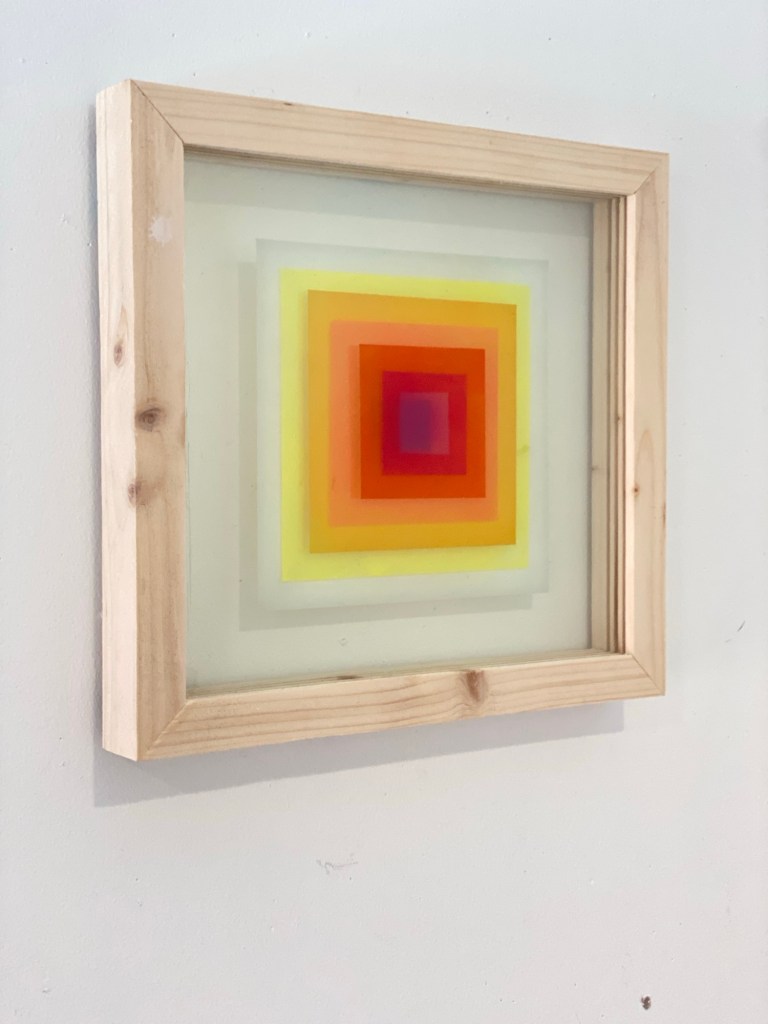
A number of you have asked about the object making part of my practice recently (we all do this- “watcha workin’ on?”) and my answer has been “material studies.” Which is to say there are new-ish sources at play (yeah I am using that noun on purpose). I feel a pull from the material itself to highlight their more physical qualities more (glass, wood, non-canvas surfaces, even paint is now more obviously dimensional and plastic) while composition becomes more optical (simplified compositions focused on color and in many cases leveraging light as a “material”). Which isn’t intellectual or even really an idea, it’s an impulse.

I noted this direction in an Instagram post this weekend where I pointed to a loose tie between a recent study, a book about Clyfford and a couple of photos.

An Instagram post by Nick Aguayo also really resonated for me. (I think) he notes the source of work can actually be a somewhat mysterious to (even) the artist, that its general direction can trusted- its “point” doesn’t have to be that all aspects are formed and understood:

“I am deeply interested in color and experimenting with it, but I think that the deeper concern of the work is a matter of structure and meditating on how the making of something in itself can carry a certain energy and attitude towards looking at the world.

So for now I’ll continue to accept many inputs and trust my fascination with materials as one of the same.

Relationships

are what’s on my mind as I sit down to write my bi-monthly update to you my regular readers, and btw, speaking of relationships, thank *you* for showing up to support my practice.

I’ve mentioned on this blog and probably to many of you in person that I have a whole, additional professional practice in clean energy. I’m proud of what I can literally point to (from consumers who now use efficient lighting to large, solar photovoltaic generators) that I’ve accomplished in that part of my life, which I attribute to my efforts to forge strong relationship (tldr; I’m in sales/BD). And, recent changes in the market have necessitated that I begin a search for my next role, which I sort of teased a while back. The search has given me the opportunity to reconnect with some great people that are doing important work to decarbonize our electric grid- it’s been edifying on a number of levels and has lead to some new friendships as well that I already cherish dearly. And, my relationship with my current team, in particular our shared value of honesty, has helped immeasurably as we have had to navigate a totally surreal and frustrating set of circumstances.

I’ve tried to foster openness and honesty in relationships in general. None more central and crucial to my wellbeing than my spouse. There have been some health challenges in our household in the last week that have strained my ability to manage my ADHD-fueled general anxiety disorder (that’s not an excuse, it’s normalizing mental health challenges), and without a robust set of language around mental health and a prioritization of boundaries a stressful week could have spiraled into a disaster (not that it was easy at all points, probably obviously since I’m pointing at the thing). Love you, babe.

The next, big thing happening in my art practice is all about relationships, too, specifically the 6 amazing creatives listed on the announcement below. That’s right- Open Source part II opens very soon. I’m beyond grateful to have these people in my orbit, in particular as several of them have made time to jump in and take over coordination or tasks that would normally fall to the curator, even though they obviously have lives as well. Conversely, timing for this show hasn’t been great for a few of us and, I think, it’s the trust from solid relationships that has enabled us to negotiate how to distribute work and help reach our collective finish line.

Also, the show foregrounds, for me, the relationship that curating has to my practice, and in general is an attempt to highlight several relationships: that of contemporary practitioners to both history and this moment in time; the relationship of object-making to culture generally; and the positioning of the viewers of this work as central to the “content” that non-figurative work creates and embodies…

Open source, in the world of software code (the hidden structure of much of the world as we view it) is source material that is made freely available for possible modification and redistribution. Open source is a decentralized software development model that encourages open collaboration.  At our current point in the history of making Art, there is also a decentralized framework within which abstract artwork can be and is made. No single artist or group owns the source of meaning for this modality, and a wide range of collaborations with and utilizations of the elements developed out of the historical canon is possible, as well as incorporation of content and materials from outside that world. In the space needed for and occupied by abstraction, an openness is required, for creator and audience. The artist must be open to the ways in which the source materials of the work, including subjective content, inform decisions about everything from composition to titles. And the audience must be open as well since abstraction’s signifiers (color, shape, surface) are non-literal.

Critique

What a triggering title, I’m sure, for many readers, especially those that went to Art school (or, like myself, Architecture school, where in my first critique a professor literally asked “whose Mongolian cluster fuck is this” about a model that had taken me 20+ hours over a couple of days). So I thought we’d start with a little haha- literally. everyone. who went to art school has been in a situation like the one Terry Zwigoff brings us in the vignette above (based on Daniel Clowe’s comic and screenplay) .

The topic is on my mind for several reasons. One is recent feedback I’ve gotten on some exhibition proposals. First and foremost I find* myself grateful to actually get feedback- those of you reading who submit a lot of proposals know how rare it is to find out why your submission wasn’t at the top of the stack. And while I could, but won’t, lie that reading “this aspect was thin” or “explain better how it actually does that” *raised defensive hackles at first (any abstractionist reading this knows about critique that is actually leveled at the modality and not your work in any specific way), once I noticed myself having those thoughts, I was able to realize I could have *much* better answers. This was an opportunity to grow and improve- how wonderful, and, again, lucky for me to be given the prompt to do so.

I have to give a shout-out to Adam Grant. My boss at the old day job gave us all a copy of Hidden Potential for a holiday gift and I just got around to picking it up recently. Don’t let the source or the endorsements scare you off- the ;tldr is that we can all learn to be better learners. You don’t have to pick it up because you want to be a CEO or the next MVP of the WNBA yourself.

One of the other reasons I have “critique” centered in my consciousness this week is the recent passing of Jeremy Gilbert Rolfe, a painter that I’ve always admired who also had an amazing facility with words. Whenever I think of him I’m reminded of his visit to the University of Houston when I was in grad school there- it was easily the best critique I had in terms of the attention he paid to what I was doing as an abstractionist. Perhaps not surprising? Again, those with Art school PTSD know that too many established artists (and under-appreciated profs…) love emotionally abusing 18-24 year olds. As far of the value of the feedback goes, I believe that while it’s valuable to get (and give) feedback from sources that lean in different directions from your practice, a kindred spirit will just see things that others don’t. Facts. So, find your tribe and nurture those relationships! Seriously- the best feedback I got about the proposal *and* the response to the same came from one such relationship that has become one of the most important to me and to my practice (you know who you are, I love you my friend).

FWIW I try to make critique a part of my practice, both by having a regularly scheduled meet-up with a consistent group (the thread of years of seeing each other’s work change over time and having visibility into the genesis of the same is a *powerful* tool for critique) and also by teaching.

BTW, for those of you that are local to the Triangle, you might be aware that I’ve been making a point this year of giving and asking for studio visits, or just meet-ups for a beverage. If we haven’t connected yet, let’s make it happen. And if I’ve promised you we would and haven’t followed through, thanks for your patience!

Words are about words

I was part of an artist talk this weekend where I reflected on and took questions about one of the pieces from my new homage series. I don’t mind talking, it’s part of my day job actually. And it also got me thinking about the role of “the discourse” and spoken and written forays into the same by creatives (that’s a good link fwiw).

The moment I decided to decide on some words about words was upon reading a social media post after the talk by a friend who questioned what the Art world would look like in the absence of the artist statement phenomena which according to Wikipedia is relatively recent. Statements and talks are not the same thing and also yes they are, intertwined at the least (the chicken in the egg).

Seems like to answer the question posed (what would change about the Art world if International Art English disappeared- link is a pdf btw), one should unpack what purpose artist statements serve. I argued, prior to reading the wiki actually, they derive from the relationship of Art to academia*, that their purpose is to point the viewer towards the artists’ intended relationship to Art history. Specifically I argued (to no one in particular and also literally) that the challenge is postmodernism is not actually an “ism.” Said differently, we don’t have the type of shorthand in the visual arts that, say, musicians have, where one might declare “it’s not boom bap, it’s trap music” that would be the best candidate for a stand in.

I’d also suggest nothing perpetuates this part of the experience of taking in Art more than artists ourselves who. Are. Always. asking each other what our work is about.

*The very existence of the arts in the academic Ivory tower is, of course and not surprisingly, the reason the majority of opines on said post’s resulting thread were approximately “everyone is entitled to an opinion with or without academic credentials” (a very American, individualist viewpoint). I’m not sure I agree all opinions are informed with equal rigor and substance even if “we all have our opinions” is the dumbest hill to die on ever. Even with my quip about music categories considered one should probably recognize that people still have words about music they love (thank you Pitchfork, Okayplaya, Stereogum at el), because good Art inspires the same.

Do I think the visual Arts are better with or without statements? I’d say they are here to stay and if that isn’t what motivates you to view Art thanks for showing up for whatever reason motivates you, especially to Artist talks.

Nostalgia

Tom Nichols, writer for the Atlantic, is as a child of the 1960s, and he says in a recent newsletter article titled “The Lies Nostalgia Tells Us“* that “those days weren’t better—but in one way, they were sweeter.” *There is a pay wall for this link to the article (unless you’re a subscriber), but if you are an Apple News subscriber, this link will open it for you. I find Tom interesting (I am a more-left-than-center progressive, yes I made that up) because he is as far to the right as I can handle, frankly. Something about perspective. Also he absolutely rails on MAGA world which, given his facility with writing, is delish. Anyway, about this recent newsletter on the topic of nostalgia. tldr; he explains what he means by talking about childhood memories that are sweet. As a child of the 1980s, I get that- it’s a sort of un-complicated-ness (because childhood, duh).

I was reminded when reading that word- nostalgia- of a blog I wrote almost a year ago about the topic of color. I also touched on the idea of nostalgia in that piece (pin) because I was beginning to explore an interest in the parallels between the cultural moment of the 2020s and late modernism (which I developed a little more at the end of that year). To summarize, I teach my students that Modernism can generally be understood as a reaction to Classicism, and a belief that a re-imagining of human culture was necessary and imminent. Very simplified of course. On to that pin = the specific reference to nostalgia was this Jonathan Stevenson essay at Two Coats in which he discusses how nostalgia that’s basic (yes I mean it that way) romanticism is the “dumb” variety. Not the same message as Tom and also parallel.

Yes I got to “and”! It just comes up all the time. “Yes” Tom and I have tender memories of childhood, and, it’s a lie to believe that time in our history was better. Same thing for Modernism- yes it was necessary change and the idea of universal human worth is great, and… it sure wasn’t a clean break from misogyny, racism and classism either.

Also, I gotta say, it’s pretty wild to read that I wrote, basically, “hey our situation today is sort of like the Modernists in that nothing about the old way of doing things works anymore” a year ago and wonder at how different things are in the US and the world one year later. Wow.

Production

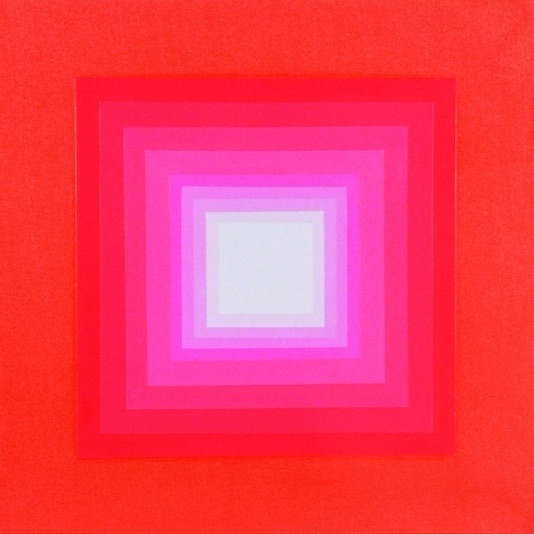
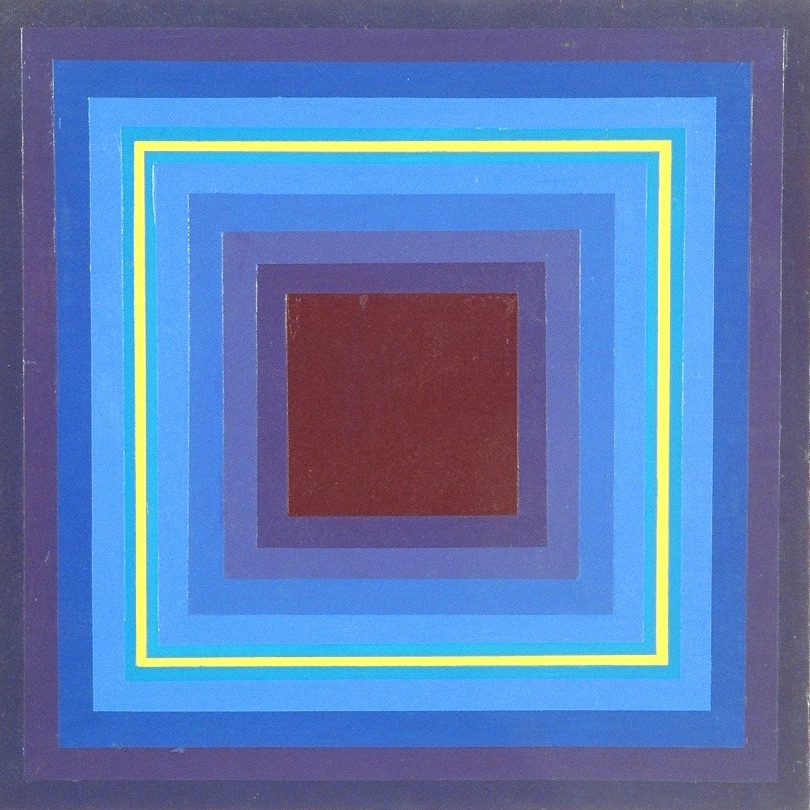
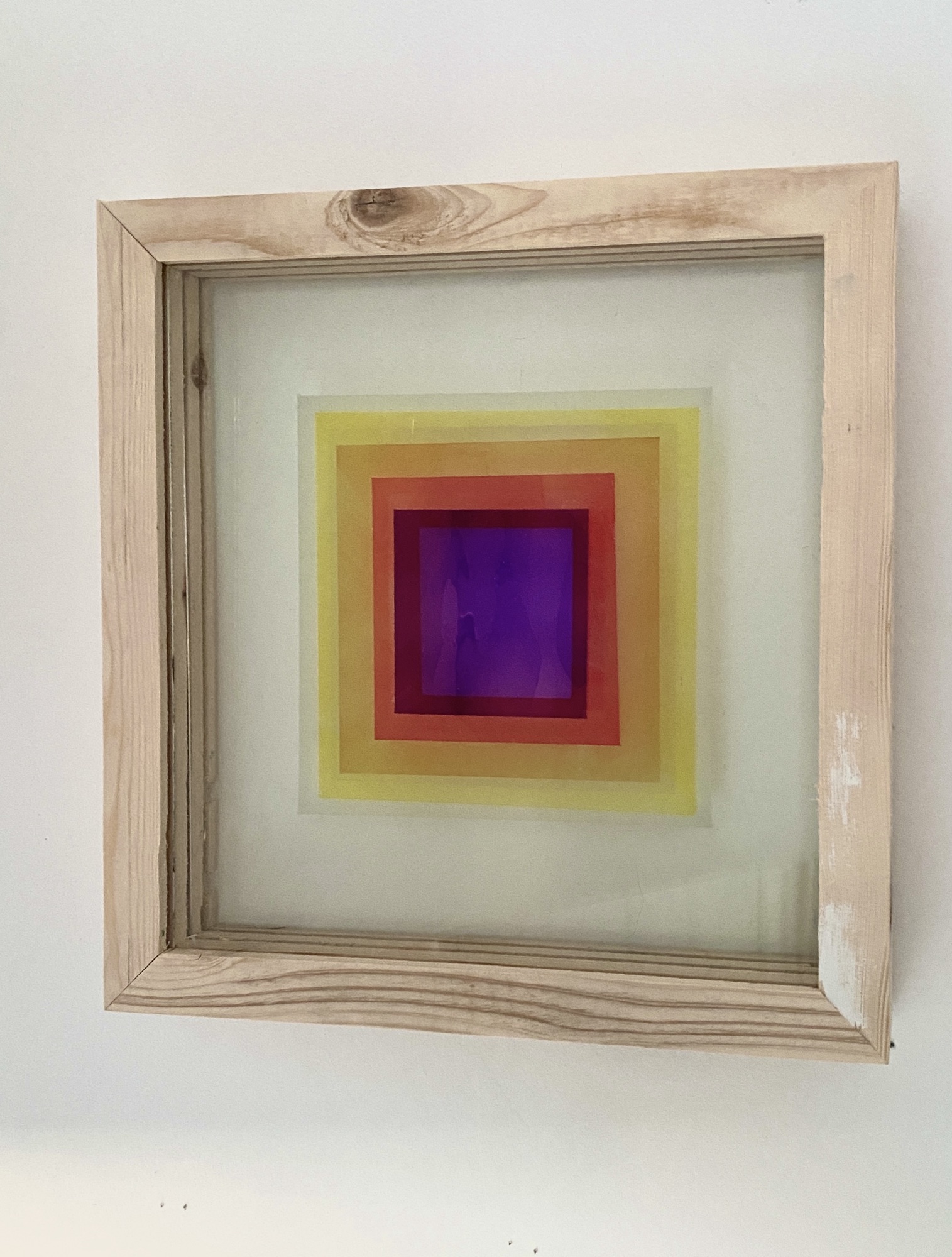
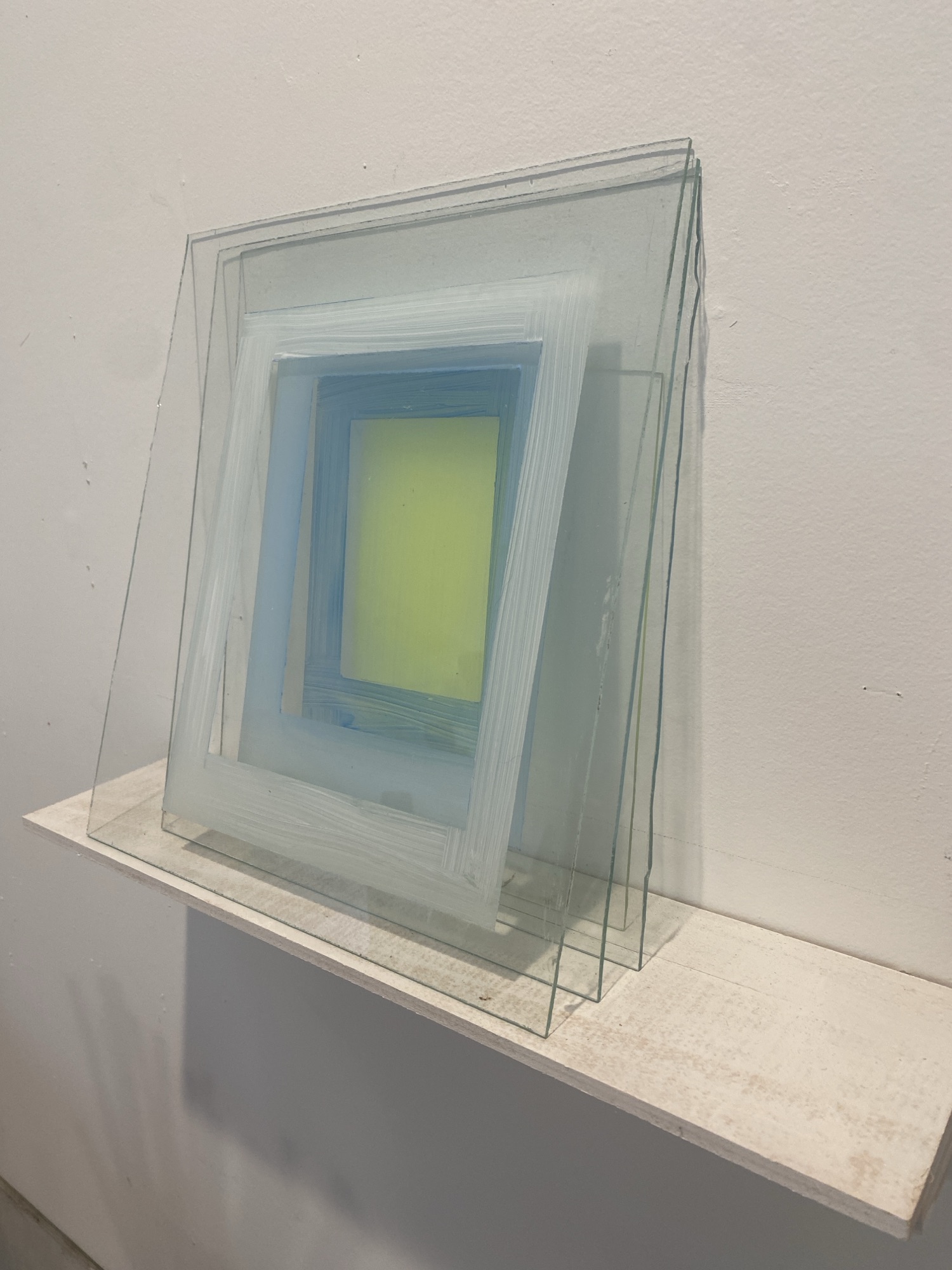
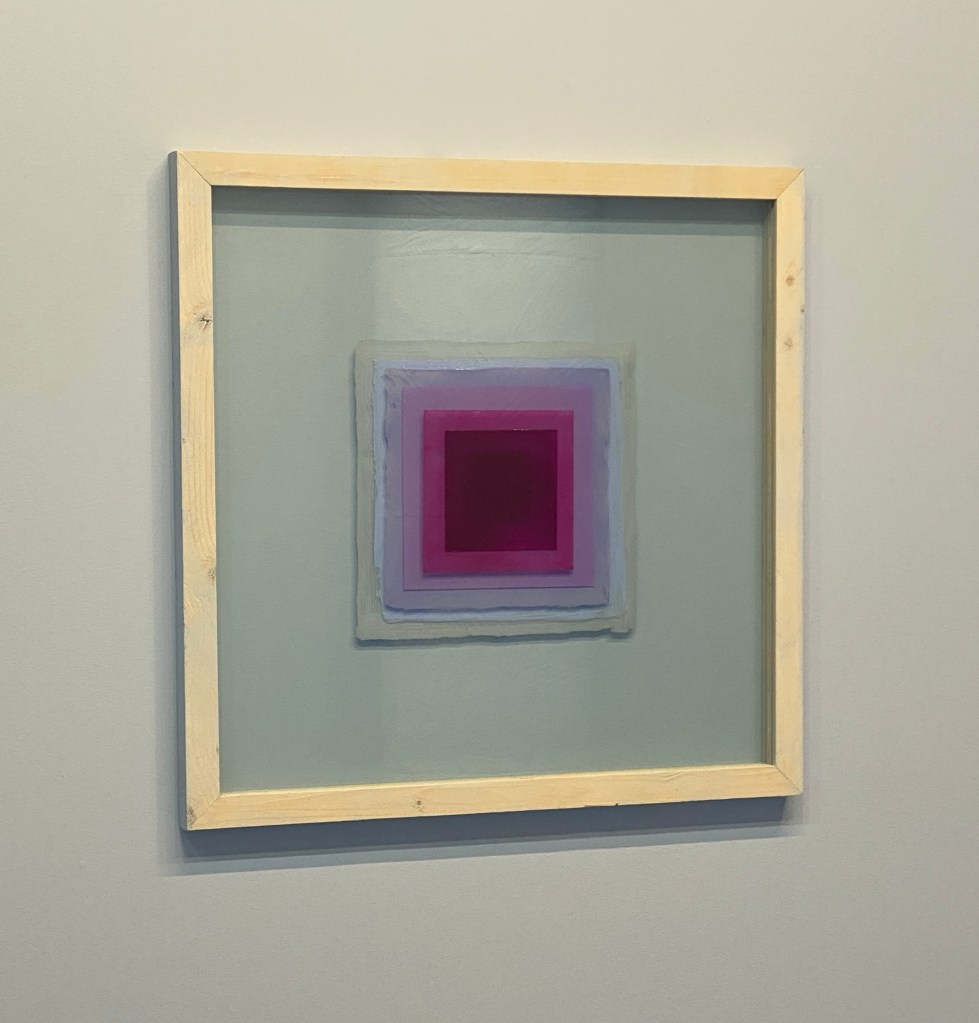
The ground I’m covering lately, with the new, square paintings on glass is somewhat familiar.

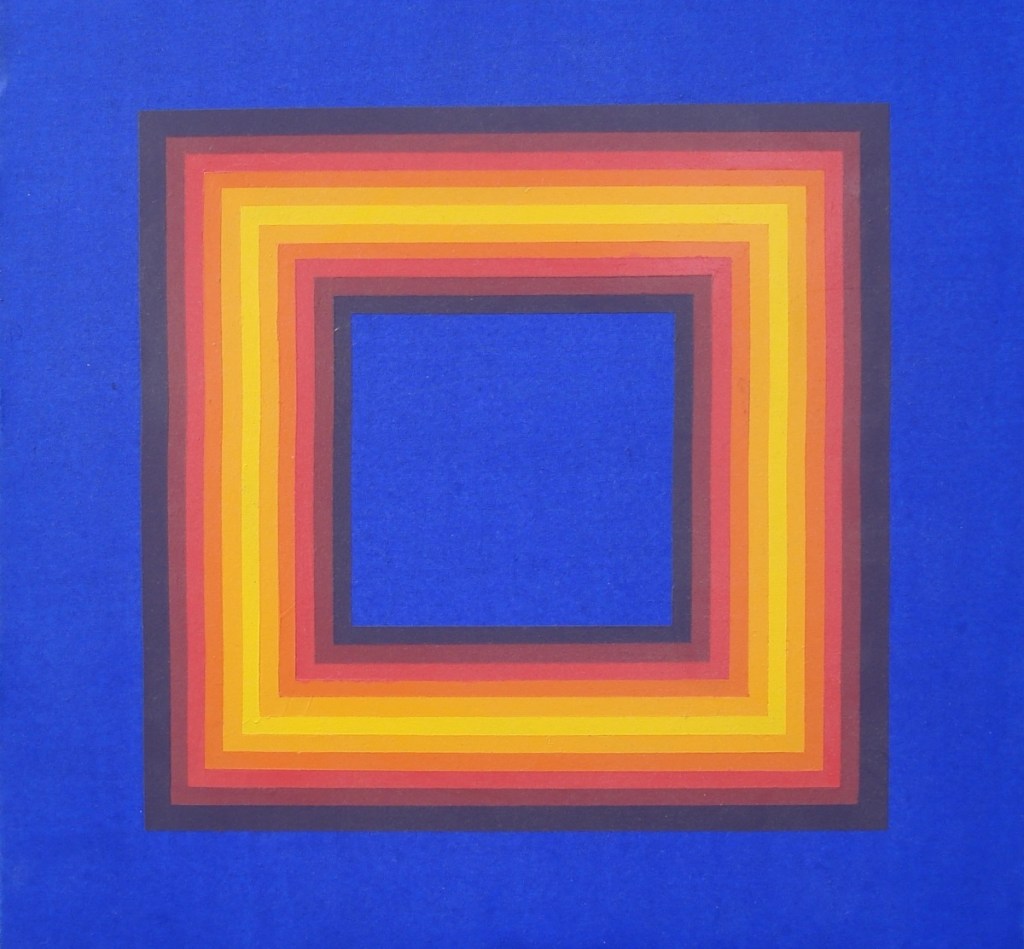
After taking a break from grad school in 2000, I began to make sketches in MS Paint that eventually turned into paintings. At the time these were a reaction to what I saw as an over-seriousness about being cool (a contradiction yes and at the time one I was not ready to receive) which I felt was a prominent theme among the abstractionists that were getting lots of shine in Houston and nationally at the time (my artists statement was, roughly, “yeah, video games and Saturday morning cartoons baby!”).

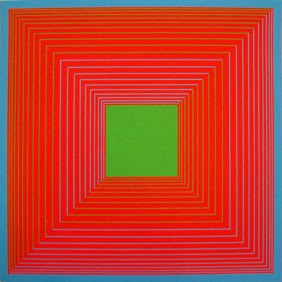
Albers
Anuskiewicz

While my newer work intends to have a more direct line to Albers, as I’ve written, the earlier work above was a nod in the direction of Richard Anuskiewicz (for whom the former was a mentor). Both shared a quite well established interest in color theory, and also in perception. In addition to this relationship between bodies of work, I also hope to soon be in need* of a different strategy for production in my practice that looks more like this earlier body of work, which mirrored Richard’s approach to making (heavy emphasis on planning to make production easier in the sense of being straightforward). Organizing my work flow into “bites” that I can chomp off as time allows will be necessary. There will be time for free-form creativity.

*More to come, suffice to say, life is in flux. Also, I am grateful to have this be the challenge I need to solve (verses so many others which could be my lot).

Understanding

This isn’t going to become a lesson in epistemology, I’m not that smart or well read.

Today, I caught an excerpt of a Sam Gilliam (RIP) interview that Hyperallergic reposted on their IG feed (youtube.com/watch). The full interview is available on Louisiana Channel (along with a lot of other good ones by a range of artists). The truth nuggets, paraphrased, are that a) abstract painting can be political because it asserts by its existence that there are things which we might not understand and that b) just recognizing something isn’t tantamount to understanding.

I also really got a lot from an Artforum interview with Jordan Nasser (FYI, there may be a pay wall, depending on how many free articles you’ve viewed this month) about the contradictions (hey-oh) of diasporic identity, the nuances of his relation to traditional craftmaking, and the role of artists in continuing cultural legacies. There’s an effort in Nassar’s practice to create understanding as well, I think of a similar kind to what Sam probably envisioned. I think they both refer not to “understanding” the noun which is the ability to perceive intended meaning in a specific way (so, decipher or interpret); instead they intend us to think about understanding the adjective– “sympathetically aware of other people’s feelings; tolerant.”

BTW, “yes” I do definitively think it is important right now for many more of us to make an effort to understand the lived reality of the peoples of the Palestinian state, not just over the last 6 months, and, certainly because of that context (and in general, to reconsider the tenants of Modernism and the idea of shared humanity).

PS, if you want to expand your understanding of other cultures by doing something here, locally, in the Triangle, go check out To Take Shape and Meaning.

Everything

Those of you from the Southeast are no doubt familiar with the Art periodical Art Papers. Their newest is guest edited by Michael Jones McKennan who penned a tight little essay outlining the context of the issue’s theme, “Reworlding.” Michael caught my eye as he began recounting the experience of light vis’a’vis the recent solar eclipse. After contextualizing the sheer awe he felt in the face of this celestial event within ever-accelerating globalism, and all it has wrought upon our planet, he asks this question- “What might this have to do with art? Artists? I would argue, just about everything.

This is a question that has been on my mind for a while, and in particular of late after a wonderful bike ride on my City’s greenway* with Jean Gray Mohs as we traveled to a meeting of the Discourse and Dialogue group. The question was different, and, paraphrased, was “what do Artists have an obligation to say or do in relation to society?”

My answer is this- Artists don’t have an obligation to engage with the world we live in by default. If a person can be said to have an obligation (and I’ve written recently, I have some of the feelings about the idea of obligation), I feel it derives from our shared humanity. IE, it does not derive from our facility with our hands or our connections to a fairly elitist ecosystem operated to secure the desirable objects of our present cultural moment (granted, access to the same is a motivation for many to use it as a vehicle, which seems fair play to me). Michaels’s answer is much the same and more eloquent- “The process of considering the macro reality that our bodies are cast within is part of an ancient story; an arc as old as humankind that artists have been the de facto fablers of. World is a primary protein of an artist’s diet.” This reminds me of a quote by painter William T. WilliamsMy art is about my experience which, by nature, makes it about other people’s experience . . . I’m trying to evoke human response. My demographic is the human arena.” Every one of us is a human first, before we invest our energy in remarking upon this confusing, amazing, often rewarding, occasionally damaging and hopefully enlightening journey called life.

To say that we have have a duty as creatives to critique a world from which we cannot extract ourselves is an odd hypothesis from which to start. I try to embrace the construct of poststructuralist thinking because of my values, yes. Having grown up in an evangelical household with near constant purity tests that required always saying the right words, finding the line between true intellectual rigor and turning the crank on a propaganda apparatus is part of my journey. Approaching the role of artist with devotion does mean attempting to look at oneself from some… sort of… position outside of ourselves- odd, right? Avoiding virtue signaling (yes, I’m sort of doing it now) and honoring the obligations of privilege with service (which is a position allowed by privilege), blah blah blah something about rivers and crying and tiny violins #firstworldproblems. All of which leads me to the thesis that, to love the potential of this world and hold us accountable to ourselves, and to earnestly strive to draw others into community or at least understanding… feels like a different point of origin to me than “artists have an obligation to speak out.” My… gut feeling is, it is one that allows all people to journey this path, and for the broadest range of values which consider and esteem shared humanity to participate in this- the– conversation.

*BTW, Raleigh Greenway regulars be sure to swing by the Walnut Creek educational center and see Derrick Beasley’s recently installed sculpture.

Casualism

Regular readers will know that I use a lot of single-word titles, and there’s a vin diagram where this group (yes, you guys) significantly overlaps with at least familiarity if not overt interest in or attention paid to Casualism in Art. It’s pretty much a label for a tendency among painters, but again, you probably knew that. The Wikipedia article on the same is succinct if you need to get up to speed (and has a ton of links btw).

It’s a term I’ve only become familiar with shortly before writing this blog, as this critical idea emerged originally while I was away from the discourse earlier in the 2000s. Having noted a colleague reference it recently, and reading below, well…

(from Wiki) “The term Casualism was coined in a 2011 essay which defined a new type of postminimalist painting that features a self-amused, anti-heroic style with an interest in off-kilter composition and impermanence. These artists are interested in a studied, passive-aggressive irresoluteness that reflects wider insights about culture and society.”

Given that I’ve described my practice as seriously un-serious, I have an entire project dedicated to impermanence, I embrace automatic drawing (a form of anti-heroism where an author relinquishes at minimum the direction or beginning of authorship), I believe work doesn’t even exist without a viewer, and central to my practice is the notion that two or more things can both be true at the same time, it sure sounds like if there ever was an “ism” to which I adhere…

“Yes,” there are creatives that have been featured on this blog which are also on Sharon‘s original list of Casualists (Cordy, Keltie, Chris, Rebecca and others). Also nice to understand a bit more deeply why I am so attracted to the cohort of writers Sharon has pulled together over at Two Coats of Paint.

Light

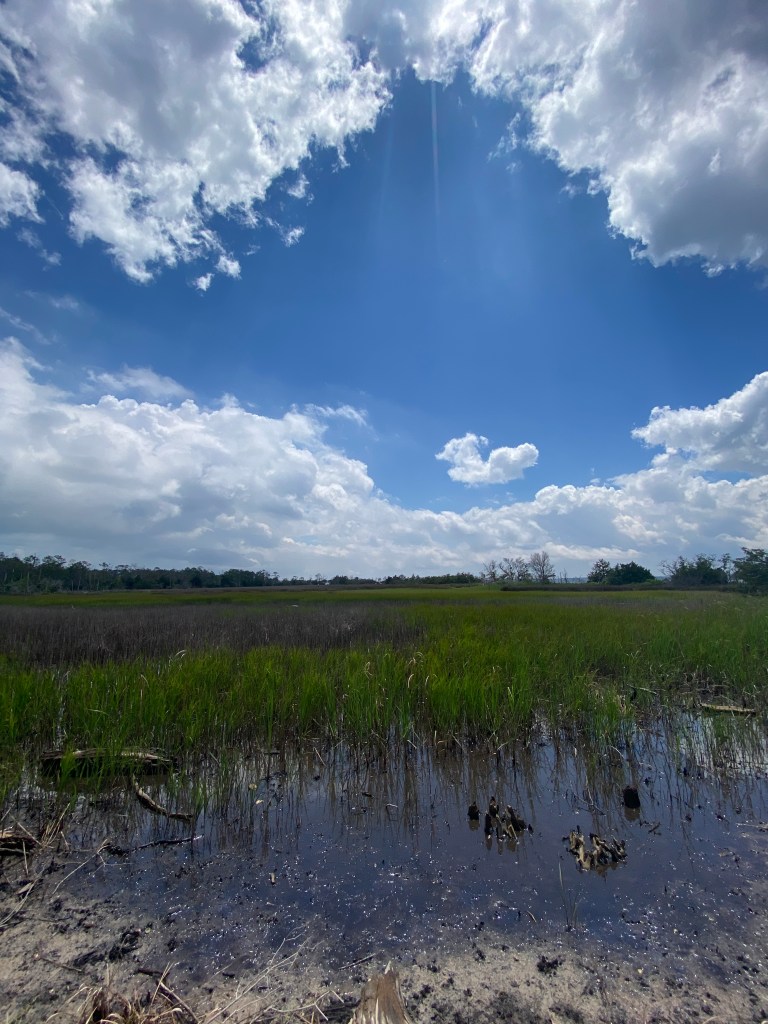
Those of you that follow my instagram feed may have seen my post about recently relating strongly to a prior project while on vacation. Specifically, I took some snaps of some clouds, and it echoed for me from an Instagram project I did during 2017 that I titled and tagged #abstractionallaroundus (the images are all still up, just follow this link to my IG post).

What I loved about taking the photos of the clouds back then was their immediacy– you don’t need words to process your reaction to an amazing cloud formation- and also their fleeting nature. There was an element of chance- happenstance is really a better word- to them as each one will never exist again, a theme (impermanence) I’ve returned to since. Part of the reason I eventually stopped taking the images was that I felt I should be more present for the moments in which I stopped to experience awe, a concept I’ve visited on this blog as well.

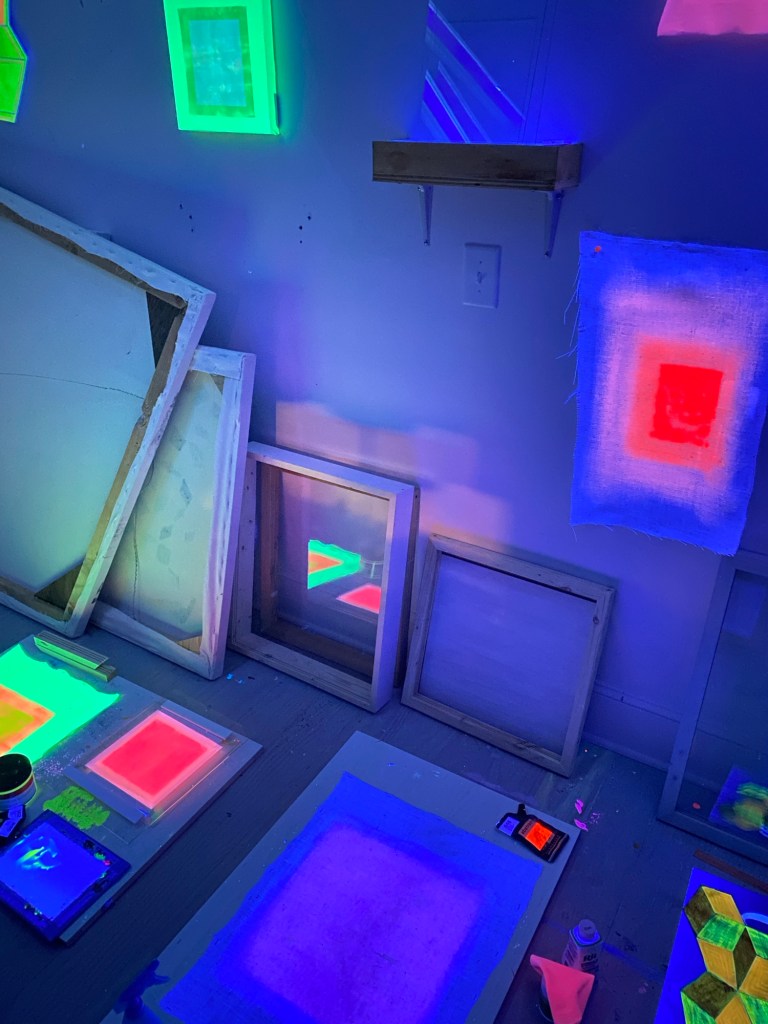
The pretty amazing things water does in our atmosphere has to do with light, and I think my interest in the same may have been part of how my fascination developed. I hadn’t made the connection until I returned, and realized upon stepping into my studio, where I’ve been working with lighting as a material, that the connection was worth reflecting on (haha).

Regular readers know about my interest in contradiction and I am drawn to the idea that a work could literally have more than one appearance (given a change in lighting). The viewers act of changing the lighting also gives the work an experiential dimension.

Further, light and use of the same as a “material” points to opticality, at least in the visual arts. Similar to the way using cubes (for me) points at Modernism and formalist projects (and on towards contemplation), light and opticality points at the Light and Space movement which accomplishes much the same. Paint also takes on physicality when it is applied on glass, which points at its materiality. I think a nod in that direction is more appropriate for my practice which is centered in the experiential- an added bonus is that paint on a transparent surface offers a sort of contradiction in that the “painting” is on a surface and also now at least appears to be an object as well.

What you see is what you see

Somehow I published this post earlier before it was finished – the challenges of blogging from a phone… apologies for being bad at technology.

This weekend I found out about Frank Stella’s passing while I was down at Artfields showing and talking about a work titled Life’s Meaning is Enhanced by Its Fleeting and Transient Nature. Thanks, universe…

Frank had some training as an artist but it was not his major at Princeton, and he freely admitted to having no mimetic facility or interest. My point is that his practice was all about materiality- 100% abstractionist from the jump. I hadn’t realized that until I started reading up on him a bit for this blog. As someone who didn’t consider myself an artist until I discovered abstraction I certainly relate.

Like many art majors I met the “protractors” first. I didn’t make hard edge paintings early in my journey although I did end up there at one point. I didn’t realize until writing this blog that my reason for embracing a direct approach to opticality was also a reaction, in my case to the seriousness of an academic environment, in Frank’s to what turned out to be the broad strokes of Art history. And while those explorations were separated by half a century of time and a cultural gulf (I was reacting to the reaction to his reaction) our shared intent was to center the viewer on their perceptions- “what you see is what you see.” To put Frank’s famous quote in full context, “all I want anyone to get out of my paintings is the fact that you can see the whole idea without any conclusion”- with immediacy.

Blah blah blah- Jerry Saltz has much wiser things to say about him of course (had- article is from 2015). And I don’t just say that ’cause JS also thinks the Polish Village series is fire*. I also really liked this Megan O’Grady article from the NYT in 2020– link should get the first ten of you that use it past the pay wall.

*Here’s my Pinterest gallery of his work from the early ’70s which is some of my favorite.

#frankstella

Vibe

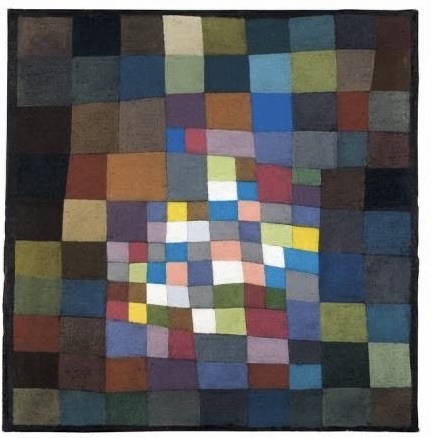
I’ve written recently about my feelings on Modernism in the general and specific. For sure there is an aesthetic draw for me to compositional strategies from that era and as I’ve written before I’m convinced that there is an experience to be had through Art that is unique to the same and exists- with immediacy– prior to our ability to describe it using language (tldr, I trust the vibe). A few examples of favs below (Johannes Itten, Ad Reinhardt, Richard Paul Lohse, Mercedes Pardo, Lorser Feitelsen, Paul Klee). Yes I see a lot of dudes, too.

This weekend I traveled to Greenville, SC, for an opening of a show that included the piece below (which is the second of a new series that is anchored around “through”). During my time there I had several conversations of differing flavors and which shared a common theme of, generally, “how about this time we’re livin’ in?” Through many of the discussions I have lately I keep coming back to the thesis that I’m seeing a relevance and value in contemplation in this (insert your adjective) cultural and historical moment, so I’ll be rereading The Coming Humanist Renaissance by Adrienne LaFrance at the Atlantic this week and continuing to reflect in coming weeks (link is to a pdf of the article because pay wall so I may have to take this down at some point as I am not an Atlantic subscriber atm).

Seriously unserious

Thanks to my friendship with Jenny Eggleston I was asked to be included in In The Pink at the Halle Cultural Arts Center where the pieces on the left below are installed from now until April 1 (no fooling). I posted on Instagram yesterday how the juxtaposition of a painting with some of the cubes made me reminisce on some of the earlier strategies that I used with both physical and implied cubes (middle pic). The easel implies still-life and the cube assemblage is definitely a collection of objects like those many of us who went to Art school probably drew and painted.

The picture on the left feels a little goofy- for me, the painting becomes a cubist portrait of… cubes. I’m including a Roy Lichtenstein for reference to the idea of being cartoonish*. The full context for my sincere if unnecessarily self-conscious emotions about any use of the word Cubism in relation to my work is the regularity with which non-Art-world types use this word incorrectly to describe it. It’s a dumb thing for me to be bothered by, especially when it is always in the context of expressing interest in the objects that result from my practice.

What I reflected on after I walked away from the exhibition install was how the work shown in the middle image above had helped me see that contradiction was showing up in my work, in this case the contradiction of the subject (cube) being present literally and representationally, and highlighting this duality through juxtaposition.

I’ve realized that goofiness in the context of a practice that takes itself pretty seriously is a useful contradiction; said differently, if I was truly goofy none of these words would have been necessary. If one digs IE googles a little deeper you quickly see that “goofy” while meaning everything from harmlessly eccentric to silly, doesn’t ever imply not being serious. *BTW, cartoonish is another interesting word choice if I do say so, meaning “not like real life, because of being too simple or exaggerated” which sounds right in the strike zone.

And… I’m not the first artist to work through this stuff. Chuck Jones, whose aesthetic is so deep in my subconscious, was clearly influenced by Modernism, including Cubism (hot take- Le Courbusier is the best Cubist painter) and Nicholas Krushenik cleverly and deftly took the equation in the opposite direction. BTW “yes” the spatial “snap” the one gets from cellular animation is hugely influential on how my mind’s eye thinks about putting images together, even if the paintings I make aren’t even really representations of a specific thing or space (then again, are the subjects of cartoons ever real?).