Regular readers have probably noticed that I didn’t publish any blogs this week about other artists. That’s because, there has been a development; well, there has been development.
A big part of having a practice, for me, is developing- the process of growth, advancement, and transitioning from a simpler to a more complex state. Sometimes, that means admitting that something that was serving you may not be any more. Perhaps that is the time and energy it takes to generate a blog every single day, especially if the energy that draws you to the activity of writing is best served by directing your time elsewhere.
I’ve considered myself an emerging artist for the last several years. Yes we’re going to look right past the fact that I’m 51 and what the word “emerging” usually means in the Visual Arts, at least for now. I need my relationship to this community to change, so I am taking action. The biggest part of that is owning the value of my relationship to all of you, and letting go of activities that don’t grow my connections or influence.
BTW, to any artists from outside the Triangle about whom I’ve blogged, and who started following the same as a result, I do value the (hand full of) times that has happened. And, it has certainly not been for every one of the 2,000+ blogs I’ve done.
I’ve received so much support and encouragement from so many of you here locally, in person and “in the comments section,” for the content I’ve created over the last several years out of my experiences being out and about on the scene. Many of you have told me you enjoy seeing my Instagram posts about, both, the local scene here in the Triangle and some of the artists from around the world (and the canon) I have learned about by blogging. YOUR feedback is the reason I realized I need and want to do more professional writing.
And I do love being out and about, seeing what you’ve all made, reflecting on it and helping to build our community by announcing its existence. Being an artist, to me, is about participating in community, and, I still very much believe that, to have space, you have make space, period. So, I have a pre-announcement to make, which is that, soon, I will launch a new vessel for these activities. Same passion, same focus (eyes on us, here- and likely on abstraction, mostly, of course) with higher expectations and intentionality around the activity/vessel growing my credibility and practice, too.
This site- sterlingbowen dot com- is now in “development” status as well. I will be reorganizing it over the coming months, as I find time. My blog will remain here and continue to be an important part of my practice, even if not daily and, going forward, exclusively my own prose. This will also always be the place to find my portfolio of visual art objects and installations. And an archive of my prior, daily artist-centric blogging practice will live here in some form indefinitely. I am pinning this post to the top of my home page, to center this development in my thinking, and my visitors’.
THANK YOU to every single reader who has followed me so far, and I’d always love to hear from any of you.
…
It’s also interesting to note the importance of the word “development” in my life on a couple of other levels. I am, literally, a developer in my 9-5 role with Duke Energy (LinkedIn profile). For those that aren’t sure what that means, I own a pipeline of electric generation projects in various stages of permitting, contracting and approvals that, lord willin’ and the creek don’t rise, will one day be utility-scale solar power plants. It’s enjoyable work, for me, which also takes – and creates- energy. And “yes” I try to be honest about what working for this particular company means.
Also, one of the definitions of development is “the process of starting to experience or suffer from an ailment or feeling.” These developments in my life do come from a place of experiencing, while maybe not suffering, definitely the need to heal. My reprioritization is, in addition to the reasons above, about making more time available in my life for non-work and non-Art activities, specifically with my life partner. Many of you have met this wonderful person and I suspect most of you came away with the impression that we have a great relationship. Odd as it may sound, given that, we have found ourselves in a space where we want more time with each other. I’m therefore very happy to report that you will all see a little less of me, and my spouse with me more often when I am out and about. I’m grateful to start- and hopefully, to share- our journey to reclaim romantic love.
It’s been a month since I wrote something other than a “daily” blog, which you may have noticed have also not been consistently daily. When I started this new-ish job a year ago, I spoke with several of you irl and acknowledged this “doer” role I was taking on was going to necessitate some discipline, which would be good for my practice. What I didn’t anticipate at the time was that discipline itself is work.
I know it seems like I’m off topic (work) already, but I’m not referring to discipline about staying on top of deadlines and making sure I schedule studio time. I have never struggled with that part of life (schedule management). Well, at least not since I realized in my college years I need a calendar to stay organized in order to fully utilize my natural, first-born-child’s instinctual superpower to be responsible. When I said “this will take discipline” I meant “I can do this, using tools I have practiced; and I trust the results will be a reward.” Also and, I am pretty sure I acknowledged (and still do) that prioritization is a form of discipline.
The “work” I’m referring to is effort, and, again, not the effort to make myself do a thing or things. It’s the effort it takes to remember and focus on an outcome in a situation where you are not an expert. I have shared with my children many times that no one can get good at anything if they aren’t willing to work at it. The universe has remembered and asked if one of us is willing to hold its beverage.
I have been working- including writing, if not prose- on things other than my blog. Every artist reading this knows being visible as an artist requires work. Call it “momentum” or “brand building” or (insert another phrase), the limited resource of space does not present itself without effort. Said differently, if- and I do mean if- you see my **work** in an exhibit in the next 12 months, solo or otherwise, you can be certain more than one venue told me “no” for the same proposal. The same goes for literally anything that happens in any under-funded, over-subscribed ecosystem like the Arts. Publications, initiatives, even loosely (or very) organized collectives that provide a mix of professional and emotional support- none of these exist without work. “Yes” I’m in or building one of each of the latter atm. If you’re out there building capacity, too- you are seen and keep ballin’ out!!!
I’ve also said here, publicly, for accountability, I want to level up my writing game this year. In that spirit, **I’ve been working** on an article submission to a publication- my first attempt at the same. It has been an eye-opening experience to work with an (amazing, kind and gracious) editor and realize how much work it takes to be a publish-able writer. Yes I intentionally didn’t say good- good is a whole other level of work. The (self) editing piece in particular has taken so much focus and effort.
I also had a moment at work (read: teh jerb) this week where I found an effort to avoid a meeting with an email failed l. We’ve probably all heard “this meeting could have been an email.” Many people use “ironically” wrong, so I’ll pedantically point that out to assuage my embarrassment that, after putting in a non-trivial amount of work to avoid a meeting, I in fact needed a meeting, because of the email. Fortunately the universe gave me grace and allowed me to realize, in the context of my non-job work, that there was work that I could have done- editing!- that would have (a) allowed me to grow my written communication and (b) would have been more likely to accomplish the goal (of making a meeting unnecessary because email).
So, this is why I chose to revisit an earlier blog- one I did about work, which seems apropos- and, as I’ve started to do with my blogs about artists, edit some prior, prose writing of my own. Below is a post I wrote in August of ’23 after returning from sabbatical in which I played around with the many definitions of the word “work.”
>>>
So I’m back at work. Work has many definitions, one of which, which applies here, is an “activity that a person engages in regularly to earn a livelihood.”
My work (job) is more than that for me. In the context of having a sabbatical and experiencing a care-free, easily enjoyable life, I found, interestingly, that I still feel that way. I find I want to feel the excitement about my profession in the way it did for the decade+ when I didn’t make art work. There’s a lot of work left to do around decarbonization and electrification- work worth doing. And that doesn’t mean I want my practice to go on the back burner again. I just noticed “hey, my attitude about this large portion of my time is different.”
Correlated, but not causal- there is, currently, less work in my studio as a result of less work taking place. While this is relative to the sabbatical I just completed the issue is time, specifically, using some of this limited resource. Going back to definitions of “work” that first sentence uses two other, distinct definitions of the many aspects of work. The first- physical works of art- are “something produced by the exercise of creative talent or expenditure of creative effort : artistic production.” The second usage refers to an “activity in which one exerts strength or faculties to do or perform something.” (see also, gettin’ sh%t done).
You know what? I’m just fine with this sitch. Really. So what if I don’t reserve and then use energy to head into the studio? I also don’t have an upcoming solo exhibit or a gallery haranguing me for inventory. Why force myself to make things because… yeah, I can’t finish the sentence. Isn’t work that bursts out due to a creative fire better, or at least more authentic? Maybe I mean easier, too. I’m still working on projects to build community, and ideas for shows (as well as the list of venues to which I’ll pitch them). I’m also in the beginning stage of my very first “strategic plan” for the next five years (note with update: I still maintain this activity, with three- and twelve-month goals along with a 5 year plan broken into yearly milestones).
I like things that work- this time, I’m using the definition “produce a desired effect or result“. I don’t think I’m alone, as an artist, in holding that sentiment. It can hold different specific import for any of us- I’ve realized/remembered, for example, that there are simple strategies to plan out studio sessions that can harness my creativity in a way that works to generate more work with less work. Selecting a single word as a theme to focus my writing “works”; doing a bunch of paintings over sabbatical just to see what “works” works; and writing this blog to keep myself accountable to keep writing more, works.
Taking a different direction from the last time I wrote here and I’ll begin the same way- some of you might not have the capacity to engage on this topic what with (waves hands around in the air) everything going on, and we will see you around some other time.
And “yes” I’m intentionally making this title a contradiction to my last essay. I’m full of surprises, I know.
Hyperallergic published a Rhea Nayyar essay recently that caught my attention, I admit, out of a typical suspicion I feel whenever people try to smash science and Art together- ;tldr I was disappointed in that regard, and inspired. The article “references new research which posits museums and galleries as ‘accessible, non-clinical spaces for preventive health promotion’…“. Y’all know two things can both be true, right? So “Art is a salve for the soul” can be corny and true. While Nayyar’s intent is that old saw that there’s no substitute for seeing “real” art which I completely agree with and tell my students on the reg, I stayed for the data (link to a pdf) on Art-viewing lowering cortisol levels, as someone who cares about that stuff. So I’ll go ahead and hypocritically fall head first into a trap of my own design and say, with moral clarity, that outcome (Art = better mental state) is a “good” thing.
The topic of the article reminded me I’ve blogged before** about another academic’s essay (link is a pdf) with a similar thesis- “awe felt during experiences with religion and spirituality, nature, art, and music” serves as “the motivation to be good to others.” Feeling good and doing good are clearly not the same and “yes” I think it would hard to do the latter without the former as well.
There’s an another piece of context for this essay, too. Two hours before finishing it, I was standing on a sidewalk with hundreds of other people to say “thank you” to a small group of Buddhist Monks from Fort Worth, Texas who are currently walking the 2,300 miles to Washington, DC, to promote peace and nonviolence. Their gift to us in these trying times has been very inspirational- I chose to walk the 2 miles from my house to downtown in small act of solidarity. And I’m not alone either, not just as someone who has been moved but who felt literally, physically drawn to the energy of this moment in history.
Am I projecting because I was just around so many people that seemed to share my values? Even if so, it can still be true that **it feels good to work for “good.”** I know I just rambled off some science at y’all earlier, and, I also doubt many of you needed to read **that** sentence to know and believe the sentiment.
While I try to be clear headed and fair when I write, I do this thing, like all other writers, out of passion about a topic. I’m not doing this to be right or have a winning argument. In fact, I’m fine with the contradiction that two weeks ago I wrote that moral clarity about good and evil doesn’t lead to desirable outcomes by default and my thesis for today- which is? It sure would be awesome if more folks woke up in the morning and intended to go out into our hurting, scary, intense communities and do something… good! That doesn’t have to be make Art (although looking at some can’t hurt, obviously, and is always appreciated), and it doesn’t have to be something as selfless and heroic as walking two thousand miles. Let the spirit of “good” guide you.
**”yes” it’s sort of wild to re-read a ’21 essay and remember when Small School was still getting going, what with all they’ve added to our community; I’m bummed that the weather kept Jody Servon away this weekend but more events are scheduled (link above is to their events page). And I’ll gladly re-commit a professional error as a writer and admit “yes” I still love howJean Gray makes our scene awesome- you, too, Pete.
I’m guessing the title will self select who has the capacity for this topic and I’d understand if many of you don’t, see you some other day.
2026 is off to quite a start, and things are happening that are hard to take in even if not really surprising. I’m sure I won’t be the only person who’s had a big challenge processing the recent news of the US government stealing (Venezuela) and murdering (civilians, by “law enforcement”). Especially big, though, if the statements and emotions of people for whom you feel affection or love or some other connection come across as indifferent, or even sympathetic or supportive. It can be jarring to hear another person respond for example to the events in Minneapolis with “yeah well she was running her mouth” if you value freedom from tyranny.**
While I do think it can ease distress to hear or read someone reflect your values (see paragraph above) this topic was a bit of a conundrum for me as my head took me in different directions from my heart. I’m not a political reporter, and I also don’t think that the internet really needs more moral clarity. What I can do, I hope, is reflect the energy I find helpful. This blog is as much for me as it is for you. Regular readers know how I love that words can have several meanings, so, I’m writing today as a writer who needs practice, to tie this theme to a couple of concepts important in my practice. Big appreciation that this act helped me get to that realization (about the meaning “practice” has for me).
My art work doesn’t deal with the concept of evil- in fact, ;tldr I’m going to give a couple of reasons to just steer clear of that word. I do hold to the importance of recognizing contradiction- that two ideas can both be true. You can take and release a breathe if you’re worried that means I’m about to make a case that “both sides are right.” That has never been the reason contradiction is important to me. “Right,” like “evil,” is a facet of how we’ve gotten here.
One piece of non-fiction that I’ve been picking at for several months is High Conflict by Amanda Reilly. I haven’t finished it, yet, and I scrolled through it again this week looking- please? anyone? hello?- for some answers. Obviously “yes” I’d recommend despite not yet finishing it, and the reason for this mention? One concept that is covered therein; “conflict entrepreneur.” Pretty much what it sounds like, these are the actors and forces that gain power by trafficking in conflict. Note, they do not need to be politicians or lawyers, it could be your Aunt. As the concept relates to the impetus for this essay… the book was published in 2021 so even though DJT gets mentioned as a “fire starter” leader (a specific type of conflict entrepreneur) it is surreal to read, today, of his first term as though he was in the rear view mirror of history.
Part of the shape for my thinking on the word “evil” was also a fairly recent Ologies episode- # 475 on Ponerology, titled “What is Evil featuring Kenneth MacKendrick. I listened to it over the winter holidays. I did so somewhat begrudgingly because of timing really- it’s not a holiday-ish topic- but nevertheless because even a month ago it seemed to speak to me as part of the zeitgeist (yeah I feel like a calendar month is, like, 12 in late capitalism months, too). I re-listened to the pod this weekend (again- help me, please, anyone) as the idea for this essay took very rough shape, and of course I’d recommend the episode, as well as the pod itself.
To tie the book and pod together more clearly, folks are gaining power by feeding narratives about who is evil (I never claimed this would be a hot take).
What interests Dr MacKendrick, and what I found most resonant, was the notion that what you do once you define evil is what matters- how does your understanding of and identification with “evil” change your behavior. I agree, which is why I gave the specific example early on of recent events in Minneapolis. My thesis is that one can not murder a civilian if one does not think their values are “evil.” I also used the phrase “moral clarity” earlier so that I could circle back here and highlight that being really certain of what’s “right” doesn’t lead to a good outcome or even a smart choice.
Yes, I’m conflating “good” and “right” or more to the point right/wrong and good/evil, and saying a LOT of people are also doing. Yes, I’m hoping you realize that categorizing that… categorizing as “not right” illustrates how commonplace binary judgements are. Both of those things can be true, at the same time. That is the truth and value to me of recognizing contradiction- it allows one to move out of binaries and into complexity (one of the strategies Ms Reilly suggests later in her book, as I understand it at least).
I hope you don’t feel let down or betrayed that we aren’t arriving at the end of this essay to find me pointing y’all to a solution or way out of this situation, from the pod or the book or my own mind. It’s never been my motivation as a writer to present hypotheses, only perspectives. I don’t have a game plan for how we think or talk or work (or fight) our way out to the other side of conflicts.
This isn’t apathy or resignation. I’m also, definitely, not going to say any outcome is inevitable, or predicting that “we” can’t reach outcomes we desire for… whatever reason- because “the other side won’t do this work with us,” or “we aren’t willing to be violent in the way they are”. I’m sharing because I wanted folks to know I sought moral clarity and the universe reminded me that it is natural that we need such clarity, and, that clarity is neither an end all or a sufficient reason to deny another agency, property or life.
**BTW, one last note, or suggestion really, which is that we not assume someone who isn’t enflamed and engaging in conversation about these topics doesn’t feel the moral dilemma keenly.
Here at the turn of the calendar year I find myself looking back, and feeling many things. Since I’m pointing myself that way intentionally, I’d note I’m grateful and hopeful. Tired, for sure. Although I’m on vacation and “relaxed” there is always the background energy of my anxiety, and I’m grateful for the progress I’ve made on that this year.
Marking occasions is not only important, it’s an easy assignment. Writers live for these kinds of things. By that I do refer to easy assignments, of course, and, I also mean a topic that gets automatic gravitas. I have read some of your year-end reflections** and look forward to a few more. I also say “easy” because I’m writing about the topic I know best- myself and my thoughts and my experiences. Did you see me call myself a writer btw? Hopefully you have been around here enough lately you take that for granted.
I think one major theme, maybe the most significant, in my practice in 2025 has been trying new and different things. Village Impulse was a little of both for me. Most of my energy on the front end of the year went into this multi-artist collaboration in which I utilized media and modalities that aren’t normally part of my strategies (“No,” there aren’t squares or cubes in the large work of Art below). This drawing-cum-happening was the centerpiece of an exhibit that pointed at several themes, such as opening up the subconscious and finding ways to let go of control. We all made a commitment that no one’s ego would ever be a filter for another creative’s license. I got lost and found my way… somewhere. It was gratifying to turn off the monkey brain and act with no judgement. If you don’t know those artists btw, that’s (left to right) yours truly, Chris Thomas, Cindy Morefield, Jason Lord and Peter Deligdisch.
I also got to work as a background enabler for an artist’s solo show. This was a lighter touch than curating, and definitely less “editorial,” as I did not select the work, only the artist, a creative whose practice is pretty different from mine. Derrick Beasley is a culture-maker. In addition to being at the center of all that is cool about Durham, NC, he organized, funded and manages a cooperative centered around equity and black farmers. His visual art also imagines a future culture. He’s a lens-based artist as well, and produced a short film for this exhibit. I was glad to be a small part of helping the Triangle show out regionally. I’d be remise if I didn’t also say that I. Am. So. Grateful for all I’ve learned through my membership in Tiger Strikes Asteroid. The experience has also been an education in collaboration and collective decision making, given that I am one of a 20+ group of the most wonderful artists and humans. And, my membership in TSA and this project specifically enabled me to put Derrick in the same room with Michaela Pillar Brown (you guys missed out on this talk let me tell you). Can’t wait to announce my main project through this platform next year!
Backing up a bit, my first curating project of this year was also my most ambitious exhibit to date. A 10 artist group exhibit titled Modernism Redux which gave me the chance to work with the Diamante Arts and Cultural Center, and of course Peter Marin, their Director. The exhibit was the inaugural Community Highlight, which I look forward to Diamante repeating annually. I am privileged and grateful for the honor of kicking things off. As part of this exhibit I utilized AI- specifically the large language model Chat GPT- as a tie-in to the themes of the show, which was very eye opening, although I have no plans to repeat the exercise. This was (is!) an amazing collection of artists, and the show looked. So. Good. If I do say so myself.
I also made a collaborative piece with Ariana Gomez for Party Line. This work was definitely more planned than Village Impulse- it had to be, since my partner in shenanigans lives in Texas. And even with planning, the universe saw fit to present me with unexpected outcomes anyway during fabrication, a couple of which I’ll be revisiting very soon (this wouldn’t be a year end/year ahead reflection without some teasers). I hope Ariana and I can show this or a similar work together in 2026.
I did get to show my own work this year, a *huge* privilege and honor, in an exhibit at Greensboro Project Space which was titled And, and, and… This show included work from a two-year period but was from a body of work that I developed over six years, and from which I’ve now moved on. While it is hard to think or talk of “and” ending, it was like a period at the end of a sentence. I got to share the space with the wonderful Leah Smith, and do an artist roundtable* with her, Allison Tierney and Chris Thomas(I discovered over the course of this year is my favorite format for engaging a show’s topic, the artists in the exhibit, and the community.
…
What do I have on deck? Besides the two teasers above, I have some writing goals and strategies in motion to get things on deck for 2027. I am, honestly, looking forward to a year centered on making which is focused on the work and not on meeting a deadline or satisfying someone else’s criteria. I choose optimism in this moment.
If you’re wondering about the title choice for this essay, it’s my values, and here’s an attempt at specificity…
Authenticity and loyalty. I try really hard to make space. I got to have lots of space this year. I think there is causation.
Commitment. I try to engage people’s thinking in addition to their senses; I write, and, I make objects that hopefully go in art galleries to be seen. These relate and are distinct (“both things are true” will continue to show up in my work as well). Each craft- writing and making- reflect time and dedication. In the former case, since considering myself a writer is still newish, I intend to lean in, and exercise a mix of discipline and grace.
Bravery. I wanna go up a level across the board this year. I have great ideas that need homes- my work, my writing, my curatorial voice. I have things in the works, and that doesn’t mean it won’t take a village to realize them (see #1). “Thank you” in advance to everyone who says “yes” to me this year. Also, I have work to do on my relationship to this word (bravery) which I’m looking forward to.
Honesty. The universe waited till the end of the year to really show me what that can do. The most personal thing I wrote this year, Expectations, was about my journey towards having a new relationship with my birth parents. Well, let’s just say that it’s had challenges, and I’ve grown by trying and, I think, taken some actions which made the relationship more likely to work, so I will trust the process as they say, and continue.
Breathe in. Release. Now, go forth and be amazing, lovelies. See you around!
** Speaking of year end reflections, you should read and participate in Allison Kirkland’s reflection questions in her lovely piece December (and you should follow her over on the Substack if you don’t already- we’re very lucky to have her practice among us in the Triangle). I took a go myself, answers below…
What parts of my creative life/writing practice felt the most meaningful this year? Writing became a bigger part of my (visual art-centric) practice due in large part to encouragement from others in the community- as I saw others considering it seriously, I found myself re-orienting its importance in my practice.
At what points in 2025 did I feel most present with my own creative voice and writing practice? When I put together my application for the Burnaway Writers Incubator. I felt really good about the application and at the time, it felt like something clicked for me in terms of how serious I wanted this part of my practice to be. I did not get invited to participate (this year!), and the rejection really hardened my resolve to continue to push my craft.
Did I have any creative challenges that pushed me to grow or taught me important lessons in 2025? Definitely! A lot of 2025 was about new experiences- I’m going to write about that very topic shortly for my own blog; the tldr was ‘25’s theme was doing new things (“yes” that’s what you’re reading now).
Which habits or routines have supported my creative practice? It’s not the thing for everyone, but, goals and schedules. I had given my art goals framework a miss for a good chunk of the beginning of 2025 because reasons (seriously, though, I was looking for and then starting a new job). Daily blogging helped keep my interest in Art and my engagement and enthusism up, and being regular about social media (to maintain my brand) kept me accountable for progress as well. I also really make a point of getting out to see the things, and being around the community gets me humming. Towards the end of the year I started scheduling time to be in the studio and make on a weekly basis.
Did I have any habits or routines that felt detrimental to my writing or creative practice? Yes and no. I definitely have been working more lately than I have in years. It’s reminded me that there was an earlier time in my life when I was this busy when I didn’t make time for making Art and, eventually, fell out of love with it. I don’t think correlation is causation, but… That feeling, when I can recognize it (lack of enthusiasm), is a powerful reminder of the importance of the momentum that I’ve built.
Are there any beliefs I want to leave behind in 2025 when it comes to my creative life and writing practice? It may not seem like this to many people but I don’t enjoy being bad at something. However, I need to start practicing what I preach to my own kids, that no one gets to be good at anything they aren’t willing to suck at for a few minutes.
What are two tangible ways I can show myself more compassion in the year ahead? Besides like, literally just doing exactly that (therapy for OCD has helped me a lot here)? I wasn’t prepared to answer this when I sat down but will direct some thought to specificity in this area. Thank you!
Hello, readers. I wish that this year included some high notes for you. For me, there were several of them, which I’ll share a tad ’bout below. If you’ve been a reader for a minute (and thank you!) there are links to prior iterations of this now recurring, annual effort to give snaps to our wonderful, local Art scene.
A few notes before we begin- these are not in order of preference or ranked. Als0, in the prior three iterations I’ve written about ten exhibits but this year I’ve expanded to 12 so there’s one for each month, maybe? I mean, *I* make the rules around these parts so it doesn’t *really* matter. Anyway, last but not least I want to note that while I clearly consider my opinion valuable enough to document it, no critic ever writes or talks about anything other than what moves them. There were clearly lots of exhibits that happened this year that aren’t included in this article, that took effort by curators and artists alike, and let’s all just take a moment to appreciate how lucky we are. Amen. Shall we begin?
Although you can’t find Critter on the IG, I hope you found Mid Career at Lump . If you saw this one once you didn’t see its totality- it evolved multiple times over almost two months, taking up both sides of our favorite artist-run gallery. If you love word play and clever Art historical references wrapped up in nods to pop culture, this giant work of Art probably (like me) pulled you back several times. As with all great shows there were lots of tiny gifts, like Critter’s journals of observed/overhead comments that also found their way into several of the works. Although I said these are in no particular order, I am putting Lump first because they deserve a big shout out. What a particularly strong year of programming from them- it would have been easy to put more than one of their exhibits on this list. I really hope they keep hosting the UNC-CH MFA thesis shows in particular (I think we will be seeing more from all four of the recent grads from that program btw).
photo by Lump Project Space
We are really lucky that Rigoberto Mena decided to relocate here from Florida. He had the limelight a couple of times this year, and Skin of the City at Raleigh’s Contemporary Art Museum was, I think, their best painting show. While this one was unfortunately only up for a few weeks before CAM unceremoniously shut down this summer, I went a couple of times to sit with them and found their “skin” belies their complexity. I find it to be a real gift to have someone from Rigoberto’s sensibility among us- the mode of painting on display was a visceral counterpoint to the heavily intellectual work that pours out of American grad schools. The paintings are vigorously, physically wrought, and sit in stillness waiting for the gift of our attention, like the skin of Mena’s beloved Havana. Sorry to not have a link to this show- it’s really too bad CAM can’t be bothered to archive their exhibitions, but I imagine most of us have criticism for the lack of vision or mission over there of late. A real tragedy as the venue, with its superb location, flexibility and variety of spaces as well as excellent programming will be missed if they cannot find a way through and out the other side of their challenges.
Martha Thorn and Mike Geary Strange Attractors at Birdland gave us the opportunity to get lost. The work was strange, in the best of ways, and I do love a clever word play, in this case one where the title is primarily a reference to complex fractals- who knows what structure if any underlies the work (frankly the author doesn’t care). With the typical layers and layers of masked and re-masked visual planes painted in the wild, acid trip colors both artists are prone to, I had to hit this one up a couple of times also. BTW, Birldand is definitely the best “new” space in the area, although I admit a bit of bias as I was able to be part of an exhibit there over the summer (village impulse). Glad to see VAE not only rebooting as an organization, but also taking over directing this venue, to make sure the programming stays top shelf.
Humans Being at Satellite, which at the time was around the corner from Birdland but is now over on Poole Road, featured Christine Randolph, Bob Ray, Allen Lee and John Samosky, and matched scale to venue. Small works in a small space- not that the show or its contents felt small. Salon format doesn’t work for every show or in every space, but it did here; juxtaposing the works with no hierarchy made their surreal contents more surreal by context. The density also served, I thought, the function of making visitors “be.” There are a lot of things humans can be, among them imaginative and creative, in particular of new or at least other worlds. I hope we can all share and enjoy these types of journeys- envisioning is a gift that artists can give right now that the world sorely needs.
photo by Satellite
Movements by Maria Britton brought together both paper-based objects and wall-hanging ones made of found and painted materials. It’s not every artist that can or even will move between modalities, and while the pedestal and wall works had a nice dialogue it’s clear one is not a warmed-over rehash of the other- they stand on their own, literally in the case of the wacky paper objects. As comfortable and fun as it would be for me to focus on some art historical references I see in the work, it feels very much like Maria is making up and and using the forms that resonate for them outside of a concern for any echoes. Also, it was a lot of work. Well done, as always, Anchorlight.
photo by Anchorlight
Renzo Ortega WAR at Artspace (link is to a pdf) brought (back) together paintings from 2000-2003 and was another painting tour-de-force. Ortega is another Latin American expat that we are fortunate calls the Triangle home. This work… hit on another level for me. I remember the Gulf War era as something that, at the time, felt like a low point in terms of my alignment with a lot of my fellow Americans, who cheered our country’s blatantly imperialist adventurism which got turned up to 10 by the neocon crowd (and yeah, *that* feels like something I’d almost welcome today). It’s an era that feels forever ago in the age of instant news that was also just being born at the time- remember watching live action War? Fucked up, right? Expressionism is an oft overused term and fitting here, both as a description and a mode of making. Really, really powerful work.
Martha Clippinger at The Orenge (courtesy Art Suite) is my wink-wink betcha didn’t know entry for this year . Orenge is a “venue” I feel like is not on the map for a lot of folks and honestly can’t remember how I got the word about this one. Martha was, as usual, clearly working with “painterly” concerns, and the material reality of the work (fiber) changes what that means. Maybe we’re (finally) in a time where observations like aren’t necessary, and it feels material (haha) to nod that way. People familiar with Martha’s practice know that collaboration with other makers is a part of her strategy; and, fiber art in general, even as it lives as a fine art object, when located in a commercial space, repositions the possibility for how Art intersects life. Regular readers know I’m into many ideas we inherited from Modernism so you’re likely not surprised to see my shouting out someone living that in real time. Also, Art Suite should do more pop-ups, their “stable” has some real NC heavyweights and they should find ways to showcase like this more often.
photo by Ben Alper
Staying with geometric/grid-oriented abstraction, I absolutely want to shout out Freddie Bell (we weren’t) built for this at DAG, in their good gallery (the one at Golden Belt; not sure why they didn’t archive this exhibition, so, no link…). Scale is super critical with non-figurative painting and the size of these works was very well thought out. The paintings were clearly about optics and not fussiness, and their small-ish scale emphasized the artist’s hand and the viewer’s eye- below is a detail to show you a little more about what I mean. There were also some wonderful assemblages in this show, painstakingly assembled out of painting that was made, destroyed, and reassembled on up-cycled, non-traditional support surfaces. Freddie’s practice in general is attentive to the relationship of our bodies to, well, everything… and they expand beyond objects into body movement among other things. Continue to keep an eye on what Freddie is up to (new works are dynamite)!
Jerstin Crosby PAUSE at Oneoneone is my personal, favorite work by this Artist to date- I’ll argue it’s definitively his most developed and relevant as well. I’m probably breaking some type of rule writing about another creative that has curated me into an exhibit and vice versa but like I said, I’m making the rules around here. There was definitely a (past) cultural moment where this show might have come off as cool hipsterism, but 2025 is not that moment, in fact the opposite. There is a sincerity at work here that the surface level of coolness belies for the casual observer. This isn’t just “yeah for the handmade in the age of AI” (although yeah I feel that). (As Jerstin said in the show statement) “I recall a time when society felt bound together by shared cultural underpinnings” and, clearly, the artist’s impulse to “pause” in this time of information acceleration really landed for me in the context of a longing for shared purpose and a sort of… if not contentment, at least belief that we shared the same reality. Super clever use of materials as well. Glad we have this space as part of our ecosystem in the Triangle, and its sister, Light Art + Design.
Skully Gustafson imagined Upon a Wand and we were all fortunate to get to see these paintings at Peel, another Chapel Hill stalwart around the corner from Oneoneone. A good blend of what we’ve come to expect from Gustafson compositionally (seriously flippant, with lots of “emotional mayhem”), the newer work, I felt, found a way to maintain the same spirit and embrace some luscious painterliness without giving up any of the “devil may care” vibe. Also glitter.
Karen Rose Border Paintings at Diamante is another show I didn’t hear enough of you talk about and you flat missed out if you did. I love the trick in the title. These scenes are not the border of the US at all, as one would expect in 2025, and in fact not even necessarily borders or even countries from which immigration by Latinos to the US is occurring. I felt it was more than clever to point in such an almost heavy handed but misdirected way to create (I hope…) pause for the audience. The strong horizontals which are clearly “of” landscape combined with non-mimetic color that is still representational (of emotional state) were so choice. No surprise that Peter Marin has a great eye for painting.
Julie Anne Greenberg Charting the Uncertain at Meredith College’s Frankie G. Weems Gallery was one of several solid performances they hosted (well done Todd Jones). If you think below is reminiscent of a hurricane you wouldn’t be far off, in a sense- the artist says “just as meteorologists attempt to predict the weather, humans hopelessly attempt to forecast their own lives.” Made of modular elements that give Greenberg almost infinite possibilities, the work exists in a space not between Art and “the natural” but of them both. The objects recall petals, or bark, and clearly Art- almost like brushstrokes. Fantastic and fantastical, and both somber and optimistic. More, please!
When I’ve put together these “year in review” previously, I’ve noted that (I think) one should consider museum exhibits in a separate category from exhibits by smaller, collection- and endowment-less (and often staff-less) institutions, so I’ll repeat that approach this year as well. My preference for abstraction noted, the museum exhibit that did “it” best for me was, hands down, Grace Hartigan: The Gift of Attention at NCMA. In addition to the importance for this exhibit that Hartigan, while canonized, is not widely and often celebrated, the show also introduced viewers to poets Daisy Aldan, Barbara Guest, James Merrill, Frank O’Hara, and James Schuyler. Their work deeply inspired Hartigan, in particular their rebellious spirit, including (and likely because) many of them were queer during a time when this was almost unthinkable, which is in itself, sort of unthinkable. Powerful work and words, organized by curator Jared Ladesma who NCMA should green light to do much more, within and outside of the collection as far as this writer is concerned.
I hope I’m not alone in committing to make the best of this occasion that we set aside in American culture as a holiday. Maybe you’re reading this because you need a break from family stuff, or reading this on Friday or even Saturday because you’ve been wrapped in the warm embrace of family and friends. I’m also thankful that we our expectations of what we have a right to expect is shifting, and the resistance to the same, I think, points out that it is hard work worth doing. However you are arriving, thanks for doing so. I wish that this is a holiday from worry for you.
As I often do here on this blog, I’ll echo what others in our community are doing- Hyperallergic* put out a Thanksgiving list today in the same spirit (making the best of it) which you should check out. I’m so thankful for that day in my parents attic when I made my first abstract painting, because it also opened up the Art World to me, which is so much bigger than that one modality. Speaking of Hyperallergic, I’m grateful that I have the gift of not being in one of the cities they cover so rigorously, and for the perspective that gives me. And to circle back to the top, I’m really grateful for publications like Hyperallergic (who shouts out Burnaway) and of course Two Coats of Paint. If you wanted to leave me a comment about your favorites, I would thankful for that, too!
Just the other day I decided to make little bit of change in the way I approach this blog, when I made a post about Meg which was not the first time I wrote about her work (btw I did pull the first post so don’t worry about a proliferation of duplicates). As I said in that post, I think revisiting a creative is well within the spirit of paying homage where due. It is in that context that I’ve decided to write this essay- because I want to (also) revisit this post, each year on the holiday. New traditions!
So it turns out… I’ve written before about being thankful. On Thanksgiving no less! I love it when the universe gives you little subtle hints that you’re on a good path. Something happened in my studio recently that was also a strong hint that an intuition I’ve had could be fruitful, maybe even pivotal. So I’m leaning in to that energy. And, you guys will just have to wait to hear about that topic because I’m still processing. It’s also pretty fun for me to read a blog from 5 years ago, which was a time when I was almost exclusively writing about the object-making part of my practice, and see some themes come back around again (I’ve gone back to “edge” as a concern in my work a couple of times since that post, including in some recent studies). I’m thankful to be in a place where I have the capacity to be present for these realizations.
And btw, yes we *absolutely* should all remember and tell the truth on days like today. Honesty shouldn’t take a holiday. We can be grateful that we live in a time when we can create and add to truth, and lift up the resilience it takes to be honest about our history in the interest of never repeating it. I’m being vague because if you’re here reading an Art blog I don’t need to unpack colonialist histories for you or link to the hundreds of essays on the internet about the reality of the relationships between early settlers in the US and the aboriginal peoples who were already here. Feel free to take a moment to sit with that and then release it with the kind of resolve that leads to good outcomes and better, fairer futures. Give yourself the grace to go back to being present wherever you are with people who matter to you.
I’m so, so thankful for you, whoever you are, that read this whole essay. I look forward to revisiting this article next Thanksgiving.
(*) Speaking of Hyperallergic, I saw this article earlier in the week and thought “I’m thankful for John Yau and all 4 of these creatives” (about whom I’ve blogged, which I’m also grateful to have the chance to do, for the love). John was writing about an exhibition which traces the radical advancements in painting by Al Held (one of my first blogs), Elizabeth Murray, Frank Stella and Judy Pfaff (who I hadn’t realized until recently was not featured here).
A major theme of my practice in 2025 has been trying new things. That’s been a great experience and is also the broader context for this weekend’s essay. A bit more specifically is that, over the last month, I’ve been working on an installation piece using some materials (video!) and strategies (staining!) that are new for me.
I teamed up with Ariana Gomez who is one of the members of ICOSA in Austin to produce work for a two collaborative show full of two-person collaborations (yes, Tiger Strikes Asteroid is the other half of the endeavor). The exhibit will be titled Party Line; more on the show below, and if you guessed it’s a reference to shared telephone service you’d be correct.
The title of the piece Ariana and I have made is Nostalgia, which is a topic I’ve written about before. Our intent is very similar to what I expressed in that essay- that nostalgia can be a lie. At least it is in any case when one leans into a belief that some other time in our history was better or preferable to where we find ourselves today- its definition is “a sentimental longing or wistful affection for the past, typically for a period or place with happy personal associations”(*).
The piece itself is not “romantic.” Romantic like most English words has many meanings. There are two usages to which I am pointing. Firstly, towards any sort of romantic view or conception of (a) person, place or thing, which is unrealistic in the sense that the notion of it is bigger or better or just more exciting than the reality that person, place or thing can, objectively, be shown to be. It’s a cousin to nostalgia. I think in a Venn diagram, nostalgia is the smaller circle.
Secondly and perhaps more obviously to you my readers who love Art with a capital “A,” “Romantic” with a capital “R” has a specific meaning in the Arts as well. According to Wikipedia, Romanticists rejected the social conventions of the time in favour of a moral outlook known as individualism. A true Romantic would say “yes, yes I am focusing on only the wonderful, dreamy emotions I have about an idea, or a person, place or thing, because it’s my individual prerogative, dang it.” No, now that I’ve typed it three times I can’t stop singing it either.
I have a romantic streak, which figured strongly in why the young, idealistic version of Sterling first uttered the phrase “I am an Artist!” at some point in undergrad. Being raised on rugged Americanism in a small town and first digesting abstract painting vis’a’vis the hyper-individualism of AbEx (which you can critique if you like- I certainly have) was no doubt positive feedback, though I’m unsure of which was chicken or egg. I really don’t think I’m alone- in being romantic- and I bet more than less of you readers have described what Artists “are” or “do” in broad, romantic generalities. And while I said nostalgia is a “lie” up above I’ll suggest that maybe we can spend a minute or two on the nature of “an intentionally false or misleading statement.” Second word will be our focus.
Some people, here in the US, have ideas about the past that I would generously call romantic. To be specific, a lot of our fellow citizens have ideas about what made us great some time ago, in a degree that makes them desirous of returning. Now, Ariana and my intent wasn’t to make a (hopefully beautiful) video-based installation work to force viewers to contend with MAGA as a cultural phenomena. I’m pointing at it here as a really obvious (I hope) example of how the intention behind some romanticism can be, well, corrupt. Poorly intended. Maybe even downright dishonest.
To get back to the* I dropped above, I’ll point once again to Modernism as an ethos. “Yes,” this epoch grew and eventually exploded and overtook Western society because it was necessary change… and, while it left a lot of Classical thinking behind, it sure wasn’t a clean break from misogyny, racism and classism either. I’ll continue as long as I think it relevant to stress that this is an important lesson to internalize. Being sentimental about this time in the history of Art is not only not helpful, it’s incomplete. Like my enduring emphasis through my practice on centering conflicting truths as evidenced by contradiction, Ariana and my hope for the work is a desire that the audience feel a sort of romantic vibe from the work, and connect to the need we all share to have fond memories, for romanticism as a tendency is understandable. Stories are important. That’s half the punchline though; it’s also that knowing and believing and even acting out of romantic motivations doesn’t absolve us of the importance of intention.
So, the exhibit opens December 5 at Greenville Center for Creative Arts and as always I hope you will put Greenville, SC, into your rotation if you’re able. I’m sure there will be images of the work available at some point but at this stage I’ll be a little mysterious and keep you all guessing about what a lens-based artist from Texas and an Neo-romantic abstractionist from North Carolina would create together. More on the show itself below…
Party Line is a collaborative group exhibition linking 42 artists between two artist collectives: TSA GVL in Greenville, SC and ICOSA Collective in Austin, TX, where pairs of artists create new collaborative works to be displayed at the Greenville Center for Creative Arts in Greenville, SC. Working across geography and media, each pair was randomly matched and invited to engage with a shared curatorial theme built around communication, connection, and collaboration across distance.
Inspired by the idea of a shared telephone network, Party Line reimagines a shared channel for today’s mode of communication, suggesting new ways of working together across cultural, political and regional divides. The results span responsive gestures, new site-specific works, and sustained cross-dialogue that reflects tension and synchronicity.
While the exhibition celebrates exchange, it also contemplates what it means to collaborate in the wake of disruption. These works arise not from agreement, but from the willingness to stay connected – even when the line cracks, the message distorts, or silence lingers.
Participating Artists
Leon Alesi, Mauro Barreto, Megan Bickel, Michael Borowski, Kiley Brandt, Sterling Bowen, Michaela Pilar Brown, Shawn Camp, Veronica Ceci, Zen Cohen, John Cummings, Erin Cunningham, Katherine Van Drie, Adam Eddy, Rebecca Forstater, Rosie Ganske, Ariana Gomez, Sarah Hirneisen, Kevin Kao, Intel Lastierre, TJ Lemanski, Chantal Lesley, Hirona Matsuda, Amanda Linn McInerney, Monica Mohnot, Charlie Mura, Juliette M.M. Herrera Nickle, Vy Ngo, Claudia O’Steen, Jacqueline Overby, Dana Potter, Ashley Rabanal, Matt Rebholz, Seth Relentless, Tammie Rubin, Alex J. Schechter, Joseph Smolin, Leah Smolin, Brooks Harris Stevens, Ana Trevino, Lana Waldrep-Appl, Jenn Wilson Shepherd
The idea for this essay has been percolating for more than a minute, and it started with another essay by another creative. I first became aware of Astrid Dickbecause of John Yau. At the time the article in the second link was published it appeared to me (from outside the NYC art world) that Astrid was having a good moment which always, truly, makes me happy for any abstractionist, even more so because home girl can. Flat. Out. Paint. Just disclosing affection because it’s bias.
Shortly afterward Astrid wrote and Hyperallergic published an essay on sport in the context of Argentina’s World Cup victory (Dick is Argentine). The match was made all the more emotional for her because their opponent was France, her country of residence at the time and the thrilling game had, as she notes, Hollywood-esque story lines. The affection I feel for this creative and my own interest in sport (which I often find to be, candidly, a.. strange interest to many in the Art world) combined instantly, and I read and shared the article several times.
I do really appreciate (and agree with) how Astrid relates her feelings and observations about our desire, among we the Art community, to see people do something we would describe as beautiful. Yes, I know that’s not why some of us would say we show up here. I probably should spend some time trying to convince you that, for example, even Neo-Marxist visual Art that is intentionally anti-aesthetic embodies the sprit of the word “beauty” if a sympathetic viewer finds the specific work to have an excellent quality; there.
For me, one of the main aspects of and reasons why I enjoy watching and playing sports is the near constant opportunity for creativity. Few things are more enjoyable and emotionally rewarding than reading the defense correctly and making (up) the right play. Astrid points at this idea by briefly discussing Kantian power, a more poetic and less bro-y investigation. If you didn’t read her essay yet maybe take a second to read at least the second and third paragraphs. I don’t plan to unpack all the ego stuff that I just tickled the edges of by the way, at least not in this essay.
Part of my interest in and reason I enjoy playing sports is also communal, yes. I will caveat that: if you’re really competitive and/or good (and they are *not* the same) I’m not in your league, literally and in the literary sense. I will only sport with folx I vibe with. Seriously. Putting the gallery below together makes me smile ear to ear and leak just a tiny bit. The memories of playing and watching sports with friends and family have shaped who I am; many of the people below have shared deep, personal stuff with me, trusted me to hear their pain and allowed me to help them carry it, all because of the bonds of competitive sports. Some of them have physically beaten me up, too.
Yes, I *did* title this essay “Competition” so what’s that all about? I also think competing has a natural draw that we really don’t need to overthink. Regular readers know I love a good “and” so here’s today’s; I think it’s normal, heck- healthy, to enjoy competing against others, whatever form that takes for you, and, coaches and team mates can share emotions and uplift each other in times of hardship in ways that are refreshing and maybe even surprising. See paragraph above gallery.
Look there’s no reason to pretend like many top level sports performers aren’t competitive. OK ultra competitive; sociopathic even… yeah, absolutely. I’m not going to waste my time or yours arguing that sports culture puts on display some really toxic masculinity that is widely celebrated in American culture (I honestly feel like that’s literally all that needs to be said about). I will note, hopefully not out of spirit of defensiveness (but my therapist will help me unpack that) that I don’t think sports by default create or even encourage mean spiritedness. What’s healthy competition or competitiveness? I think I’m gonna IYKYK on that one, too (speaking of being in the know, if you ball you weren’t surprised where the link above went, right?).
To dig just a little further to end, I also think it’s disingenuous to pretend like we don’t compete in the Art world. If I get a show, it means one of you didn’t, and vice versa. When I see an open call I love to share it, and, if I also plan to apply, don’t think I’m not aware of who I need to out shine in the jurors’ eyes. I don’t feel any animosity though. You guys make me try harder and be better, and I love you for it.
PS- if you want more on the topic of sports please please please read Isabella Marie Garcia’s write up on North Kack-raised Najja Moonin Burnaway from just a few days ago.
In another essay I suggested any conception that Artists or the Arts or whoever needs a master narrative to give Art meaning lacked veracity and further that the reverse is true- any possible narrative only comes after we have a sense of the meaning of what we all did. So once again I was feeling a little cantankerous as I started to read, but not much, because critics’ and historians’ job is to try to throw this very structure around all the things. If you don’t truck with this interpretation of their role just open another tab and search for the word “history”. This article will be here when you get back.
Carrier notes that those of us old enough to remember Claude Levi-Strauss’s books on structural anthropology or Rosalind Krauss’ famed structuralist account of sculpture will appreciate the show. Their reason seemed good so I read the latter- both of these writers were covered in one or more of my undergrad classes, for certain. I confess I didn’t plow all the way through since I wanted to get back to David’s words and understand the connection.
I know most of the ten artists Ostrow has included, and one of the reasons for this blog’s existence is the joy I find in “discovering” creative practices, and so I will blog about those we haven’t discussed yet over the next week. Pat and Milton made important contributions to history obviously, and the foundation named for the same plays host to the subject exhibit which features work by Ron and Joanna and Joe, the latter being, in my opinion, a painter who was overdue for a retrospective and got one earlier this year at the Menil in Houston. The take away is that the grouping are creatives who have made their mark, which I note because I do think our read of their work, each time it happens going forward, is a read on ourselves. Not a justification per se, although over time maybe some creative re-telling… The point being the notion that this show is about the arc of history is not overreach, there is skin in the game.
Carrier understands this exhibit is part of a larger body of “work” by Ostrow to draw the contours of a very specific point in Art history, for Saul’s own reasons. Spoiler alert he thinks the conceit that there is a master narrative to be had is a bit forced. To generalize, I’d offer that any creative would agree that while we all take in what is going on around us that we also very much have our own ideas of what we are about and which I doubt anyone who calls themselves Artist with a capital “A” feels obliged to check with the literati regarding. As I said at the top, the contour often takes the distance of time anyway (which in fairness, Ostrow has) and any diagram is at best helpful and always artificial. tldr; my perspective about Carrier’s intent did not serve me in the end, as we seem to be aligned on that point. Also and, the show has some great looking work in it which he recognizes so if you’re NYC based go check it out.
Speaking of contours, I remember a moment in a critique in grad school which like too many of them for my taste went sideways, and in this case, involved a retort by yours truly that the expectation that Artists should consider at all times that their practice could and should be part of the canon was folly. I literally can’t remember what prof had goaded me into this exclamation, but it stands out as a moment when I realized that I truly believed Art as a historical project was over, or at least pointless (yes, “dead”) and that we should all proceed as lead by the spirit. And yes, I had recently finished a good number of Arthur Danto‘s essays (link is to a great overview vid by Amor Sciendi on his YouTube channel).
Clearly the volume of words I’ve left here and elsewhere illustrate that I do not feel the limited value of a master contour detracts from the value we can find in our own practices, or even in drawings lines of influence (before or after the act of creation) to our collective history. Just search for the word “Modernism” on this blog if you’re new and curious how I think about what I’m doing here in relation to events from our past. Cheers.
Those of you who read which I suspect is most you, may take a pause at this essay’s title, wondering where you’ve heard this phrase recently, or at least something very similar. You’d be correct of course. Hyperallergic recently published Geometric Abstraction in the Age of Disparity, a review of Lisa Corinne Davis’s newest work by the one and only John Yau.
Lisa has been hitting for a minute, and if you’re a fan of abstraction you can see why. Tight, right? I’m glad to admit that I dig artists that roll up their sleeves and really focus on high craft. No need to pretend like we don’t just. love. really sharp painting. I mean, look at these! She’s got chops, period.
Lisa also has a broad definition of practice, which I appreciate- in addition to making, she teaches, curates and writes. So we share that as a point of fact and no I’m not equating the success or rigor or importance of my practice to hers. And, regular readers also know what a huge John Yau fan I am (I’ve referenced his essays on this blog no less than 15 times). He (and Lisa) do, I think, an excellent job of recognizing the relevancy of openness and intentional rigor around identity while also making time in their practice to address ideas of universality of human experience. This is no mean feat- snaps all around.
With a set up like above, you know the “however” is coming, so, here it is. When I read things like “stretched the possibilities of painting into a territory defined by digital systems, algorithms, flow charts, and diagrams” I just smirk. Not laugh, more of a self-righteous grin. Those of you who know me irl can probably picture the left side of my smile creeping up. Thanks to everyone who says thank you for my words, here and in shorter format over on IG, which I will continue to enjoy giving away for the love of it*. And, a serious art writer has to put some smack down now and then because that is what criticism is. So, let’s try this serious thing on for size.
Put a pin in the notion that the medium of painting can meaningfully comment on “the digital” (and leave that pin in the wall, and never come back to it). Brass tacks- denizens of the capital “A” Art world pontificating about flow charts and diagrams is amusing if I’m feeling generous. If you can’t write a nested IF function in MS Excel or even change out the style on a flow chart in PowerPoint I think you’re out over your skis on the topics that have to do with the world of business, friend. I’ve never once been working on a project pro forma or critical milestones in a digital format and come across anything that in any way shares aesthetic with Lisa’s work. Never.
Geometry is, no doubt, a system of rules. And, Lisa is no doubt interested in systems and their semiotics and how that literally shapes the way we see the world (key word being “see”). I just… I just don’t buy the notion that Lisa’s work is “about” geometry, just because it has some straight lines and squares. Hyper graphic maximalism is more appropriate and that is all love, as I shared above. Keep cranking it out; also and, keep it real, folks.
Why do I like “multiplicity” better than “disparity”? Well let’s start with the fact that John admits multiplicity is present (“they welcome myriad narratives without ever settling into a single storyline“) and the gallery, Miles McEnery, points it out in the show statement (“her works are several things at once“). Disparity is “a noticeable and usually significant difference or dissimilarity.” I’m pretty certain that the cacophonous quality of Lisa’s work doesn’t really make one notice significant differences; maximalism is conflation as its most overpowering. Multiplicity, is, simply, the state of being various. Am I nitpicking? No, I think the distinction that these works aren’t “about” highlighting differences using geometry to comment on algorithms is worth a moment of thought for all of you. I think Lisa’s really well executed, thoughtful and engaging works capture this moment of the flattening of culture and the firehose that is digital media in a way that is eerily comforting. Like that uneasy but familiar feeling of being sucked into… whatever it is. Feeling resentful of something that has power over you is “several things at once.”
I think it all comes down to my gut feeling that when writers, even great writers like John, start describing artwork as being “about” anything, you simplify a piece of Art, reducing it to a mere container, at best a codex, a sort of proxy that only exists to give us a reason to congratulate ourselves for ideas that are more important than the work itself. I understand words are the writer’s bias. And, stop it.
*BTW, in the link above I referenced a prior essay where I shared thoughts about an essay by Hakim Bishara to whom I must offer congratulations, I know we all look forward to them taking on more responsibilities at Hyperallergic.
I have a daughter who is trans, and I have evangelical parents. You almost definitely see where this is going, don’t you?
And maybe your expectations are not serving you. We are primed to react. I am not a scientist or even well read, so I won’t pretend to know the canon about evolution and human psychology. I also am not going out on the skinny branches to say that having a reaction to a situation is a survival reflex that all creatures have, and in some contexts it can save us, and, in 2025, with the quantity of complex situations that we encounter daily, maybe, just maybe, it’s (also) not serving us.
I’m wondering if we’ve forgotten how to pause and listen or read deeper since we all have the entirety of human existence, experience and history in our pocket, and it’s coming at us all. Day. Long. The algorithm also makes it near impossible not to get caught up in the culture war, even if it isn’t a super highway through the middle of your expectations about what family should be. The math that feeds the math of late Capitalism knows that the easiest food for attention is fear, anger, jealousy or some cocktail of all three. And yes I’ll acknowledge that it is totally an option to turn away from our phones and computers. I’ve been trying to do more of that and it seems silly not to acknowledge it as I sit at a computer to write this and, at some point later, you read it on your device.
I am trying to discard my expectations. I don’t know that I can work backward through the estrangement, which I won’t take time to explain because family business, any other way.
The most basic question that arises for me out this experience of living the culture war in the Southeast in real time is the one raised by Fortesa, Anna and I’m sure many others, about the misalignment of the societal obligation to except familial relations from, really, the requirement of basic decency, and the necessity that all good relationships have defined boundaries.
I. Do. Not. Take. This. Question. Lightly.
It’s a contradiction for sure that our American ethos of individuality, which to be specific is, for most of us, an intense preoccupation with individuation, runs headlong into this cultural expectation for subordination to the nuclear family unit. Like many children of evangelical culture, my relationship with authority is complex and complicated. I certainly came out the other side of this childhood landscape with an aversion to groups that require correctly spoken purity tests and am often surprisingly and frustratingly demurring to strong willed authoritative language.
And… I’ve acknowledged many times in this forum that I plot myself left of center on our socio-political spectrum, so I tend towards the belief that the toxic aspects of hyper masculine, Judeo-Christian and white-centered ethnocentrism should not be allowed to continue for another generation. Yes, we’re going to skip right over the fact that I said I was averse to purity tests and virtue signaling and then said I was a progressive. Good for you for noticing.
I think we are in a cultural moment- have been for some time- where people across the spectrum of beliefs and values actually share the desire (I would say the need) to be around people who don’t hurt us. I’m not going to unpack the baggage and dishonesty inherent in my parent’s insistence that “my side” is, generously, inconsiderate of “other” values (yeah, it’s super weird to see that word come flying back this way). I am drawing the contours of this challenge and that one is real, for certain in the abstract, and because of that, I am filled with the entire range of human emotions. From grace for my birth family that often surprises everyone in my nuclear family, to a selfish desire to return hurt by severing relationships with people because they have hurt me and my family.
My relationship with my parents gives me nothing but questions. They include:
I feel affection for my parents, and is this the same as love (I tend to describe love as absolute trust and that is missing, I think on both sides)?
I sincerely want to understand how we love another and expect nothing in return (you would think I’d understand this as a parent, but living it as a parent doesn’t require understanding it)?
How do you have a relationship with someone you violently disagree with without feeling the need to change their heart? Right?!?!?
How do you communicate with someone who has not just a different lived reality, but a totally separate set of “facts,” IE, when there is very little shared truth between the parties?
Asking questions means you have to be still and listen, without expectations. Fuck this is fucking hard.
Today I begin my 52nd trip around the sun. A little context for why I am thinking about how we assign importance to occurrences, and mark the passage of time.
“Occasion” like so many English words and phrases has multiple uses of course. “A special occasion” or “on the occasion of” or “I had the occasion to,” etc . Occasions- noting and referring to them more specifically- show or reveal the outlines of how we see ourselves in our own story, which is shaped by our relationship to time as we both remember past events and have hopes for the future.
When we refer to “an occasion” we are noting that we have “marked” a moment in time, or, in the case of ceremonies and celebrations, multiple moments over sometimes long periods of time. A painting is a way of marking the passage of time also. I should clarify that I’m talking about how I feel about abstract painting. One of the ways I’m giving in to nostalgia this weekend is looking through my slide library, which I can do because I still own a light table (I just admitted I’m 51). I found images of work I was making in the late ’90s “about” mapping, conflating wood grain forms with contour maps, which are both snapshots of geologic time. I was mostly just pointing at painting as a record of its own creation.
The (poorly photographed) “map” works were probably, OK, *definitely* artist statement cover for my formalist tendencies. Maps and mapping are pretty rich terms for those of us who are part of the first generation of art students to get educated almost exclusively by postmodern era instructors. On this occasion of reflecting about the past, specifically on my college (over)education, I can see, as the artist I am today, how that facet of the development of my practice shapes my relationship to and wariness around plenty of concepts. Not just maps and mapping. I catch myself constructing an argument as if I’m arguing with some of “them,” pretty regularly, especially when I engage with topics like progress and universal humanity. It’s been a bit of, while not rebelliousness (no artist apologizes for *that*), definitely a reaction on my part, which comes with some of the feelings, as the kids say.
I don’t think mine is a unique situation, to value the existence of an institution like “Art” and also to have been drawn into its dynamic of simultaneously venerating and eschewing the past. It’s almost like a parent-child-family sort of relationship to the past and future. Our weird little village is, well… BTW, “yes” it’s totally one of many contradictions that animate and motivate me that I have developed an academic approach of using words, while having and expressing resentment towards the Academy. Maybe that’s just a way of saying I’m bought in on this idea that I’m an Artist with a capital “A” though- I mean the resentment of my elders, not the snootiness. Maybe that too, though…
Anyway, a birthday is an occasion as experience filtered through memories of past, similar experiences. Its shape is sort of wild if you think about it that way. Part of the context for these reflections on the passage of time and memory is that I’m working on a collaborative piece about memory, specifically nostalgia, and the way it is a broken map, but, that’s a blog for another Sunday. Be good to each other lovelies.
I think one of the best parts about the city I’ve chosen to live in, and specifically its Art scene, is perspective. Regular readers know I love the Triangle of North Carolina. I think it’s not on a lot of people’s radar who aren’t here or from here. That’s not shade or being jaded. The ubiquity of social media cuts both ways in this instance- “yes” more people can know of what we do because of platforms like Facebook, Tik Tok and Instagram, and, there are probably other, similar cities and regions that are also clamoring for love from the algorithmic overlords of the internets.
An example of the value of perspective that you can only see from a place like here? To get to my point, I’ll point you to an example in a recent essay over at, yep, Two Coats of Paint. Anna Gregor‘s The Art Critics Who Don’t Want Better Art gives it to multiple someones with both barrels. I was dying to know who, too, but (spoiler) she doesn’t, although Jacob Brooks came over the top a couple days after her essay was published and spilled the tea- we’ll get to that. Anyway, I think the gist of her article is she ain’t feelin’ the love no more. Not that she makes the case that the purpose of a critic is to be a stan.
I’ve touched on the role of critics as well. I think a perspective Anna and I share is that the art writing we enjoy the most comes from a place (my words, from link above) of belief in the value of the things about which the author is writing. Anna goes further- “The critics who have developed this power will create works that open up artworks to those who want to engage with them but aren’t sure how.” I don’t know that this is the truth, or strive to make the case that there is a way to be (or specifically, to write) that is “right.” I’m pointing to something we have in common on my way to where my perspective differs.
I also continued in my essay linked above by saying that I’m trying to create an “us.” While by that, I didn’t mean a new paradigm that is a clear set of rules for what goes in the “Art” box, and also I didn’t flesh my notion of an “us” out in the succinct way Jacob did in his response to Anna’s essay (told you we’d get there). He calls for “forms of expression that deny the individual and the market… a deliberate embrace of obscurity that algorithms cannot parse.” He also clarifies that this is not a “call for new games as a nostalgic plea for a new avante-garde, with its worn-out fantasies of shock, rupture, and eventual assimilation… but a wholesale expansion of expression and thought that cannot be transformed into commodities.” What does the… (?) editor of a blog titled “Painting After Art is Dead” think about shattering paradigms and hewing to the idiosyncratic? Glad I asked.
Related to the (a?) notion that there is a possible “us” worth contemplating, over at Brooklyn Rail Bob Nickas had another enjoyable piece of brain candy (for me at least) that came out this last ~week. Maybe not candy in the sense of being sweet, since I find myself feeling contrarian about it. The set up was ‘Has Contemporary Art Run Its Course?” which, of course, said editor of this blog has clearly answered. Not really answered in the sense of a “yes” or “no” to the particular question asked in Bob’s essay’s title (else, why write this) but answered in the sense that I do in fact think some aspect of history has, in fact, run its course- and so does he. Not sounding contrarian, yet, I know.
I’ll move to the offensive then and note that, actually, I disagree with the premise that contemporary Art has run its course. Beyond the obvious fact that this author is sitting down on a Saturday morning to write about Art (for the love, as discussed above), I think my issue is the closing phrase of the sentence. And I don’t mean to boil the article down to the title, because Bob makes some quite interesting points- I’ve read it twice before starting this essay and by the time you read this I’ll have done so at least a third time.
I’ll disclose my interpretation of the phrase to clarify- “run its course “means complete its natural development without interference.” It’s “development.” I see my practice as continual development. If I stop or stopped developing then sure I might agree. I’m guessing if you’ve read this far you care enough about Art that you’ll not only agree with Anna’s thesis that good criticism makes you want to get out and see Art you’ll likely at least sympathize with my hot take that you view being an Artist as a strategy to living in the world, more so than it being a job (it certainly is work of course to be an Artist), or agreeing with Bob’s broader point, with which I also take some issue, that we need a master narrative to connect to give Art meaning (I’d argue it’s the reverse that’s true- that narrative only comes after we have a sense of the meaning of what we all did.)
…
And… they’re all talking about NYC. Right? I mean, yes- the authors are discussing “the Art world.” But “obscurity,”? Really, Brian? From the editor’s desk of Two Coats of Paint, which has never, ever covered a single show outside of the state of New York? The sheer volume of things to see and do in NYC is astronomical. I’m hoping I can take my first pilgrimage there since 2020 soon, so, again with the “no shade.” All three authors really should come hang out with us though. I spent like 2 hours looking at Art last weekend. And I didn’t have to jostle with ten bazillion New Yorkers to do it.
Look, I read what the people wrote, because I see value in their perspective that only they can have. I just wonder what perspective they’d have if they really embraced the type of broad, post-historical narrative they’re espousing and got out of the damn City and hung out with those of us who are committed to practicing a vibrant, challenging, diverse and fucking meaningful practice without needing to be in the center of the Art universe. Bless their hearts.

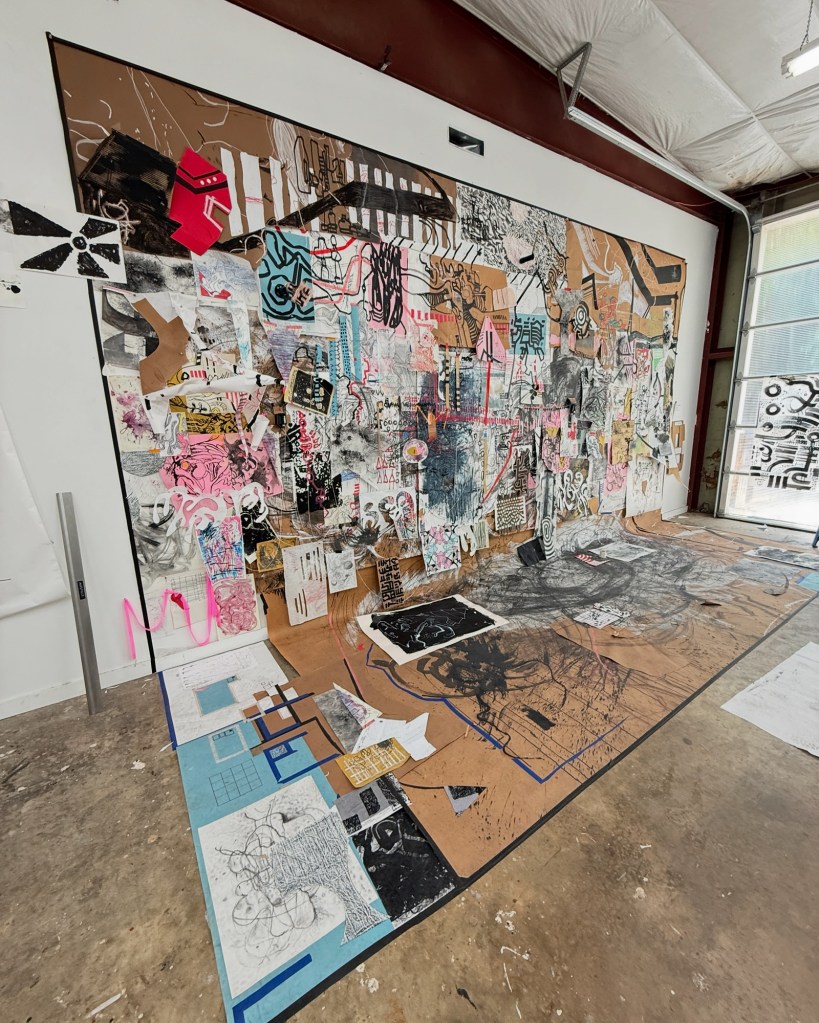
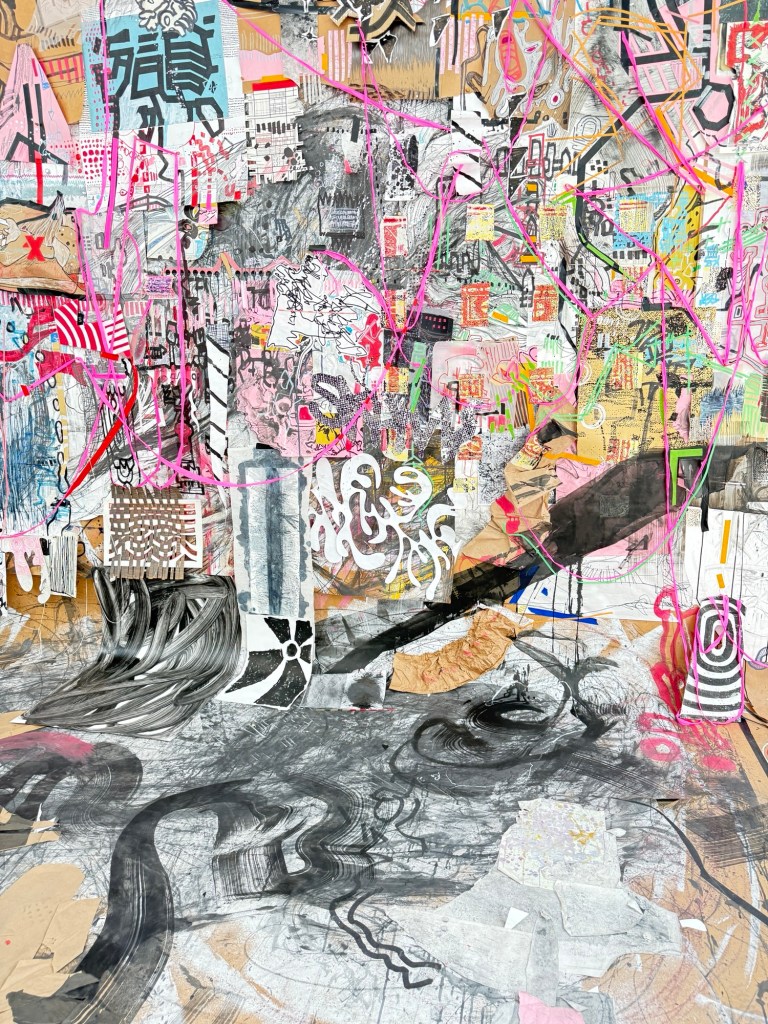


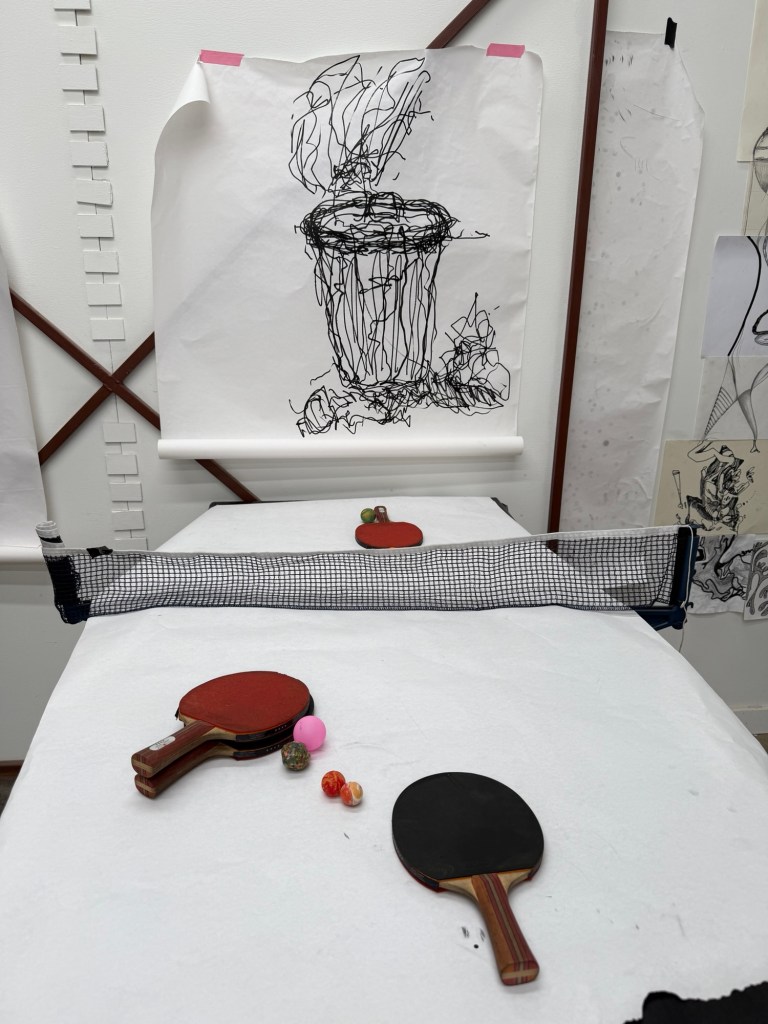

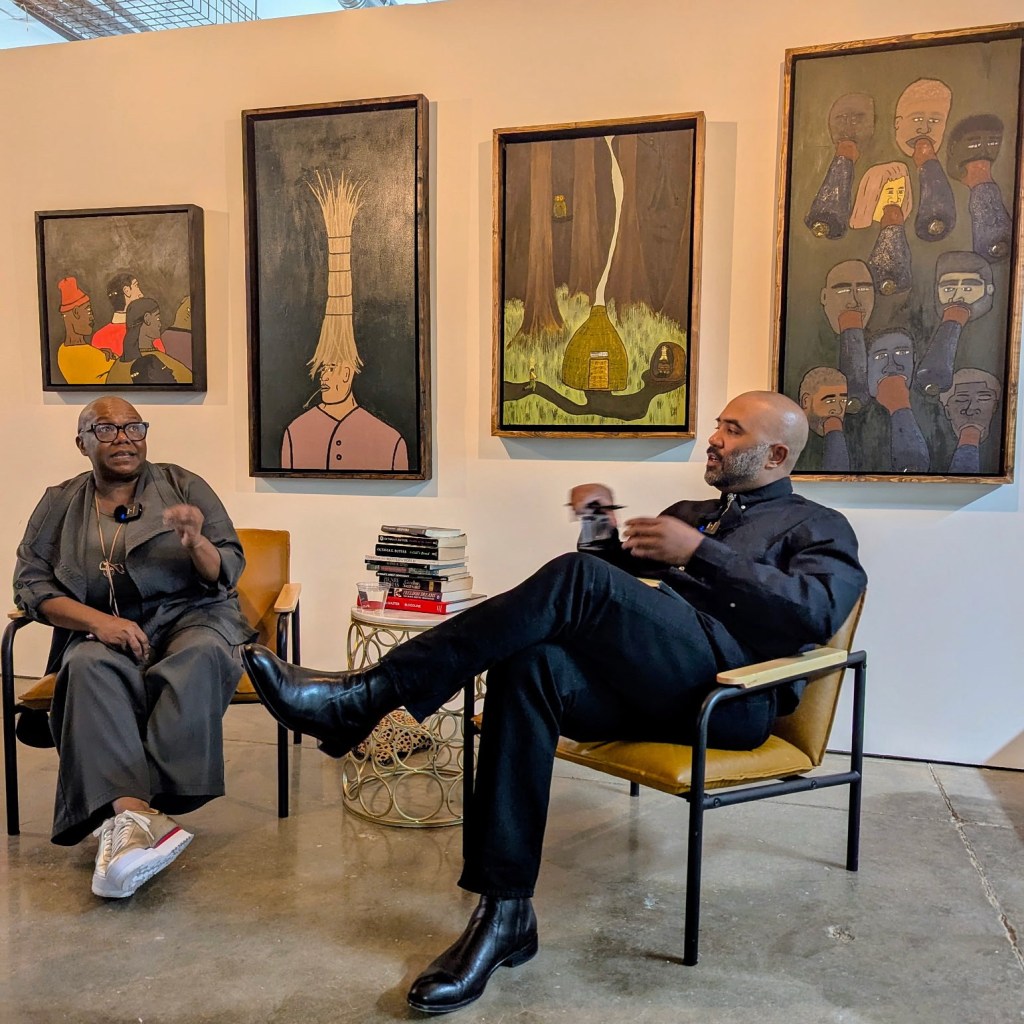
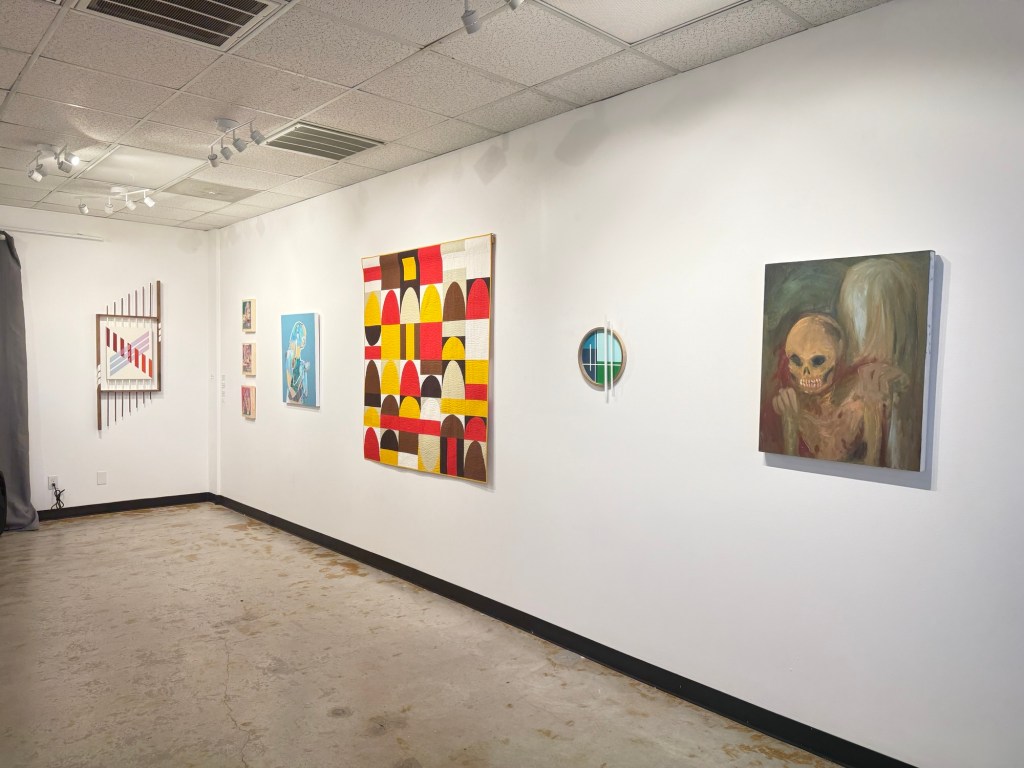


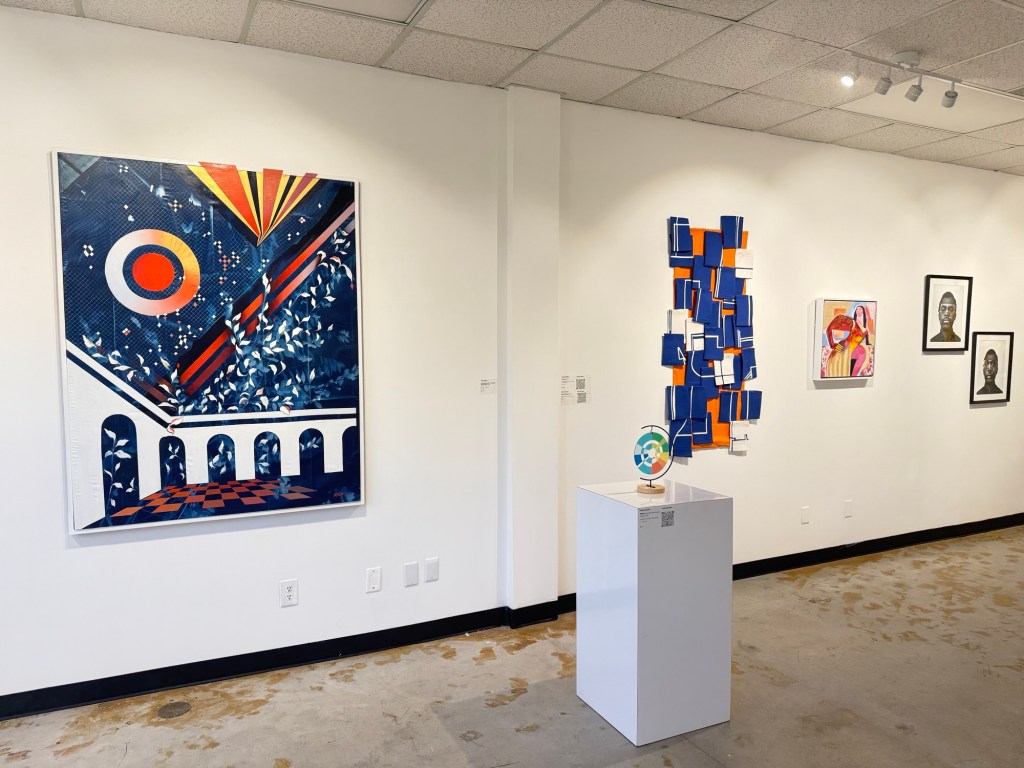


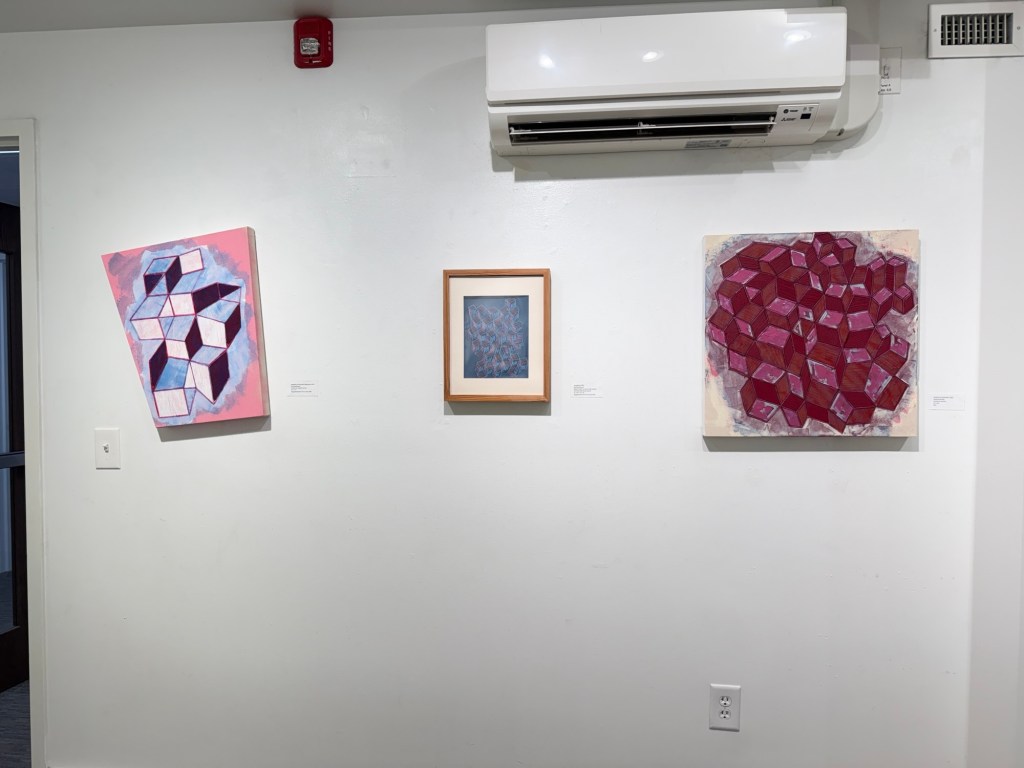
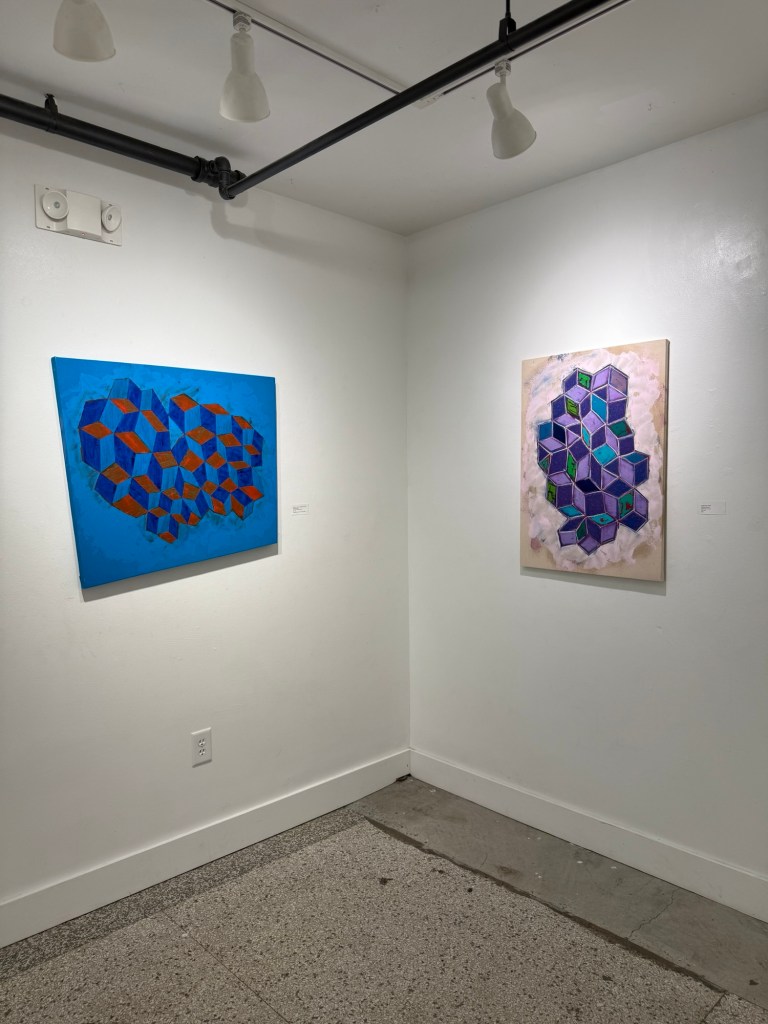

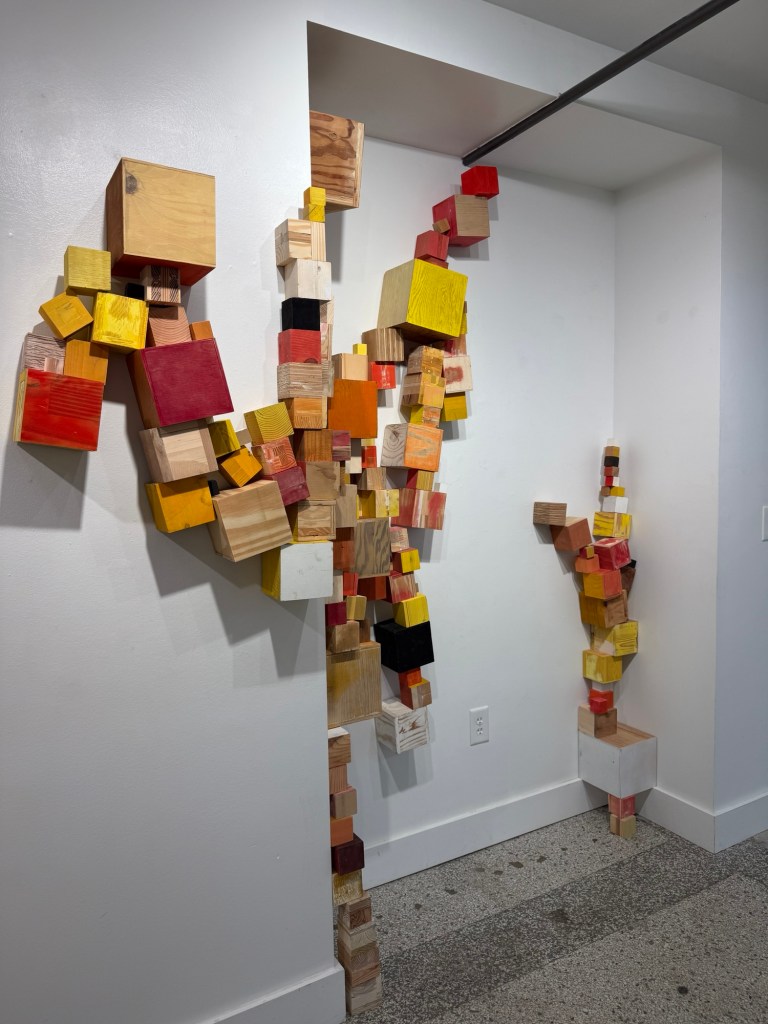


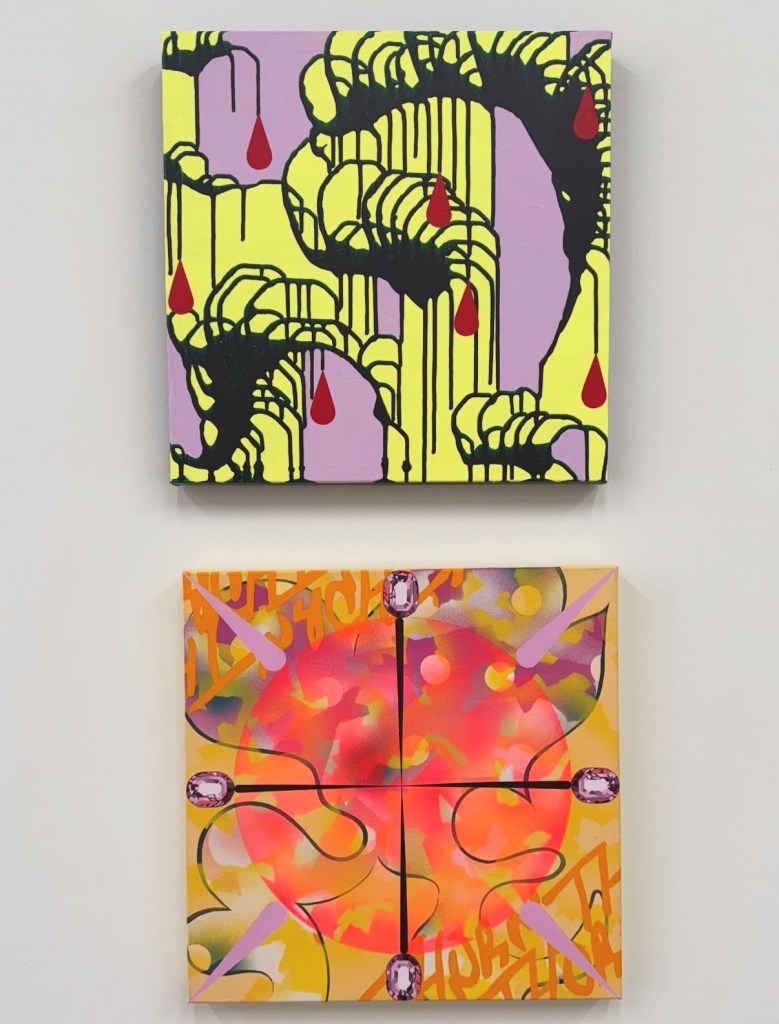
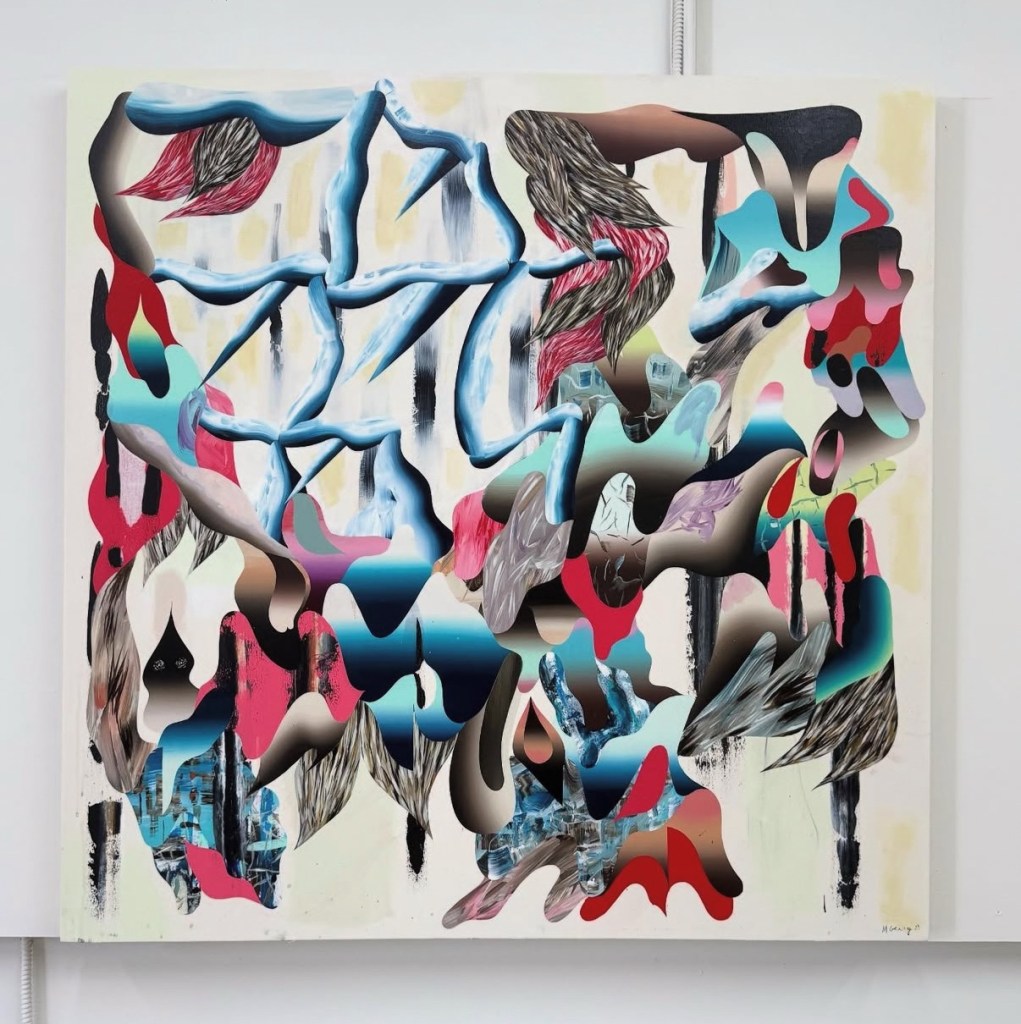


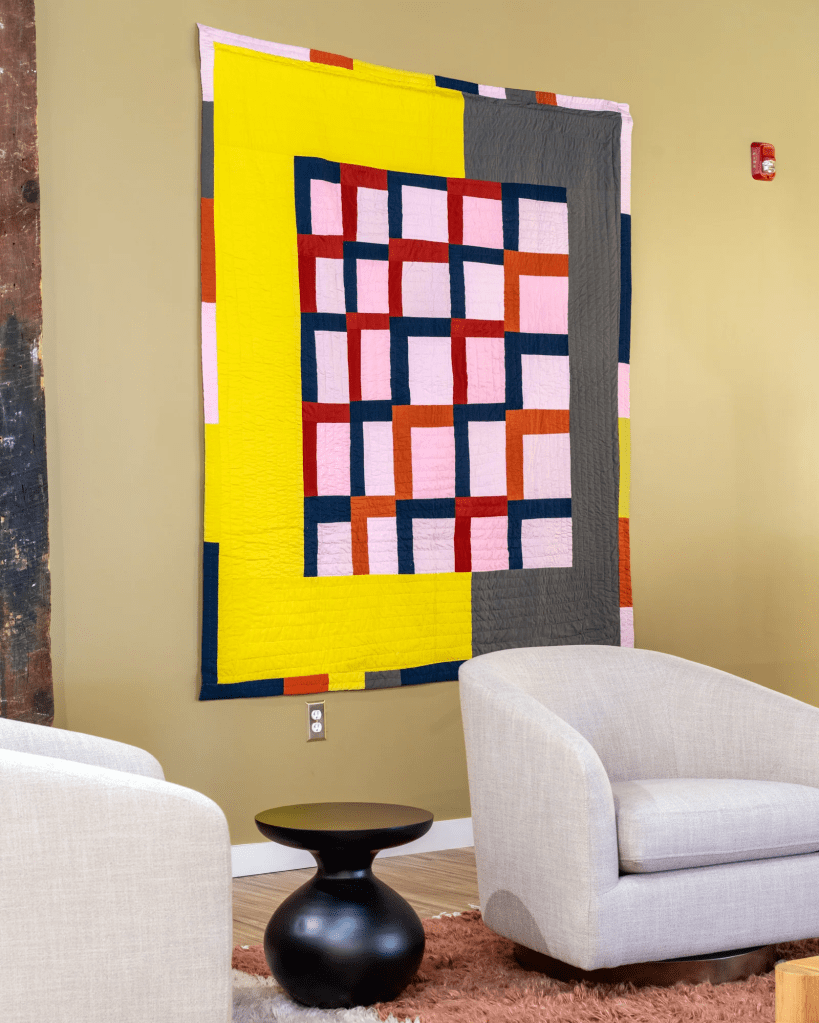


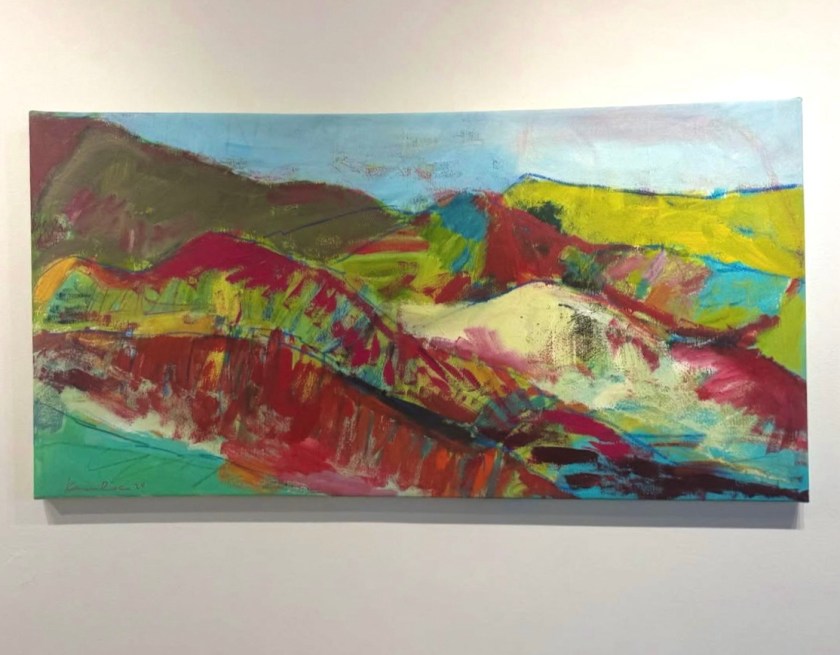


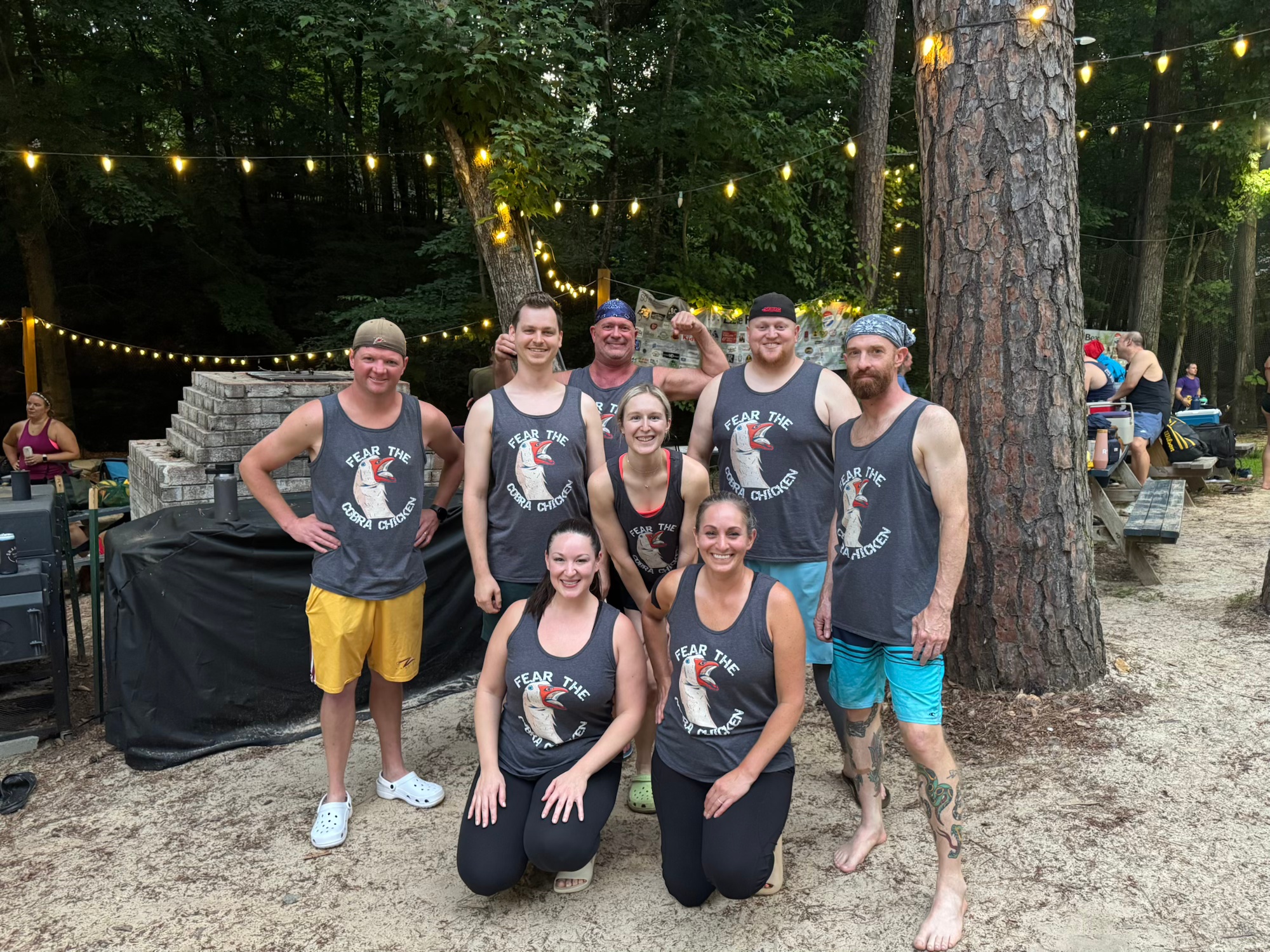
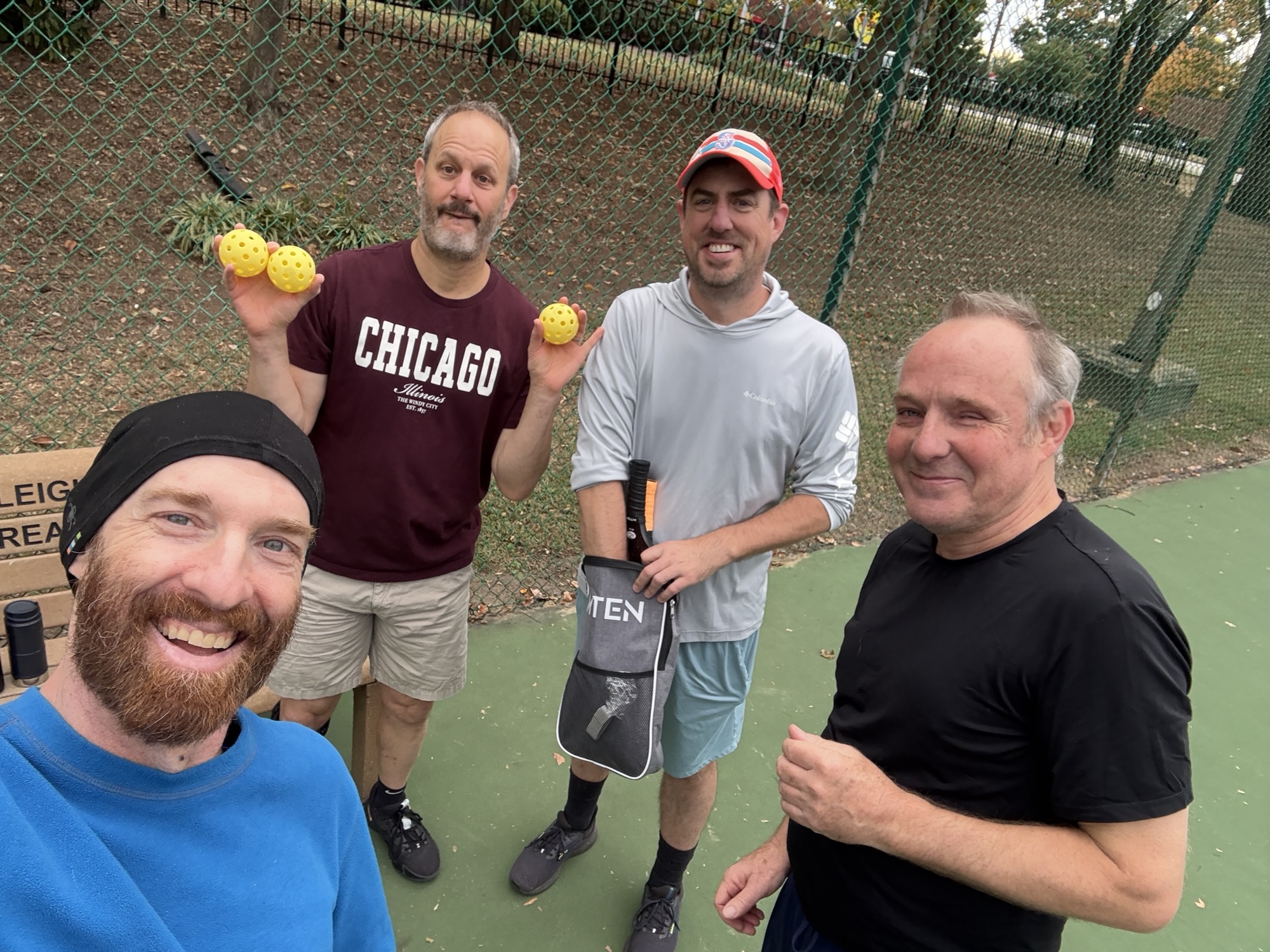
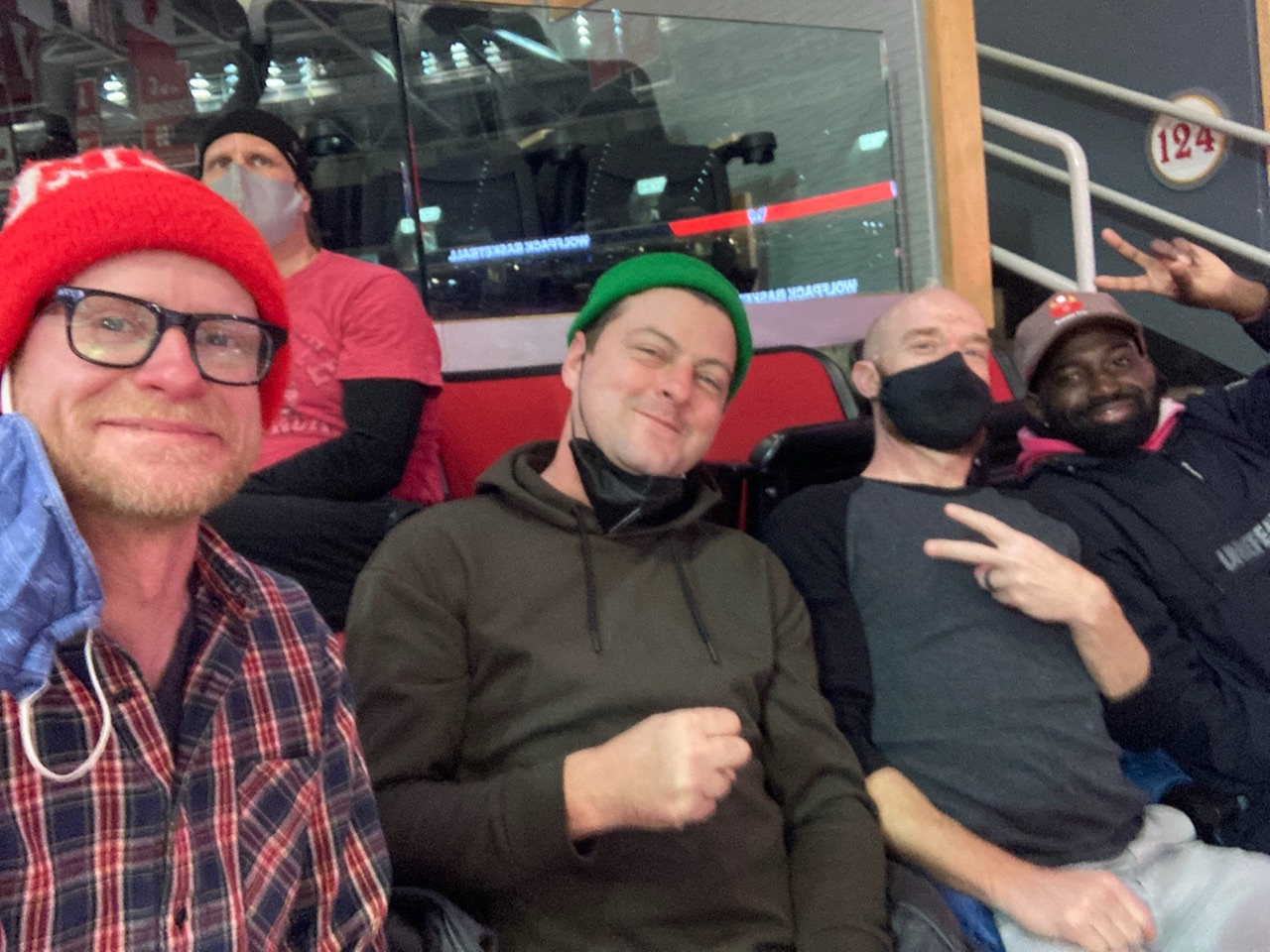


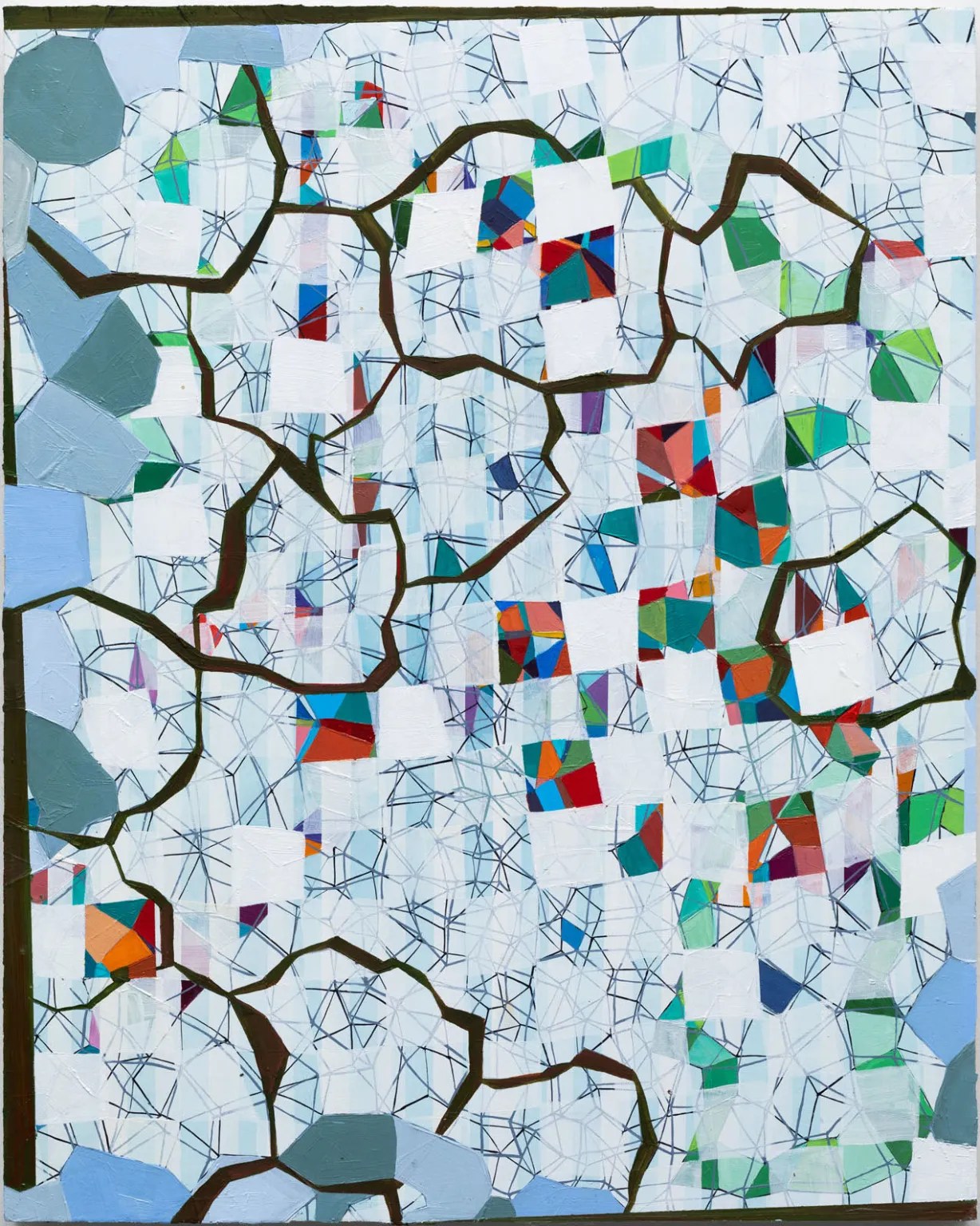

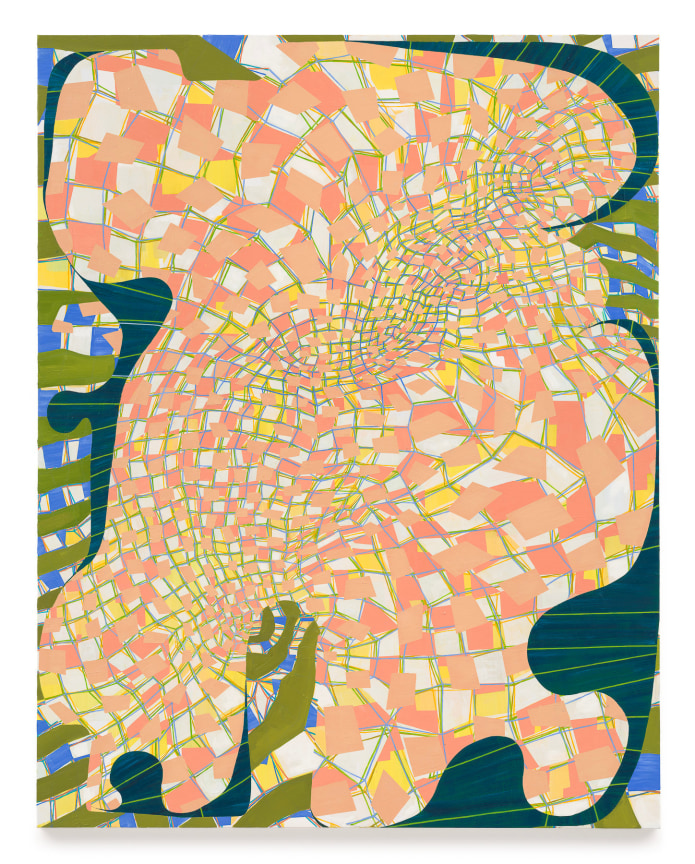


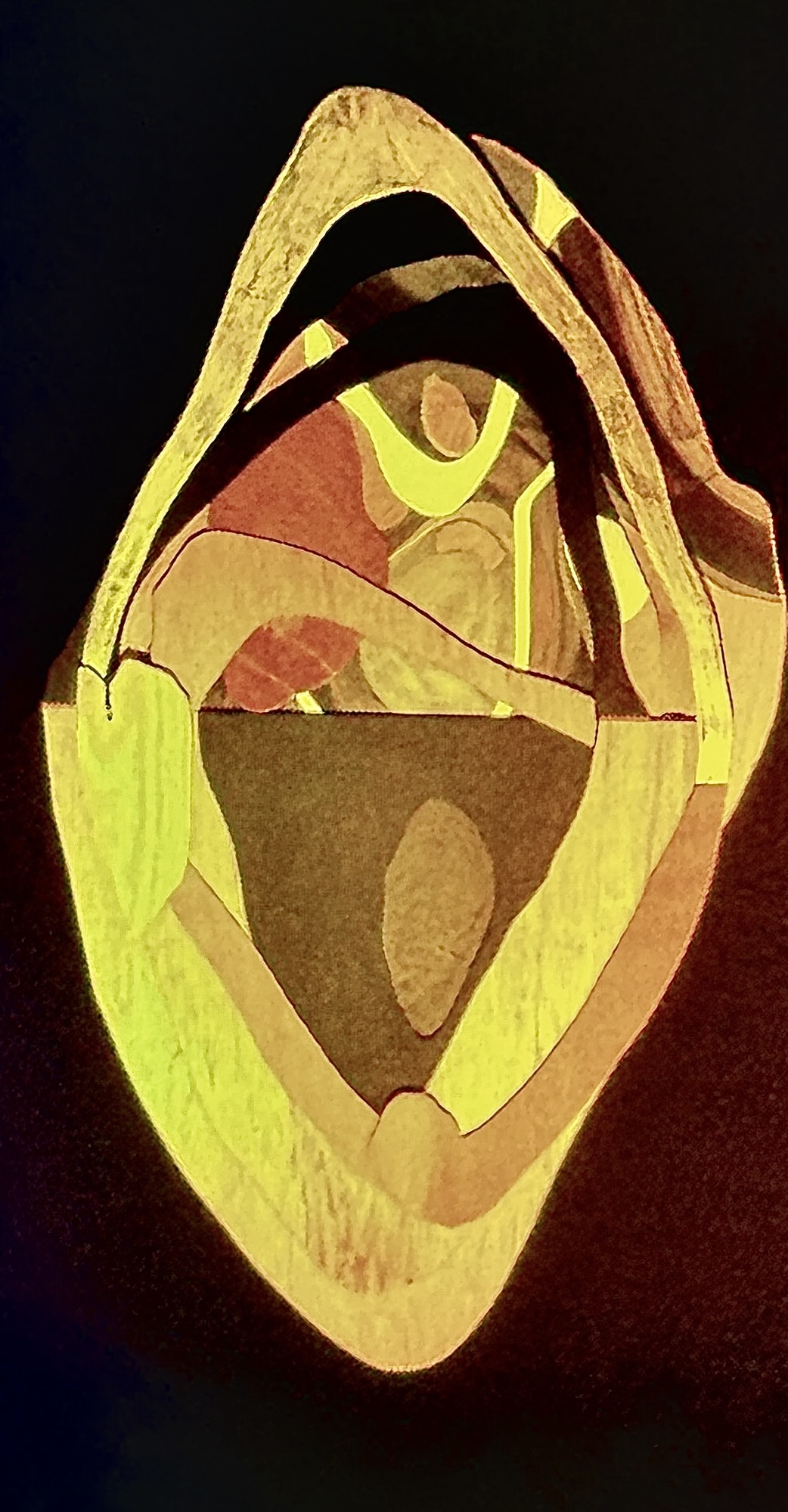
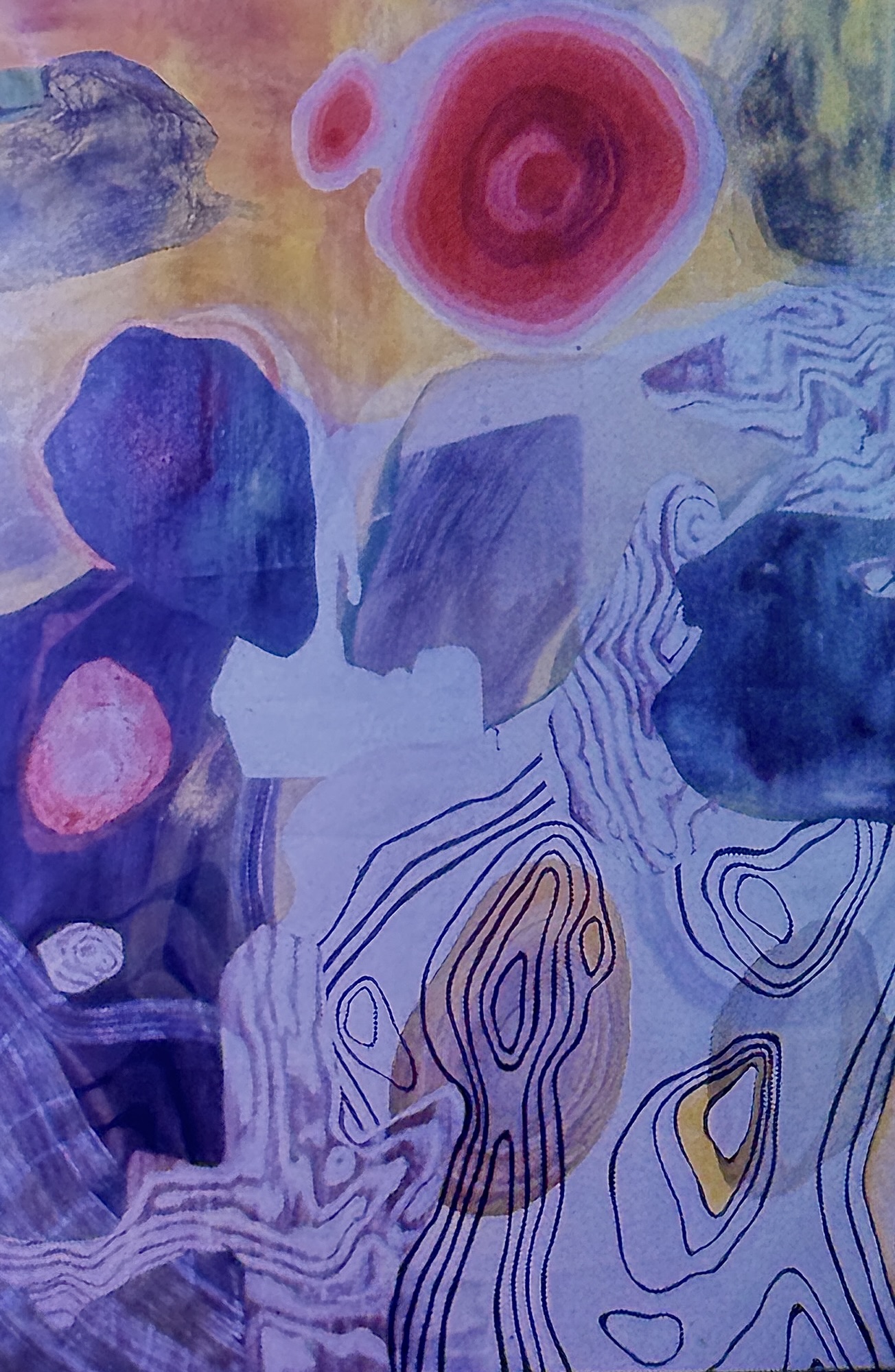
 Painting After Art is Dead