(back to Curating)
This exhibit was (is?) the initial iterations of what I hope will be several. A group show featuring 6 other artists, the initial showing was at Lump Project Space and the Sertoma Art Center, both in Raleigh, NC.
The most recent (and expansive, in scale) iteration took place earlier this year in the Wilma Daniel’s Gallery at Cape Fear Community College in Wilmington, NC.
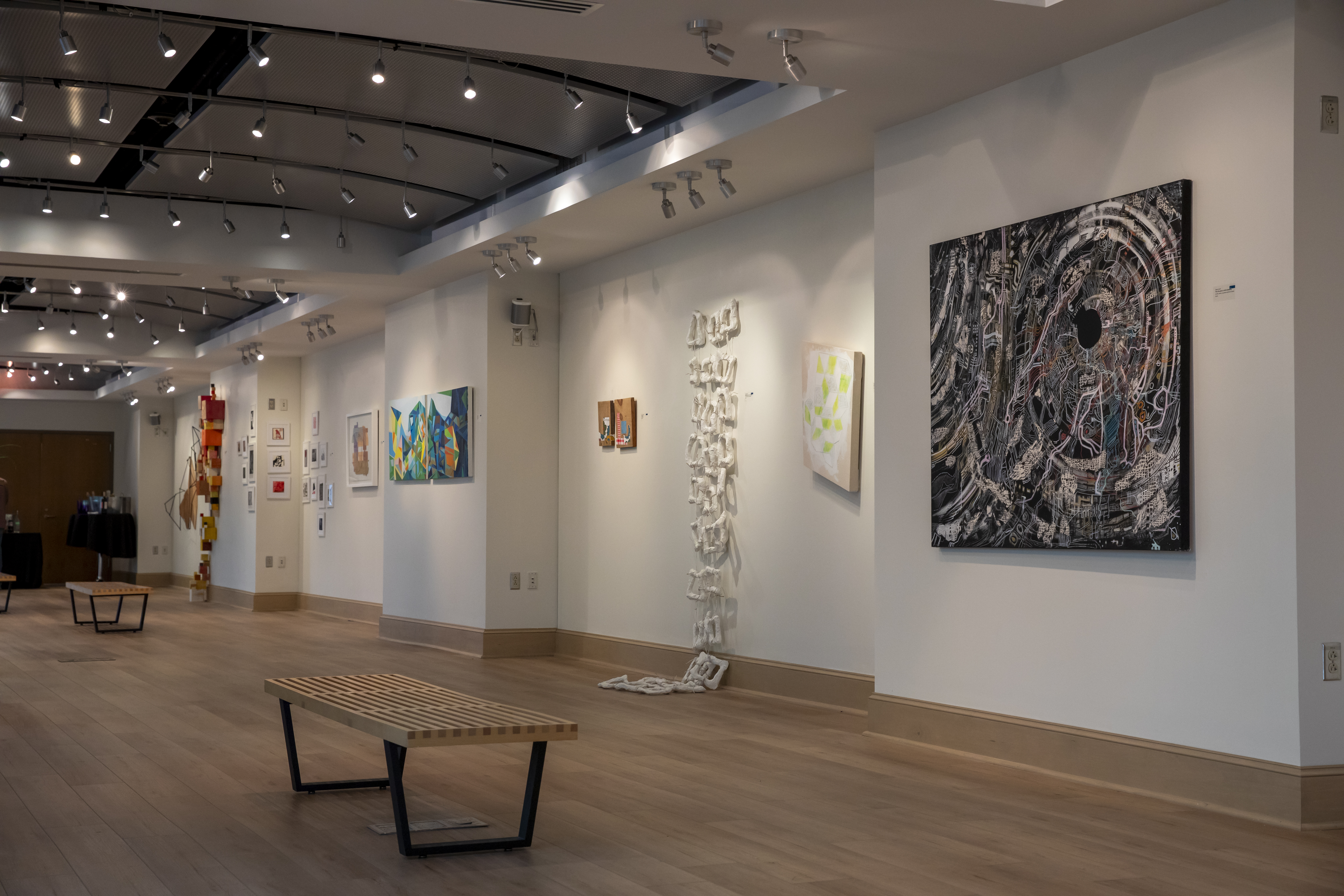
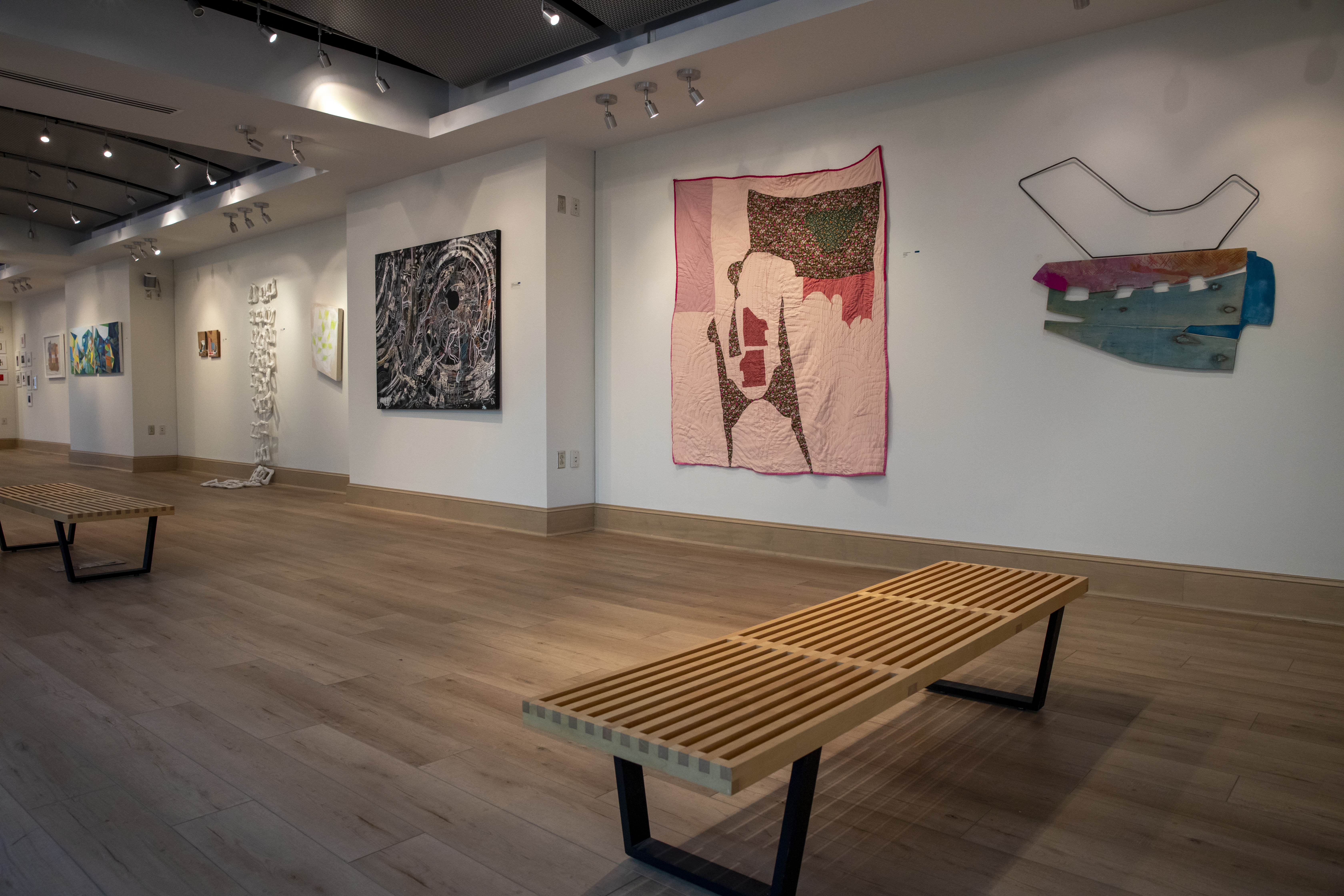


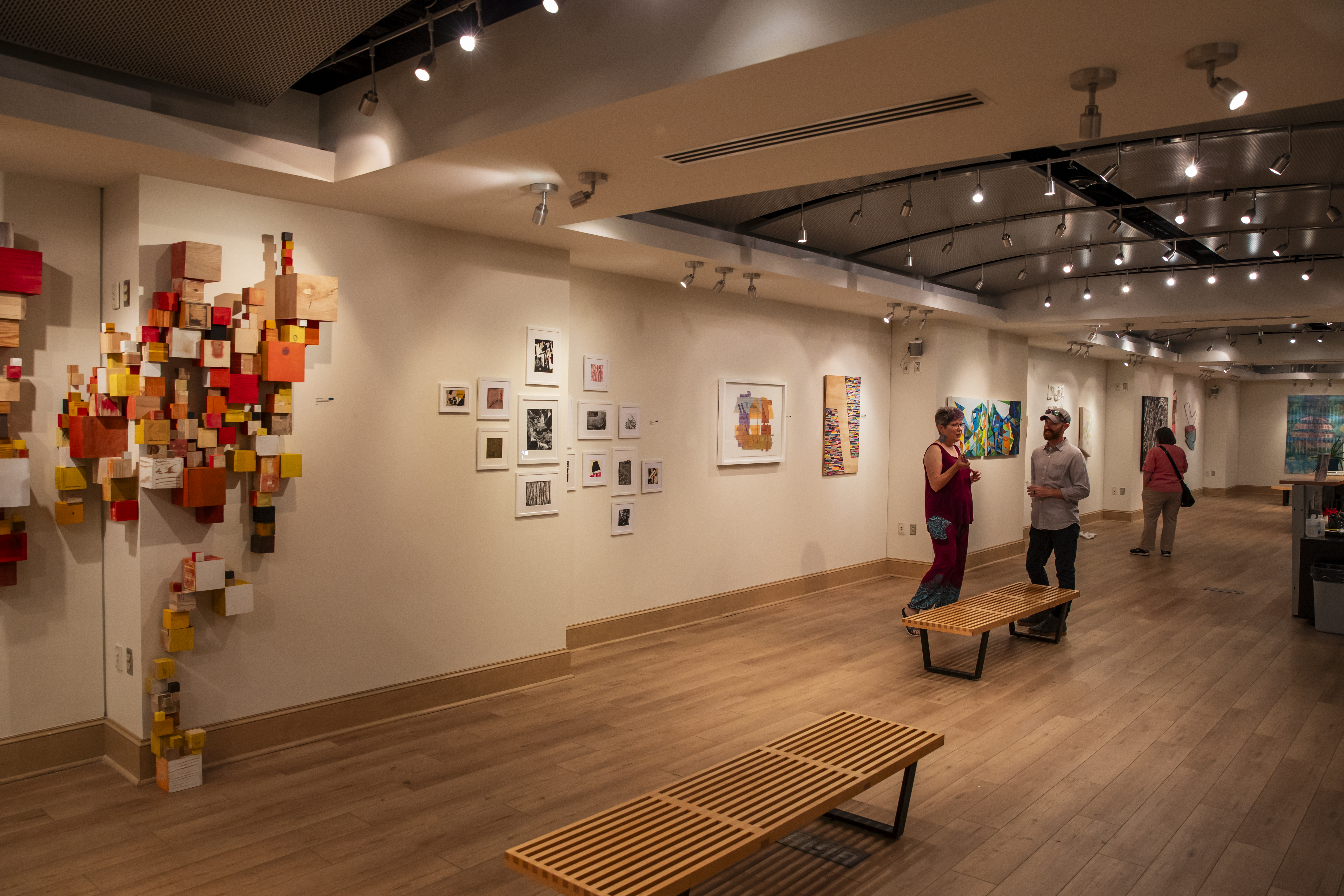
Show statement (followed by artist statements)
Open source, in the world of software code (the hidden structure of much of the world as we view it), is source material that is made freely available for possible modification and redistribution. Open source is a decentralized software development model that encourages open collaboration.
At our current point in the history of making Art, there is also a decentralized framework within which abstract artwork can be and is made. No single artist or group owns the source of meaning for this modality, and a wide range of collaborations with and utilizations of the elements developed out of the historical canon is possible, as well as the incorporation of content and materials from outside that world.
In the space needed for and occupied by abstraction, an openness is required, for creator and audience. The artist must be open to the ways in which the source materials of the work, including subjective content, inform decisions about everything from composition to titles. And the audience must be open as well since abstraction’s signifiers (color, shape, surface) are non-literal.
Perhaps most importantly though, the title of this show brings our awareness and acknowledgment to and celebrates the open-ness of source material possible in our time of art making. Artists Freddie Bell, Sterling Bowen, Natalia Torres del Valle, Jason Lord, Peter Marin, Jean Gray Mohs, Cindy Morefield and Carson Whitmore all approach non-figurative artwork from different vantages, personal and conceptual.
Freddie Bell
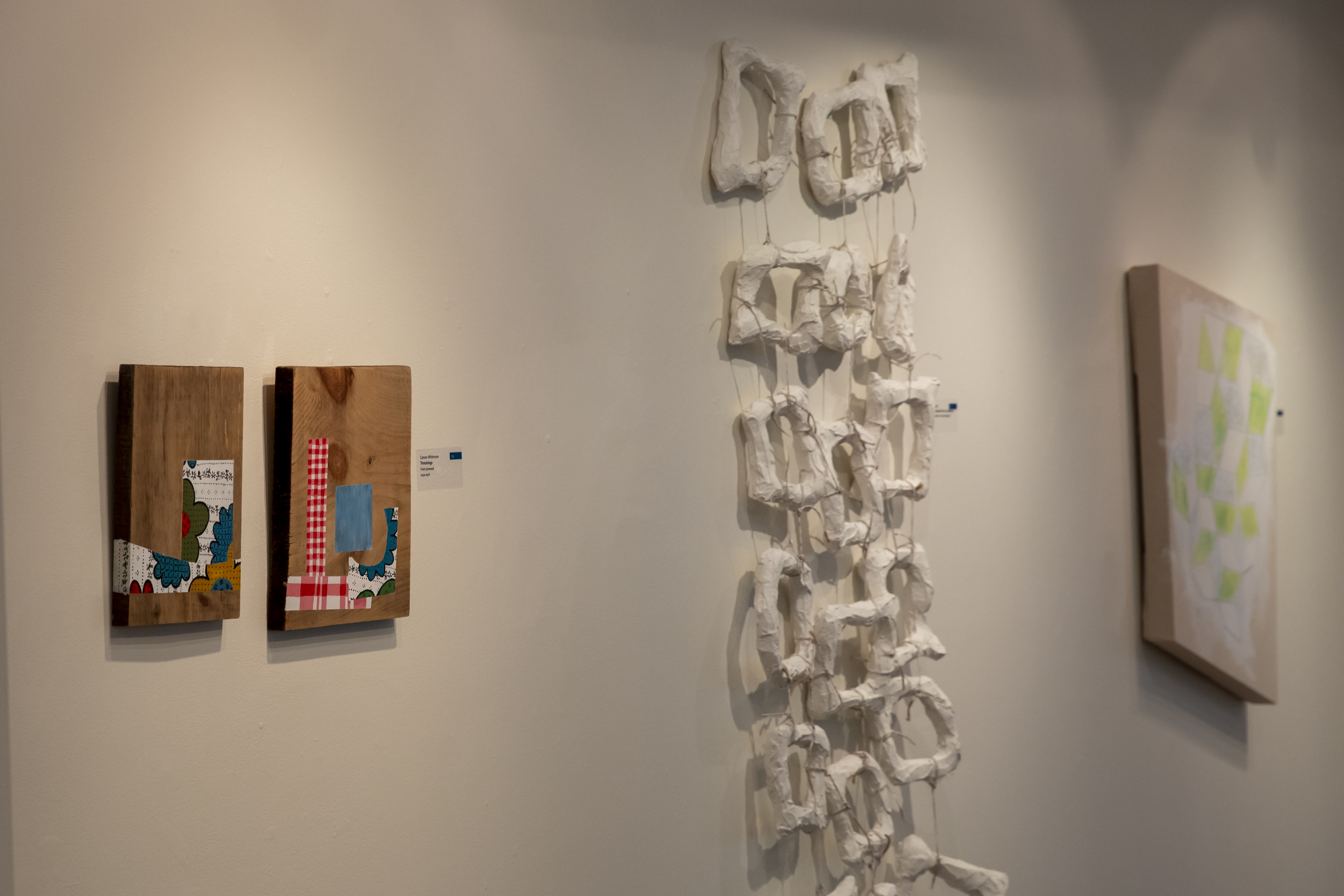
Bell identifies as a queer and transgender person which informs how they see and move through the world and is a fundamental influence in all their work as they aim to subvert binaries. Bell is interested in our constructed societal systems as well as the interior systems of our physical bodies, and in particular in how the body knows about and holds on to grief and trauma. Our interior systems store our lived experiences in our fascial tissue system, gut, and bones. They have primarily expressed this through abstract acrylic painting and small sculptures made with joint compound that are abstract representations of bones. Their current focus is on how we move forward carrying these experiences with us physically, emotionally, individually and collectively.
Sterling Bowen
Sterling is first and foremost an abstractionist. He is primarily interested in the value that contemplation has in our contemporary society, and in foregrounding contradictions which allow viewers to recognize the possibility of holding conflicting truths simultaneously. The object-making part of his practice centers automatic drawing and interconnected cubes. He uses this structure for several reasons: it allows the studio to become a place where outcomes can’t all be known in advance; the inherently discordant nature of the system becomes rich with optic possibilities as it unfolds; and, in a Lewitt-ian sense, it is a system- a “machine”- that generates compositions. The cube as a subject also has several layers of significance that includes experiences ranging from play in childhood to architecture school. The cube also holds space within Art as a representation of ideas about non figurative painting and the centrality of contemplation.
Jason Lord
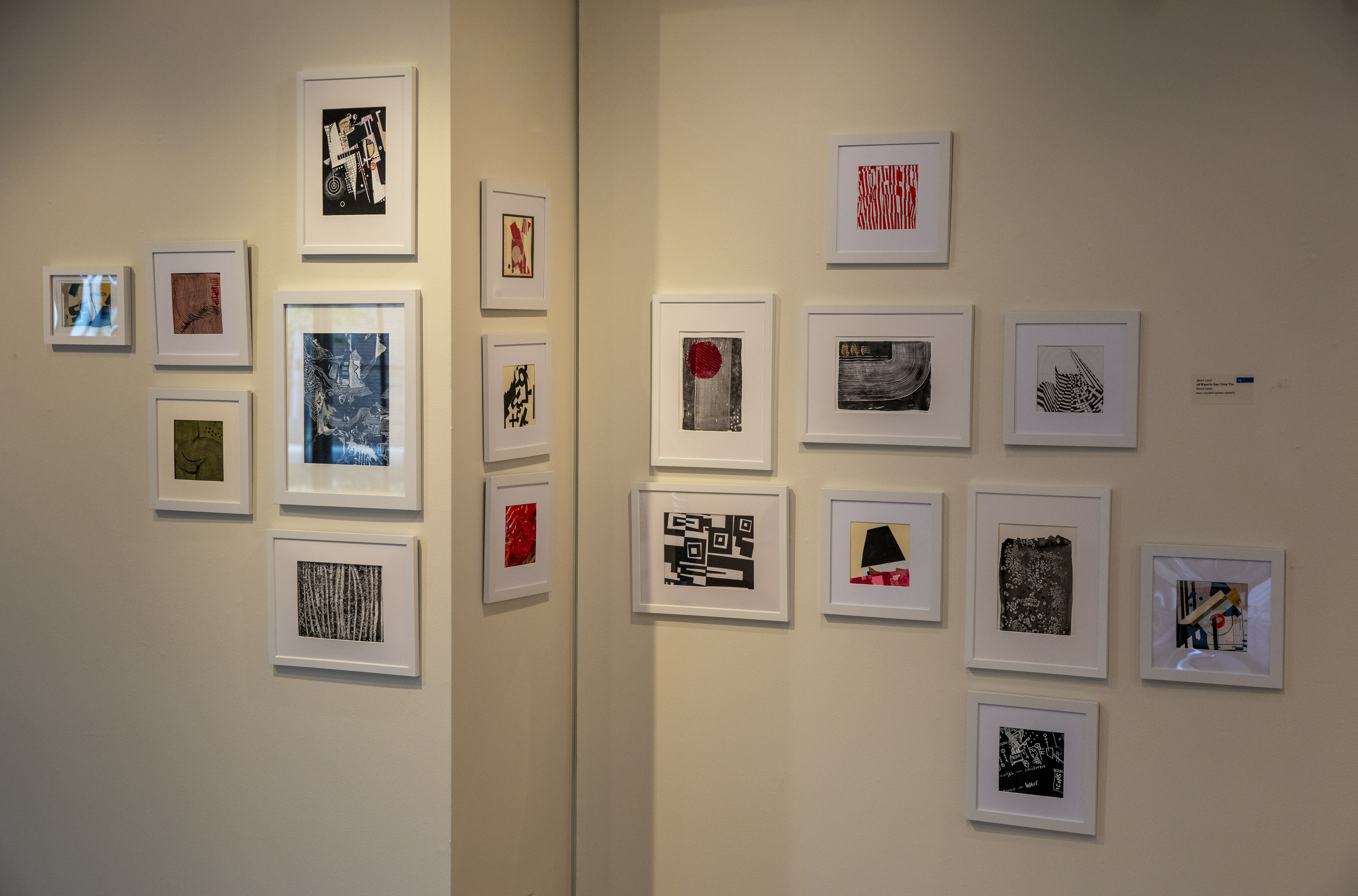
Jason Lord uses rituals and shifting sets of rules to investigate pattern, rhythm, and the relationship between repetition and improvisation. Using assemblage, drawing, print, sculpture, sound, video,and immersive installation, he relentlessly experiments with intersection by breaking things into elemental components, looping, layering, and deconstructing their complexities. Much of the work is rooted in a daily walking ritual; the deep topographies of the urban environment are an important source material. The practice of walking bridges the place between being and doing as this fundamental human act becomes an aesthetic endeavor, a subversive action, a socially engaged and democratic practice, and a creative tool.
Peter Marin
Marín’s abstract painting references architecture, landscape, identity and sacred geometry utilizing the languages of color and structure.
Jean Gray Mohs
Placing disease and balance at the core of her practice, Jean Gray’s work brings attention to the processes and mechanisms that go easily unnoticed in our bodies. Through the use of contrasting sturdy and fragile materials, her abstracted objects communicate the body’s tenacity and put emphasis on the balance we all walk in this world. She sources imagery and ideas from our inner organ landscape as well as structures out in nature.
Cindy Morefield
Cindy Morefield’s recent body of work is based on rubbings made from texture matrices, large wall collages created with paper, tape, and other recycled materials. While rubbings are obviously explorations of surface texture, Cindy has enjoyed discovering how they also reveal what’s beneath the surface. Covered layers come through, giving the feel of an X-ray or negative. She is intrigued by the play between what is hidden and what is revealed, and how that play makes space for mystery.
Carson Whitmore
Whitmore’s recent body of work emerges from a folk etymology that conceives of the “threshold” as a literal space, just outside the home, to contain the threshings of processed material. She utilizes “threshings” from past projects, whether her own or from a previous hand, to initiate a conversation between the realms of painting and quilting, of expression and utility, of the boundary between art and an artifact. Working within many of the “open source” techniques of quilting and an ethos of cyclical materiality, Whitemore views these pieces as collaborations across time and space.

 Painting After Art is Dead