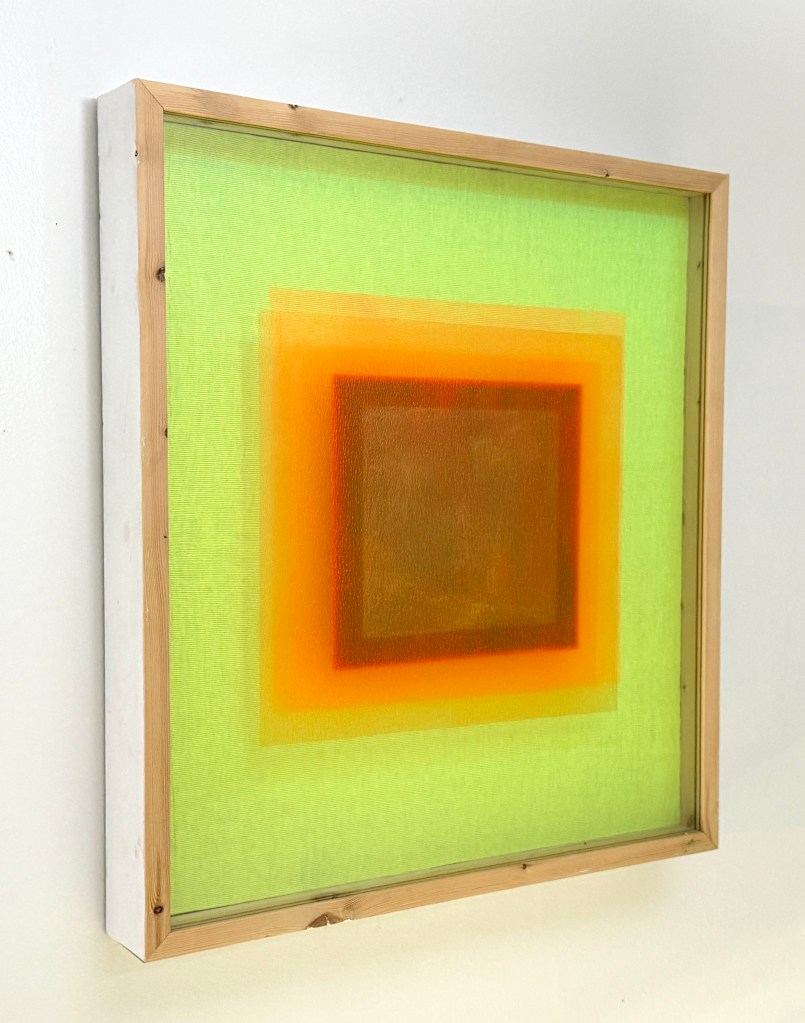
v. to make three times as great or as many
This is my third newsletter. So, we have acheived three times as many; working on three times as great.
A triple is a lot- triple shot (of espresso), triple dip (of ice cream), triple decker (sandwich). All of those sound like too much to consume. We also live in the age of the triple if you follow basketball. The ;tldr there is a story of efficiency. This newsletter is both- it is easily three-times the work of publishing a single essay, and it is a more efficient way to create (I hope) valuable content for local readers, as an alternative direction of energy to publishing a blog every day for a more limited audience. Speaking of such… I also like Tripel beers which may have gotten their name from the triple “X”s on their casks to note their strength, which I respect, along with their warm maltiness, creamy head and fruity yeasts. They are also hard to find, in the US at least, and most people, even regular beer drinkers, are not fans. You are welcome to try to figure out how that relates to my taste in Art.
A triple is also, I found out recently, a phrase that intentionally conveys three distinct, valid interpretations simultaneously. This literary device requires clever wordplay to pack layered significance into a single expression. To that end, I’ll preview that my next newsletter will utilize such a triple…
Also, if you’re viewing this in your web browser you’ve no doubt noticed I’ve updated the WordPress template I use. My intent is to more clearly emphasize the writing elements of my practice when people arrive for the first time.
Contents
What I’ve Seen (IRL)
Diamante Art and Cultural Center‘s newest exhibit features two creatives familiar to us, Todd Jones and Patrizia Ferreira, in Drift + Dwelling. There is still time to check this one out. The works share the strategy of material re-use and have overtones of “the domestic” (see below by Jones as example 1). I think you’ll also find yourself thinking about the environment as well, and not just because of material reuse- Ferreira choses titles like “Marine Carcass.”


Cindy Morefield’s practice utilizes rubbing, and Branching Rooted at Durham Art Guild’s Golden Belt Gallery brings together two bodies of work that use this strategy of revealing the unseen. Morefield always does a good job of making a millimeter in physical depth feel like a mile. To think we all used this strategy in Art class in school; beyond the import of wearing the intent to reveal on their surface, the simplicity of the action required to do so brings a child-like ease to being with them (some are human scale).


Peel Mother Upon invites viewers to consider what it means to mother upon someone or something and how these NC-based artists reach toward, represent, mirror, or invoke the essence of the phrase. Pictured are Reneesha McCoy, Cassandra Rowe, Megan Thomas Cronin (titled, I think the most successfully, “Invisible Labor”) and Peg Bachenheimer (the surface on this little one tho…). Second outing with Peel for curator Jameela Dallis and hopefully not the last time she collaborates with the space.


OneOneOne Paper Ghosts was a look back at the work of Kimowan Metchewais who was recently (posthumously) included in Biennale (which we’ll get to also). Below is for scale (I posted a video and some comments about my favorite on IG) and “yes” scale is one of its subjects.

Light Art Design next door hosted 15 Years of Light, a look back on some of the creatives that have been with the gallery for the duration, and included some fantastic non-figurative work. Yun Dong Nam contributed some minimalist work with luscious, otherworldly surfaces and Linda Curry’s large piece demanded several minutes (each rectangle is almost head-sized).


Anchorlight is home for the next 3 weeks to Charles Joyner’s Pattern of Commonality. This one requires a few minutes, which probably isn’t surprising given the amount of information available to the senses in the single work below. Spoiler alert, not all of the collage materials are found. A lovely post-modern romp through many things at once (I’ve already given one spoiler so you’ll have to visit to learn more about the source materials).

VAE’s newest at the Birdland space- Flight- was a great chance to see a few familiar faces and a lot of new ones. This show really felt like the VAE I first became accustomed to when I rebooted my practice in 2017. I hope the current iteration of this organization (now in its 45th year) makes the kind of difference for lots of emerging artists that it did for me (I am still pals with my critique cohort from that era). Someone did spot me at the opening…

Frameworks Gallery’s Journey to Healing, featuring Lamar Whidbee and Charles Silver, was a moving testament to the power of Art, and also therapy, to heal. I hope you all got to see it. If you didn’t, you missed Lamar Whidbee shifting the subject a little, to landscape (although clearly *this* type of landscape is about a good many things that were gutsy to say in this particular space).

PAF in Siler City was host to Whimsy and Fury and Ashe Lorossu and Paget Marion Blythe. Hung salon style, the appropriately titled show features a lot of smallish but punchy abstraction. I was drawn to the the pathways series by Lorusso, both their (assumed) concept and the visual manifestation of the same. Blythe’s pieces are a good contrast, with their heavily knifed surfaces and titles like “Factory Floor.” The one on the right below is a tad dif from others in this show and, wow, just… luminous. Glad to see Ashe exploring paper mache which no, you’re aren’t crazy, isn’t pictured. She’s not the only creative doing that so, someone curate a paper mache show, quick!


What I’ve Seen (OTI)
So much of the Art we all encounter is through our screen devices, so it feels appropriate to carve out a specific section for my favorites.
What you see below are works by…
Sydney Zester
Brooklin Soumahoro
Fatemeh Burnes
Rigoberto Mena
Alana Fitzgerald
Jonathan Prichard
John Rollins
Fabrian Marcaccio
Galen Cheney


What I thought about for a minute after…
“Let the beauty of what you love be what you do.”
-Rumi
In May, the exhibit to which my mind has returned most often is Continuum: From Classical to Contemporary Islamic Art, which is being hosted by the City of Raleigh in their Block Gallery. Guest curator Kulsum Tasnif , founder of The Artist Ummah and the creative force behind the The Protest Purse, is an artist herself. Her series “Journey to the Good Life,” is a collection of illustrations of war survivors she interviewed, which required four years of work recording their oral histories- not the first time she has taken on the role of historian for her community.
I saw the work initially in the company of Kulsum and many of the artists during the reception for the show. Milling around among their family and friends, who were speaking a mix of languages and sharing food from dolma to chocolate chip cookies, the word “diversity” hummed in the back of my mind. In the fraught moment where we find ourselves, it was uplifting to look around and see a glimpse of a world that is rich, not dull with simplistic ethnocentrism. The range of beauty left me full of hope, and beckoned me to daydream about the best iteration of America-as-a-melting-pot.
Kulsum’s painting, “God is Beautiful and Loves Beauty,” which is the feature image for this journal, is also the reason I’ve thought so much about this show. Yes, it harkens to a beautiful sentiment. At the time I first saw it, our nation was only days past the President threatening to wipe out the entire civilization of Iran. I could not reconcile this blind vitriol with what I stood before, and was dumbstruck, and saddened. Iran occupies the land which was Persia, which is the ethnic lineage of one of the Artists in the show, and an empire which predated the Roman one so many westerners consider the historical precursor of their own civilizations and cultures. The (uneven) power dynamics and conflicts between the west and the Muslim world, which serve no one but a powerful few, are an undeniable part of the backdrop of this exhibit and inform the way any thinking person will encounter it.
There is no better time to point not just at the compositional strategies and material techniques of several ancient cultures, but also at their lessons and mores. I looked around at works with titles like “With Every Hardship There is Ease” and “The Geometry of Peace” and felt connection to these concepts. The ideas at work spoke directly to me, as a non-religious person; certainly the artist in me responded to the tug of universality in their poetics as well, ergo the Rumi quote to start. I know that “universality” is out of fashion, even considered trite by some. I find the notion that some values have similarity- if not directly resulting in identical beliefs, at least common intent- across a multitude of cultures to be a powerful story. Regular readers know I center the importance of “and”… in this case I’m pointing to the fact that centering diversity uplifts how cultures (and individuals) are different, and it shows us how and where we have things in common.


Another valuable issue at stake in the works in this exhibit lies in their hand-made qualities. While they are of above average quality craftsmanship- graphically tight, and highly detailed- the presence of the artist is also clear. Look closely and it’s obvious they are made by hand. The point is of course to embody an aesthetic, yes, but not to privilege craftsmanship or point to some unattainable perfection. The resonance of the analog in a time of algorithms and flattening of culture through screen devices is something that I’ve noted in many conversations recently. Being “hand made” in 2026 lands very differently than it did just a few years ago, and “thank you” to Kulsum and the artists for celebrating that.
There are many opportunities to learn through the show as well. The traditions of making and forms associated with Islamic art include Tezhip (a form of illumination originating in Turkey), Arabic calligraphy and (Persian) Nastaliq script. I encourage readers to click on the first link in the first paragraph above (as well as this one on the distinction between Iranian and Persian) to learn more about these highly committed artists and artisans. Habibe Kocak, Hiba Chohan, Melika Osareh, Nigam Eshan, Roohi Amed and Noureen Shaikh are all keeping traditions alive that in some cases are thousands of years old. So, again, like last month, I must congratulate the staff of my City for their efforts to bring work important to citizens’ understanding of the world into public spaces.
And! The exhibit run was just extended through August so you definitely have time to go by at least once (I plan to take at least one more trip myself) and bring a friend, or family member to share in this connection to the world outside of this country’s borders and to time outside of the one in which we find ourselves.
What I’ve written about
My most recent post was a reflection, promised in my essay Responsibility, on Uplifting. Speaking of “a time of algorithms,” here’s what Gemini had to say about it just for giggles

What they’ve written about
I really enjoyed Shannon Chen See’s essay on Leasho Johnson and their exploration of Anansi in Burnaway’s newest Reader, Myth. I’ve followed Leasho for a minute and wowzah can they paint. You need to buy a copy of Myth to access this one but you can read Shannon’s review of another Jamaican artist, also for Burnaway, here.

After seeing the collage above by Shayla Thornton (irl, in We Set Our Terms, at Zeitgeist in Durham), I re-read the essay which first put me on to Shayla’s practice, Kylie Marsh’s Can Artists of Color Just Create, or Does Our Work Always Have to be Political? which was supported by Durham Art Guild. For more from Kylie visit her website.
I did also peruse what the Guardian had to say about Biennale.

Hakim at Hyperallergic thought it was garbage, too. I’m certainly glad that the two (two!!!) times I got to visit Biennale, the ‘Murca pavilion was repped by Bill Viola (’95) and Martin Puryear (’19). While thinking back on that, I had some fun and re-watched some of Viola’s work from his installation in the US pavilion (and newer work, too). Below is a detail of one of my favorite Puryears- leave a comment if you recognize where this one lives.

Given the exhibit I chose to review this week, Aruna D’Souza’s newest at Hyperallergic caught my eye as I was perusing editorials related to the current goings-on in Venice. She makes note of both the drama Khaled Sabsabi (an Australian Lebanese artist and this year’s representative of his adopted country) experienced with his exhibit, but also spends most of their interview on the work, and Sabsabi’s exploration of “collective becoming” (influenced by Sufism). The concepts resonated and, unfortunately, I don’t think even video of the work translates well…
I also read (a pdf of) the catalog essay for Abstract by Definition: an Index, written by curator Saul Ostrow who regular readers have seen mentioned before. The exhibit, which is this year’s installment of the annual showcase for American Abstract Artists, is on my bucket list (the show, that is, although wow it would be cool to be invited to be a member at some point in my career). The project Ostrow undertakes is ambitious and as a someone in love head over heels with this modality, I appreciate his thoughtfulness, specifically this thought:
No single narrative or discursive regime is prescribed; rather, the exhibition seeks to produce multiple, potentially incommensurable spaces—a proliferation of intentions and strategies wherein even common formal languages like geometry or gesture yield radically divergent results.
Art is dead, long live painting!
ALSO and, Sharon Butler wrote a piece (published on Two Coats, of course) based on her notes for a talk she did with Saul for the exhibit, which was moderated by Tom McGlynn, and it (her essay from the notes, not the talk) is the best, last.
What I’m looking forward to
CJ Martin will rock it out solo-style at Satellite with Phony Tough (opens 6/14).
Charles (Joyner, see above) is giving a talk at Anchorlight on June 20, at 3pm.
Small School is continuing to bring creatives here from outside the Triangle- Josh Copus is up in June (21st at NCMA, 1:30 pm).
VAE is opening up the Jobe House and giving the mic to Whitney Stanley for My Cousin’s House (opening First Friday 6/3).
OneOneOne has Kendrick “Rusty” Shackleford on deck next.
Artspace will honor Pride in June with Durhamite Nori McDuffie‘s Flavors of You, as they turn their lens on the fluidity of gender identity among dark-skinned members of our community.
While there is a lot here to read and look at in this journal, which I hope keeps you coming back (and sharing, please!!!), my main goal here is to practice writing fairly conventional reviews of exhibits once a month. Maybe this is obvious to most of you, but there is a difference between making a few observations, even if they are thoughtful, about a work or three in a show, and taking a beat to reflect on what’s at stake, draw some ties to “the discourse” or to Art history, and do a little research on the backstory of artist(s), curator and topic. I enjoy reading this type of writing, when it is done well, very much. Feedback is welcome, through comments or the form below. “Yes” I’m also interested in commissions for exhibit essays, etc.


Anyway, thanks so much for your attention. Your reward is the opportunity to waste valuable minutes of your life creating your own Waffle House competitor… just check it out.

Leave a Reply